Nigeria IT Services Market Size & Growth Rate (2026-2032)
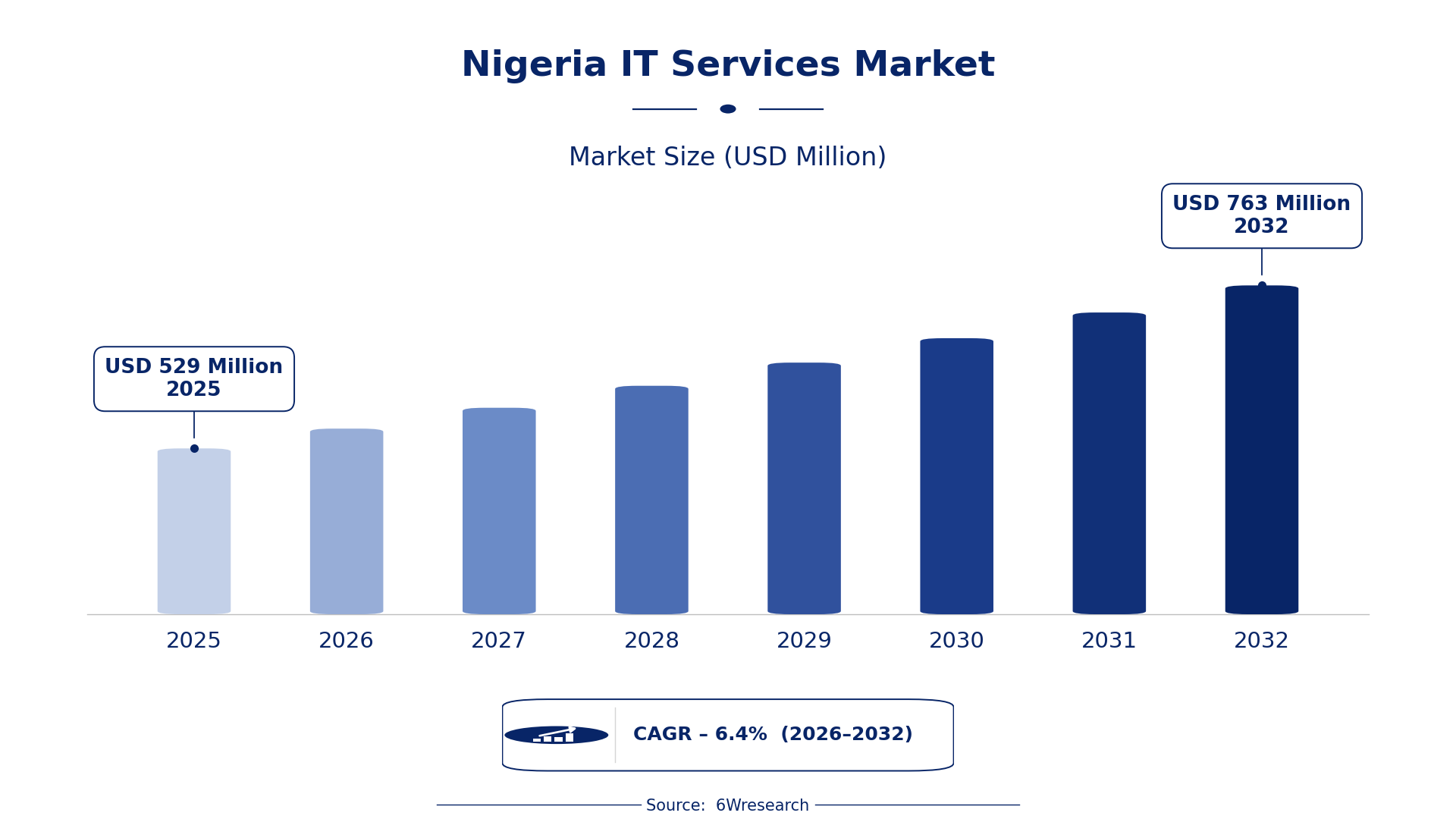
The Nigeria IT Services Market was estimated at USD 529 Million in 2025 and is projected to reach USD 763 Million by 2032, growing at a CAGR of 6.4% from 2026 to 2032.
Nigeria IT Services Market Synopsis
In Nigeria, the burgeoning IT services sector is increasingly characterized by a rising demand for cloud computing solutions. Businesses across various industries are recognizing the need to migrate to cloud platforms to enhance their operational efficiency and ensure scalability.
This demand is complemented by a growing trend towards managed services, as organizations prioritize outsourcing IT functions to focus on their core competencies. Such a shift is indicative of broader digital transformation initiatives sweeping through the Nigerian economy.
Nigeria IT Services Market Year-wise Growth Rate and Key Drivers
This graph illustrates the annual growth rates of the Nigeria IT Services Market from 2021 to 2032, highlighting a steady upward trajectory and projected expansion over the forecast period.
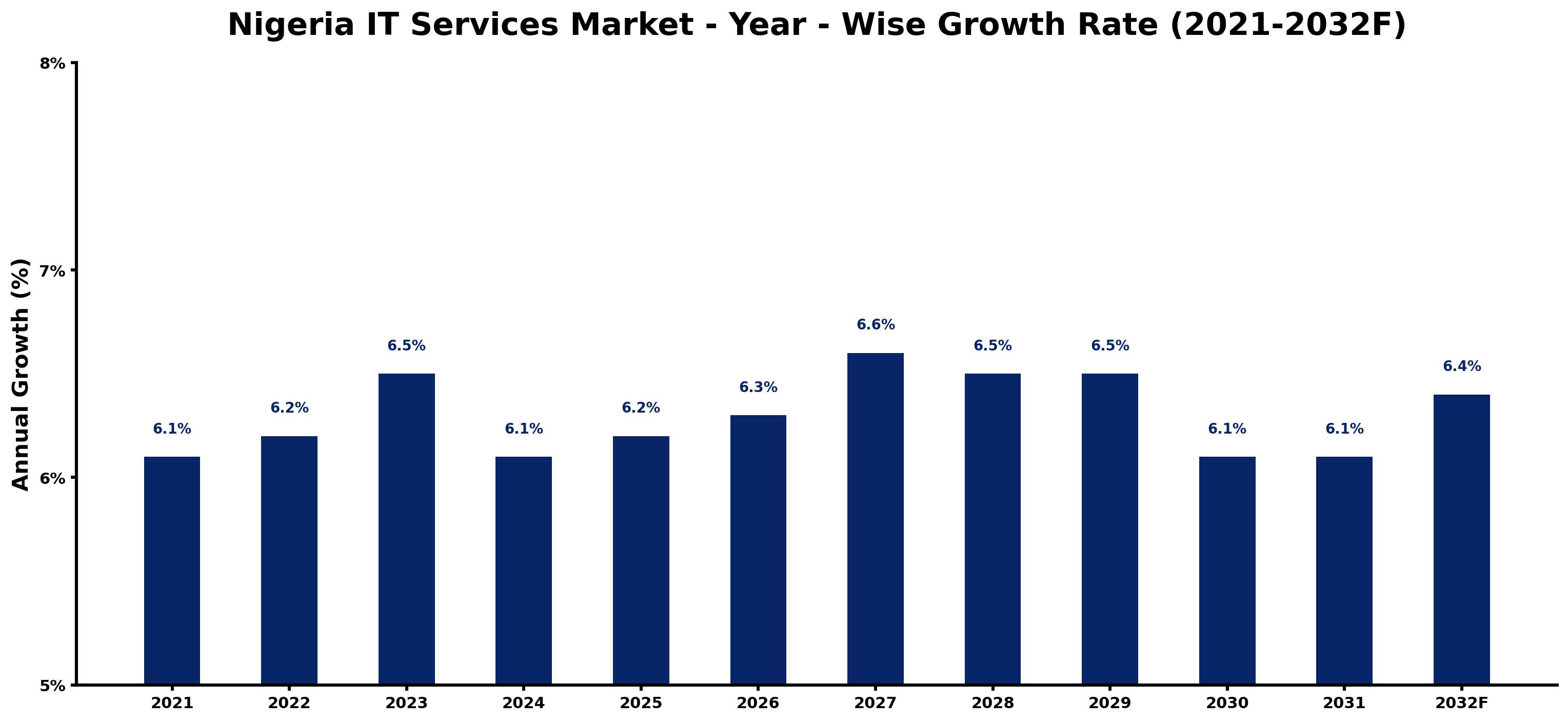
The table below presents the year‑wise growth rates along with the key drivers influencing the market
| Year | Growth Rate | Major Drivers |
| 2021 | 6.1% | National ICT Policy enhancing local tech investment opportunities. |
| 2022 | 6.2% | Surge in cybercrime incidents prompting cybersecurity service demand. |
| 2023 | 6.5% | Growth of fintech companies driving software development services. |
| 2024 | 6.1% | Adoption of cloud solutions by Nigerian businesses increasing. |
| 2025 | 6.2% | Government support for tech startups through funding initiatives. |
| 2026 | 6.3% | Emergence of AI applications within Nigerian service sectors. |
| 2027 | 6.6% | Increase in mobile banking users enhancing IT service demands. |
| 2028 | 6.5% | Local universities expanding IT curricula to meet industry needs. |
| 2029 | 6.5% | Public sector digitization initiatives boosting IT service adoption. |
| 2030 | 6.1% | Rising interest in digital transformation among SMEs fueling growth. |
| 2031 | 6.1% | Investment in telecom infrastructure facilitating IT service expansion. |
| 2032 | 6.4% | Increased online education prompting software development boom. |
Note: Market size estimations and growth projections presented in this report are based on 6Wresearch's proprietary forecasting methodology, utilizing the latest available industry data, government publications, and primary research inputs.
Nigeria IT Services Market Key Takeaways
Below are some of the specific key takeaways from the market, including:
- The market is projected to grow significantly, driven by increased investments in IT infrastructure.
- Cloud services and cybersecurity solutions are among the fastest-growing segments.
- Outsourcing of IT services is becoming a strategic priority for many organizations.
- Government initiatives are increasingly supporting the growth of the IT services sector.
- The shortage of skilled professionals remains a critical challenge for the industry.
Evaluation of Restraints in Nigeria IT Services Market
The Nigeria IT services market faces several real constraints that are holding back its full potential. A significant shortage of skilled professionals hampers service delivery and innovation. This gap is compounded by the rapid pace of technological advancements, which requires ongoing investments in training and infrastructure. High operational costs further strain local providers, making it difficult for them to compete effectively. These factors collectively limit the market's growth and efficiency.
Nigeria IT Services Market Trends
Current trends indicate a strong shift towards integrated IT solutions, combining various services to enhance value for clients. The demand for cybersecurity has surged, driven by increasing awareness of data protection among businesses. Additionally, the rise of remote work has accelerated the adoption of cloud services, with companies seeking flexible solutions to support their operations. on top of that, investments in AI and automation are beginning to reshape service offerings, presenting new avenues for efficiency and innovation.
Nigeria IT Services Market Opportunities
The market presents substantial growth opportunities, particularly in the area of cloud services. As more businesses transition to digital platforms, there is an increasing need for cloud infrastructure and services. Additionally, cybersecurity solutions are in high demand, as organizations seek to safeguard their digital assets. on top of that, the government’s initiatives to promote digital literacy and ICT education will create a more skilled workforce, facilitating the expansion of IT services across various sectors.
Government Initiatives in the Nigeria IT Services Market
Government policies in Nigeria are increasingly focused on enhancing digital infrastructure and promoting IT literacy. These initiatives are critical for ensuring that businesses can effectively leverage technology to improve productivity and competitiveness. By providing support for local IT service providers, the government aims to foster growth in this dynamic sector.
- A national digital infrastructure upgrade programme was recently completed to improve broadband access across urban and rural areas.
- Ongoing initiatives focus on increasing ICT education in schools to foster a tech-savvy generation.
- A regulatory framework was introduced in 2025 to incentivize investments in local IT startups.
- Current plans include a public-private partnership aimed at expanding internet connectivity in underserved regions by 2028.
- Upcoming policies are set to promote cybersecurity awareness and best practices among businesses.
Future Insights of the Nigeria IT Services Market
Looking ahead to 2026-2032, the Nigeria IT services market is expected to evolve significantly. The integration of advanced technologies such as AI and machine learning will redefine service delivery, enabling providers to offer more tailored solutions. As digital transformation continues to gain momentum, organizations that invest in IT services will likely experience increased operational efficiency and competitive advantage. on top of that, government support and investment in infrastructure will play a crucial role in shaping the market's future trajectory.
Nigeria IT Services Market Latest Developments
Over the past year, the Nigeria IT services market has seen notable developments, with an increased focus on cloud adoption and cybersecurity. Companies are making strategic moves to enhance their service offerings in response to growing client demands. This period of activity indicates a strong commitment to innovation and responsiveness to market needs.
- A major technology vendor launched a new cloud platform in early 2025, aimed at small and medium enterprises.
- A partnership between leading local firms was formed in Q3 2025 to develop a comprehensive cybersecurity training program.
- A new initiative is currently underway to upgrade existing IT infrastructures across educational institutions, expected to be completed by mid-2026.
- Plans for a nationwide campaign promoting the benefits of digital transformation are slated to kick off in late 2025.
- Several providers are preparing for a rollout of AI-based solutions targeted at enhancing service efficiency, expected to begin in early 2026.
Nigeria IT Services Market - Key Attractiveness of the Report
- 10 Years of Market Numbers
- Historical Data Starting from 2022 to 2025
- Base Year: 2025
- Forecast Data until 2032
- Key Performance Indicators Impacting the Market
- Major Upcoming Developments and Projects
Key drivers include the increasing adoption of cloud services, a rising demand for cybersecurity solutions, and businesses’ need to improve operational efficiency through outsourcing IT functions.
Key Highlights of the Report:
- Nigeria IT Services Market Outlook
- Market Size of Nigeria IT Services Market, 2025
- Forecast of Nigeria IT Services Market, 2032
- Historical Data and Forecast of Nigeria IT Services Revenues & Volume for the Period 2022-2032F
- Nigeria IT Services Market Trend Evolution
- Nigeria IT Services Market Drivers and Challenges
- Nigeria IT Services Price Trends
- Nigeria IT Services Porter's Five Forces
- Nigeria IT Services Industry Life Cycle
- Historical Data and Forecast of Nigeria IT Services Market Revenues & Volume By Vertical for the Period 2022-2032F
- Historical Data and Forecast of Nigeria IT Services Market Revenues & Volume By Government and defense for the Period 2022-2032F
- Historical Data and Forecast of Nigeria IT Services Market Revenues & Volume By Banking, Financial Services, and Insurance (BFSI) for the Period 2022-2032F
- Historical Data and Forecast of Nigeria IT Services Market Revenues & Volume By Healthcare for the Period 2022-2032F
- Historical Data and Forecast of Nigeria IT Services Market Revenues & Volume By Media and entertainment for the Period 2022-2032F
- Historical Data and Forecast of Nigeria IT Services Market Revenues & Volume By Consumer goods and retail for the Period 2022-2032F
- Historical Data and Forecast of Nigeria IT Services Market Revenues & Volume By IT and telecom for the Period 2022-2032F
- Historical Data and Forecast of Nigeria IT Services Market Revenues & Volume By Business Function for the Period 2022-2032F
- Historical Data and Forecast of Nigeria IT Services Market Revenues & Volume By Human Resources for the Period 2022-2032F
- Historical Data and Forecast of Nigeria IT Services Market Revenues & Volume By Finance and Accounting for the Period 2022-2032F
- Historical Data and Forecast of Nigeria IT Services Market Revenues & Volume By Sales and Marketing for the Period 2022-2032F
- Historical Data and Forecast of Nigeria IT Services Market Revenues & Volume By Supply Chain Management for the Period 2022-2032F
- Historical Data and Forecast of Nigeria IT Services Market Revenues & Volume By Operations and Support for the Period 2022-2032F
- Historical Data and Forecast of Nigeria IT Services Market Revenues & Volume By Manufacturing for the Period 2022-2032F
- Historical Data and Forecast of Nigeria IT Services Market Revenues & Volume By Deployment Mode for the Period 2022-2032F
- Historical Data and Forecast of Nigeria IT Services Market Revenues & Volume By On-premises for the Period 2022-2032F
- Historical Data and Forecast of Nigeria IT Services Market Revenues & Volume By Cloud for the Period 2022-2032F
- Historical Data and Forecast of Nigeria IT Services Market Revenues & Volume By Organization Size for the Period 2022-2032F
- Historical Data and Forecast of Nigeria IT Services Market Revenues & Volume By Large enterprises for the Period 2022-2032F
- Historical Data and Forecast of Nigeria IT Services Market Revenues & Volume By Small and Medium Enterprises (SMEs) for the Period 2022-2032F
- Historical Data and Forecast of Nigeria IT Services Market Revenues & Volume By Service Type for the Period 2022-2032F
- Historical Data and Forecast of Nigeria IT Services Market Revenues & Volume By Professional services for the Period 2022-2032F
- Historical Data and Forecast of Nigeria IT Services Market Revenues & Volume By Managed services for the Period 2022-2032F
- Historical Data and Forecast of Nigeria IT Services Market Revenues & Volume By Telecom services for the Period 2022-2032F
- Nigeria IT Services Import Export Trade Statistics
- Market Opportunity Assessment By Vertical
- Market Opportunity Assessment By Business Function
- Market Opportunity Assessment By Deployment Mode
- Market Opportunity Assessment By Organization Size
- Market Opportunity Assessment By Service Type
- Nigeria IT Services Top Companies Market Share
- Nigeria IT Services Competitive Benchmarking By Technical and Operational Parameters
- Nigeria IT Services Company Profiles
- Nigeria IT Services Key Strategic Recommendations






































