Nigeria Prefabricated Building Market Size Growth Rate
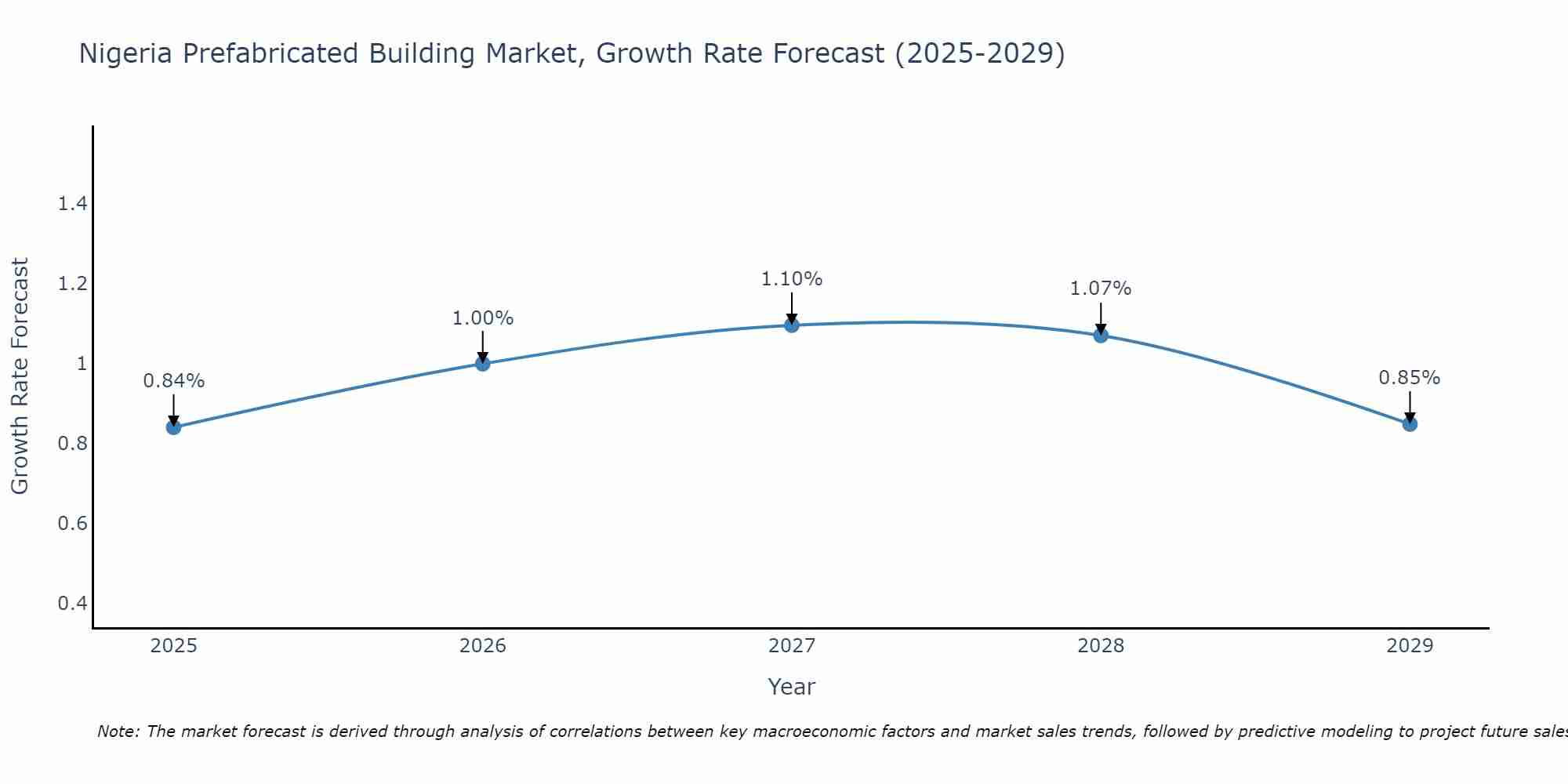
The Nigeria Prefabricated Building Market is projected to witness mixed growth rate patterns during 2025 to 2029. The growth rate begins at 0.84% in 2025, climbs to a high of 1.10% in 2027, and moderates to 0.85% by 2029.
Nigeria Prefabricated Building Market Overview
The Nigeria prefabricated building market is experiencing significant growth due to factors such as rapid urbanization, population growth, and the need for affordable housing solutions. Prefabricated buildings offer advantages such as cost-efficiency, reduced construction time, and sustainability, making them increasingly popular in the Nigerian construction industry. Key market players are investing in innovative technologies and designs to meet the growing demand for prefabricated structures in residential, commercial, and industrial sectors. Government initiatives promoting affordable housing and infrastructure development are also driving the market growth. With a focus on quality, durability, and customization, the Nigeria prefabricated building market is expected to continue expanding in the coming years, offering sustainable and efficient construction solutions for various project requirements.
Nigeria Prefabricated Building Market Trends
The Nigeria Prefabricated Building Market is experiencing growth due to several key trends. One prominent trend is the increasing demand for affordable and quick construction solutions, especially in urban areas facing housing shortages. Prefabricated buildings offer a cost-effective and efficient alternative to traditional construction methods, making them popular among developers and investors. Another trend driving the market is the focus on sustainability and eco-friendly construction practices. Prefabricated buildings can be designed to be energy-efficient and environmentally friendly, aligning with the growing eco-consciousness of consumers and regulators. Additionally, advancements in technology and design capabilities are enabling more innovative and customizable prefabricated building solutions to cater to various needs and preferences in the Nigerian market.
Nigeria Prefabricated Building Market Challenges
In the Nigeria Prefabricated Building Market, several challenges are faced, including limited awareness and acceptance of prefabricated construction methods among local developers and builders, which hinders widespread adoption. Additionally, inadequate infrastructure, such as transportation networks and logistics systems, can pose challenges in the efficient delivery and installation of prefabricated components. Supply chain issues, including sourcing quality materials and skilled labor, also impact the growth of the market. Regulatory hurdles and a lack of standardized building codes tailored to prefabricated construction further complicate the sector`s development. Addressing these challenges will be crucial in unlocking the full potential of the Nigeria Prefabricated Building Market and driving its growth in the future.
Nigeria Prefabricated Building Market Investment Opportunities
Investment opportunities in the Nigeria Prefabricated Building Market are promising due to the country`s growing population, urbanization, and increasing demand for affordable housing. Investors can capitalize on the rising need for quick, cost-effective, and sustainable construction solutions by investing in prefabricated building manufacturing companies, technology providers, and real estate development projects utilizing prefabricated components. Additionally, government initiatives to promote affordable housing and infrastructure development further enhance the potential for investment in this sector. With a focus on quality, innovation, and scalability, investors can benefit from the opportunities presented by the Nigeria Prefabricated Building Market to contribute to the country`s construction industry growth and address the housing deficit.
Nigeria Prefabricated Building Market Government Policy
In Nigeria, government policies related to the prefabricated building market focus on promoting affordable housing solutions and improving construction efficiency. The government has introduced initiatives such as the National Housing Fund, which provides financing options for low and middle-income earners to access housing, including prefabricated buildings. Additionally, the Federal Ministry of Works and Housing has implemented regulations and standards to ensure the quality and safety of prefabricated structures, aiming to boost consumer confidence in these innovative construction methods. Overall, the government is actively encouraging the adoption of prefabricated building technologies as a means to address housing shortages and enhance the overall construction industry in Nigeria.
Nigeria Prefabricated Building Market Future Outlook
The Nigeria Prefabricated Building Market is poised for significant growth in the coming years due to factors such as rapid urbanization, population growth, and increasing demand for affordable and quick construction solutions. The government`s focus on infrastructure development and initiatives to promote affordable housing will also drive the market expansion. Additionally, the rising awareness about the benefits of prefabricated buildings, such as cost-effectiveness, reduced construction time, and sustainability, will further propel market growth. With advancements in technology and design capabilities, prefabricated buildings are becoming more customizable and aesthetically pleasing, appealing to a wider range of customers. Overall, the Nigeria Prefabricated Building Market is expected to witness strong growth and opportunities for manufacturers, suppliers, and construction companies in the foreseeable future.
Key Highlights of the Report:
- Nigeria Prefabricated Building Market Outlook
- Market Size of Nigeria Prefabricated Building Market, 2024
- Forecast of Nigeria Prefabricated Building Market, 2031
- Historical Data and Forecast of Nigeria Prefabricated Building Revenues & Volume for the Period 2021 - 2031
- Nigeria Prefabricated Building Market Trend Evolution
- Nigeria Prefabricated Building Market Drivers and Challenges
- Nigeria Prefabricated Building Price Trends
- Nigeria Prefabricated Building Porter's Five Forces
- Nigeria Prefabricated Building Industry Life Cycle
- Historical Data and Forecast of Nigeria Prefabricated Building Market Revenues & Volume By Dimensions for the Period 2021 - 2031
- Historical Data and Forecast of Nigeria Prefabricated Building Market Revenues & Volume By Skeleton System for the Period 2021 - 2031
- Historical Data and Forecast of Nigeria Prefabricated Building Market Revenues & Volume By Panel System for the Period 2021 - 2031
- Historical Data and Forecast of Nigeria Prefabricated Building Market Revenues & Volume By Cellular System for the Period 2021 - 2031
- Historical Data and Forecast of Nigeria Prefabricated Building Market Revenues & Volume By Combined System for the Period 2021 - 2031
- Historical Data and Forecast of Nigeria Prefabricated Building Market Revenues & Volume By Application for the Period 2021 - 2031
- Historical Data and Forecast of Nigeria Prefabricated Building Market Revenues & Volume By Residential for the Period 2021 - 2031
- Historical Data and Forecast of Nigeria Prefabricated Building Market Revenues & Volume By Non-Residential for the Period 2021 - 2031
- Nigeria Prefabricated Building Import Export Trade Statistics
- Market Opportunity Assessment By Dimensions
- Market Opportunity Assessment By Application
- Nigeria Prefabricated Building Top Companies Market Share
- Nigeria Prefabricated Building Competitive Benchmarking By Technical and Operational Parameters
- Nigeria Prefabricated Building Company Profiles
- Nigeria Prefabricated Building Key Strategic Recommendations






































