Paraguay Anti Reflective Glass Market Growth Rate Analysis (2025 - 2031)
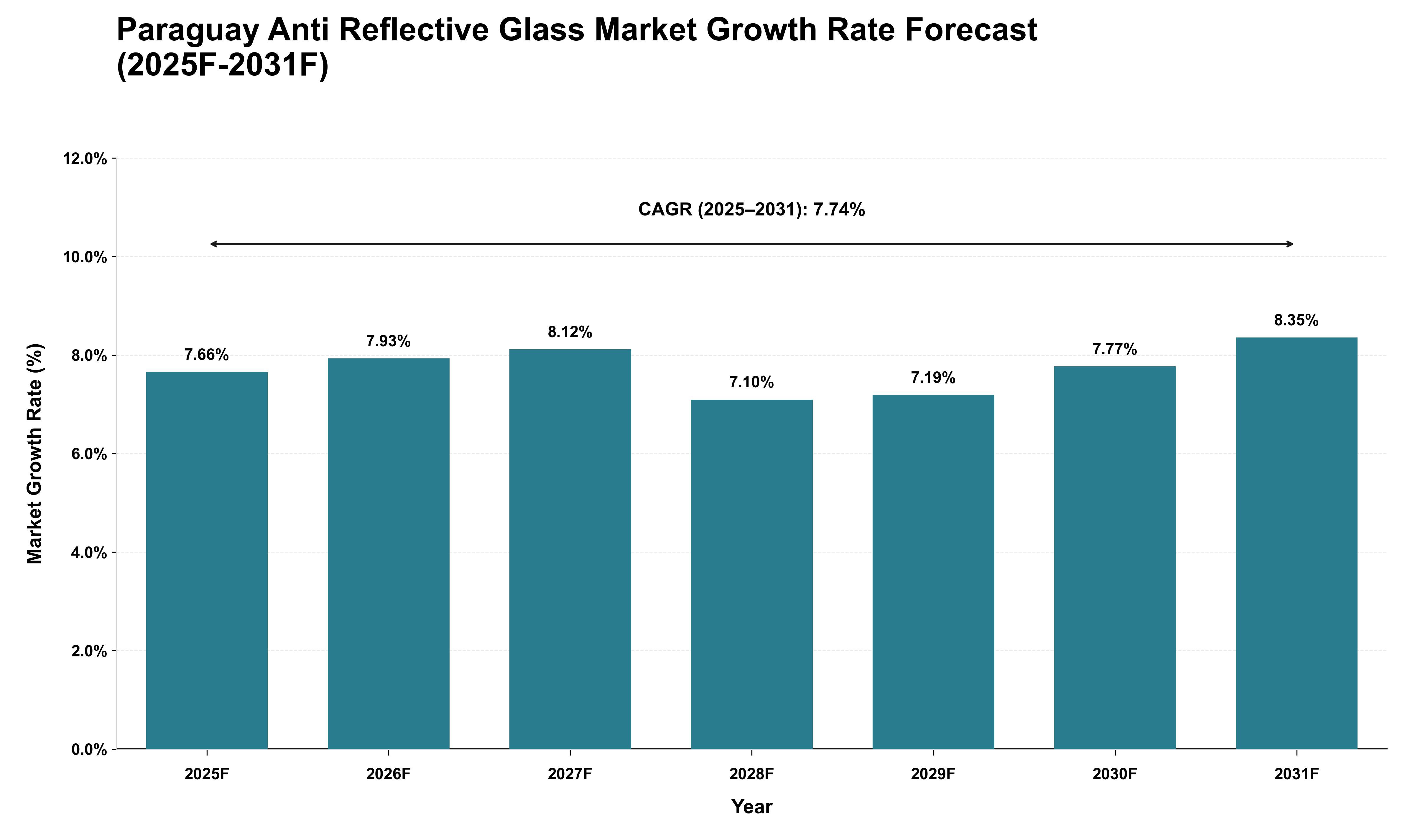
The Paraguayan anti-reflective glass market will experience a robust growth trajectory driven by several macroeconomic factors, including increasing demand from the construction and automotive sectors. The forecasted CAGR of 7.74% reflects a consistent upward trend in annual growth rates, peaking at 8.35% in 2031, indicative of rising consumer preferences for energy-efficient and aesthetically appealing products. As Paraguay's economy continues to develop, urbanization will likely spur investments in infrastructure, further enhancing demand for specialized glass products. Additionally, import dependencies on advanced manufacturing technologies may create opportunities for local producers to innovate and capture market share. Cyclical trends associated with economic recovery phases will also play a role; as disposable incomes rise, consumers are expected to prioritize quality enhancements in their purchases, thereby sustaining the positive momentum within this sector throughout the forecast period.
Key Highlights of the Report:
- Paraguay Anti Reflective Glass Market Outlook
- Market Size of Paraguay Anti Reflective Glass Market, 2024
- Forecast of Paraguay Anti Reflective Glass Market, 2031
- Historical Data and Forecast of Paraguay Anti Reflective Glass Revenues & Volume for the Period 2021-2031
- Paraguay Anti Reflective Glass Market Trend Evolution
- Paraguay Anti Reflective Glass Market Drivers and Challenges
- Paraguay Anti Reflective Glass Price Trends
- Paraguay Anti Reflective Glass Porter`s Five Forces
- Paraguay Anti Reflective Glass Industry Life Cycle
- Historical Data and Forecast of Paraguay Anti Reflective Glass Market Revenues & Volume By Type for the Period 2021-2031
- Historical Data and Forecast of Paraguay Anti Reflective Glass Market Revenues & Volume By Double Layers for the Period 2021-2031
- Historical Data and Forecast of Paraguay Anti Reflective Glass Market Revenues & Volume By Four Layers for the Period 2021-2031
- Historical Data and Forecast of Paraguay Anti Reflective Glass Market Revenues & Volume By Others for the Period 2021-2031
- Historical Data and Forecast of Paraguay Anti Reflective Glass Market Revenues & Volume By Application for the Period 2021-2031
- Historical Data and Forecast of Paraguay Anti Reflective Glass Market Revenues & Volume By Architectural Windows for the Period 2021-2031
- Historical Data and Forecast of Paraguay Anti Reflective Glass Market Revenues & Volume By Instrumentation Windows for the Period 2021-2031
- Historical Data and Forecast of Paraguay Anti Reflective Glass Market Revenues & Volume By Electronic Displays for the Period 2021-2031
- Historical Data and Forecast of Paraguay Anti Reflective Glass Market Revenues & Volume By Picture Framing Glass for the Period 2021-2031
- Historical Data and Forecast of Paraguay Anti Reflective Glass Market Revenues & Volume By Showcase Glass for the Period 2021-2031
- Historical Data and Forecast of Paraguay Anti Reflective Glass Market Revenues & Volume By Cold Storage Displays for the Period 2021-2031
- Historical Data and Forecast of Paraguay Anti Reflective Glass Market Revenues & Volume By Lamps Glass for the Period 2021-2031
- Historical Data and Forecast of Paraguay Anti Reflective Glass Market Revenues & Volume By Others for the Period 2021-2031
- Paraguay Anti Reflective Glass Import Export Trade Statistics
- Market Opportunity Assessment By Type
- Market Opportunity Assessment By Application
- Paraguay Anti Reflective Glass Top Companies Market Share
- Paraguay Anti Reflective Glass Competitive Benchmarking By Technical and Operational Parameters
- Paraguay Anti Reflective Glass Company Profiles
- Paraguay Anti Reflective Glass Key Strategic Recommendations






































