Peru Cloud ERP Market Size & Growth Rate (2026-2032)
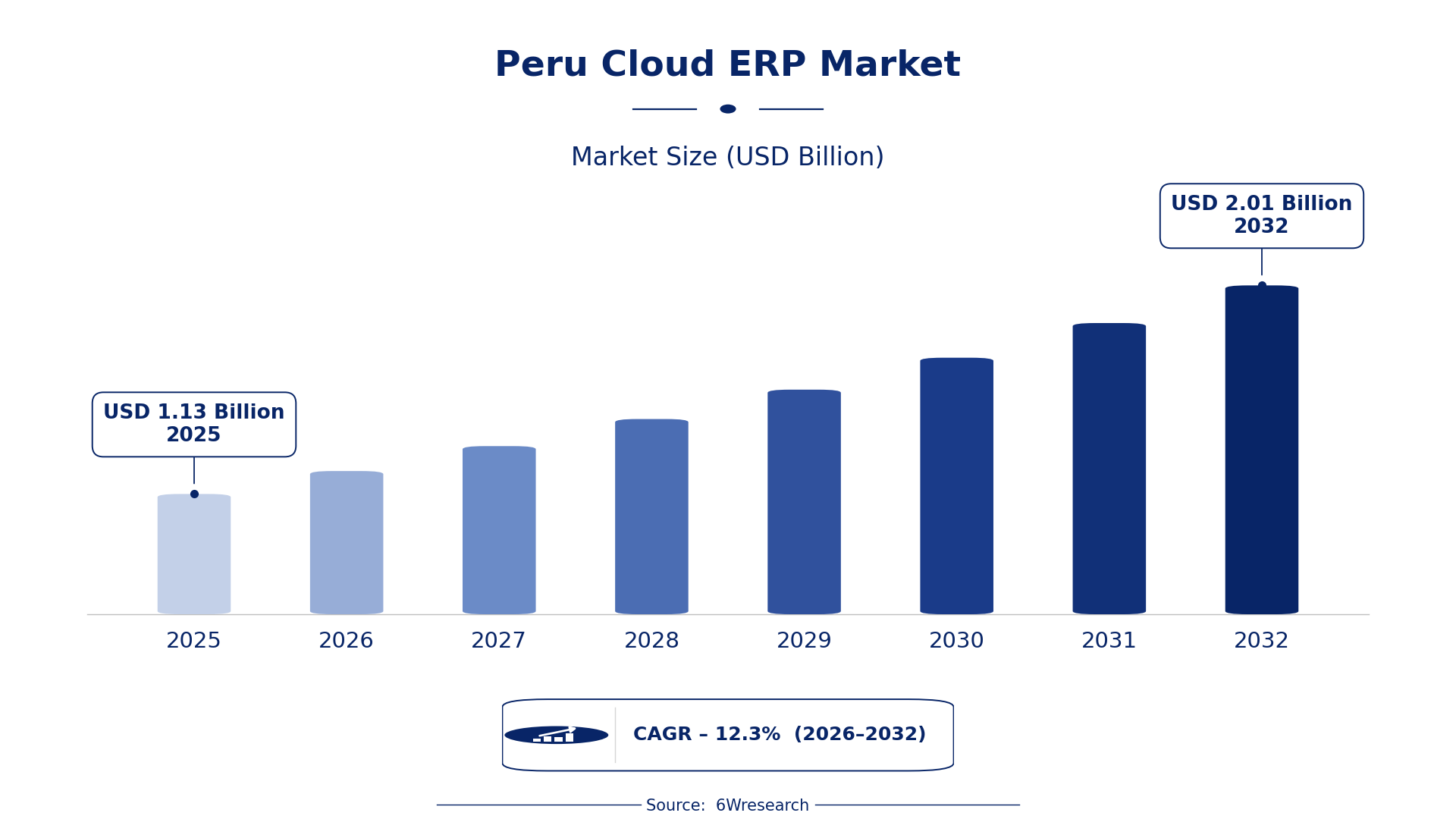
The Peru Cloud ERP Market was estimated at USD 1130 Million in 2025 and is projected to reach USD 2012 Million by 2032, growing at a CAGR of 12.3% from 2026 to 2032.
Peru Cloud ERP Market Synopsis
The driving force behind the Peru Cloud ERP market is the rapid digital transformation initiatives embraced by local businesses. Companies are increasingly seeking cloud-based solutions that enhance operational efficiency and provide real-time data access, reflecting a broader trend towards modernization.
As remote work becomes more prevalent, the demand for scalable and flexible ERP systems is rising. The shift is particularly pronounced among small and medium-sized enterprises (SMEs), which recognize the advantages of cloud solutions in terms of cost and functionality.
Peru Cloud ERP Market Year-wise Growth Rate and Key Drivers
This graph illustrates the annual growth rates of the Peru Cloud ERP Market from 2021 to 2032, highlighting a steady upward trajectory and projected expansion over the forecast period.
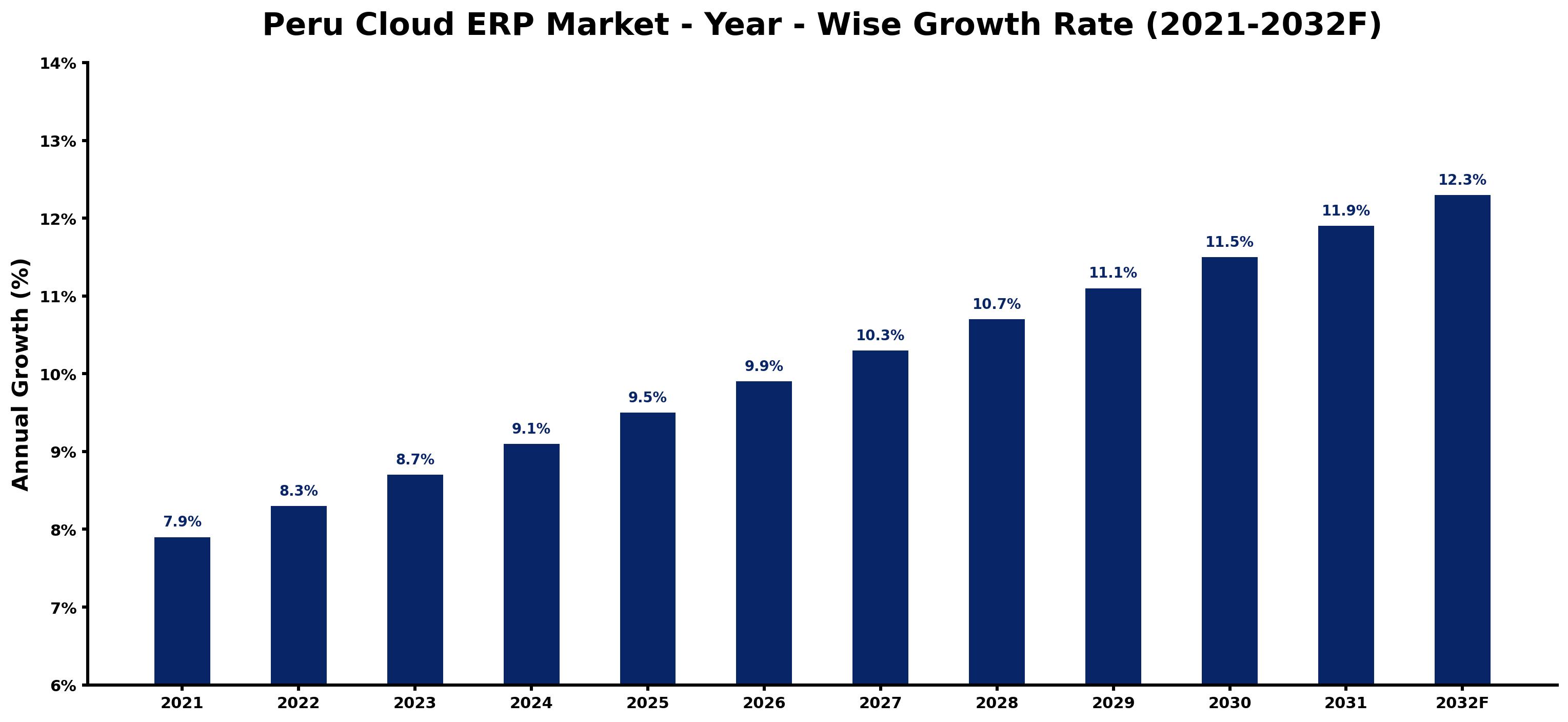
The table below presents the year‑wise growth rates along with the key drivers influencing the market
| Year | Growth Rate | Major Drivers |
| 2021 | 7.9% | Increased foreign investments in Peruvian tech startups |
| 2022 | 8.3% | Ministry of Education promoting cloud-based management systems |
| 2023 | 8.7% | Growing e-commerce sector driving ERP software needs |
| 2024 | 9.1% | Regulatory incentives for digital financial services expansion |
| 2025 | 9.5% | Local SMEs seeking innovative operational solutions |
| 2026 | 9.9% | Improved internet infrastructure across urban areas |
| 2027 | 10.3% | Government push for Industry 4.0 adoption in businesses |
| 2028 | 10.7% | Increased awareness of data analytics benefits for firms |
| 2029 | 11.1% | Successful local ERP providers enhancing market competition |
| 2030 | 11.5% | International trade agreements stimulating export-oriented digital solutions |
| 2031 | 11.9% | Fintech growth requiring advanced ERP functionalities |
| 2032 | 12.3% | Peru's youth demographic driving technology integration trends |
Note: Market size estimations and growth projections presented in this report are based on 6Wresearch's proprietary forecasting methodology, utilizing the latest available industry data, government publications, and primary research inputs.
Peru Cloud ERP Market Key Takeaways
Below are some of the specific key takeaways from the market, including:
- Strong growth trajectory driven by increasing cloud adoption among businesses.
- SMEs are leading the charge, leveraging cloud ERP for improved efficiency.
- Integration of advanced technologies like AI and machine learning is on the rise.
- Government initiatives are actively supporting digital transformation efforts.
- Concerns regarding data security continue to challenge market growth.
Evaluation of Restraints in Peru Cloud ERP Market
Despite the enthusiasm surrounding cloud ERP solutions, the market faces several restraints. Limited awareness among SMEs about the benefits of cloud systems hampers adoption. Many companies still cling to traditional on-premise solutions, often due to a resistance to change. on top of that, concerns around data security and privacy remain prevalent, creating hesitance in transitioning to cloud-based platforms. Inconsistent internet infrastructure across various regions of Peru also poses a challenge, affecting the performance and reliability of cloud ERP implementations.
Peru Cloud ERP Market Trends
The market is seeing a shift towards industry-specific ERP solutions, tailored to meet the unique needs of various sectors. These specialized systems provide businesses with tools that enhance functionality and align more closely with operational requirements. There's also a noticeable trend towards mobile-friendly ERP platforms, reflecting the increasing demand for flexibility in accessing data and applications.
Additionally, the integration of AI and machine learning technologies is gaining traction, as businesses seek enhanced decision-making capabilities and predictive analytics. These advancements not only streamline processes but also empower organizations to stay ahead of the competition.
Peru Cloud ERP Market Opportunities
The Peru Cloud ERP market presents a wealth of opportunities for growth and investment. Vendors can capitalize on the rising demand for customizable and user-friendly ERP solutions that address the specific challenges faced by Peruvian businesses. The increasing emphasis on data-driven decision-making offers a pathway for integrating advanced analytics into ERP systems, which can enhance performance.
on top of that, as organizations continue to embrace remote work, there is a need for cloud ERP solutions that ensure secure access from various locations. This opens doors for vendors to develop more versatile products that cater to a mobile workforce while addressing data security concerns.
Government Initiatives in the Peru Cloud ERP Market
The Peruvian government is actively supporting the growth of the Cloud ERP market through various initiatives aimed at promoting digital technologies. Public policies are designed to enhance business efficiency and competitiveness, with a focus on collaboration between the public and private sectors. These initiatives are critical in shaping the adoption of cloud solutions across the country.
- A national digital transformation strategy launched in 2023 aims to encourage businesses to adopt cloud technologies.
- Current initiatives include tax incentives for companies investing in digital solutions, fostering an environment conducive to cloud ERP adoption.
- Ongoing regulatory frameworks are being established to ensure data privacy and security compliance for cloud users.
- A planned public-private partnership expected to enhance internet infrastructure by 2027 will support cloud accessibility across the nation.
Future Insights of the Peru Cloud ERP Market
Looking ahead to 2026-2032, the Peru Cloud ERP market is set for substantial growth. As more organizations become aware of the tangible benefits of cloud-based solutions, adoption rates are likely to accelerate. Companies will increasingly prioritize real-time data access and process efficiency, propelling demand for innovative ERP systems.
Government initiatives aimed at supporting digital transformation will continue to fuel market expansion, creating a favorable environment for vendors. As technology evolves and businesses adapt to new demands, the Peru Cloud ERP market will experience significant transformation and innovation.
Peru Cloud ERP Market Latest Developments
In the past year, the Peru Cloud ERP market has seen a flurry of activity as businesses and vendors alike respond to the growing demand for cloud solutions. Companies are increasingly investing in technology upgrades and partnerships to enhance their service offerings, reflecting a dynamic market environment.
- A major technology vendor launched a new cloud ERP solution in early 2023, tailored specifically for the manufacturing sector.
- In mid-2023, a partnership between a leading regional operator and a local software provider was established to enhance ERP functionalities with AI capabilities.
- An initiative that began in early 2023 is currently underway, focusing on providing training and resources for SMEs to adopt cloud solutions effectively.
- A rollout of a new regulatory framework aimed at improving data security compliance is expected to begin in late 2024.
Peru Cloud ERP Market - Key Attractiveness of the Report
- 10 Years of Market Numbers
- Historical Data Starting from 2022 to 2025
- Base Year: 2025
- Forecast Data until 2032
- Key Performance Indicators Impacting the Market
- Major Upcoming Developments and Projects
Key Highlights of the Report:
- Peru Cloud ERP Market Outlook
- Market Size of Peru Cloud ERP Market, 2025
- Forecast of Peru Cloud ERP Market, 2032
- Historical Data and Forecast of Peru Cloud ERP Revenues & Volume for the Period 2022-2032F
- Peru Cloud ERP Market Trend Evolution
- Peru Cloud ERP Market Drivers and Challenges
- Peru Cloud ERP Price Trends
- Peru Cloud ERP Porter's Five Forces
- Peru Cloud ERP Industry Life Cycle
- Historical Data and Forecast of Peru Cloud ERP Market Revenues & Volume By Component for the Period 2022-2032F
- Historical Data and Forecast of Peru Cloud ERP Market Revenues & Volume By Solution for the Period 2022-2032F
- Historical Data and Forecast of Peru Cloud ERP Market Revenues & Volume By Services for the Period 2022-2032F
- Historical Data and Forecast of Peru Cloud ERP Market Revenues & Volume By Vertical for the Period 2022-2032F
- Historical Data and Forecast of Peru Cloud ERP Market Revenues & Volume By BFSI for the Period 2022-2032F
- Historical Data and Forecast of Peru Cloud ERP Market Revenues & Volume By Manufacturing for the Period 2022-2032F
- Historical Data and Forecast of Peru Cloud ERP Market Revenues & Volume By IT and Telecom for the Period 2022-2032F
- Historical Data and Forecast of Peru Cloud ERP Market Revenues & Volume By Business Function for the Period 2022-2032F
- Historical Data and Forecast of Peru Cloud ERP Market Revenues & Volume By Accounting and Finance for the Period 2022-2032F
- Historical Data and Forecast of Peru Cloud ERP Market Revenues & Volume By Sales and Marketing for the Period 2022-2032F
- Historical Data and Forecast of Peru Cloud ERP Market Revenues & Volume By Inventory and Order Management for the Period 2022-2032F
- Historical Data and Forecast of Peru Cloud ERP Market Revenues & Volume By Organization Size for the Period 2022-2032F
- Historical Data and Forecast of Peru Cloud ERP Market Revenues & Volume By SMEs for the Period 2022-2032F
- Historical Data and Forecast of Peru Cloud ERP Market Revenues & Volume By Large Enterprises for the Period 2022-2032F
- Peru Cloud ERP Import Export Trade Statistics
- Market Opportunity Assessment By Component
- Market Opportunity Assessment By Vertical
- Market Opportunity Assessment By Business Function
- Market Opportunity Assessment By Organization Size
- Peru Cloud ERP Top Companies Market Share
- Peru Cloud ERP Competitive Benchmarking By Technical and Operational Parameters
- Peru Cloud ERP Company Profiles
- Peru Cloud ERP Key Strategic Recommendations






































