Peru Digital Market Size & Growth Rate (2026-2032)
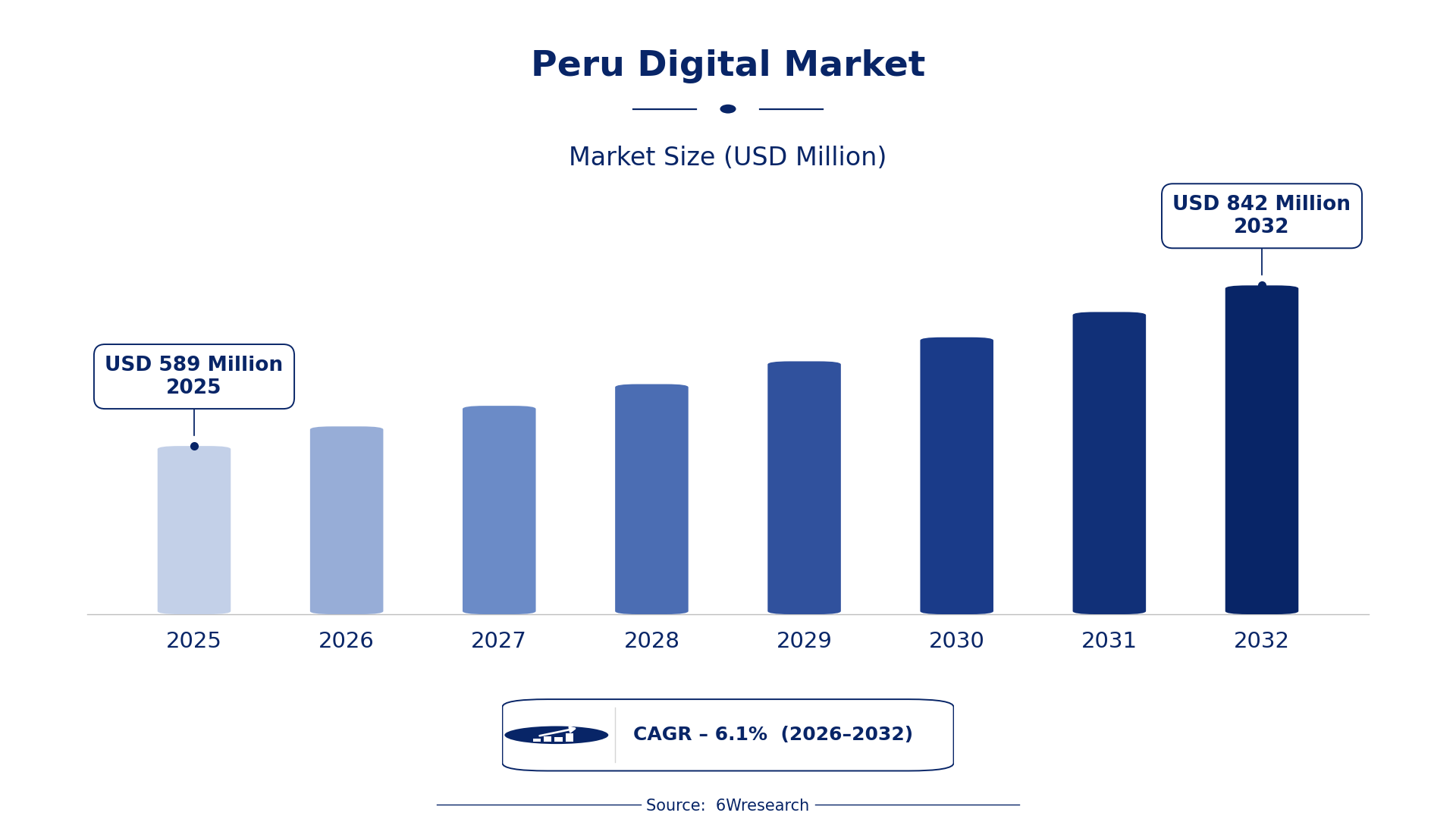
The Peru Digital Market was estimated at USD 589 Million in 2025 and is projected to reach USD 842 Million by 2032, growing at a CAGR of 6.1% from 2026 to 2032.
Peru Digital Market Synopsis
The Peru Digital Market has experienced a surge in activity, primarily driven by the rapid increase in internet access and the widespread adoption of smartphones. As consumers become more comfortable with digital transactions, the market is set for continued growth, indicating a shift in how businesses engage with their audience.
Looking ahead, the potential for expansion remains strong, fueled by government initiatives aimed at enhancing digital literacy and infrastructure. With a tech-savvy population eager to embrace e-commerce and digital services, the Peru Digital Market is on track for a transformative phase.
Peru Digital Market Year-wise Growth Rate and Key Drivers
This graph illustrates the annual growth rates of the Peru Digital Market from 2021 to 2032, highlighting a steady upward trajectory and projected expansion over the forecast period.
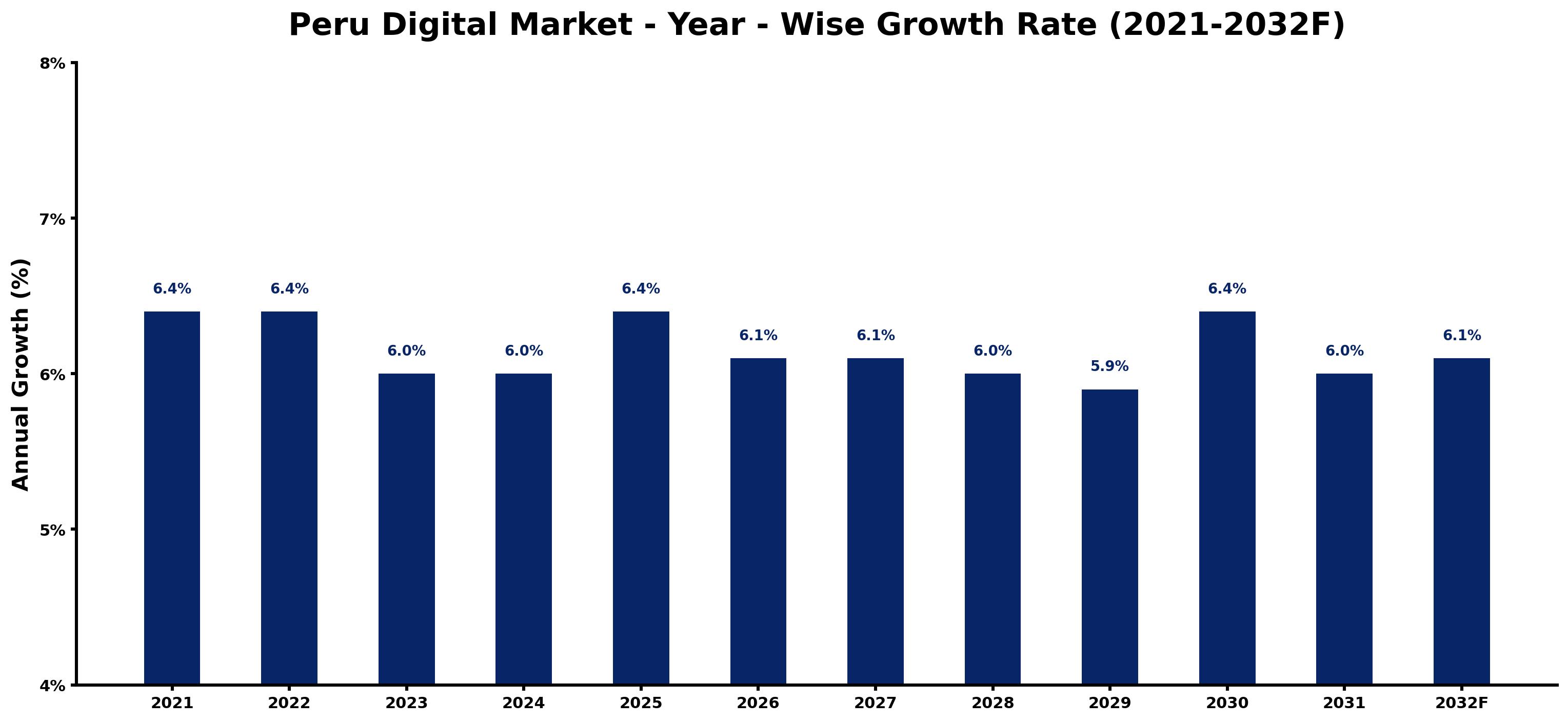
The table below presents the year‑wise growth rates along with the key drivers influencing the market
| Year | Growth Rate | Major Drivers |
| 2021 | 6.4% | Launch of broadband expansion programs by Osiptel. |
| 2022 | 6.4% | Increased smartphone penetration driving online shopping trends. |
| 2023 | 6.0% | Government initiatives promoting digital literacy in rural areas. |
| 2024 | 6.0% | Surge in e-commerce adoption post-pandemic recovery. |
| 2025 | 6.4% | Investment in tech startups enhancing local digital innovations. |
| 2026 | 6.1% | Growing popularity of social media marketing among brands. |
| 2027 | 6.1% | Regulatory support for fintech innovation boosting trust. |
| 2028 | 6.0% | Surging interest in local content creation and streaming. |
| 2029 | 5.9% | Emergence of digital wallets in urban consumer markets. |
| 2030 | 6.4% | Partnerships between banks and tech firms facilitating growth. |
| 2031 | 6.0% | Increased digital advertising spend from small enterprises. |
| 2032 | 6.1% | Stimulation of tech education programs by local universities. |
Note: Market size estimations and growth projections presented in this report are based on 6Wresearch's proprietary forecasting methodology, utilizing the latest available industry data, government publications, and primary research inputs.
Peru Digital Market Key Takeaways
Below are some of the specific key takeaways from the market, including:
- Increasing internet penetration is driving e-commerce growth in Peru.
- Social media platforms are becoming essential for business marketing strategies.
- The demand for online content and digital payment solutions is rising.
- Government policies are actively promoting digital entrepreneurship and infrastructure improvements.
- Challenges in rural connectivity and digital literacy remain critical barriers.
Evaluation of Restraints in Peru Digital Market
Despite the promising growth trajectory, several constraints hinder the Peru Digital Market's full potential. Limited internet access in rural regions remains a pressing issue, leaving a substantial part of the population disconnected from digital services. Additionally, the low levels of digital literacy among certain demographics restrict broader participation in the online economy. There’s also a strong preference for cash transactions, which complicates the adoption of digital payment systems. Concerns surrounding data privacy and cybersecurity are prevalent, creating hesitance among consumers to fully embrace digital platforms. Addressing these challenges will require targeted investment in infrastructure and educational initiatives.
Peru Digital Market Trends
Current trends in the Peru Digital Market indicate a significant shift towards mobile commerce, with consumers increasingly favoring shopping through their smartphones. The rising popularity of social media not only enhances connectivity but also serves as a vital tool for marketing and engagement. on top of that, the demand for streaming services and online gaming is on the rise, providing content creators and developers ample room for innovation. Additionally, digital payment solutions are gaining traction, reflecting a cultural shift towards cashless transactions.
Peru Digital Market Opportunities
The opportunities within the Peru Digital Market are vast and varied. E-commerce stands out as a key area for growth, with both local and international brands looking to capture the emerging consumer base. Digital marketing strategies leveraging social media present another avenue for businesses to engage effectively with their audience. Additionally, as fintech solutions become more mainstream, there are significant prospects for innovation in payment technologies, particularly in underserved regions. The entertainment sector, especially online gaming and streaming services, is also ripe for investment as demand continues to surge.
Government Initiatives in the Peru Digital Market
The Peruvian government plays a crucial role in shaping the digital market through targeted policies and initiatives aimed at enhancing digital infrastructure and literacy. These efforts are crucial for fostering a more inclusive digital economy, ensuring that all segments of society can participate in the growing online marketplace.
- A National E-commerce Strategy launched in early 2025 aimed at boosting online sales and consumer trust in digital transactions.
- The Digital Transformation Plan is currently underway, focusing on expanding internet access and improving digital literacy across the population.
- A recently completed initiative provided resources and tools for small and medium-sized enterprises (SMEs) to establish their online presence.
- Planned public-private partnerships are expected to enhance telecommunications infrastructure by 2028.
- Ongoing programs are designed to educate citizens about digital tools and promote safe online practices.
Future Insights of the Peru Digital Market
Looking toward 2026-2032, the Peru Digital Market is likely to witness substantial growth driven by increasing internet accessibility and smartphone penetration. With a more connected population, the demand for e-commerce, digital services, and innovative payment solutions will continue to rise. The government's commitment to improving digital infrastructure will further facilitate this transformation, creating a favorable environment for businesses and consumers alike. The integration of advanced technologies, along with a focus on user-friendly platforms, will be vital in meeting the evolving needs of the market.
Peru Digital Market Latest Developments
Recent developments in the Peru Digital Market reflect a dynamic shift toward enhancing digital capabilities and expanding consumer access. Over the past year, numerous initiatives and partnerships have emerged, aiming to boost the market's infrastructure and service offerings.
- A major technology vendor rolled out a comprehensive digital payment solution in Q2 2025, enhancing transaction efficiency for local businesses.
- An initiative aimed at upgrading internet infrastructure in rural areas began in early 2025 and remains underway, targeting increased connectivity.
- In Q3 2025, a leading regional operator launched a new e-commerce platform designed to facilitate local online sales.
- A digital literacy campaign commenced in late 2025, focusing on educating communities about online safety and the benefits of digital services.
- Upcoming in early 2026 is a public-private initiative expected to enhance mobile broadband access nationwide.
Peru Digital Market - Key Attractiveness of the Report
- 10 Years of Market Numbers
- Historical Data Starting from 2022 to 2025
- Base Year: 2025
- Forecast Data until 2032
- Key Performance Indicators Impacting the Market
- Major Upcoming Developments and Projects
Key Highlights of the Report:
- Peru Digital Market Outlook
- Market Size of Peru Digital Market, 2025
- Forecast of Peru Digital Market, 2032
- Historical Data and Forecast of Peru Digital Revenues & Volume for the Period 2022-2032F
- Peru Digital Market Trend Evolution
- Peru Digital Market Drivers and Challenges
- Peru Digital Price Trends
- Peru Digital Porter's Five Forces
- Peru Digital Industry Life Cycle
- Historical Data and Forecast of Peru Digital Market Revenues & Volume By Software for the Period 2022-2032F
- Historical Data and Forecast of Peru Digital Market Revenues & Volume By CRM Software for the Period 2022-2032F
- Historical Data and Forecast of Peru Digital Market Revenues & Volume By Email Marketing Software for the Period 2022-2032F
- Historical Data and Forecast of Peru Digital Market Revenues & Volume By Social Media Advertising for the Period 2022-2032F
- Peru Digital Import Export Trade Statistics
- Market Opportunity Assessment By Software
- Peru Digital Top Companies Market Share
- Peru Digital Competitive Benchmarking By Technical and Operational Parameters
- Peru Digital Company Profiles
- Peru Digital Key Strategic Recommendations






































