Peru Digital Signature Market Size & Growth Rate (2026-2032)
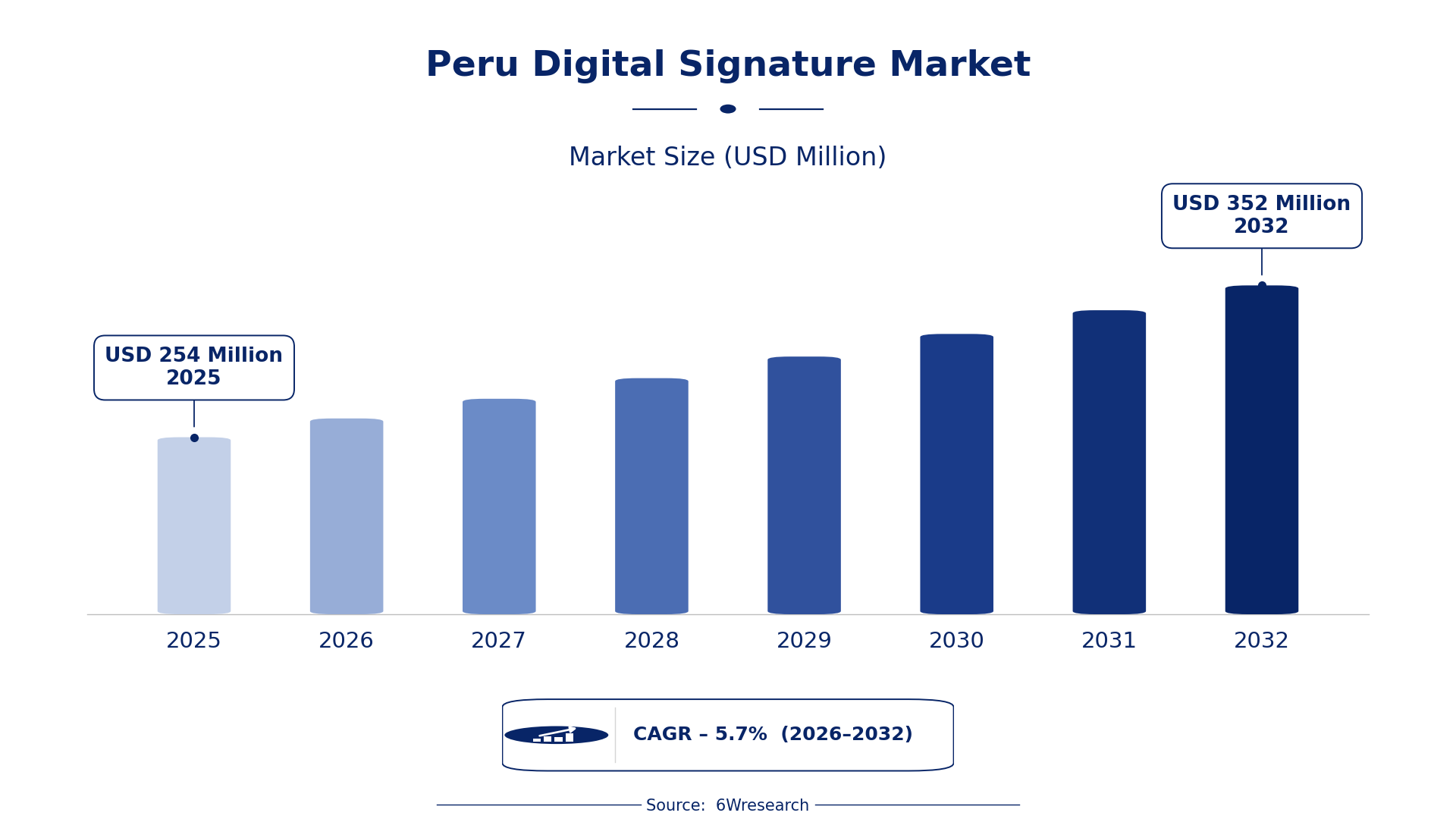
The Peru Digital Signature Market was estimated at USD 254 Million in 2025 and is projected to reach USD 352 Million by 2032, growing at a CAGR of 5.7% from 2026 to 2032.
Peru Digital Signature Market Synopsis
A wave of digital transformation is reshaping the Peru Digital Signature Market, driven primarily by the government's push for enhanced efficiency in electronic transactions across key sectors. This momentum is transforming traditional practices, as businesses increasingly recognize the inherent benefits of digital signatures in streamlining operations.
In tandem with this initiative, a growing emphasis on cybersecurity further propels the market forward. With the rise of remote work and the escalation of digital transactions, consumers and enterprises alike seek secure, reliable means of authentication. The demand for legally binding digital signatures is therefore on an upward trajectory, compelling various industries to adapt swiftly to this new norm.
Peru Digital Signature Market Year-wise Growth Rate and Key Drivers
This graph illustrates the annual growth rates of the Peru Digital Signature Market from 2021 to 2032, highlighting a steady upward trajectory and projected expansion over the forecast period.
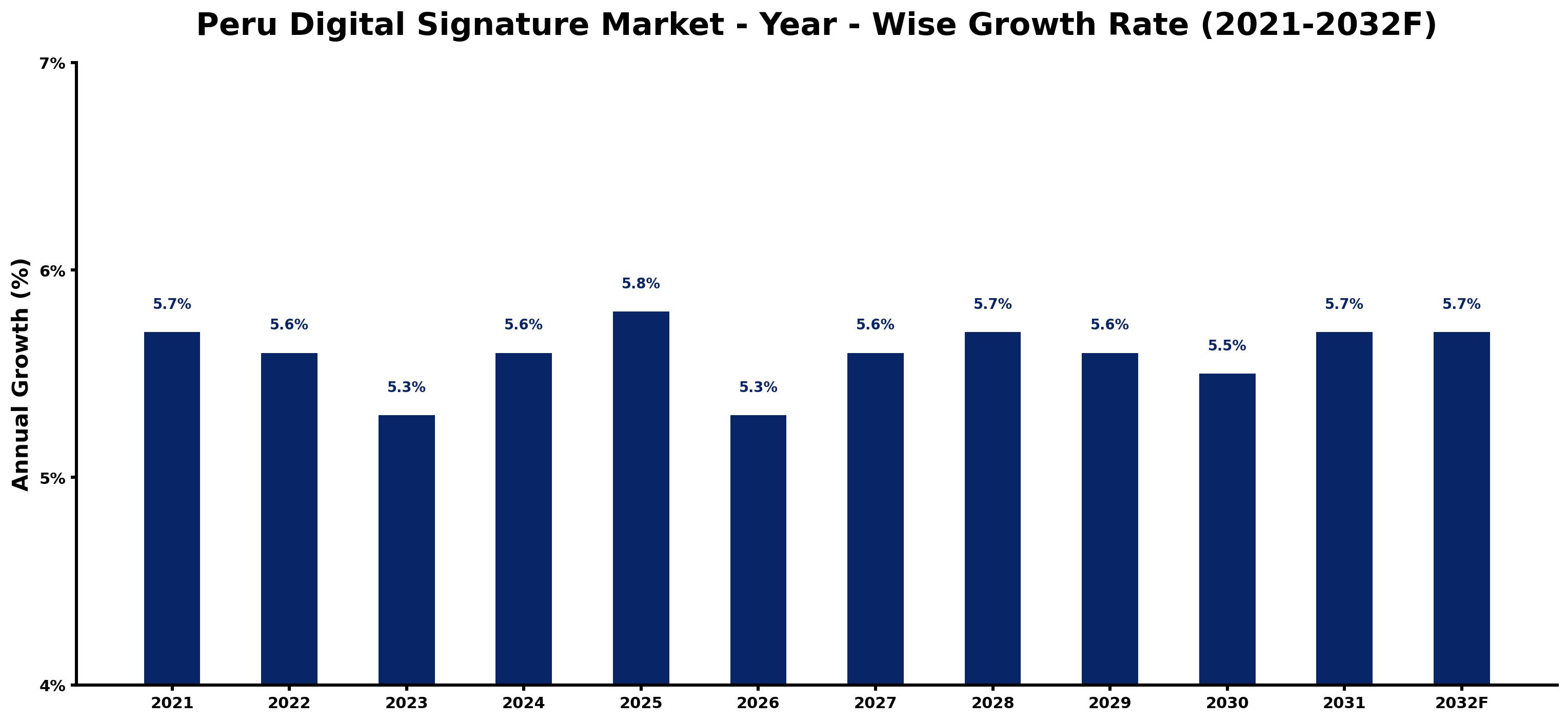
The table below presents the year‑wise growth rates along with the key drivers influencing the market
| Year | Growth Rate | Major Drivers |
| 2021 | 5.7% | New e-government initiatives mandated digital signatures for transactions. |
| 2022 | 5.6% | Increased cybersecurity regulations drove demand for digital signing. |
| 2023 | 5.3% | Growing remote work culture boosted digital document authentication. |
| 2024 | 5.6% | Adoption of digital ID projects enhanced user signature verification. |
| 2025 | 5.8% | Government support for electronic signatures in public procurement. |
| 2026 | 5.3% | Rise of fintech startups improving digital signature solutions. |
| 2027 | 5.6% | Local businesses digitizing services requiring secure signatures. |
| 2028 | 5.7% | Educational institutions leveraging digital signatures for enrollment processes. |
| 2029 | 5.6% | Proliferation of online contracts necessitated digital authentication measures. |
| 2030 | 5.5% | Strengthening data protection laws urged companies to adopt signatures. |
| 2031 | 5.7% | Public sector digitization processes relied on secure digital signatures. |
| 2032 | 5.7% | Increased cross-border trade demands secure digital signing solutions. |
Note: Market size estimations and growth projections presented in this report are based on 6Wresearch's proprietary forecasting methodology, utilizing the latest available industry data, government publications, and primary research inputs.
Peru Digital Signature Market Key Takeaways
Below are some of the specific key takeaways from the market, including:
- Rapid digital transformation is leading to greater adoption of digital signatures across multiple sectors in Peru.
- The market is bolstered by government regulatory support that encourages secure electronic transactions.
- Businesses are increasingly prioritizing digital signature solutions to enhance operational efficiency and compliance.
- Cybersecurity concerns are driving demand for reliable digital signing solutions.
- Investment opportunities are emerging as various industries shift towards digitalization.
Evaluation of Restraints in Peru Digital Signature Market
Despite the growth trajectory, the Peru Digital Signature Market faces notable obstacles. Many businesses remain unaware of the advantages digital signatures offer, leading to hesitance in abandoning traditional paper-based processes. Concerns about data security and privacy persist, often amplified by inadequate infrastructure in certain regions. As the transition from established methods to digital solutions is met with resistance, a concentrated effort to educate stakeholders is essential to unlock the market's full potential.
Peru Digital Signature Market Trends
An observable trend is the increasing adoption of cloud-based digital signature solutions, which cater to the growing demand for scalability and ease of use. As remote work becomes commonplace, organizations are turning to these solutions for efficient document signing. The rise in e-commerce activities also underscores the need for secure online transactions, propelling the growth of digital signatures as businesses and consumers seek trustworthy authentication methods.
Peru Digital Signature Market Opportunities
The expansion of digital technologies in Peru presents fertile ground for investment in the digital signature market. Companies are recognizing the advantages of implementing digital signatures to streamline operations and enhance data integrity. With government efforts promoting digitalization across industries such as healthcare, finance, and public services, there is a compelling demand for robust digital signature solutions. Opportunities abound for those willing to innovate and provide effective services in this burgeoning landscape.
Government Initiatives in the Peru Digital Signature Market
The regulatory framework governing the Peru Digital Signature Market is a crucial element for fostering growth and adoption. The Peruvian government actively champions digital transformation through supportive policies and initiatives aimed at enhancing electronic transactions. By creating a conducive environment for businesses and citizens, these efforts are set to cement the role of digital signatures in everyday transactions.
- A national digital infrastructure upgrade program is currently underway to enhance connectivity and access to digital services.
- The Digital Signature Law, established in 2011, continues to provide a solid legal framework for electronic transactions.
- Recently, the government launched training programs to educate businesses on the effective use of digital signatures.
- Ongoing initiatives are focused on incentivizing businesses to transition to digital solutions for secure online transactions.
- A planned public-private partnership is expected to roll out in 2026, aimed at improving the regulatory landscape for digital signature adoption.
Future Insights of the Peru Digital Signature Market
The outlook for the Peru Digital Signature Market is optimistic as it gears up for substantial growth from 2026 to 2032. As the necessity for secure and efficient electronic transactions intensifies, the market is set to evolve in response to changing consumer expectations. The trend towards heightened data protection will compel businesses to invest in advanced digital signature solutions. Coupled with supportive government initiatives and the increasing prevalence of e-commerce, the future of the digital signature sector in Peru appears promising.
Peru Digital Signature Market Latest Developments
Recent developments within the Peru Digital Signature Market signal a dynamic shift towards innovation and enhanced service offerings. As businesses and consumers alike adjust to increased digital transaction volumes, companies are stepping up their game to meet these evolving demands.
- A leading regional operator launched a new cloud-based digital signature platform in early 2025, enhancing accessibility and security for businesses.
- In mid-2025, a major technology vendor began an initiative to integrate digital signatures into their existing software solutions, promoting seamless user experiences.
- An ongoing project that started in late 2024 aims to establish a nationwide awareness campaign about the benefits of digital signatures.
- A rollout expected to begin in Q3 2026 will introduce advanced security features for digital signature solutions, addressing growing cybersecurity concerns.
- A partnership between technology firms is currently underway to develop a comprehensive digital signing solution, anticipated to enhance market competitiveness.
Peru Digital Signature Market - Key Attractiveness of the Report
- 10 Years of Market Numbers
- Historical Data Starting from 2022 to 2025
- Base Year: 2025
- Forecast Data until 2032
- Key Performance Indicators Impacting the Market
- Major Upcoming Developments and Projects
Key Highlights of the Report:
- Peru Digital Signature Market Outlook
- Market Size of Peru Digital Signature Market, 2025
- Forecast of Peru Digital Signature Market, 2032
- Historical Data and Forecast of Peru Digital Signature Revenues & Volume for the Period 2022-2032F
- Peru Digital Signature Market Trend Evolution
- Peru Digital Signature Market Drivers and Challenges
- Peru Digital Signature Price Trends
- Peru Digital Signature Porter's Five Forces
- Peru Digital Signature Industry Life Cycle
- Historical Data and Forecast of Peru Digital Signature Market Revenues & Volume By Component for the Period 2022-2032F
- Historical Data and Forecast of Peru Digital Signature Market Revenues & Volume By Solutions for the Period 2022-2032F
- Historical Data and Forecast of Peru Digital Signature Market Revenues & Volume By Services for the Period 2022-2032F
- Historical Data and Forecast of Peru Digital Signature Market Revenues & Volume By Solution for the Period 2022-2032F
- Historical Data and Forecast of Peru Digital Signature Market Revenues & Volume By Software for the Period 2022-2032F
- Historical Data and Forecast of Peru Digital Signature Market Revenues & Volume By Hardware for the Period 2022-2032F
- Historical Data and Forecast of Peru Digital Signature Market Revenues & Volume By Vertical for the Period 2022-2032F
- Historical Data and Forecast of Peru Digital Signature Market Revenues & Volume By BFSI for the Period 2022-2032F
- Historical Data and Forecast of Peru Digital Signature Market Revenues & Volume By Government for the Period 2022-2032F
- Historical Data and Forecast of Peru Digital Signature Market Revenues & Volume By Defense for the Period 2022-2032F
- Historical Data and Forecast of Peru Digital Signature Market Revenues & Volume By Legal for the Period 2022-2032F
- Historical Data and Forecast of Peru Digital Signature Market Revenues & Volume By Real Estate for the Period 2022-2032F
- Historical Data and Forecast of Peru Digital Signature Market Revenues & Volume By Organization Size for the Period 2022-2032F
- Historical Data and Forecast of Peru Digital Signature Market Revenues & Volume By Large Enterprises for the Period 2022-2032F
- Historical Data and Forecast of Peru Digital Signature Market Revenues & Volume By Small and Medium-Sized Enterprises (SMEs) for the Period 2022-2032F
- Historical Data and Forecast of Peru Digital Signature Market Revenues & Volume By Deployment Mode for the Period 2022-2032F
- Historical Data and Forecast of Peru Digital Signature Market Revenues & Volume By Cloud for the Period 2022-2032F
- Historical Data and Forecast of Peru Digital Signature Market Revenues & Volume By On-Premises for the Period 2022-2032F
- Peru Digital Signature Import Export Trade Statistics
- Market Opportunity Assessment By Component
- Market Opportunity Assessment By Solution
- Market Opportunity Assessment By Vertical
- Market Opportunity Assessment By Organization Size
- Market Opportunity Assessment By Deployment Mode
- Peru Digital Signature Top Companies Market Share
- Peru Digital Signature Competitive Benchmarking By Technical and Operational Parameters
- Peru Digital Signature Company Profiles
- Peru Digital Signature Key Strategic Recommendations






































