Peru Virtualization Security Market Size & Growth Rate (2026-2032)
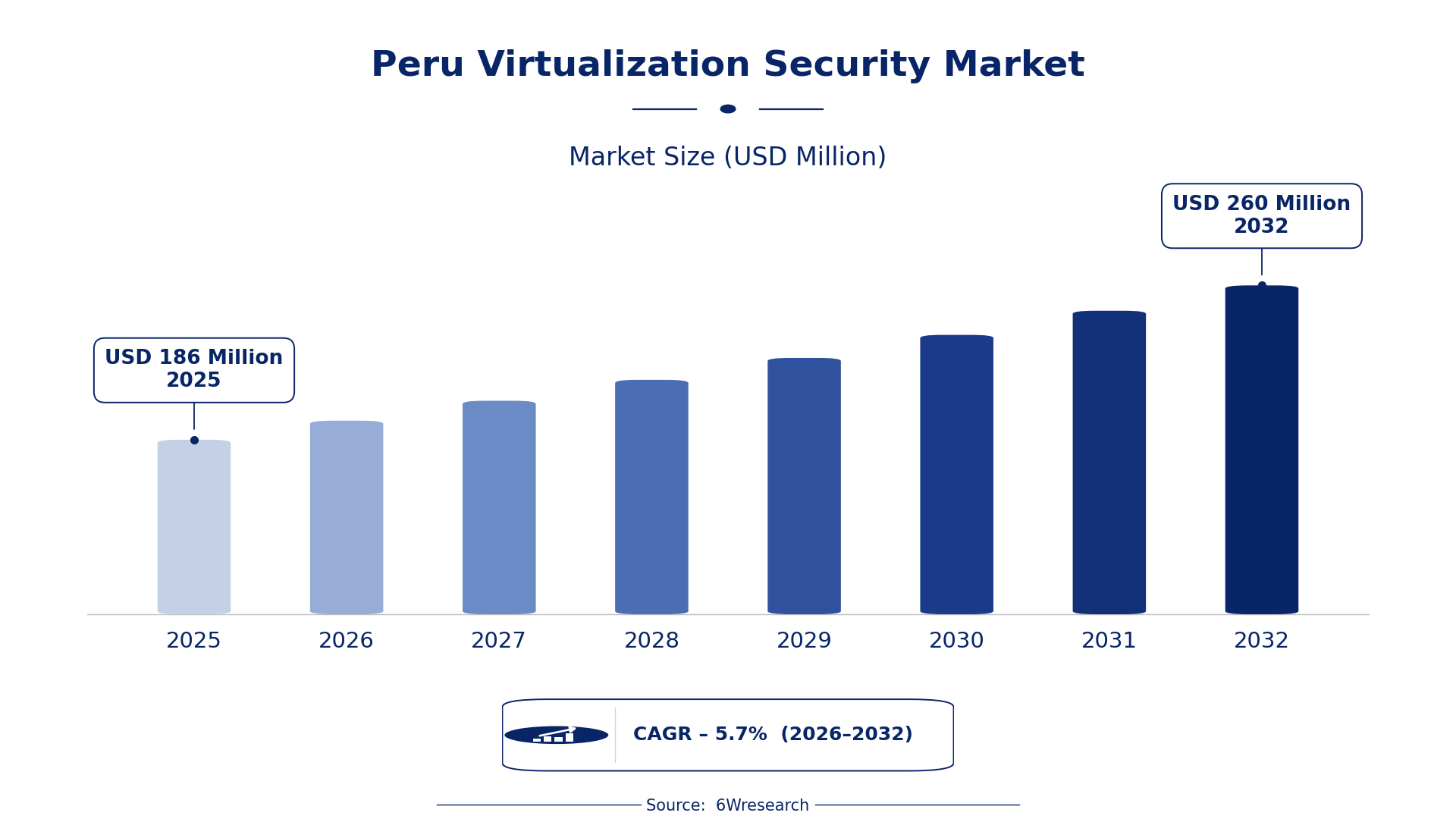
The Peru Virtualization Security Market was estimated at USD 186 Million in 2025 and is projected to reach USD 260 Million by 2032, growing at a CAGR of 5.7% from 2026 to 2032.
Peru Virtualization Security Market Synopsis
The accelerating adoption of virtualization technologies across various sectors is currently the most powerful force shaping the Peru Virtualization Security Market. As organizations increasingly transition to cloud-based solutions and remote work environments, the urgency for securing these virtual infrastructures has surged.
With this heightened focus on cybersecurity, businesses are investing in solutions that protect their virtualized environments. From intrusion detection systems to compliance management tools, the demand for comprehensive security measures is on the rise, signaling a shift towards prioritizing data protection.
Peru Virtualization Security Market Year-wise Growth Rate and Key Drivers
This graph illustrates the annual growth rates of the Peru Virtualization Security Market from 2021 to 2032, highlighting a steady upward trajectory and projected expansion over the forecast period.
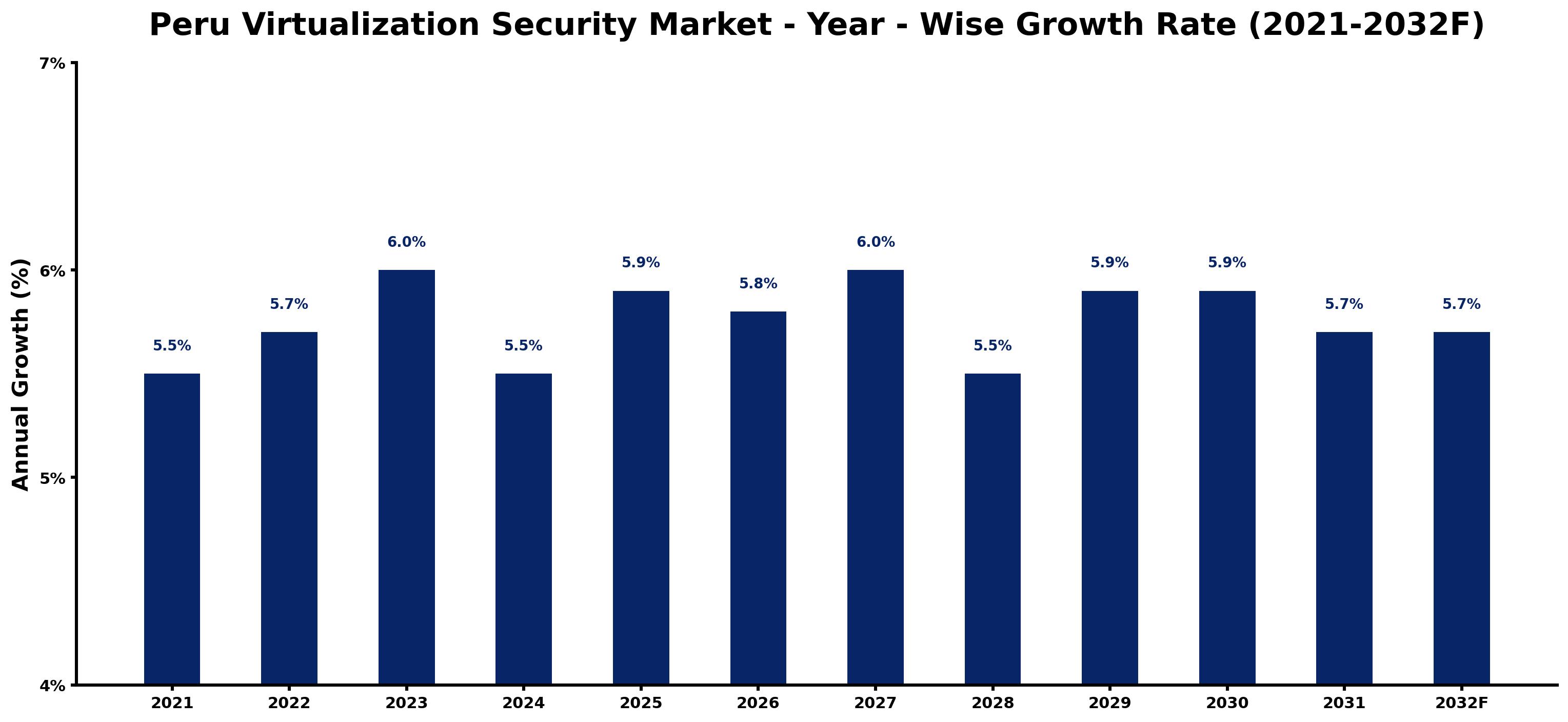
The table below presents the year‑wise growth rates along with the key drivers influencing the market
| Year | Growth Rate | Major Drivers |
| 2021 | 5.5% | Increased remote work demands heightened virtualization security needs. |
| 2022 | 5.7% | National cybersecurity strategy emphasized cloud security protocols. |
| 2023 | 6.0% | Rising digital fraud incidents drove security technology investment. |
| 2024 | 5.5% | Government support for tech startups boosted cybersecurity initiatives. |
| 2025 | 5.9% | Local enterprises adopted virtualization for cost-saving security measures. |
| 2026 | 5.8% | Growing e-commerce reliance increased demand for secure transactions. |
| 2027 | 6.0% | Educational institutions enhanced IT security frameworks amid growth. |
| 2028 | 5.5% | Regulatory compliance mandates reinforced importance of security solutions. |
| 2029 | 5.9% | Oil and gas sector digitization necessitated robust security measures. |
| 2030 | 5.9% | Telecommunication advancements spurred need for improved security protocols. |
| 2031 | 5.7% | Public sector IT modernization prioritized virtualization security upgrades. |
| 2032 | 5.7% | Healthcare digitization accelerated demand for secure patient data management. |
Note: Market size estimations and growth projections presented in this report are based on 6Wresearch's proprietary forecasting methodology, utilizing the latest available industry data, government publications, and primary research inputs.
Peru Virtualization Security Market Key Takeaways
Below are some of the specific key takeaways from the market, including:
- The market is driven by the increasing need for data protection solutions amid rising cyber threats.
- Compliance with regulatory frameworks is becoming a key driver for investment in virtualization security.
- Organizations are adopting advanced security technologies like network segmentation and encryption.
- Remote work trends are accelerating the need for secure virtualized environments.
- Awareness about virtualization security risks remains a challenge for many businesses in Peru.
Evaluation of Restraints in Peru Virtualization Security Market
A major restraint hindering the Peru Virtualization Security Market is the pervasive lack of awareness among businesses regarding the intricacies of virtualization security. Many companies underestimate the vulnerabilities associated with virtual environments and may not fully appreciate the consequences of inadequate protection. This gap in understanding can lead to insufficient investment in necessary security measures, leaving organizations exposed to potential cyber threats. on top of that, the rapid pace of technological change often leaves businesses scrambling to keep up with the latest security innovations, which further complicates their ability to implement effective virtualization security solutions.
Peru Virtualization Security Market Trends
A notable trend in the Peru Virtualization Security Market is the shift towards proactive security measures. Companies are increasingly focusing on sophisticated technologies that offer real-time monitoring and incident response capabilities. The demand for tools such as encryption and access control has surged as organizations seek to safeguard sensitive data. Compliance with regulatory standards is also driving this trend, compelling companies to adopt comprehensive security frameworks that align with both local and international requirements. This proactive approach is essential for mitigating risks and ensuring business continuity.
Peru Virtualization Security Market Opportunities
The Peru Virtualization Security Market presents various promising investment opportunities, primarily due to the expanding adoption of virtualization technologies. Organizations are on the lookout for advanced security solutions tailored to their specific needs. Notably, the demand for encryption and threat detection solutions is increasing, as companies prioritize data privacy in virtual environments. The growth of remote work and the shift towards cloud computing further amplify the need for secure infrastructures, creating a fertile ground for investment in virtualization security technologies and services.
Government Initiatives in the Peru Virtualization Security Market
The Peruvian government is actively shaping the Virtualization Security Market through various regulatory initiatives aimed at enhancing data protection and cybersecurity. This focus is critical in fostering a secure environment for businesses to operate in an increasingly digital landscape. By implementing guidelines and investment programs, the government is encouraging adherence to international standards while fortifying the country's cybersecurity infrastructure.
- A regulatory framework established in 2025 mandates enhanced data protection measures for companies engaged in virtualization services.
- Currently underway is a national cybersecurity awareness campaign, aimed at educating organizations about the importance of securing virtual environments.
- A technology training program was recently launched to enhance the skills of IT professionals in managing virtualization security effectively.
- Plans for a public-private partnership are being developed to bolster local cybersecurity capabilities by 2027.
- The government is working on integrating cybersecurity training in educational curricula to build a skilled workforce for the future.
Future Insights of the Peru Virtualization Security Market
The outlook for the Peru Virtualization Security Market from 2026 to 2032 appears promising, driven by ongoing digital transformation across industries. With an increasing number of organizations adopting cloud services and virtualization technologies, the demand for effective security solutions is expected to grow. The rising frequency of cyber threats will likely compel businesses to invest significantly in advanced security measures. As compliance standards evolve, organizations will need to adapt and enhance their security frameworks accordingly, paving the way for sustained growth in this market.
Peru Virtualization Security Market Latest Developments
Recent activity in the Peru Virtualization Security Market highlights a strong trend toward innovation and investment in advanced security solutions. Over the past 12-14 months, stakeholders have been increasingly focused on developing tools that address the specific challenges faced in virtual environments. This activity showcases a commitment to enhancing security postures and addressing vulnerabilities in the digital realm.
- A major technology vendor launched a new encryption solution aimed at enhancing data protection in virtualized environments in early 2025.
- Currently ongoing is a collaboration between industry leaders to develop a framework for secure cloud infrastructure, with preliminary results expected by mid-2026.
- An initiative focusing on improving incident response capabilities was completed in Q4 2025, enhancing overall organizational security measures.
- Upcoming in late 2026 is a rollout for a comprehensive access control solution, designed to mitigate unauthorized access in virtual environments.
- A pilot program to provide cybersecurity training for IT personnel began in early 2025 and is still underway.
Peru Virtualization Security Market - Key Attractiveness of the Report
- 10 Years of Market Numbers
- Historical Data Starting from 2022 to 2025
- Base Year: 2025
- Forecast Data until 2032
- Key Performance Indicators Impacting the Market
- Major Upcoming Developments and Projects
Key Highlights of the Report:
- Peru Virtualization Security Market Outlook
- Market Size of Peru Virtualization Security Market, 2025
- Forecast of Peru Virtualization Security Market, 2032
- Historical Data and Forecast of Peru Virtualization Security Revenues & Volume for the Period 2022-2032F
- Peru Virtualization Security Market Trend Evolution
- Peru Virtualization Security Market Drivers and Challenges
- Peru Virtualization Security Price Trends
- Peru Virtualization Security Porter's Five Forces
- Peru Virtualization Security Industry Life Cycle
- Historical Data and Forecast of Peru Virtualization Security Market Revenues & Volume By Component for the Period 2022-2032F
- Historical Data and Forecast of Peru Virtualization Security Market Revenues & Volume By Solution (Virtual Infrastructure & Lifecycle Protection) for the Period 2022-2032F
- Historical Data and Forecast of Peru Virtualization Security Market Revenues & Volume By Services (Professional & Managed) for the Period 2022-2032F
- Historical Data and Forecast of Peru Virtualization Security Market Revenues & Volume By Organization Size for the Period 2022-2032F
- Historical Data and Forecast of Peru Virtualization Security Market Revenues & Volume By SMEs for the Period 2022-2032F
- Historical Data and Forecast of Peru Virtualization Security Market Revenues & Volume By Large Enterprises for the Period 2022-2032F
- Historical Data and Forecast of Peru Virtualization Security Market Revenues & Volume By End User for the Period 2022-2032F
- Historical Data and Forecast of Peru Virtualization Security Market Revenues & Volume By Service Providers for the Period 2022-2032F
- Historical Data and Forecast of Peru Virtualization Security Market Revenues & Volume By Enterprises for the Period 2022-2032F
- Historical Data and Forecast of Peru Virtualization Security Market Revenues & Volume By Deployment for the Period 2022-2032F
- Historical Data and Forecast of Peru Virtualization Security Market Revenues & Volume By On-premises for the Period 2022-2032F
- Historical Data and Forecast of Peru Virtualization Security Market Revenues & Volume By Cloud for the Period 2022-2032F
- Peru Virtualization Security Import Export Trade Statistics
- Market Opportunity Assessment By Component
- Market Opportunity Assessment By Organization Size
- Market Opportunity Assessment By End User
- Market Opportunity Assessment By Deployment
- Peru Virtualization Security Top Companies Market Share
- Peru Virtualization Security Competitive Benchmarking By Technical and Operational Parameters
- Peru Virtualization Security Company Profiles
- Peru Virtualization Security Key Strategic Recommendations






































