Philippines Electric Water Heater Market Summary
The philippines electric water heater market was estimated at USD 227 Million in 2025 and is projected to reach USD 320 Million by 2032, growing at a CAGR of 6.1% from 2026 to 2032.
Philippines Electric Water Heater Market Year-wise Growth Rate and Key Drivers
This graph highlights how the Philippines Electric Water Heater Market has steadily grown over the past five years, supported by major growth factors.
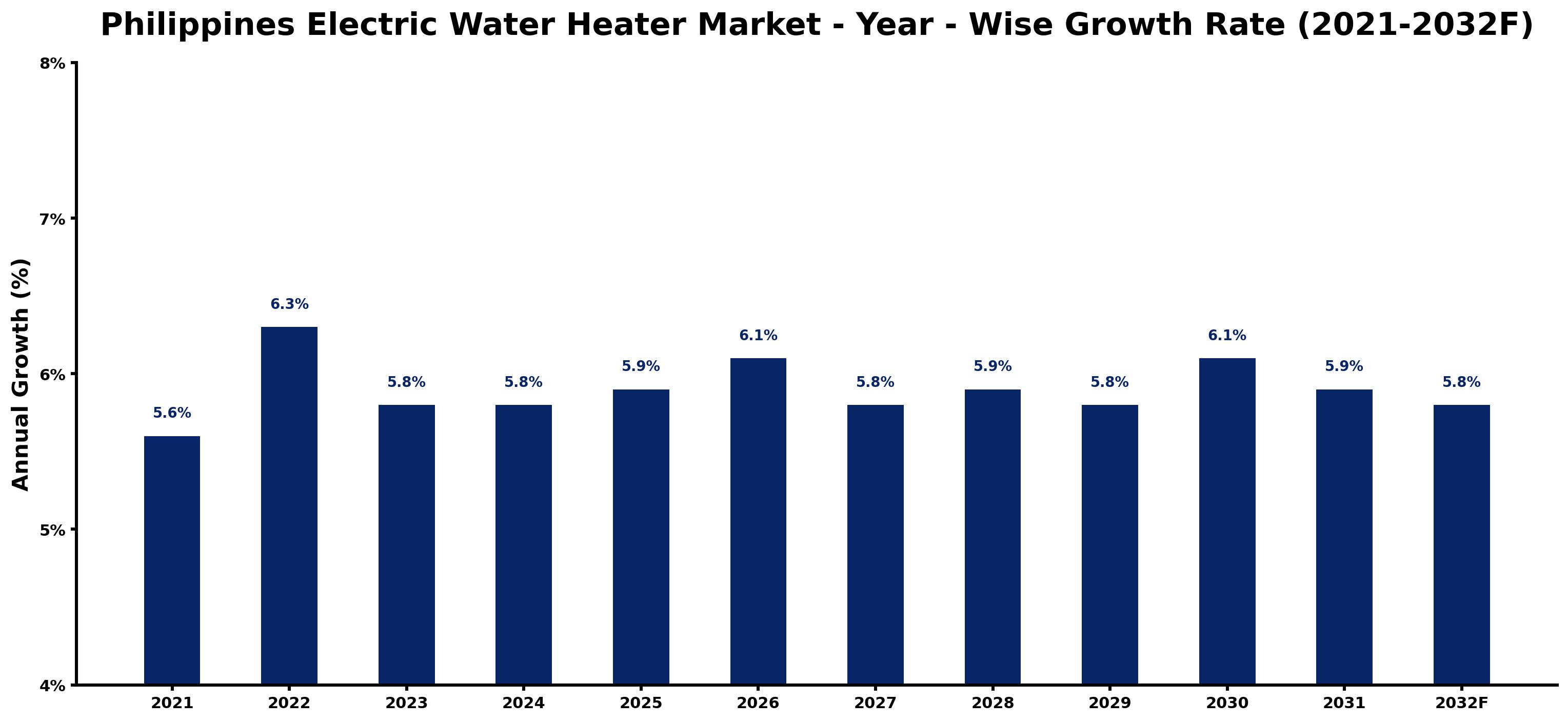
The table below presents the year wise growth rates along with the key drivers influencing the market
| Year | Growth Rate | Major Drivers |
| 2021 | 5.6% | Post-lockdown retail projects generated increased interest in home improvement solutions. |
| 2022 | 6.3% | Consumer awareness around energy efficiency led to higher electric water heater inquiries. |
| 2023 | 5.8% | Urban migration patterns created greater demand for convenient hot water solutions. |
| 2024 | 5.8% | Technological innovation in compact designs captured attention from space-conscious households. |
| 2025 | 5.9% | Rising disposable incomes enabled more families to invest in modern appliances. |
| 2026 | 6.1% | Sustainability trends encouraged consumers to choose electric over traditional water heating. |
| 2027 | 5.8% | Localized manufacturing initiatives boosted product availability and affordability nationwide. |
| 2028 | 5.9% | New residential developments prioritized eco-friendly amenities in their infrastructure designs. |
| 2029 | 5.8% | Increased competition among brands stimulated product enhancements and pricing strategies. |
| 2030 | 6.1% | Marketing campaigns emphasizing health benefits improved consumer perceptions of electric heaters. |
| 2031 | 5.9% | Collaborations with local installers simplified the purchasing and installation process. |
| 2032 | 5.8% | Climate variability prompted households to seek reliable hot water solutions year-round. |
Note - Market size estimations and growth projections presented in this report are based on 6Wresearch's advanced forecasting approach, validated with industry datasets as of June 2026.
Philippines Electric Water Heater Market Synopsis
The Philippines Electric Water Heater Market is projected to reach 6.1% and witness significant growth during the forecast period (2026-2032). This anticipated expansion is primarily driven by an increasing adoption of electric water heating technology among middle and upper-income households. As consumers become more aware of the efficiency and cost-effectiveness of electric water heaters, their demand is expected to rise. Despite the current landscape being dominated by a limited number of local manufacturers, there is a surge in investments aimed at technological advancements. These investments are likely to enhance product innovation and affordability, thus facilitating greater market penetration.
Philippines Electric Water Heater Market Growth Drivers
Several key factors are propelling the growth of the Philippines Electric Water Heater Market:
- Increased consumer awareness about energy-efficient appliances is fostering a shift towards electric water heaters, significantly contributing to market growth.
- The rapid urbanization in the Philippines is facilitating the adoption of modern architectural designs that necessitate the use of premium homeware products, including electric water heaters.
- The rising need for hygienic practices, especially following the COVID-19 pandemic, has heightened the demand for hot water, reinforcing the market's potential.
- Investments in centralized water heating systems are driving up the demand for electric water heaters with capacities up to 250 litres, as these systems meet the average daily needs of households.
- Government initiatives aimed at promoting energy efficiency are creating a favorable environment for the electric water heater market, providing incentives for both consumers and manufacturers.
Philippines Electric Water Heater Market Trends and Opportunities
The landscape of the Philippines Electric Water Heater Market is evolving, with significant trends and opportunities emerging:
- The market is witnessing a gradual shift towards innovative technologies such as smart water heating systems that offer enhanced energy management features.
- There is a growing preference for compact designs that save space, especially in urban residential buildings where space optimization is essential.
- As environmental concerns take center stage, the demand for eco-friendly electric water heaters is on the rise, aligning with global sustainability goals.
- Emerging middle-class households are increasingly investing in quality products, which is expected to boost the market for high-end electric water heaters.
- There is an opportunity for product differentiation through customization options, catering to unique consumer preferences and needs.
Philippines Electric Water Heater Market Challenges and Restraints
Despite the promising outlook, the Philippines Electric Water Heater Market faces several challenges:
- The current market is heavily influenced by a few manufacturers, which may limit competition and innovation within the sector.
- Supply chain disruptions, exacerbated by the lingering effects of the COVID-19 pandemic, have impacted production and distribution efficiency.
- Economic fluctuations can deter investments in electric water heater technology, affecting overall market growth.
- The high initial cost of electric water heating systems compared to traditional methods may pose a barrier to widespread adoption among price-sensitive consumers.
- Consumers may be hesitant to transition from established water heating methods due to a lack of knowledge regarding the benefits of electric systems.
Philippines Electric Water Heater Market Government Investment and Initiatives
The Philippine government has recognized the importance of enhancing energy efficiency and promoting the use of sustainable technologies. Various initiatives have been launched, focusing on the development of the electric water heater market:
- Government programs aiming at educating consumers on energy-efficient appliances are actively promoting electric water heaters.
- Public funding is being allocated to support research and development in water heating technologies, facilitating product innovation and efficiency improvements.
- Policies encouraging manufacturers to invest in eco-friendly and cost-effective electric water heaters are being implemented to enhance market offerings.
- Incentives for homeowners to transition to electric water heating systems are being introduced, motivating consumers to consider these modern solutions.
- Strategic partnerships between the government and private sectors are being formed to create a conducive environment for market expansion and technological advancements.
Philippines Electric Water Heater Market Latest Developments (May 2025 - June 2026)
Recent developments in the Philippines Electric Water Heater Market indicate a trajectory towards innovation and efficiency. New technologies are being introduced, enhancing the performance and affordability of electric water heaters. Manufacturers are focusing on integrating smart technologies that allow consumers to monitor and control energy usage more effectively. Additionally, responses to ongoing shifts in consumer behavior driven by health and hygiene concerns are influencing product offerings. The market is also witnessing increased collaboration among stakeholders, aiming to enhance the overall ecosystem supporting electric water heaters.
Philippines Electric Water Heater Market - Key Attractiveness of the Report
- 10 Years of Market Numbers
- Historical Data Starting from 2022 to 2025
- Base Year: 2025
- Forecast Data until 2032
- Key Performance Indicators Impacting the Market
- Major Upcoming Developments and Projects






































