Qatar Connected Agriculture Market Size & Growth Rate (2026-2032)
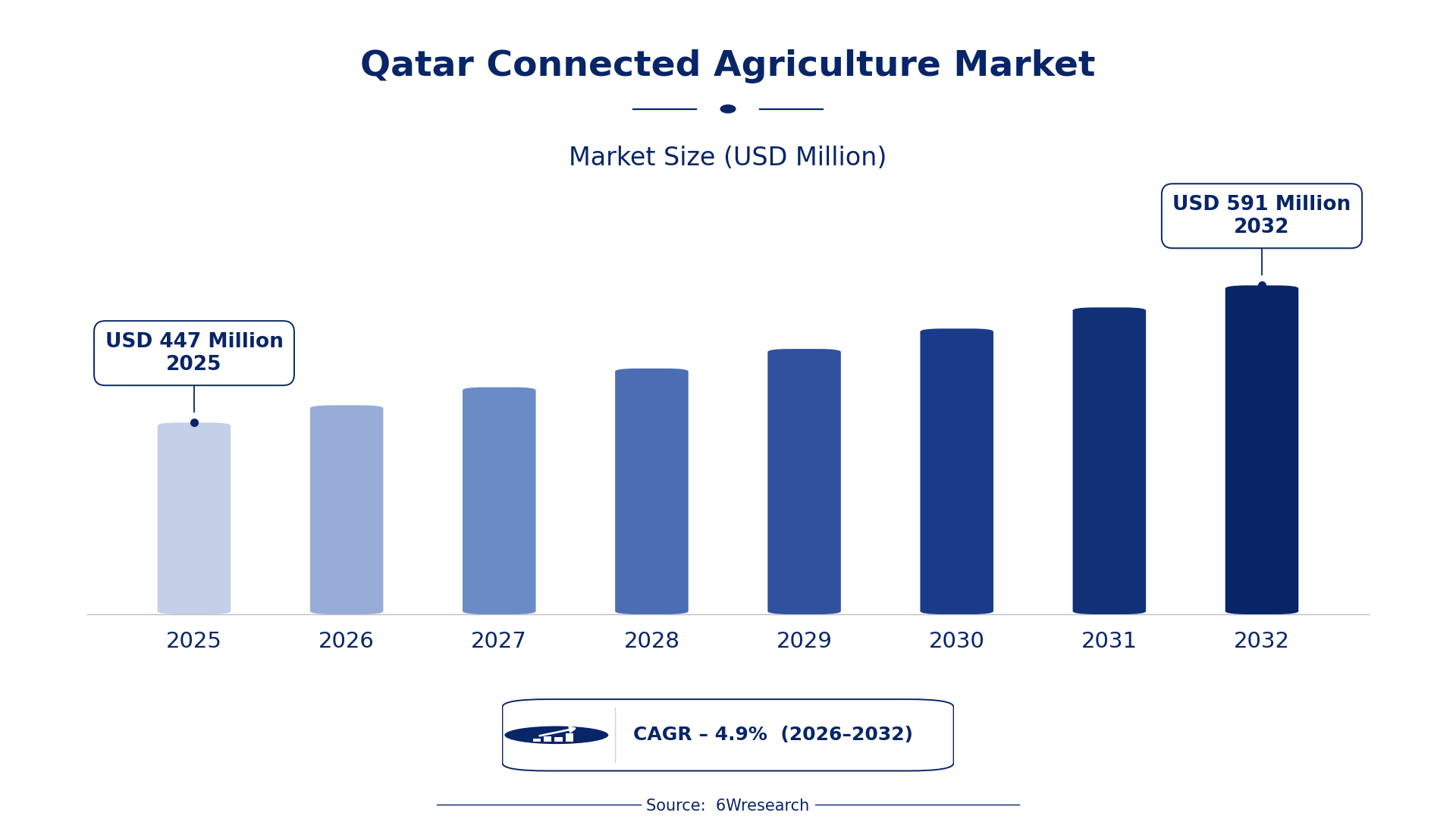
The Qatar Connected Agriculture Market was estimated at USD 447 Million in 2025 and is projected to reach USD 591 Million by 2032, growing at a CAGR of 4.9% from 2026 to 2032.
Qatar Connected Agriculture Market Synopsis
The Qatar Connected Agriculture Market is witnessing a pivotal shift as technology becomes integral to agricultural practices. Farmers are increasingly adopting IoT devices and data analytics to address pressing challenges such as food security and resource scarcity, enhancing productivity and sustainability in the sector.
While recent advancements have laid a solid foundation, the future holds even greater promise. As precision farming techniques gain traction, the market is set to expand, driven by the need for efficient resource management and improved crop yields. This evolution signals a transformative era for agriculture in Qatar.
Qatar Connected Agriculture Market Year-wise Growth Rate and Key Drivers
This graph illustrates the annual growth rates of the Qatar Connected Agriculture Market from 2021 to 2032, highlighting a steady upward trajectory and projected expansion over the forecast period.
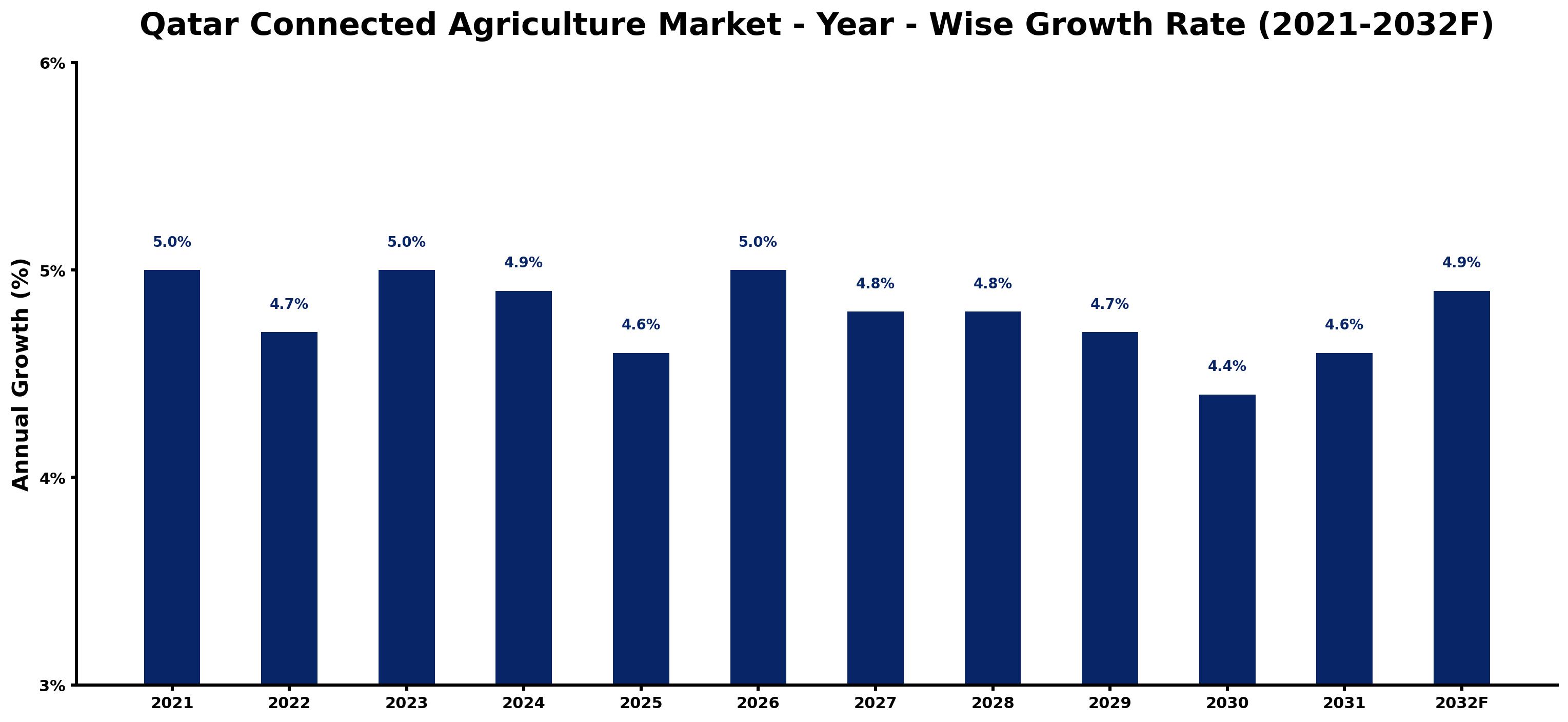
The table below presents the year‑wise growth rates along with the key drivers influencing the market
| Year | Growth Rate | Major Drivers |
| 2021 | 5.0% | Qatar's food security initiatives enhancing agricultural technology adoption. |
| 2022 | 4.7% | Government investment in precision farming technologies advancing crop yield. |
| 2023 | 5.0% | Increased urban farming initiatives supported by local businesses. |
| 2024 | 4.9% | Qatar National Vision 2030 promoting sustainable agricultural practices. |
| 2025 | 4.6% | Growing interest in hydroponics driven by local universities. |
| 2026 | 5.0% | Rising adoption of IoT solutions for farm management. |
| 2027 | 4.8% | Supportive policies for agricultural startups enhancing innovation. |
| 2028 | 4.8% | Increased funding for agricultural technology by local investors. |
| 2029 | 4.7% | Community awareness campaigns boosting local food production initiatives. |
| 2030 | 4.4% | Qatar's climate adaptation strategies supporting smart agriculture. |
| 2031 | 4.6% | Partnerships with international agtech firms boosting local capabilities. |
| 2032 | 4.9% | Incentives for organic farming attracting new entrepreneurs. |
Note: Market size estimations and growth projections presented in this report are based on 6Wresearch's proprietary forecasting methodology, utilizing the latest available industry data, government publications, and primary research inputs.
Qatar Connected Agriculture Market Key Takeaways
Below are some of the specific key takeaways from the market, including:
- The integration of IoT technologies is crucial for enhancing agricultural productivity.
- Government initiatives are aligning with global trends in precision farming and digital agriculture.
- Adoption of connected agriculture solutions is accelerating in response to food security challenges.
- Data analytics play a vital role in optimizing farming practices and decision-making.
- Investments in digital infrastructure are essential for overcoming connectivity challenges in rural areas.
Evaluation of Restraints in Qatar Connected Agriculture Market
Despite the promising outlook, several constraints hinder the growth of the Qatar Connected Agriculture Market. Connectivity issues, especially in remote regions, pose significant barriers to the deployment of IoT devices and sensors. Reliable internet access is essential for real-time data collection and monitoring, which are key components of connected agriculture.
on top of that, the financial implications of adopting advanced technologies can be daunting for small and medium-sized farmers. The initial investment and ongoing maintenance costs may deter many from transitioning to these innovative solutions. Finally, concerns surrounding data privacy and security must be addressed to foster trust and encourage wider adoption of connected agriculture practices.
Qatar Connected Agriculture Market Trends
A few notable trends are shaping the Qatar Connected Agriculture Market. The shift towards precision farming is increasingly evident, with farmers using data-driven insights to optimize resource allocation. This trend is complemented by the growing use of AI and machine learning to analyze agricultural data and predict outcomes.
Additionally, there is a rising focus on sustainability and eco-friendly practices. This trend is driving the development of technologies that minimize waste and enhance resource efficiency. As awareness of environmental issues grows, consumers are demanding more sustainable agricultural practices, prompting a shift in how farms operate.
Qatar Connected Agriculture Market Opportunities
The Qatar Connected Agriculture Market presents numerous opportunities for growth and investment. First, there is a significant demand for advanced data analytics solutions to help farmers make informed decisions. Companies that specialize in these technologies can find a receptive market.
Second, initiatives aimed at enhancing digital infrastructure in rural areas can facilitate the expansion of connected agriculture solutions. Collaborations between private and public sectors can foster innovation and support farmers in adopting new technologies. Finally, as consumer preferences shift towards sustainable products, there is room for innovation in eco-friendly agricultural practices.
Government Initiatives in the Qatar Connected Agriculture Market
Government policies are significantly influencing the direction of the Qatar Connected Agriculture Market. With a focus on enhancing food security and promoting sustainable practices, the government is actively encouraging the adoption of digital technologies in agriculture. This supportive regulatory environment is crucial for the growth of the market.
- A national digital infrastructure upgrade programme now in its rollout phase aims to improve internet connectivity in rural agricultural zones.
- Current initiatives include subsidies for farmers adopting IoT technologies to enhance crop management and monitoring.
- A regulatory framework introduced in 2025 mandates the integration of precision agriculture practices in large-scale farming operations.
- A public-private initiative expected to expand access to agricultural technology training and resources is set to launch in 2026.
Future Insights of the Qatar Connected Agriculture Market
Looking ahead, the Qatar Connected Agriculture Market is expected to evolve rapidly between 2026 and 2032. As digital technology continues to infiltrate the agricultural sector, farmers will increasingly rely on data-driven solutions to improve yields and manage resources more effectively. With government backing and a growing focus on sustainability, this market is on a trajectory towards innovation and efficiency.
Emerging technologies, particularly in AI and machine learning, will play a crucial role in shaping future agricultural practices. By leveraging these advancements, farmers can enhance productivity while simultaneously addressing environmental concerns. The next few years will be critical in establishing a technologically advanced, sustainable agricultural sector in Qatar.
Qatar Connected Agriculture Market Latest Developments
Recent activity in the Qatar Connected Agriculture Market indicates a strong push towards digital transformation. Over the past year, there has been a noticeable increase in the adoption of IoT solutions among local farmers. This trend reflects a broader commitment to enhancing agricultural practices through technology.
- A major technology vendor launched a comprehensive IoT platform in early 2025, aimed at optimizing resource management for local farms.
- An initiative that began in mid-2025 and remains underway is focused on integrating AI tools to assist farmers in predicting crop performance and managing irrigation systems.
- By the second half of 2026, a pilot programme is expected to roll out, showcasing the use of drone technology for crop monitoring and assessment.
- In late 2025, a partnership between a regional agritech firm and local universities was established to promote research and development in precision agriculture.
Qatar Connected Agriculture Market - Key Attractiveness of the Report
- 10 Years of Market Numbers
- Historical Data Starting from 2022 to 2025
- Base Year: 2025
- Forecast Data until 2032
- Key Performance Indicators Impacting the Market
- Major Upcoming Developments and Projects
Key Highlights of the Report:
- Qatar Connected Agriculture Market Outlook
- Market Size of Qatar Connected Agriculture Market, 2025
- Forecast of Qatar Connected Agriculture Market, 2032
- Historical Data and Forecast of Qatar Connected Agriculture Revenues & Volume for the Period 2022-2032F
- Qatar Connected Agriculture Market Trend Evolution
- Qatar Connected Agriculture Market Drivers and Challenges
- Qatar Connected Agriculture Price Trends
- Qatar Connected Agriculture Porter's Five Forces
- Qatar Connected Agriculture Industry Life Cycle
- Historical Data and Forecast of Qatar Connected Agriculture Market Revenues & Volume By Component for the Period 2022-2032F
- Historical Data and Forecast of Qatar Connected Agriculture Market Revenues & Volume By Solution for the Period 2022-2032F
- Historical Data and Forecast of Qatar Connected Agriculture Market Revenues & Volume By Platforms for the Period 2022-2032F
- Historical Data and Forecast of Qatar Connected Agriculture Market Revenues & Volume By Services for the Period 2022-2032F
- Historical Data and Forecast of Qatar Connected Agriculture Market Revenues & Volume By Platforms for the Period 2022-2032F
- Historical Data and Forecast of Qatar Connected Agriculture Market Revenues & Volume By Device Management for the Period 2022-2032F
- Historical Data and Forecast of Qatar Connected Agriculture Market Revenues & Volume By Application Enablement for the Period 2022-2032F
- Historical Data and Forecast of Qatar Connected Agriculture Market Revenues & Volume By Connectivity Management for the Period 2022-2032F
- Historical Data and Forecast of Qatar Connected Agriculture Market Revenues & Volume By Application for the Period 2022-2032F
- Historical Data and Forecast of Qatar Connected Agriculture Market Revenues & Volume By Pre-Production Planning and Management for the Period 2022-2032F
- Historical Data and Forecast of Qatar Connected Agriculture Market Revenues & Volume By In-Production Planning and Management for the Period 2022-2032F
- Historical Data and Forecast of Qatar Connected Agriculture Market Revenues & Volume By Post-Production Planning and Management for the Period 2022-2032F
- Qatar Connected Agriculture Import Export Trade Statistics
- Market Opportunity Assessment By Component
- Market Opportunity Assessment By Platforms
- Market Opportunity Assessment By Application
- Qatar Connected Agriculture Top Companies Market Share
- Qatar Connected Agriculture Competitive Benchmarking By Technical and Operational Parameters
- Qatar Connected Agriculture Company Profiles
- Qatar Connected Agriculture Key Strategic Recommendations






































