Qatar Data Protection Market Size & Growth Rate (2026-2032)
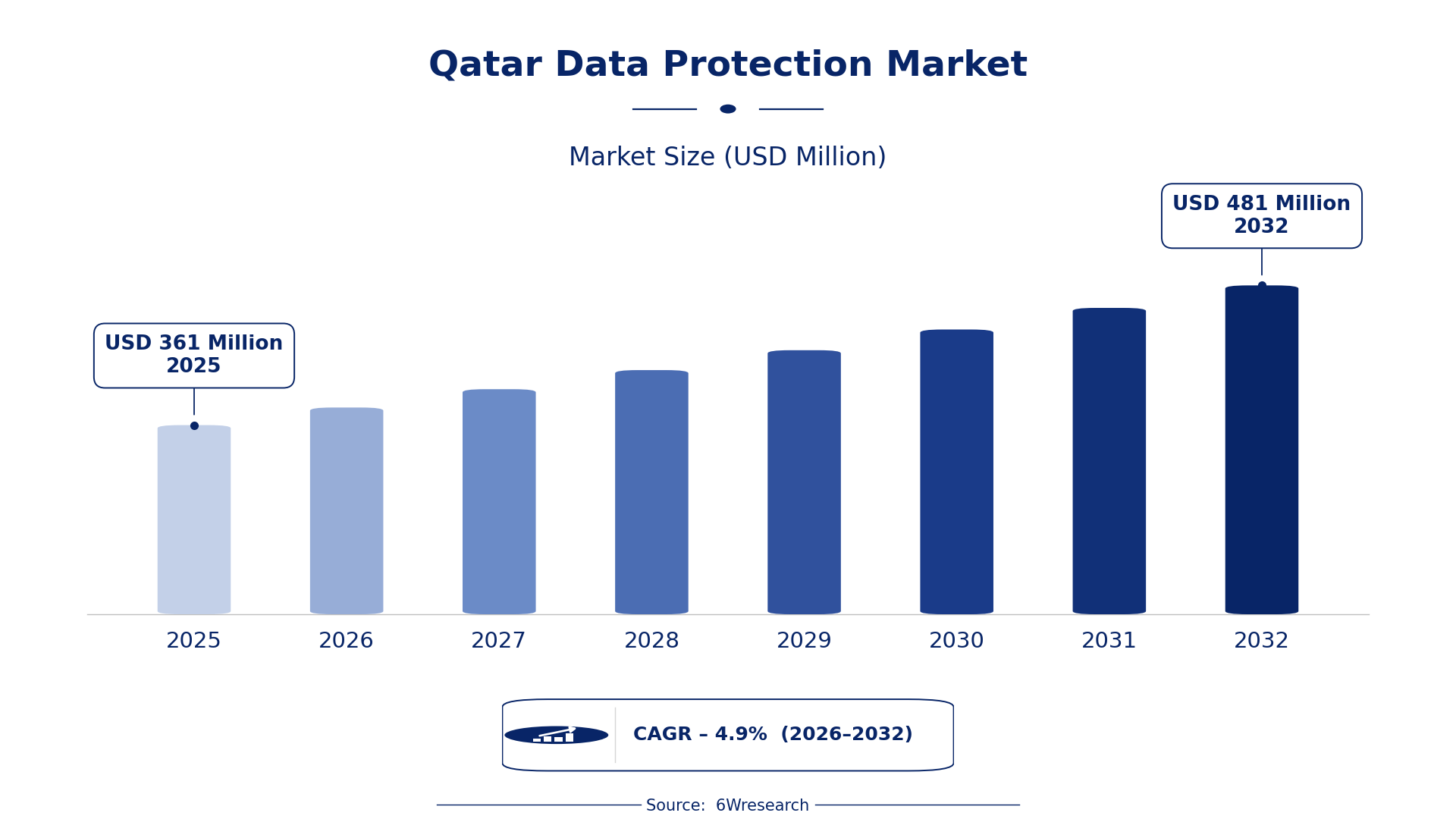
The Qatar Data Protection Market was estimated at USD 361 Million in 2025 and is projected to reach USD 481 Million by 2032, growing at a CAGR of 4.9% from 2026 to 2032.
Qatar Data Protection Market Synopsis
The Qatar Data Protection Market has surged recently as organizations realize the imperative of securing sensitive information. However, the journey ahead is fraught with the challenge of keeping pace with escalating data volumes and increasingly sophisticated cyber threats. As data privacy becomes a critical priority, companies are investing more heavily in innovative data protection solutions.
The focus on compliance with regulations, particularly the Personal Data Protection Law, is reshaping the market dynamics. Organizations are compelled to adopt comprehensive strategies that not only enhance security but also align with legal obligations. This evolving scenario sets the stage for continued investment and growth in the sector.
Qatar Data Protection Market Year-wise Growth Rate and Key Drivers
This graph illustrates the annual growth rates of the Qatar Data Protection Market from 2021 to 2032, highlighting a steady upward trajectory and projected expansion over the forecast period.
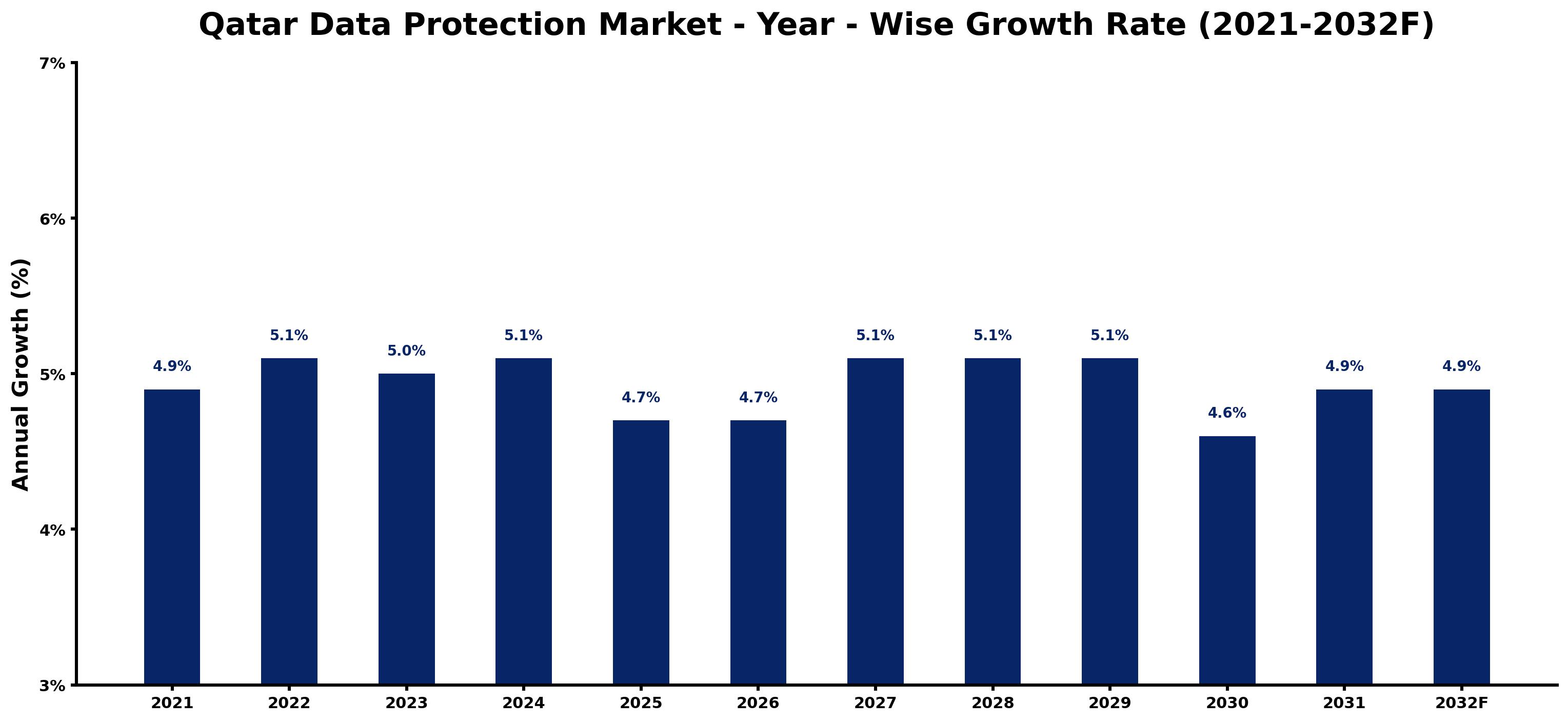
The table below presents the year‑wise growth rates along with the key drivers influencing the market
| Year | Growth Rate | Major Drivers |
| 2021 | 4.9% | Implementation of Qatar Digital Government Strategy 2020. |
| 2022 | 5.1% | Increased focus on cybersecurity by QIA's initiatives. |
| 2023 | 5.0% | Heightened consumer awareness on personal data protection rights. |
| 2024 | 5.1% | Launch of National Information Assurance Policy by government. |
| 2025 | 4.7% | Investment in data protection training programs for professionals. |
| 2026 | 4.7% | Growing local tech startups emphasizing data privacy solutions. |
| 2027 | 5.1% | Partnerships with global tech firms enhancing data security. |
| 2028 | 5.1% | Demand for cloud solutions with local data residency. |
| 2029 | 5.1% | Regulatory updates from Qatar Central Bank on data handling. |
| 2030 | 4.6% | Rising incidents of data breaches motivating regulatory compliance. |
| 2031 | 4.9% | Support from Qatar Science & Technology Park for innovations. |
| 2032 | 4.9% | Focus on data sovereignty following global trends. |
Note: Market size estimations and growth projections presented in this report are based on 6Wresearch's proprietary forecasting methodology, utilizing the latest available industry data, government publications, and primary research inputs.
Qatar Data Protection Market Key Takeaways
Below are some of the specific key takeaways from the market, including:
- Organizations are prioritizing compliance with the Personal Data Protection Law.
- Data encryption and loss prevention technologies are gaining traction.
- The pandemic accelerated the need for comprehensive data protection measures.
- Awareness of data privacy is at an all-time high, driving investments.
- Ongoing digital transformation initiatives are fueling market demand.
Evaluation of Restraints in Qatar Data Protection Market
The growth of the Qatar Data Protection Market faces hurdles from the escalating volumes of sensitive data organizations must secure. The complexity of managing this data amid strict compliance mandates can overwhelm even seasoned IT departments. Additionally, the relentless evolution of cyber threats makes it increasingly difficult for companies to stay ahead, often resulting in resource strain and vulnerability to breaches.
Qatar Data Protection Market Trends
As the market develops, several trends are evident. The adoption of advanced encryption techniques is on the rise, reflecting a need for enhanced data security. Meanwhile, organizations are increasingly implementing data loss prevention strategies to mitigate risks associated with data breaches. The growing reliance on cloud technologies is also changing how data protection measures are structured, with an emphasis on securing cloud-based assets.
Qatar Data Protection Market Opportunities
New avenues for growth are unfolding, particularly for companies that can offer innovative, flexible data protection solutions tailored to meet the unique demands of Qatar’s evolving regulatory environment. The emphasis on compliance creates opportunities for consultancies and technology providers who can help businesses navigate the complexities of data management while ensuring robust security protocols are in place.
Government Initiatives in the Qatar Data Protection Market
The Qatari government is actively shaping the Data Protection Market through a series of regulatory initiatives. These policies not only aim to protect citizen data but also establish Qatar as a regional leader in data security. The commitment to upholding data privacy underscores the importance of a structured framework, which has far-reaching implications for businesses operating in the country.
- A recently completed regulatory framework mandates the protection of personal data, enhancing legal compliance for organizations.
- Current initiatives include government-sponsored workshops aimed at educating businesses on best practices in data management.
- Planned public-private partnerships focus on bolstering cyber defense mechanisms nationwide.
- The introduction of a national data security accreditation program is set to roll out in late 2026, enhancing trust in data handling practices.
- Ongoing evaluations of data protection measures are guiding adjustments to existing legislation to keep pace with technological advancements.
Future Insights of the Qatar Data Protection Market
Looking ahead, the Qatar Data Protection Market is expected to thrive through 2032. As organizations continue to digitize operations, the demand for sophisticated data protection solutions will rise sharply. Regulatory pressures will further compel businesses to enhance their compliance strategies. Investment in technology that can keep up with evolving threats and regulations will likely remain a top priority, positioning this market for sustained growth.
Qatar Data Protection Market Latest Developments
In the last year, the Qatar Data Protection Market has witnessed notable activity as organizations ramp up efforts to secure data. Emerging technologies and strategic partnerships are reshaping how data protection is approached. Businesses are increasingly recognizing the urgent need to adapt to a complex regulatory environment while ensuring data safety.
- A major technology vendor launched a new data encryption service aimed at small to medium enterprises, now available as of mid-2025.
- An ongoing initiative is focused on integrating artificial intelligence into data protection solutions, enhancing threat detection capabilities.
- A rollout of advanced data monitoring tools is expected to commence in early 2026, improving compliance tracking for businesses.
- Plans for a national cybersecurity awareness campaign are set for Q3 2025, targeting businesses and consumers alike.
- A collaboration between key industry players to develop standardized data handling protocols has recently begun, aiming for completion by the end of 2025.
Qatar Data Protection Market - Key Attractiveness of the Report
- 10 Years of Market Numbers
- Historical Data Starting from 2022 to 2025
- Base Year: 2025
- Forecast Data until 2032
- Key Performance Indicators Impacting the Market
- Major Upcoming Developments and Projects
Key Highlights of the Report:
- Qatar Data Protection Market Outlook
- Market Size of Qatar Data Protection Market, 2025
- Forecast of Qatar Data Protection Market, 2032
- Historical Data and Forecast of Qatar Data Protection Revenues & Volume for the Period 2022-2032F
- Qatar Data Protection Market Trend Evolution
- Qatar Data Protection Market Drivers and Challenges
- Qatar Data Protection Price Trends
- Qatar Data Protection Porter's Five Forces
- Qatar Data Protection Industry Life Cycle
- Historical Data and Forecast of Qatar Data Protection Market Revenues & Volume By Component for the Period 2022-2032F
- Historical Data and Forecast of Qatar Data Protection Market Revenues & Volume By Solutions for the Period 2022-2032F
- Historical Data and Forecast of Qatar Data Protection Market Revenues & Volume By Services (Professional Services and Managed Services) for the Period 2022-2032F
- Historical Data and Forecast of Qatar Data Protection Market Revenues & Volume By Deployment Mode for the Period 2022-2032F
- Historical Data and Forecast of Qatar Data Protection Market Revenues & Volume By On-premises for the Period 2022-2032F
- Historical Data and Forecast of Qatar Data Protection Market Revenues & Volume By Cloud for the Period 2022-2032F
- Historical Data and Forecast of Qatar Data Protection Market Revenues & Volume By Industry Vertical for the Period 2022-2032F
- Historical Data and Forecast of Qatar Data Protection Market Revenues & Volume By Government and defense for the Period 2022-2032F
- Historical Data and Forecast of Qatar Data Protection Market Revenues & Volume By Banking, Financial Services, and Insurance (BFSI) for the Period 2022-2032F
- Historical Data and Forecast of Qatar Data Protection Market Revenues & Volume By Healthcare for the Period 2022-2032F
- Historical Data and Forecast of Qatar Data Protection Market Revenues & Volume By IT and telecom for the Period 2022-2032F
- Historical Data and Forecast of Qatar Data Protection Market Revenues & Volume By Consumer goods and retail for the Period 2022-2032F
- Historical Data and Forecast of Qatar Data Protection Market Revenues & Volume By Education for the Period 2022-2032F
- Historical Data and Forecast of Qatar Data Protection Market Revenues & Volume By Media and entertainment for the Period 2022-2032F
- Historical Data and Forecast of Qatar Data Protection Market Revenues & Volume By Organization Size Large Enterprises for the Period 2022-2032F
- Historical Data and Forecast of Qatar Data Protection Market Revenues & Volume By SMEs for the Period 2022-2032F
- Historical Data and Forecast of Qatar Data Protection Market Revenues & Volume By Large Enterprises for the Period 2022-2032F
- Qatar Data Protection Import Export Trade Statistics
- Market Opportunity Assessment By Component
- Market Opportunity Assessment By Deployment Mode
- Market Opportunity Assessment By Industry Vertical
- Market Opportunity Assessment By Organization Size Large Enterprises
- Qatar Data Protection Top Companies Market Share
- Qatar Data Protection Competitive Benchmarking By Technical and Operational Parameters
- Qatar Data Protection Company Profiles
- Qatar Data Protection Key Strategic Recommendations






































