Qatar Galvanized Steel Market Size Growth Rate
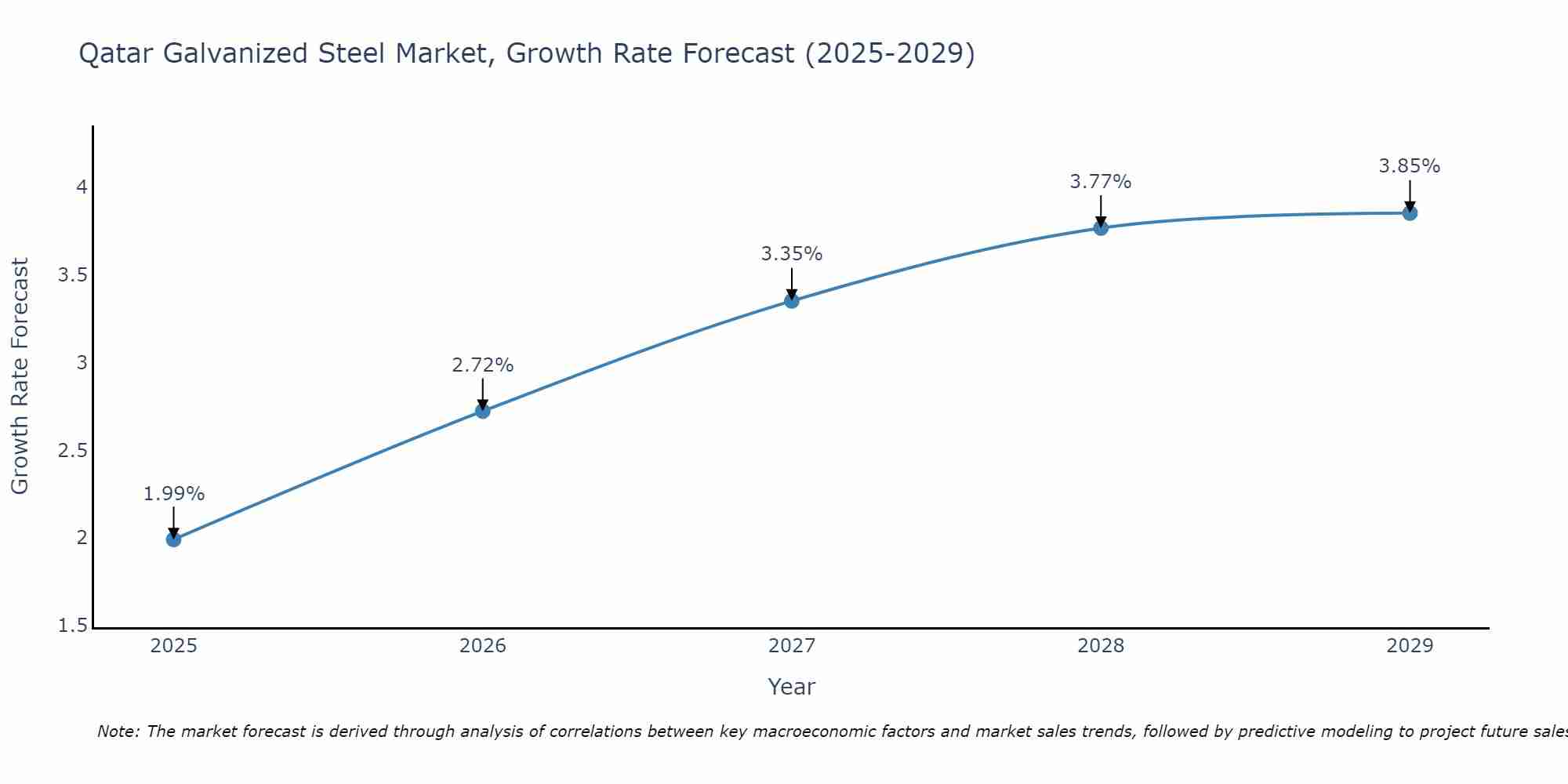
The Qatar Galvanized Steel Market is likely to experience consistent growth rate gains over the period 2025 to 2029. Commencing at 1.99% in 2025, growth builds up to 3.85% by 2029.
Qatar Galvanized Steel Market Synopsis
The Qatar galvanized steel market experienced growth between 2025 and 2031. Galvanized steel is a type of steel coated with a layer of zinc to protect it from corrosion, making it suitable for various construction, infrastructure, and industrial applications. Qatar booming construction and infrastructure development activities, industrial growth, and the demand for durable and corrosion-resistant materials contributed to the Market expansion during the forecast period.
Drivers of The Market
Several factors drove the growth of the galvanized steel market in Qatar during the specified period. Firstly, the country`s construction industry, driven by infrastructure development and real estate projects, created a significant demand for galvanized steel in applications such as roofing, walls, and structural components. The durability and corrosion resistance of galvanized steel made it an attractive choice for Qatar harsh climatic conditions. Secondly, the industrial sector`s growth and expansion led to increased demand for galvanized steel in machinery, equipment, and storage solutions, where protection against rust and corrosion is critical.
Challenges of The Market
Despite the positive market conditions, the Qatar galvanized steel market faced certain challenges during the forecast period. One significant challenge was the fluctuation in raw material prices, particularly for zinc, which could impact the overall cost of galvanized steel production. Additionally, the competition from alternative materials, such as stainless steel and coated aluminum, posed a challenge for the galvanized steel market. Different industries had to weigh the cost-effectiveness and specific properties of various materials to make informed choices.
Covid-19 Impact of the Market
The Covid-19 pandemic had a notable impact on the Qatar galvanized steel market. During the pandemic, construction activities and infrastructure projects faced temporary slowdowns due to movement restrictions and economic uncertainties. This led to reduced demand for galvanized steel in the construction sector. However, the industrial sector`s demand remained relatively stable, as essential industries continued to operate with precautionary measures. As Qatar managed the pandemic and economic activities resumed, the galvanized steel market started to recover.
Key Highlights of the Report:
- Qatar Galvanized Steel Market Outlook
- Market Size of Qatar Galvanized Steel Market, 2024
- Forecast of Qatar Galvanized Steel Market, 2031
- Historical Data and Forecast of Qatar Galvanized Steel Revenues & Volume for the Period 2021-2031
- Qatar Galvanized Steel Market Trend Evolution
- Qatar Galvanized Steel Market Drivers and Challenges
- Qatar Galvanized Steel Price Trends
- Qatar Galvanized Steel Porter's Five Forces
- Qatar Galvanized Steel Industry Life Cycle
- Historical Data and Forecast of Qatar Galvanized Steel Market Revenues & Volume By Product Type for the Period 2021-2031
- Historical Data and Forecast of Qatar Galvanized Steel Market Revenues & Volume By Galvanized Steel Coils for the Period 2021-2031
- Historical Data and Forecast of Qatar Galvanized Steel Market Revenues & Volume By Galvanized Steel Strips for the Period 2021-2031
- Historical Data and Forecast of Qatar Galvanized Steel Market Revenues & Volume By Others for the Period 2021-2031
- Historical Data and Forecast of Qatar Galvanized Steel Market Revenues & Volume By Application for the Period 2021-2031
- Historical Data and Forecast of Qatar Galvanized Steel Market Revenues & Volume By Construction for the Period 2021-2031
- Historical Data and Forecast of Qatar Galvanized Steel Market Revenues & Volume By Automobile for the Period 2021-2031
- Historical Data and Forecast of Qatar Galvanized Steel Market Revenues & Volume By Home Appliances for the Period 2021-2031
- Historical Data and Forecast of Qatar Galvanized Steel Market Revenues & Volume By Others for the Period 2021-2031
- Qatar Galvanized Steel Import Export Trade Statistics
- Market Opportunity Assessment By Product Type
- Market Opportunity Assessment By Application
- Qatar Galvanized Steel Top Companies Market Share
- Qatar Galvanized Steel Competitive Benchmarking By Technical and Operational Parameters
- Qatar Galvanized Steel Company Profiles
- Qatar Galvanized Steel Key Strategic Recommendations






































