Qatar MVNO Market Size & Growth Rate (2026-2032)
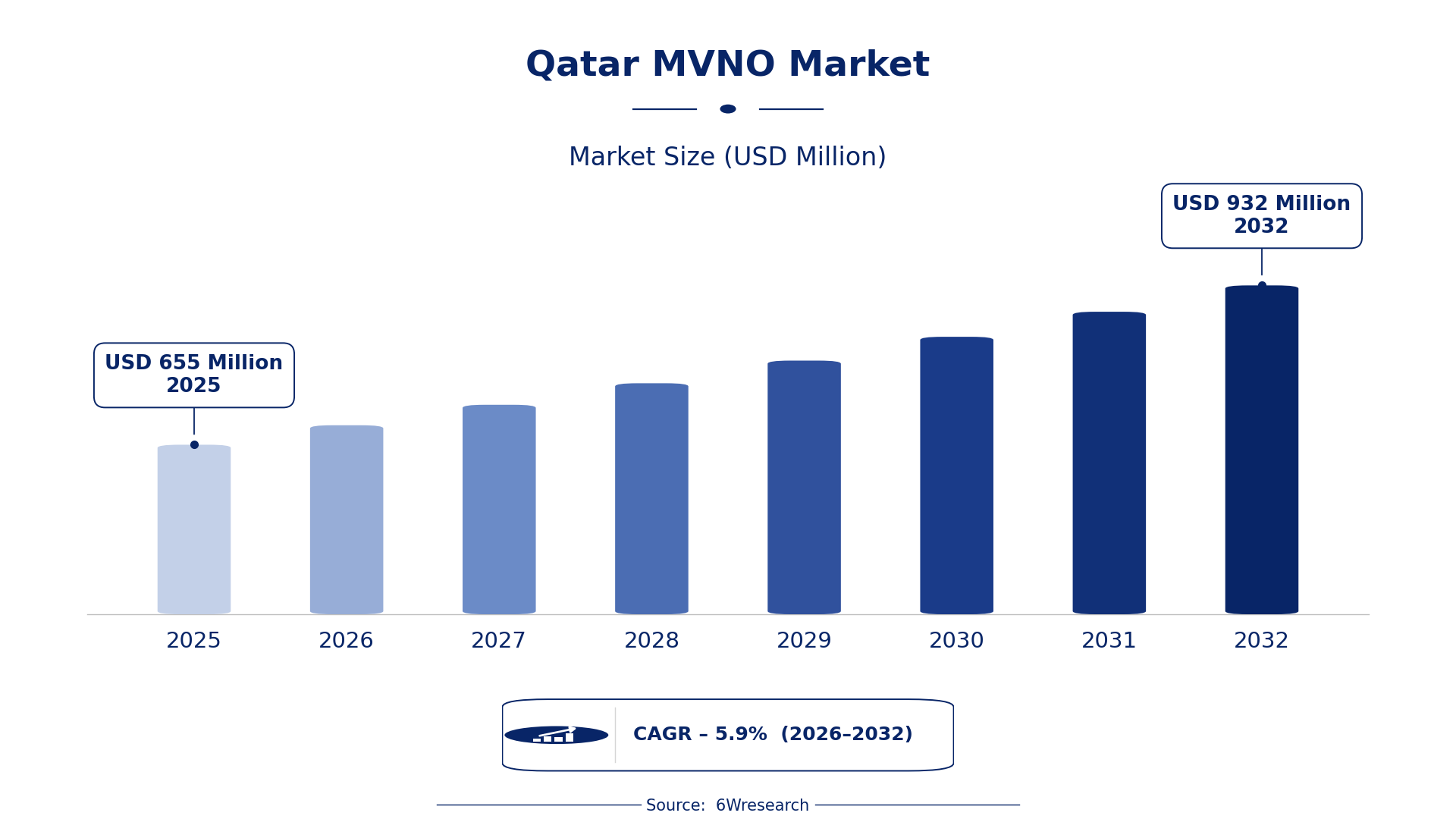
The Qatar MVNO Market was estimated at USD 655 Million in 2025 and is projected to reach USD 932 Million by 2032, growing at a CAGR of 5.9% from 2026 to 2032.
Qatar MVNO Market Synopsis
The demand for tailored mobile services is on the rise in Qatar, as consumers increasingly seek cost-effective solutions that meet their specific needs. MVNOs, which operate by leasing network capacity from established telecom operators, are uniquely positioned to cater to this growing appetite.
As a result, the Qatar MVNO market is witnessing a surge in new entrants targeting niche segments. With innovative service offerings and strategic partnerships, these MVNOs are challenging traditional operators, thereby enhancing competition and service diversity within the telecommunications sector.
Qatar MVNO Market Year-wise Growth Rate and Key Drivers
This graph illustrates the annual growth rates of the Qatar MVNO Market from 2021 to 2032, highlighting a steady upward trajectory and projected expansion over the forecast period.
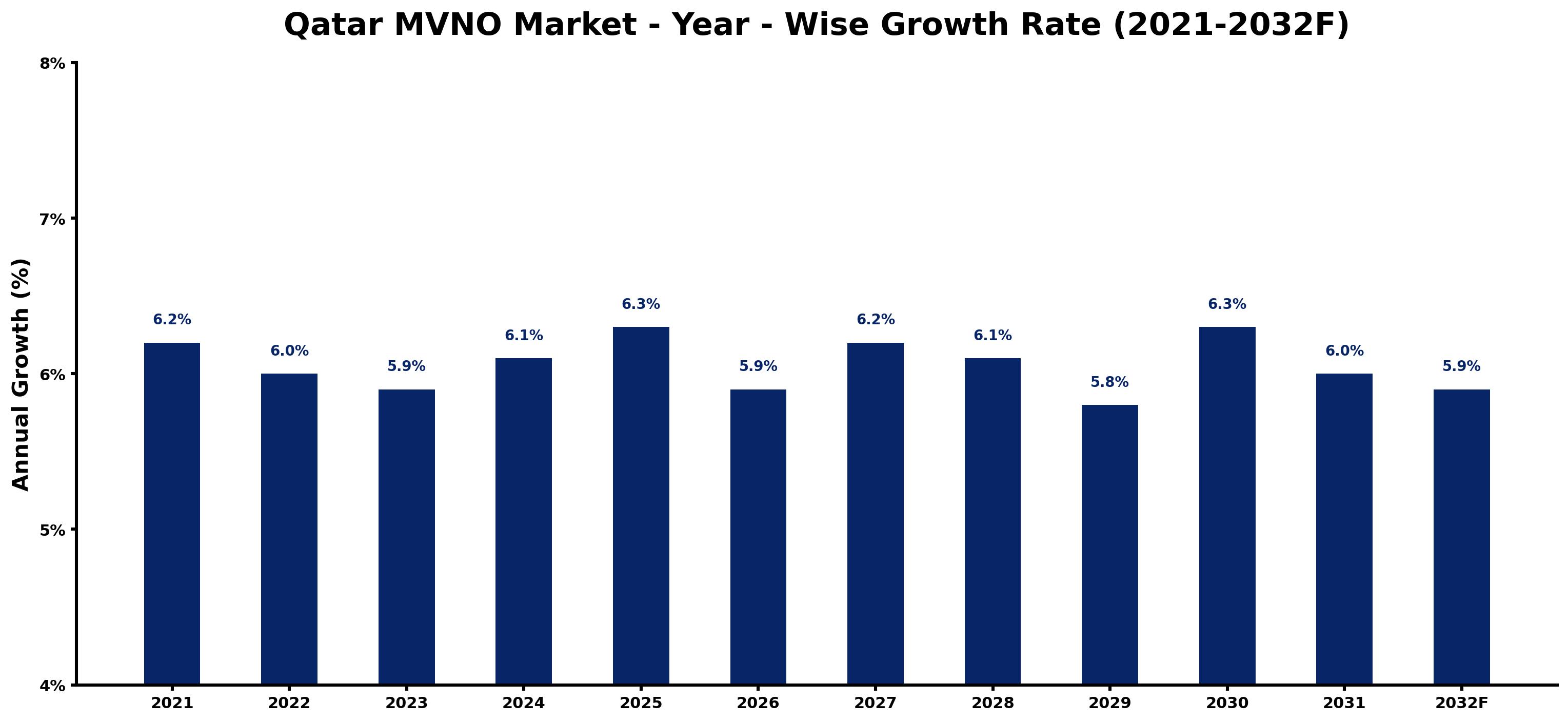
The table below presents the year‑wise growth rates along with the key drivers influencing the market
| Year | Growth Rate | Major Drivers |
| 2021 | 6.2% | QCA's policies favoring new MVNO licenses. |
| 2022 | 6.0% | Increased smartphone penetration boosting mobile services utilization. |
| 2023 | 5.9% | Demand for affordable communication options post-pandemic surge. |
| 2024 | 6.1% | Government initiatives enhancing foreign investment in telecom sector. |
| 2025 | 6.3% | Local startups innovating in mobile virtual network services. |
| 2026 | 5.9% | Shift towards prepaid plans among budget-conscious consumers. |
| 2027 | 6.2% | Rising expatriate population increasing mobile service demand. |
| 2028 | 6.1% | Increased digital content consumption driving mobile data sales. |
| 2029 | 5.8% | Enhanced customer experience focus by MVNOs attracting users. |
| 2030 | 6.3% | Qatar Vision 2030 supporting telecom market diversification. |
| 2031 | 6.0% | MVNO competition fostering innovation in service offerings. |
| 2032 | 5.9% | Growth in remote work driving mobile connectivity needs. |
Note: Market size estimations and growth projections presented in this report are based on 6Wresearch's proprietary forecasting methodology, utilizing the latest available industry data, government publications, and primary research inputs.
Qatar MVNO Market Key Takeaways
Below are some of the specific key takeaways from the market, including:
- The MVNO market in Qatar is characterized by rapid growth driven by consumer demand for specialized services.
- Regulatory support is essential for MVNOs to thrive in a landscape dominated by major telecommunications players.
- Innovative service offerings are becoming a key differentiator among new MVNO entrants.
- Strategic partnerships with existing operators are crucial for expanding service capabilities.
- COVID-19 accelerated the adoption of mobile services, creating new opportunities for MVNOs to innovate.
Evaluation of Restraints in Qatar MVNO Market
The Qatar MVNO market faces several constraints that could impede its growth trajectory. Regulatory complexities often pose significant barriers for new entrants, requiring extensive compliance efforts that can delay market access. Limited availability of spectrum can further constrain MVNO operations, particularly as demand for mobile data continues to soar. Additionally, the strong presence of established mobile network operators can create fierce competition, making customer acquisition a challenge for emerging MVNOs.
Qatar MVNO Market Trends
Several trends are currently shaping the Qatar MVNO market. One notable trend is the increasing consumer demand for customized mobile plans, prompting MVNOs to innovate in service delivery. The rise of digital-first services, including app-based mobile solutions, reflects a shift in consumer expectations towards convenience and flexibility.
Additionally, there is a growing emphasis on sustainability and eco-friendly practices among telecom operators, with MVNOs exploring green technologies as part of their service offerings. These trends highlight a dynamic market environment where adaptability is key to success.
Qatar MVNO Market Opportunities
The Qatar MVNO market presents numerous opportunities for growth and investment. As consumer preferences continue to evolve, MVNOs that can offer innovative, tailored services stand to gain significant market share. There is also a promising avenue for collaboration with local businesses and startups, allowing MVNOs to create bespoke service packages that cater to specific industries.
The expansion of digital services and the integration of advanced technologies, such as AI and IoT, are likely to drive further innovation, providing fertile ground for new offerings. In this rapidly changing landscape, forward-thinking MVNOs can carve out distinctive positions by capitalizing on these trends.
Government Initiatives in the Qatar MVNO Market
The Qatari government is actively shaping the MVNO market through various regulatory initiatives aimed at fostering competition and innovation. By creating a conducive environment for MVNOs, authorities are promoting diversity in mobile services, which is crucial for economic growth. Such policies not only encourage market entry but also enhance consumer choice, making it essential for MVNOs to stay aligned with government priorities.
- A regulatory framework introduced in 2025 mandating transparency in billing practices to enhance consumer trust.
- A national digital infrastructure upgrade program currently underway aims to improve overall connectivity and access.
- Ongoing assessments of spectrum availability to ensure fair access for all market players.
- A planned public-private initiative expected to expand telecom infrastructure access by 2028.
- Recent initiatives focused on enhancing cybersecurity measures for mobile operators and MVNOs.
Future Insights of the Qatar MVNO Market
Looking ahead to 2026-2032, the Qatar MVNO market is expected to continue its upward trajectory, driven by increasing consumer demand for personalized services and innovative solutions. The ongoing investments in digital infrastructure will likely enhance service delivery capabilities, allowing MVNOs to better meet the needs of diverse customer segments.
As the regulatory environment evolves, opportunities for collaboration between MVNOs and traditional operators will expand, fostering a more competitive ecosystem. Those MVNOs that can effectively adapt to market changes and leverage emerging technologies will be well-positioned to thrive in the coming years.
Qatar MVNO Market Latest Developments
Recent activity within the Qatar MVNO market indicates a vibrant and competitive atmosphere. Operators are increasingly focusing on enhancing their service offerings and forming strategic alliances to bolster their market presence. The last 12-14 months have seen significant shifts as MVNOs adapt to changing consumer preferences and technological advancements.
- A major MVNO launched a new range of data-centric plans in Q1 2025, targeting young professionals and students.
- An initiative that began in mid-2025 is currently underway, aimed at enhancing customer service through AI-driven chat support.
- A partnership between two MVNOs was established in early 2025 to share resources and expand their market reach.
- Plans for a new mobile app that integrates various digital services are expected to be rolled out by late 2026.
- Ongoing enhancements to network security protocols were initiated in early 2025 to protect consumer data.
Qatar MVNO Market - Key Attractiveness of the Report
- 10 Years of Market Numbers
- Historical Data Starting from 2022 to 2025
- Base Year: 2025
- Forecast Data until 2032
- Key Performance Indicators Impacting the Market
- Major Upcoming Developments and Projects
Key Highlights of the Report:
- Qatar MVNO Market Outlook
- Market Size of Qatar MVNO Market, 2025
- Forecast of Qatar MVNO Market, 2032
- Historical Data and Forecast of Qatar MVNO Revenues & Volume for the Period 2022-2032F
- Qatar MVNO Market Trend Evolution
- Qatar MVNO Market Drivers and Challenges
- Qatar MVNO Price Trends
- Qatar MVNO Porter's Five Forces
- Qatar MVNO Industry Life Cycle
- Historical Data and Forecast of Qatar MVNO Market Revenues & Volume By Operational Model for the Period 2022-2032F
- Historical Data and Forecast of Qatar MVNO Market Revenues & Volume By Reseller for the Period 2022-2032F
- Historical Data and Forecast of Qatar MVNO Market Revenues & Volume By Service Operator for the Period 2022-2032F
- Historical Data and Forecast of Qatar MVNO Market Revenues & Volume By Full MVNO for the Period 2022-2032F
- Historical Data and Forecast of Qatar MVNO Market Revenues & Volume By Organization Size for the Period 2022-2032F
- Historical Data and Forecast of Qatar MVNO Market Revenues & Volume By SMES for the Period 2022-2032F
- Historical Data and Forecast of Qatar MVNO Market Revenues & Volume By Large Enterprise for the Period 2022-2032F
- Historical Data and Forecast of Qatar MVNO Market Revenues & Volume By Subscriber for the Period 2022-2032F
- Historical Data and Forecast of Qatar MVNO Market Revenues & Volume By Consumer for the Period 2022-2032F
- Historical Data and Forecast of Qatar MVNO Market Revenues & Volume By Enterprise for the Period 2022-2032F
- Qatar MVNO Import Export Trade Statistics
- Market Opportunity Assessment By Operational Model
- Market Opportunity Assessment By Organization Size
- Market Opportunity Assessment By Subscriber
- Qatar MVNO Top Companies Market Share
- Qatar MVNO Competitive Benchmarking By Technical and Operational Parameters
- Qatar MVNO Company Profiles
- Qatar MVNO Key Strategic Recommendations






































