Qatar Volleyball Equipment Market Size, Share & Growth Rate
The Qatar Volleyball Equipment Market was estimated at USD 1177 Million in 2025 and is projected to reach USD 1674 Million by 2032, growing at a CAGR of 5.2% from 2026 to 2032. This robust growth trajectory is driven by an increase in youth participation in volleyball, supported by schools and sports clubs that are adopting the sport into their physical education programs. Furthermore, Qatar's growing reputation as a host for international sports events has amplified interest and investment in volleyball infrastructure, fostering a thriving environment for both recreational and competitive play.
Qatar Volleyball Equipment Market Year-wise Growth Rate and Key Drivers
This graph highlights how the Qatar Volleyball Equipment Market has steadily grown over the years, supported by major growth factors.
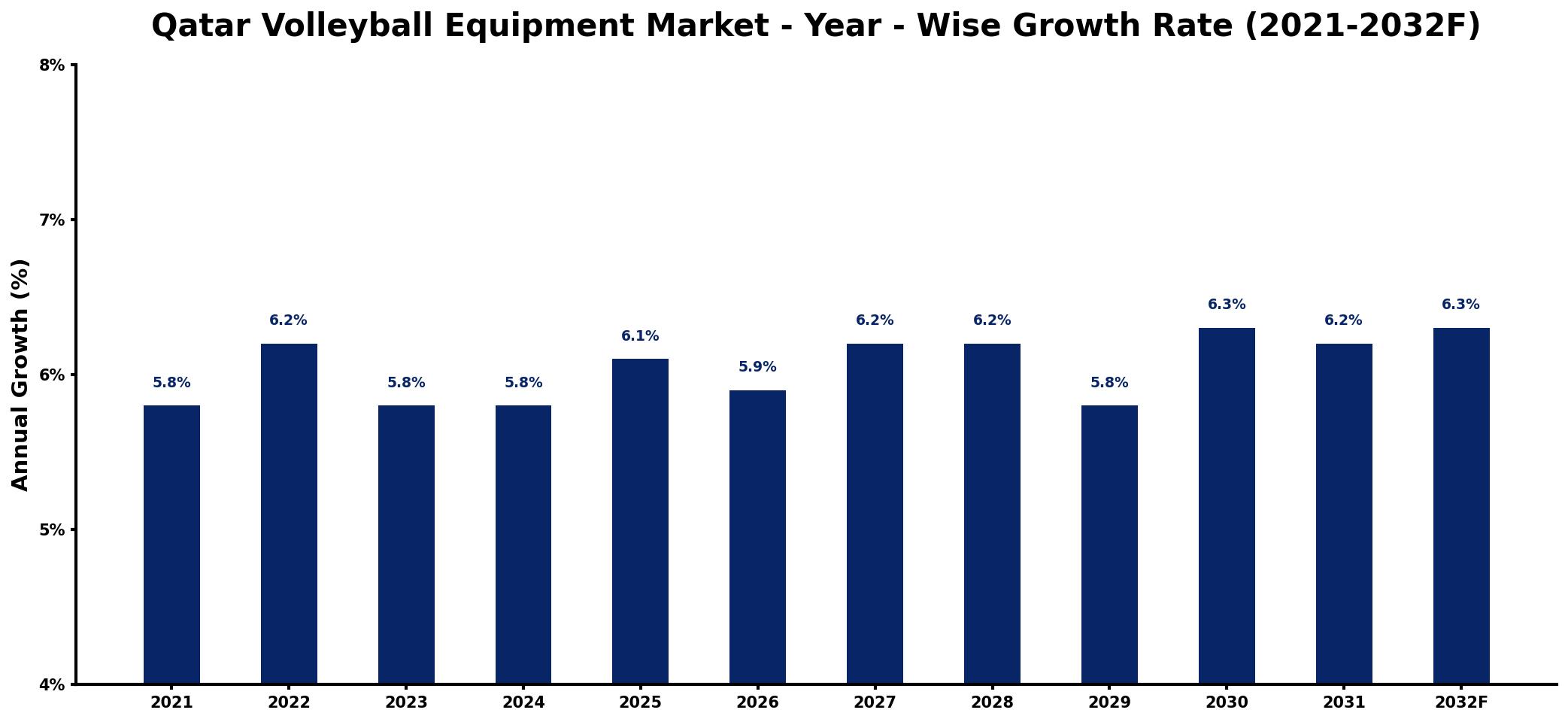
The table below presents the year‑wise growth rates along with the key drivers influencing the market
| Year | Growth Rate | Major Drivers |
| 2021 | 5.8% | Increased participation in sports |
| 2022 | 6.2% | Growing youth sports programs |
| 2023 | 5.8% | Emerging fitness trends popularity |
| 2024 | 5.8% | Rise in recreational leagues |
| 2025 | 6.1% | Expansion of sports facilities |
| 2026 | 5.9% | Increase in health awareness campaigns |
| 2027 | 6.2% | Boost in community engagement activities |
| 2028 | 6.2% | Growth of school sports initiatives |
| 2029 | 5.8% | Surge in local tournaments hosting |
| 2030 | 6.3% | Higher sponsorship investments seen |
| 2031 | 6.2% | Increased media coverage benefits |
| 2032 | 6.3% | increased production capacity utilization |
Note: Market size estimations and growth projections presented in this report are based on 6Wresearch's proprietary forecasting methodology, utilizing the latest available industry data, government publications, and primary research inputs.
Qatar Volleyball Equipment Market Synopsis
In recent years, volleyball has emerged as a prominent sport in Qatar, attracting a dedicated following among both athletes and enthusiasts. The influx of international competitions has not only elevated the sport's profile but also increased demand for high-quality volleyball equipment tailored to meet diverse needs, from professional to recreational play.
As community engagement through sports continues to rise, Qatars volleyball scene has experienced significant momentum. The expansion of sporting facilities and investment in local clubs have further stimulated interest in volleyball, underpinning the need for a comprehensive range of equipment, including nets, balls, and protective gear.
Qatar Volleyball Equipment Market Key Takeaways
- Significant growth projected in the market, with a CAGR of 5.2% from 2026 to 2032.
- Increasing emphasis on sports participation in schools and colleges is boosting equipment demand.
- International volleyball events hosted in Qatar are enhancing visibility and interest in the sport.
- Competitive dynamics exist with other sports vying for consumer attention and spending.
- Post-pandemic recovery has reignited interest in physical fitness and volleyball participation.
Evaluation of Restraints in Qatar Volleyball Equipment Market
The market for volleyball equipment in Qatar is challenged by seasonal fluctuations in interest and engagement. While there is a solid base of volleyball enthusiasts, factors such as changing weather conditions and the timing of international competitions can impact demand unpredictably. Moreover, the competition for consumers' discretionary spending from various sports and recreational activities poses a constant challenge. To maintain a consistent market, stakeholders must implement innovative marketing strategies that not only highlight the sport's competitive aspects but also promote its value in fostering community spirit and promoting healthy lifestyles.
Qatar Volleyball Equipment Market Trends
One notable trend is the increasing incorporation of technology in volleyball training and equipment, such as performance analytics tools and advanced materials in gear design. Additionally, the push for inclusivity in sports is gaining traction, leading to programs aimed at encouraging female participation and youth engagement in volleyball. Furthermore, grassroots initiatives are expanding, providing more recreational opportunities and creating a culture of engagement around the sport.
Qatar Volleyball Equipment Market Opportunities
As the market develops, there are substantial opportunities for growth in sectors such as digital engagement and community-based programs. Companies can capitalize on the demand for innovative equipment tailored to both serious athletes and casual players. Expanding e-commerce platforms and increasing access to volleyball gear online also represent areas for potential investment. Collaborations with educational institutions and local sports clubs can further amplify reach and promote the sport among youth populations.
Government Initiatives in the Qatar Volleyball Equipment Market
The Qatari government has placed a strong emphasis on sports development, recognizing its role in promoting health and community well-being. Initiatives include funding for sports facilities, community sports programs, and hosting international events aimed at elevating the profile of sports like volleyball. These efforts are not only enhancing the physical infrastructure for volleyball but are also fostering a culture of sportsmanship and teamwork among the population.
Future Insights of the Qatar Volleyball Equipment Market
Looking ahead to the years 2026-2032, the Qatar Volleyball Equipment Market is poised for continued expansion. As more young players are introduced to the sport and as participation rates rise, demand for quality equipment will grow. The successful hosting of international competitions is likely to bolster interest further, creating a cycle of engagement that supports long-term market health. Companies will need to stay ahead by innovating both product offerings and engagement strategies, ensuring they meet the evolving needs of the market.
Qatar Volleyball Equipment Market Latest Developments (2025 - 2026)
Recent developments in the Qatar volleyball equipment market indicate a shift towards sustainable practices, with manufacturers beginning to adopt eco-friendly materials in their products. Additionally, local sports events and amateur leagues have seen increased participation, driving demand for equipment. The community's enthusiasm continues to grow as initiatives aimed at promoting volleyball are gaining traction.
Qatar Volleyball Equipment Market - Key Attractiveness of the Report
- 10 Years of Market Numbers
- Historical Data Starting from 2022 to 2025
- Base Year: 2025
- Forecast Data until 2032
- Key Performance Indicators Impacting the Market
- Major Upcoming Developments and Projects
Key Highlights of the Report:
- Qatar Volleyball Equipment Market Outlook
- Market Size of Qatar Volleyball Equipment Market, 2025
- Forecast of Qatar Volleyball Equipment Market, 2032
- Historical Data and Forecast of Qatar Volleyball Equipment Revenues & Volume for the Period 2022-2032F
- Qatar Volleyball Equipment Market Trend Evolution
- Qatar Volleyball Equipment Market Drivers and Challenges
- Qatar Volleyball Equipment Price Trends
- Qatar Volleyball Equipment Porter's Five Forces
- Qatar Volleyball Equipment Industry Life Cycle
- Historical Data and Forecast of Qatar Volleyball Equipment Market Revenues & Volume By Product for the Period 2022-2032F
- Historical Data and Forecast of Qatar Volleyball Equipment Market Revenues & Volume By Balls for the Period 2022-2032F
- Historical Data and Forecast of Qatar Volleyball Equipment Market Revenues & Volume By Shoes for the Period 2022-2032F
- Historical Data and Forecast of Qatar Volleyball Equipment Market Revenues & Volume By Protective Gear for the Period 2022-2032F
- Historical Data and Forecast of Qatar Volleyball Equipment Market Revenues & Volume By Others for the Period 2022-2032F
- Historical Data and Forecast of Qatar Volleyball Equipment Market Revenues & Volume By Distribution channel for the Period 2022-2032F
- Historical Data and Forecast of Qatar Volleyball Equipment Market Revenues & Volume By Offline for the Period 2022-2032F
- Historical Data and Forecast of Qatar Volleyball Equipment Market Revenues & Volume By Online for the Period 2022-2032F
- Historical Data and Forecast of Qatar Volleyball Equipment Market Revenues & Volume By Sports Discipline for the Period 2022-2032F
- Historical Data and Forecast of Qatar Volleyball Equipment Market Revenues & Volume By Indoor Volleyball for the Period 2022-2032F
- Historical Data and Forecast of Qatar Volleyball Equipment Market Revenues & Volume By Beach Volleyball for the Period 2022-2032F
- Qatar Volleyball Equipment Import Export Trade Statistics
- Market Opportunity Assessment By Product
- Market Opportunity Assessment By Distribution channel
- Market Opportunity Assessment By Sports Discipline
- Qatar Volleyball Equipment Top Companies Market Share
- Qatar Volleyball Equipment Competitive Benchmarking By Technical and Operational Parameters
- Qatar Volleyball Equipment Company Profiles
- Qatar Volleyball Equipment Key Strategic Recommendations






































