Qatar Wardrobes Market Summary
The qatar wardrobes market was estimated at USD 420 Million in 2025 and is projected to reach USD 583 Million by 2032, growing at a CAGR of 5.4% from 2026 to 2032.
Qatar Wardrobes Market Year-wise Growth Rate and Key Drivers
This graph highlights how the Qatar Wardrobes Market has steadily grown over the past five years, supported by major growth factors.
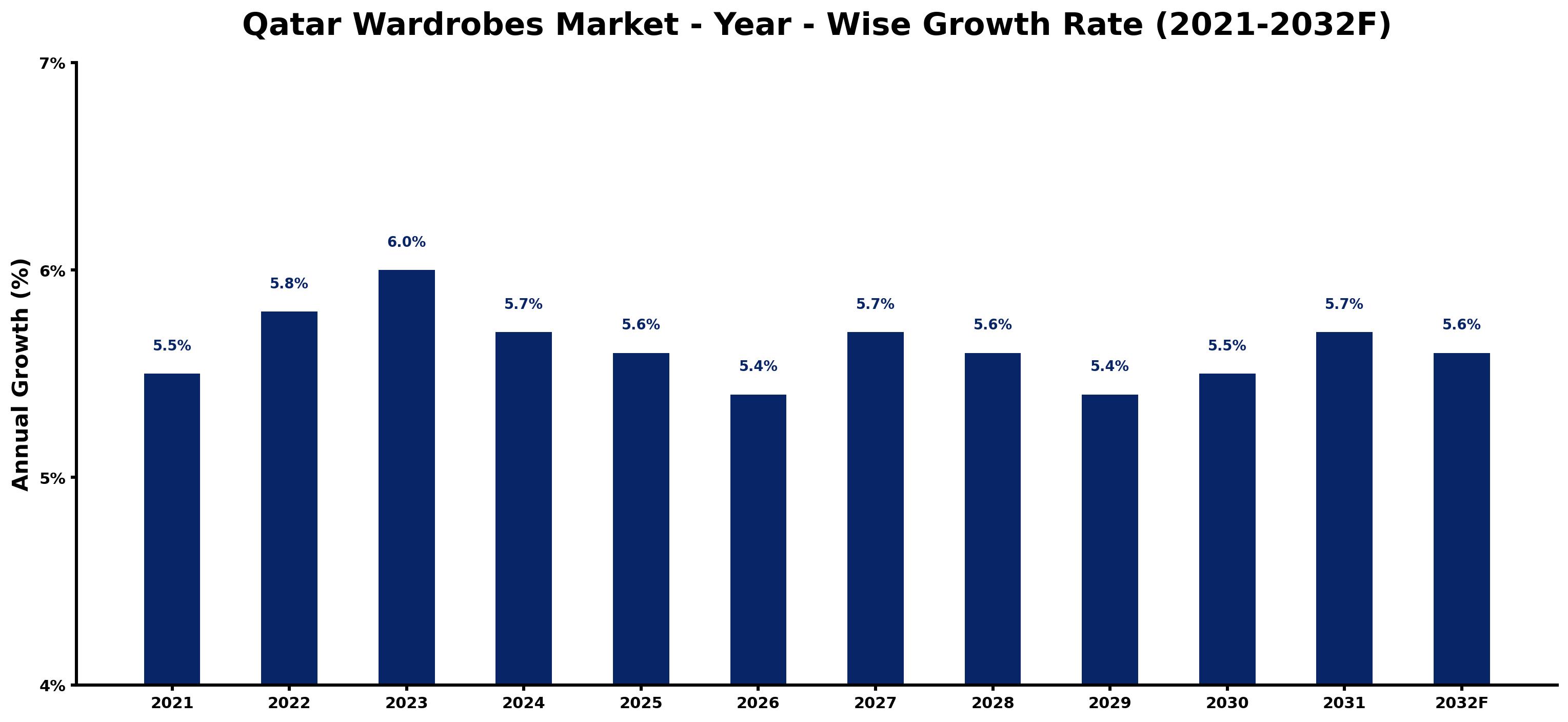
The table below presents the year wise growth rates along with the key drivers influencing the market
| Year | Growth Rate | Major Drivers |
| 2021 | 5.5% | Post-lockdown retail projects reopened, enhancing consumer accessibility to wardrobe options. |
| 2022 | 5.8% | Luxury brands entered the Qatari market, offering tailored wardrobe solutions for affluent consumers. |
| 2023 | 6.0% | Sustainability trends prompted brands to introduce eco-friendly materials for wardrobe production. |
| 2024 | 5.7% | Increased foreign investments in real estate spurred demand for high-quality wardrobes. |
| 2025 | 5.6% | Emerging tech in furniture design attracted younger buyers seeking smart wardrobe features. |
| 2026 | 5.4% | Cultural events in Qatar highlighted local craftsmanship in bespoke wardrobe creations. |
| 2027 | 5.7% | Urbanization intensified, with new developments demanding innovative and space-efficient wardrobe designs. |
| 2028 | 5.6% | E-commerce platforms catered to online shoppers, expanding wardrobe selection and convenience. |
| 2029 | 5.4% | Interior design trends shifted towards minimalism, impacting wardrobe style preferences significantly. |
| 2030 | 5.5% | Local artisans gained recognition, driving interest in handmade, unique wardrobe offerings. |
| 2031 | 5.7% | Partnerships between designers and architects enhanced integrated wardrobe solutions for modern homes. |
| 2032 | 5.6% | Smart home technology integration created new opportunities for high-tech wardrobe functionalities. |
Note - Market size estimations and growth projections presented in this report are based on 6Wresearch's advanced forecasting approach, validated with industry datasets as of June 2026.
Qatar Wardrobes Market Synopsis
The Qatar Wardrobes Market is projected to reach 5.4% and witness significant growth during the forecast period (2026-2032). This growth trajectory is primarily influenced by the robust expansion of the real estate and construction sectors within the country, which are essential components driving demand for storage solutions in both residential and commercial spaces.
Qatar Wardrobes Market Growth Drivers
The factors fueling the growth of the Qatar wardrobes market are multifaceted and interconnected.
- Investment in infrastructure development plays a crucial role, as ongoing urbanization projects create a surge in new residential and commercial properties, leading to an increased need for effective storage solutions.
- Rising disposable incomes have significantly altered consumer purchasing behaviors, allowing for the acquisition of more aesthetically appealing and functional wardrobe options that align with modern lifestyles.
- Shifts in consumer preferences towards home decor have prompted an increased appreciation for custom and stylish wardrobe designs, consequently boosting demand.
- Technological advancements within the furniture industry, such as modular designs and built-in lighting features, have made wardrobes not only more functional but also more desirable to consumers, catering to the evolving marketplace.
- The growing trend of customization in furniture enables consumers to create tailored storage solutions that meet specific needs, thus further driving the market's expansion.
Qatar Wardrobes Market Challenges and Restraints
While the Qatar wardrobes market has significant growth potential, it is not without its challenges.
- Economic fluctuations and uncertainties, particularly stemming from events such as the Covid-19 pandemic, have led to a temporary dip in consumer spending and investment in the real estate market, ultimately constraining demand for new wardrobes.
- The presence of affordable alternatives and second-hand furniture in the market has intensified competition, particularly among budget-conscious consumers, slowing down sales of new wardrobe products.
- Logistical challenges prompted by global supply chain disruptions can result in limited availability of specific wardrobe models and materials, affecting retailers' ability to meet consumer demand promptly.
- Rapid changes in consumer preferences and market trends necessitate ongoing innovation and adaptation by manufacturers, which can be a resource-intensive process that some entities may struggle to manage effectively.
- Regulatory challenges surrounding material sourcing and environmental sustainability can pose obstacles for manufacturers seeking to align with evolving market standards and consumer expectations.
Qatar Wardrobes Market Trends and Opportunities
Emerging trends within the Qatar wardrobes market present numerous opportunities for growth and innovation.
- The rising inclination towards eco-friendly and sustainable materials in furniture production is gaining traction as consumers become increasingly aware of their environmental impact, creating a niche for manufacturers who prioritize sustainable practices.
- The growing digital transformation in retail, including e-commerce platforms and virtual showrooms, offers opportunities for brands to reach consumers more effectively and cater to diverse consumer preferences.
- Smart home integration is becoming a focal point for modern furniture design, with innovations such as smart storage solutions generating interest among technology-savvy consumers.
- Collaborations with interior designers and architects are increasingly commonplace, allowing manufacturers to create bespoke wardrobe solutions tailored to specific client needs in new developments.
- Expanding into untapped markets such as luxury segments or affordable housing projects can provide avenues for players to diversify and broaden their customer base.
Qatar Wardrobes Market Government Investment and Initiatives
The government's investment and initiatives play an essential role in shaping the Qatar wardrobes market landscape.
- Qatar's National Vision 2030 promotes economic diversification and sustainable development, which positively influences the real estate and construction sectors, consequently bolstering the wardrobes market.
- Public spending on infrastructure, including housing developments and urban regeneration projects, fosters an environment conducive to the growth of the wardrobes market as demand for storage solutions escalates.
- Regulatory frameworks encouraging foreign investment and partnerships in the furniture industry create pathways for increased competition and innovation.
- Incentives for green building practices, which often include storage solutions, align with the global shift towards sustainability and can enhance demand for eco-friendly wardrobes.
- Government-led initiatives to enhance living standards through improved housing solutions naturally lead to increased investment in furniture, including wardrobes, positioning the market for growth.
Qatar Wardrobes Market Latest Developments (May 2025 - June 2026)
The period from May 2025 to June 2026 has seen notable developments impacting the Qatar wardrobes market.
- The industry has witnessed a shift towards online sales and digital consultations, as manufacturers and retailers adapt to changing consumer behaviors stemming from the Covid-19 pandemic.
- Supply chain recovery efforts have begun, with many manufacturers reinstating their operations and ensuring product availability to meet the pent-up demand from consumers.
- Innovative features, including integrated technology in wardrobe design, have gained traction, with consumers increasingly seeking smart solutions that enhance functionality.
- The demand for customization options has surged, reflecting a broader trend in consumer preferences for unique and personalized home furnishings.
- Trade fairs and exhibitions have resumed, providing a platform for networking and showcasing new products, thereby revitalizing interest in the wardrobes market.
Qatar Wardrobes Market - Key Attractiveness of the Report
- 10 Years of Market Numbers
- Historical Data Starting from 2022 to 2025
- Base Year: 2025
- Forecast Data until 2032
- Key Performance Indicators Impacting the Market
- Major Upcoming Developments and Projects
Key Highlights of the Report:
- Qatar Wardrobes Market Outlook
- Market Size of Qatar Wardrobes Market, 2025
- Forecast of Qatar Wardrobes Market, 2032
- Historical Data and Forecast of Qatar Wardrobes Revenues & Volume for the Period 2022-2032F
- Qatar Wardrobes Market Trend Evolution
- Qatar Wardrobes Market Drivers and Challenges
- Qatar Wardrobes Price Trends
- Qatar Wardrobes Porter's Five Forces
- Qatar Wardrobes Industry Life Cycle
- Historical Data and Forecast of Qatar Wardrobes Market Revenues & Volume By Type for the Period 2022-2032F
- Historical Data and Forecast of Qatar Wardrobes Market Revenues & Volume By Finished Wardrobes for the Period 2022-2032F
- Historical Data and Forecast of Qatar Wardrobes Market Revenues & Volume By Customized Wardrobes for the Period 2022-2032F
- Historical Data and Forecast of Qatar Wardrobes Market Revenues & Volume By Application for the Period 2022-2032F
- Historical Data and Forecast of Qatar Wardrobes Market Revenues & Volume By Residential Use for the Period 2022-2032F
- Historical Data and Forecast of Qatar Wardrobes Market Revenues & Volume By Commercial Use for the Period 2022-2032F
- Qatar Wardrobes Import Export Trade Statistics
- Market Opportunity Assessment By Type
- Market Opportunity Assessment By Application
- Qatar Wardrobes Top Companies Market Share
- Qatar Wardrobes Competitive Benchmarking By Technical and Operational Parameters
- Qatar Wardrobes Company Profiles
- Qatar Wardrobes Key Strategic Recommendations






































