Russia AI in IoT Market Size & Growth Rate (2026-2032)
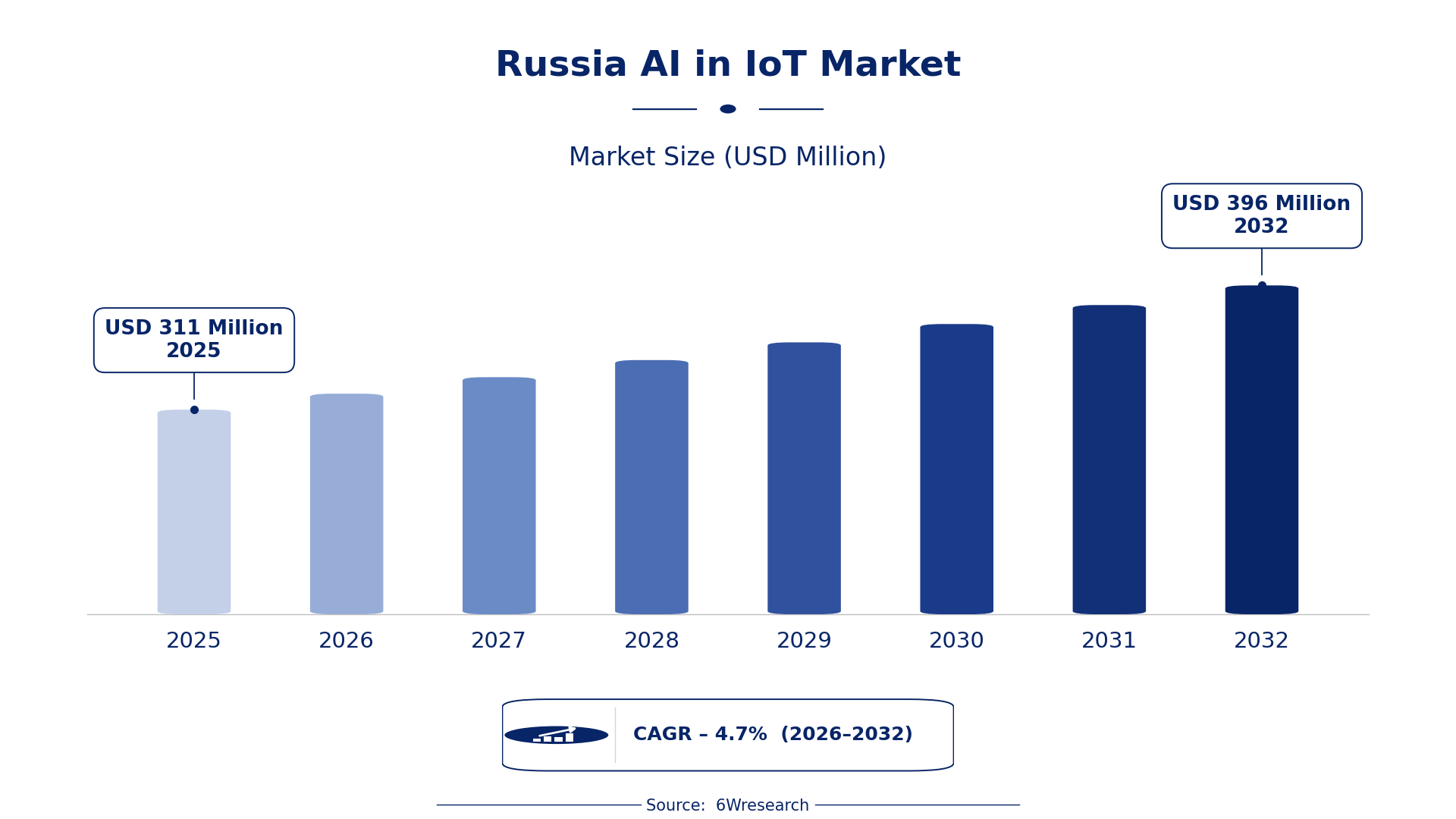
The Russia AI in IoT Market was estimated at USD 311 Million in 2025 and is projected to reach USD 396 Million by 2032, growing at a CAGR of 4.7% from 2026 to 2032.
Russia AI in IoT Market Synopsis
The demand for AI-integrated IoT solutions in Russia is surging, particularly in sectors like manufacturing and healthcare. Businesses are increasingly recognizing how these technologies can streamline operations, enhance decision-making, and drive productivity. This growth is marked by a significant shift towards predictive analytics and automation, which are becoming critical for maintaining competitive advantages.
Amid this growth, the Russian market is also facing challenges related to data security and a shortage of skilled professionals. Despite these hurdles, the commitment from both the private and public sectors to invest in AI technologies is creating a fertile environment for innovation. Stakeholders are actively seeking solutions that can ensure compliance while maximizing the benefits of AI in IoT.
Russia AI in IoT Market Year-wise Growth Rate and Key Drivers
This graph illustrates the annual growth rates of the Russia AI in IoT Market from 2021 to 2032, highlighting a steady upward trajectory and projected expansion over the forecast period.
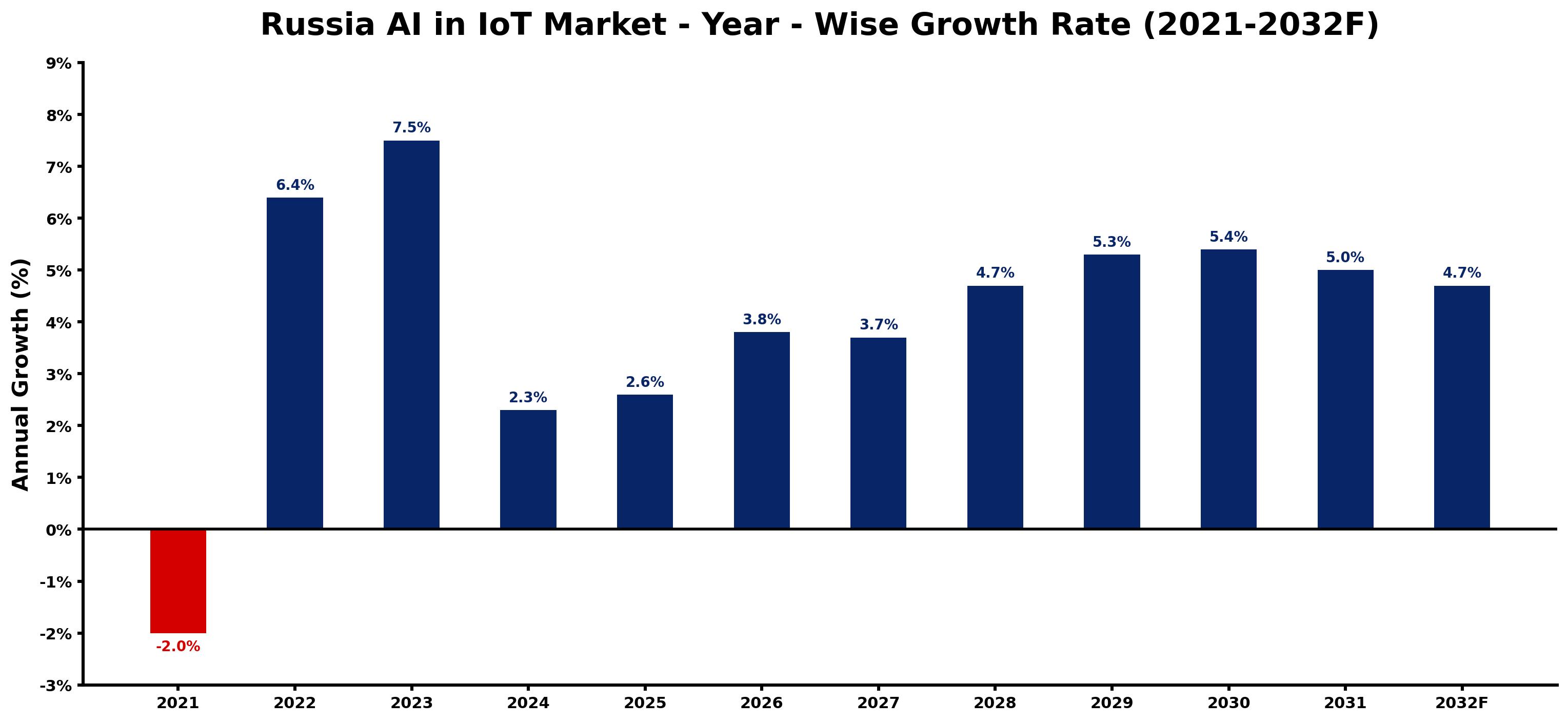
The table below presents the year‑wise growth rates along with the key drivers influencing the market
| Year | Growth Rate | Major Drivers |
| 2021 | -2.0% | Increased sanctions impacting technology imports and investments. |
| 2022 | 6.4% | Government funding boosts AI research in IoT technologies. |
| 2023 | 7.5% | Increased cyber-physical systems integration in Russian industries. |
| 2024 | 2.3% | Local startups driving innovation in IoT devices. |
| 2025 | 2.6% | Heightened focus on smart home solutions by consumers. |
| 2026 | 3.8% | Regulatory support for IoT infrastructure development initiatives. |
| 2027 | 3.7% | Collaborations with tech universities enhance IoT workforce skills. |
| 2028 | 4.7% | Rising interest in AI-driven industrial automation applications. |
| 2029 | 5.3% | Enhanced 5G rollout facilitates IoT expansion across sectors. |
| 2030 | 5.4% | Growing investment in connected vehicle technologies in Russia. |
| 2031 | 5.0% | Government initiatives promoting green IoT solutions gain traction. |
| 2032 | 4.7% | Increased adoption of AI analytics in Russian retail. |
Note: Market size estimations and growth projections presented in this report are based on 6Wresearch's proprietary forecasting methodology, utilizing the latest available industry data, government publications, and primary research inputs.
Russia AI in IoT Market Key Takeaways
Below are some of the specific key takeaways from the market, including:
- The integration of AI in IoT is enhancing operational efficiencies across various industries.
- Government initiatives are fostering digital transformation, driving market growth.
- Data security remains a critical concern, impacting consumer trust and adoption rates.
- A shortage of skilled professionals is hindering the pace of innovation in AI and IoT.
- Investment opportunities exist in AI startups focused on IoT applications and cybersecurity solutions.
Evaluation of Restraints in Russia AI in IoT Market
The Russia AI in IoT market is grappling with several restraints that could hamper its growth trajectory. Data privacy concerns are paramount, as consumers remain hesitant about sharing sensitive information with AI-powered IoT devices. Additionally, the skills gap in AI and IoT technologies poses a significant challenge; many companies struggle to find professionals who can develop and implement innovative solutions. on top of that, regulatory barriers complicate the operational landscape, often causing delays in project execution and limiting access to advanced technologies. To surmount these challenges, a collaborative approach involving government, industry, and educational institutions is essential.
Russia AI in IoT Market Trends
A notable trend in the Russia AI in IoT market is the increasing reliance on predictive maintenance and real-time analytics. Organizations are deploying sophisticated AI algorithms to monitor equipment performance and anticipate failures before they occur. This proactive approach minimizes downtime and enhances productivity. Additionally, the focus on cybersecurity is intensifying, with companies investing in advanced protective measures to safeguard data integrity. As businesses continue to adapt, the emphasis on tailored AI solutions for specific IoT applications is expected to grow, paving the way for innovative developments.
Russia AI in IoT Market Opportunities
The potential for growth in the Russia AI in IoT market is immense, particularly in sectors such as healthcare, transportation, and smart city initiatives. The increasing adoption of IoT devices across these industries signifies a rising demand for AI solutions that can enhance efficiency and optimize operations. Investments in AI-driven cybersecurity technologies also represent a significant opportunity, addressing the urgent need for data protection in IoT networks. Stakeholders who can provide effective, innovative solutions will find a receptive market eager for advancements that drive digital transformation.
Government Initiatives in the Russia AI in IoT Market
The Russian government is actively promoting the growth of AI and IoT technologies through various initiatives aimed at bolstering digital infrastructure and regulatory frameworks. This proactive stance is crucial for establishing a supportive environment that encourages innovation and investment in these sectors. With ongoing support for digital transformation, the government's initiatives are shaping the future of the Russia AI in IoT market.
- A recently completed initiative includes the launch of the "Digital Economy of the Russian Federation" program, which aims to improve digital technology infrastructure.
- Currently underway is the "Strategy for the Development of Artificial Intelligence," which outlines specific objectives to boost innovation in AI technologies.
- A planned public-private partnership expected to expand telecom infrastructure access by 2028 will facilitate better connectivity for IoT devices.
- New regulatory frameworks introduced in 2025 are aimed at enhancing data protection and cybersecurity standards for AI applications.
- An initiative focusing on educational programs for AI and IoT skills is currently being developed to address the workforce gap in these technologies.
Future Insights of the Russia AI in IoT Market
Looking ahead to 2026-2032, the Russia AI in IoT market is set for substantial growth. The ongoing digital transformation across industries will drive demand for AI technologies that enhance IoT applications. As organizations increasingly adopt automation and predictive analytics, the market will benefit from advancements in AI algorithms that improve operational efficiencies. Government support and investment from key market players will likely foster an environment ripe for innovation, paving the way for new applications and business models.
Russia AI in IoT Market Latest Developments
In the past year, the Russia AI in IoT market has witnessed considerable activity, reflecting a strong commitment to technological advancement. Companies are rapidly pursuing innovations to capture market share, while government policies are aligning to support this growth. This combination of industry and public sector efforts is setting the stage for a transformative period in the market.
- A major technology vendor announced a new AI-enhanced IoT platform in early 2025, aimed at improving operational efficiencies for manufacturing clients.
- In mid-2025, a leading regional operator began rolling out an IoT network upgrade to enhance connectivity and support AI applications across multiple sectors.
- Plans for a cybersecurity technology initiative were revealed in early 2025, expected to bolster protections for IoT devices against emerging threats.
- An upcoming partnership between educational institutions and tech firms is slated to start in late 2026, focusing on developing AI and IoT expertise.
- By mid-2026, a pilot program for smart city solutions integrating AI with IoT is expected to launch, showcasing new urban management capabilities.
Russia AI in IoT Market - Key Attractiveness of the Report
- 10 Years of Market Numbers
- Historical Data Starting from 2022 to 2025
- Base Year: 2025
- Forecast Data until 2032
- Key Performance Indicators Impacting the Market
- Major Upcoming Developments and Projects
Key Highlights of the Report:
- Russia AI in IoT Market Outlook
- Market Size of Russia AI in IoT Market, 2025
- Forecast of Russia AI in IoT Market, 2032
- Historical Data and Forecast of Russia AI in IoT Revenues & Volume for the Period 2022-2032F
- Russia AI in IoT Market Trend Evolution
- Russia AI in IoT Market Drivers and Challenges
- Russia AI in IoT Price Trends
- Russia AI in IoT Porter's Five Forces
- Russia AI in IoT Industry Life Cycle
- Historical Data and Forecast of Russia AI in IoT Market Revenues & Volume By Component for the Period 2022-2032F
- Historical Data and Forecast of Russia AI in IoT Market Revenues & Volume By Platforms for the Period 2022-2032F
- Historical Data and Forecast of Russia AI in IoT Market Revenues & Volume By Software Solutions for the Period 2022-2032F
- Historical Data and Forecast of Russia AI in IoT Market Revenues & Volume By Services for the Period 2022-2032F
- Historical Data and Forecast of Russia AI in IoT Market Revenues & Volume By Vertical for the Period 2022-2032F
- Historical Data and Forecast of Russia AI in IoT Market Revenues & Volume By Manufacturing for the Period 2022-2032F
- Historical Data and Forecast of Russia AI in IoT Market Revenues & Volume By Energy and Utilities for the Period 2022-2032F
- Historical Data and Forecast of Russia AI in IoT Market Revenues & Volume By Transportation and Mobility for the Period 2022-2032F
- Historical Data and Forecast of Russia AI in IoT Market Revenues & Volume By BFSI for the Period 2022-2032F
- Historical Data and Forecast of Russia AI in IoT Market Revenues & Volume By Government and Defense for the Period 2022-2032F
- Historical Data and Forecast of Russia AI in IoT Market Revenues & Volume By Retail for the Period 2022-2032F
- Historical Data and Forecast of Russia AI in IoT Market Revenues & Volume By Healthcare and Life Sciences for the Period 2022-2032F
- Historical Data and Forecast of Russia AI in IoT Market Revenues & Volume By Telecom for the Period 2022-2032F
- Historical Data and Forecast of Russia AI in IoT Market Revenues & Volume By Technology for the Period 2022-2032F
- Historical Data and Forecast of Russia AI in IoT Market Revenues & Volume By ML and Deep Learning for the Period 2022-2032F
- Historical Data and Forecast of Russia AI in IoT Market Revenues & Volume By NLP for the Period 2022-2032F
- Russia AI in IoT Import Export Trade Statistics
- Market Opportunity Assessment By Component
- Market Opportunity Assessment By Vertical
- Market Opportunity Assessment By Technology
- Russia AI in IoT Top Companies Market Share
- Russia AI in IoT Competitive Benchmarking By Technical and Operational Parameters
- Russia AI in IoT Company Profiles
- Russia AI in IoT Key Strategic Recommendations






































