Russia Applicant Tracking System Market Size & Growth Rate (2026-2032)
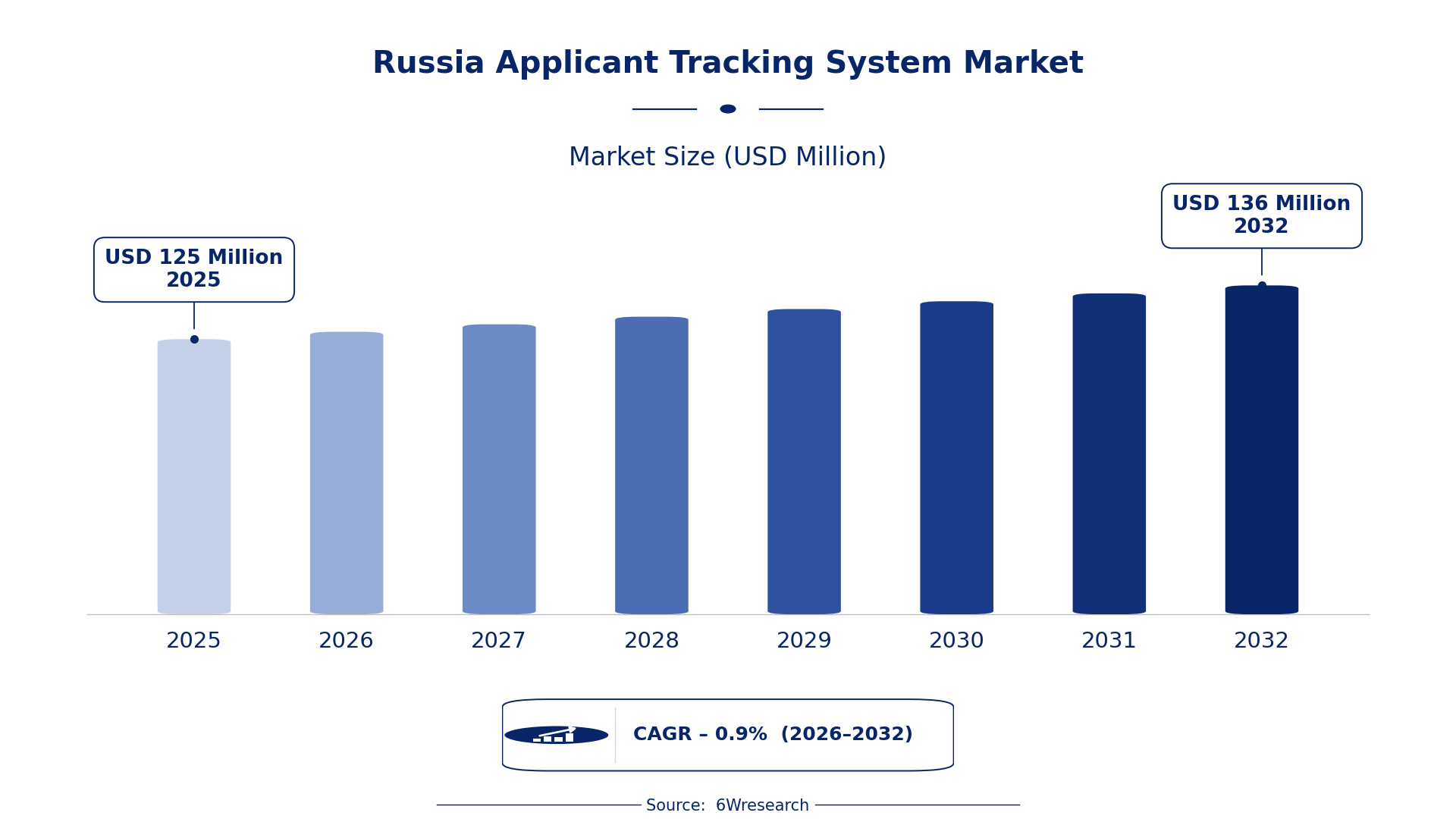
The Russia Applicant Tracking System Market was estimated at USD 125 Million in 2025 and is projected to reach USD 136 Million by 2032, growing at a CAGR of 0.9% from 2026 to 2032.
Russia Applicant Tracking System Market Synopsis
The Russia Applicant Tracking System (ATS) market is evolving as companies increasingly recognize the need for efficient recruitment processes. A growing emphasis on enhancing candidate experiences and streamlining hiring workflows is driving adoption across various sectors, from IT to manufacturing.
Organizations are prioritizing data-driven decision-making, with advanced features such as analytics and automated tracking becoming standard in ATS solutions. This shift is indicative of a broader trend toward integrating technology in HR practices, promising a bright future for the ATS market in Russia.
Russia Applicant Tracking System Market Year-wise Growth Rate and Key Drivers
This graph illustrates the annual growth rates of the Russia Applicant Tracking System Market from 2021 to 2032, highlighting a steady upward trajectory and projected expansion over the forecast period.
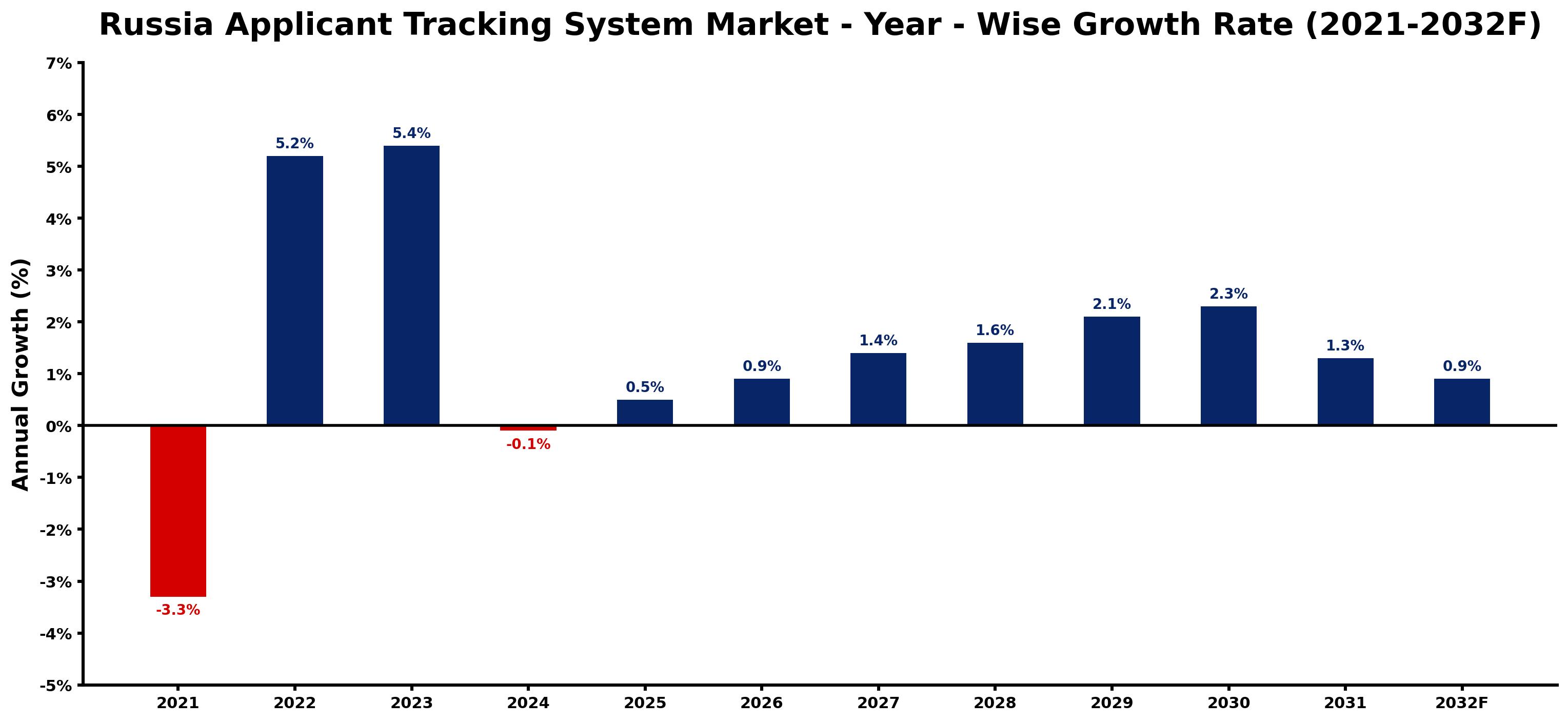
The table below presents the year‑wise growth rates along with the key drivers influencing the market
| Year | Growth Rate | Major Drivers |
| 2021 | -3.3% | Client budget cuts due to economic sanctions impact |
| 2022 | 5.2% | Increased remote hiring due to pandemic workforce shifts |
| 2023 | 5.4% | Growing adoption of AI for candidate screening |
| 2024 | -0.1% | Decreased demand from shrinking recruitment agencies in Russia |
| 2025 | 0.5% | Enhanced recruitment analytics from local tech innovations |
| 2026 | 0.9% | Demand for employer branding tools among Russian firms |
| 2027 | 1.4% | Regulatory push for digital transformation in HR processes |
| 2028 | 1.6% | Increased focus on diversity hiring initiatives |
| 2029 | 2.1% | Rise in e-commerce driving online recruitment needs |
| 2030 | 2.3% | Support from local venture capital for HR tech startups |
| 2031 | 1.3% | Emergence of specific university programs in HR technology |
| 2032 | 0.9% | Integration of psychometric testing in hiring practices |
Note: Market size estimations and growth projections presented in this report are based on 6Wresearch's proprietary forecasting methodology, utilizing the latest available industry data, government publications, and primary research inputs.
Russia Applicant Tracking System Market Key Takeaways
Below are some of the specific key takeaways from the market, including:
- Increasing demand for efficient recruitment processes is driving ATS adoption.
- Cloud-based solutions are gaining traction due to their flexibility and cost-effectiveness.
- The integration of AI and machine learning is transforming traditional hiring practices.
- Compliance with local regulations is becoming essential for ATS providers.
- Investment opportunities exist for customizable and user-friendly ATS solutions.
Evaluation of Restraints in Russia Applicant Tracking System Market
Despite steady growth, the Russia ATS market faces notable challenges. Localization to meet specific cultural and language needs can complicate implementation for many providers. on top of that, stringent data privacy regulations demand rigorous compliance, which may deter smaller companies from entering the market. These factors create a complex environment for ATS vendors, who must navigate local intricacies while remaining competitive against established players.
Russia Applicant Tracking System Market Trends
Current trends indicate a marked shift toward cloud-based ATS solutions that offer scalability and flexibility to businesses. Companies are increasingly seeking solutions that incorporate artificial intelligence to enhance recruitment efficiency, automate repetitive tasks, and analyze candidate data more effectively. This inclination towards technology is shaping the future of recruitment in Russia, as organizations strive to improve their hiring strategies.
Russia Applicant Tracking System Market Opportunities
Investment opportunities in the Russia ATS market are expanding, particularly for providers who can offer tailored solutions that align with local compliance and cultural needs. As organizations look to enhance their recruitment processes, there is a growing appetite for features like candidate tracking and analytics. The rising emphasis on AI and machine learning capabilities further enhances the potential for growth in this sector, making it an attractive arena for investors.
Government Initiatives in the Russia Applicant Tracking System Market
Government policy plays a critical role in shaping the Russia Applicant Tracking System market, particularly concerning data protection and recruitment regulations. These policies aim to foster transparency and fairness in hiring practices while ensuring the protection of personal information. Adherence to these regulations is essential for ATS providers operating in the market, influencing both compliance strategies and market entry approaches.
- A regulatory framework implemented in 2023 mandates data protection protocols for ATS providers.
- Current initiatives are focused on enhancing recruitment transparency and preventing discrimination in hiring processes.
- A planned government review of recruitment policies is expected to take place in 2025, potentially impacting ATS regulations.
- Ongoing training programs for HR professionals on compliance with data privacy laws are being rolled out in collaboration with industry stakeholders.
- Upcoming public consultations aimed at refining ATS regulations are scheduled for late 2026.
Future Insights of the Russia Applicant Tracking System Market
Looking ahead to 2026-2032, the Russia ATS market is set for steady growth as organizations increasingly embrace technology in recruitment. The focus on improving candidate experiences and streamlining hiring processes will drive demand for advanced ATS solutions. on top of that, the integration of AI and machine learning features will likely reshape recruitment strategies, making them more efficient and data-centric.
Russia Applicant Tracking System Market Latest Developments
In the past year, the Russia ATS market has seen significant advancements as companies seek to enhance their hiring capabilities. Numerous vendors have launched innovative solutions aimed at addressing local compliance and improving user experiences. This ongoing activity reflects a dynamic environment where organizations are keen to adopt cutting-edge technologies in their recruitment processes.
- A leading technology vendor launched a new cloud-based ATS solution in early 2025, focused on AI-driven analytics.
- An initiative began in Q3 2025 to integrate machine learning capabilities into existing ATS platforms, enhancing candidate matching processes.
- By mid-2026, a major regional player is expected to expand its ATS offerings to include mobile optimization features.
- A partnership between ATS providers and local HR firms is currently underway, aimed at developing customized solutions for specific industry needs.
- An upgrade to existing ATS systems focusing on user experience is planned for late 2026.
Russia Applicant Tracking System Market - Key Attractiveness of the Report
- 10 Years of Market Numbers
- Historical Data Starting from 2022 to 2025
- Base Year: 2025
- Forecast Data until 2032
- Key Performance Indicators Impacting the Market
- Major Upcoming Developments and Projects
Key Highlights of the Report:
- Russia Applicant Tracking System Market Outlook
- Market Size of Russia Applicant Tracking System Market, 2025
- Forecast of Russia Applicant Tracking System Market, 2032
- Historical Data and Forecast of Russia Applicant Tracking System Revenues & Volume for the Period 2022-2032F
- Russia Applicant Tracking System Market Trend Evolution
- Russia Applicant Tracking System Market Drivers and Challenges
- Russia Applicant Tracking System Price Trends
- Russia Applicant Tracking System Porter's Five Forces
- Russia Applicant Tracking System Industry Life Cycle
- Historical Data and Forecast of Russia Applicant Tracking System Market Revenues & Volume By Component for the Period 2022-2032F
- Historical Data and Forecast of Russia Applicant Tracking System Market Revenues & Volume By Software for the Period 2022-2032F
- Historical Data and Forecast of Russia Applicant Tracking System Market Revenues & Volume By Services for the Period 2022-2032F
- Historical Data and Forecast of Russia Applicant Tracking System Market Revenues & Volume By Organization Size for the Period 2022-2032F
- Historical Data and Forecast of Russia Applicant Tracking System Market Revenues & Volume By SMEs for the Period 2022-2032F
- Historical Data and Forecast of Russia Applicant Tracking System Market Revenues & Volume By Large Enterprises for the Period 2022-2032F
- Historical Data and Forecast of Russia Applicant Tracking System Market Revenues & Volume By Deployment Mode for the Period 2022-2032F
- Historical Data and Forecast of Russia Applicant Tracking System Market Revenues & Volume By On-Premises for the Period 2022-2032F
- Historical Data and Forecast of Russia Applicant Tracking System Market Revenues & Volume By Cloud for the Period 2022-2032F
- Historical Data and Forecast of Russia Applicant Tracking System Market Revenues & Volume By Vertical for the Period 2022-2032F
- Historical Data and Forecast of Russia Applicant Tracking System Market Revenues & Volume By BFSI for the Period 2022-2032F
- Historical Data and Forecast of Russia Applicant Tracking System Market Revenues & Volume By Government for the Period 2022-2032F
- Historical Data and Forecast of Russia Applicant Tracking System Market Revenues & Volume By Manufacturing for the Period 2022-2032F
- Historical Data and Forecast of Russia Applicant Tracking System Market Revenues & Volume By Telecom and IT for the Period 2022-2032F
- Historical Data and Forecast of Russia Applicant Tracking System Market Revenues & Volume By Consumer Goods and Retail for the Period 2022-2032F
- Historical Data and Forecast of Russia Applicant Tracking System Market Revenues & Volume By Healthcare and Lifesciencs for the Period 2022-2032F
- Historical Data and Forecast of Russia Applicant Tracking System Market Revenues & Volume By Energy and Utilities for the Period 2022-2032F
- Historical Data and Forecast of Russia Applicant Tracking System Market Revenues & Volume By Transportation and Logistics for the Period 2022-2032F
- Russia Applicant Tracking System Import Export Trade Statistics
- Market Opportunity Assessment By Component
- Market Opportunity Assessment By Organization Size
- Market Opportunity Assessment By Deployment Mode
- Market Opportunity Assessment By Vertical
- Russia Applicant Tracking System Top Companies Market Share
- Russia Applicant Tracking System Competitive Benchmarking By Technical and Operational Parameters
- Russia Applicant Tracking System Company Profiles
- Russia Applicant Tracking System Key Strategic Recommendations






































