Saudi Arabia Ginseng Extract Market: Import Trend Analysis
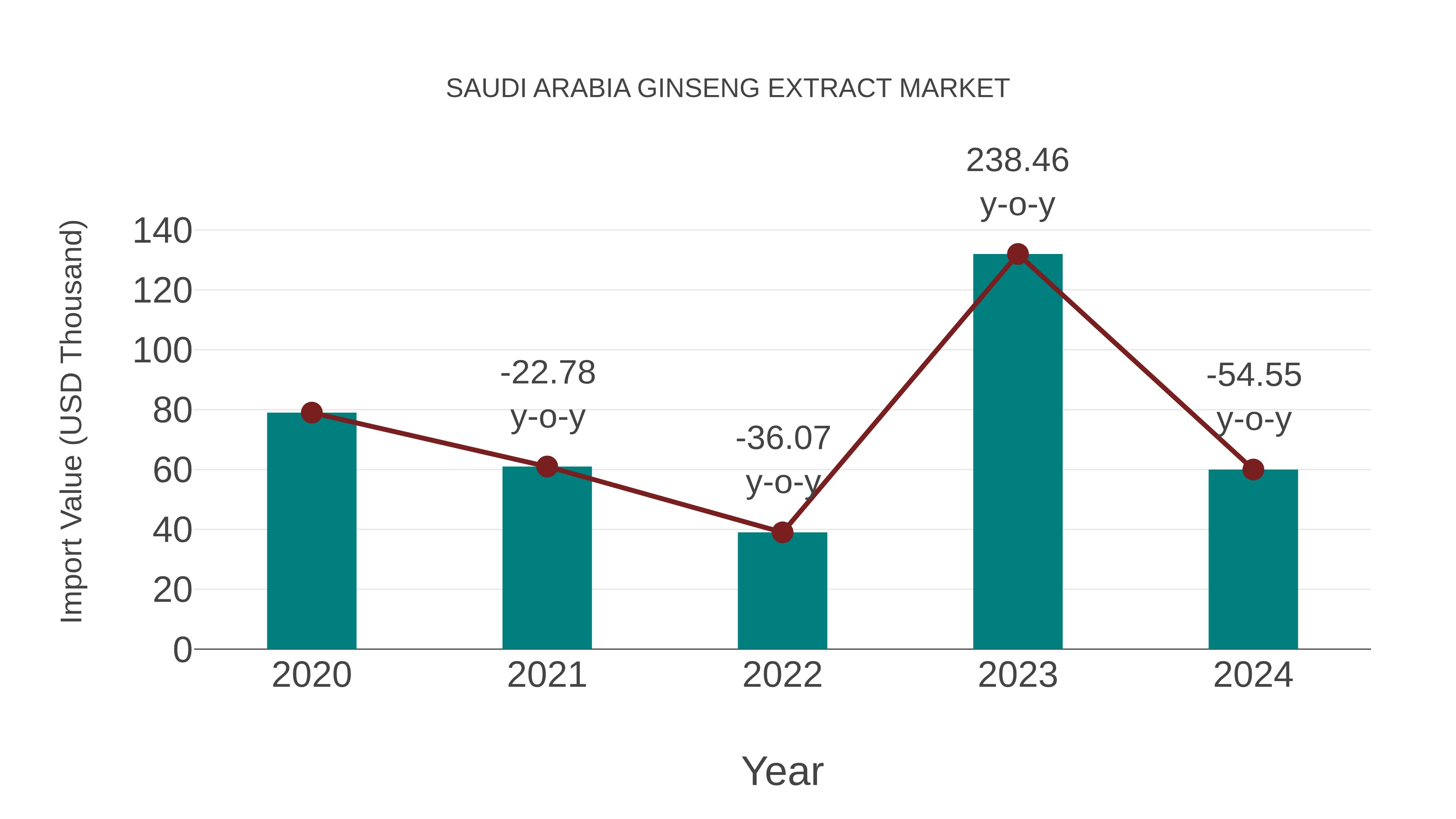
In the Saudi Arabia ginseng extract market, the import trend experienced a decline, with a growth rate of -54.55% from 2023 to 2024 and a CAGR of -6.65% from 2020 to 2024. This negative momentum can be attributed to shifting consumer preferences or changes in import regulations impacting market stability.
Saudi Arabia Ginseng Extract Market Overview
The Saudi Arabia ginseng extract market is experiencing steady growth due to increasing consumer awareness about the health benefits of ginseng. Ginseng extract is widely used in traditional medicine for its potential to boost energy levels, improve cognitive function, and enhance overall well-being. The market is driven by the growing demand for natural and herbal supplements, as consumers seek alternatives to synthetic products. Key players in the Saudi market are focusing on product innovation, such as offering ginseng extract in various forms like capsules, powders, and teas, to cater to different consumer preferences. With a rising health-conscious population and a shift towards natural remedies, the Saudi ginseng extract market is poised for further expansion in the coming years.
Saudi Arabia Ginseng Extract Market Trends
In Saudi Arabia, the ginseng extract market is experiencing a growing trend driven by the increasing awareness of the health benefits associated with ginseng consumption. Consumers are seeking natural remedies to improve energy levels, boost immunity, and enhance overall well-being, leading to a rising demand for ginseng extract products. Additionally, the growing popularity of traditional medicine and herbal supplements in the region is further fueling the market growth. As a result, manufacturers are introducing innovative ginseng extract formulations in various product categories such as dietary supplements, energy drinks, and skincare products to cater to the evolving preferences of consumers in Saudi Arabia. The market is expected to continue expanding as more consumers embrace the use of ginseng extract for its perceived health benefits.
Saudi Arabia Ginseng Extract Market Challenges
In the Saudi Arabia ginseng extract market, several challenges are faced, including limited consumer awareness of the benefits of ginseng extract, cultural preferences for traditional herbal remedies over imported supplements, and regulatory restrictions on certain herbal products. Additionally, competition from alternative natural supplements and the high cost of importing ginseng extract into the country pose further obstacles for market growth. Overcoming these challenges will require targeted marketing campaigns to educate consumers, partnerships with local retailers to increase distribution channels, and navigating the complex regulatory landscape to ensure compliance with Saudi Arabia`s strict import regulations for herbal products.
Saudi Arabia Ginseng Extract Market Investment Opportunities
In the Saudi Arabia ginseng extract market, there are promising investment opportunities for companies looking to capitalize on the growing demand for natural health supplements. With the increasing awareness of the health benefits associated with ginseng, there is a rising trend towards using ginseng extract in various products such as dietary supplements, energy drinks, and skincare products. Investing in ginseng extract production or distribution in Saudi Arabia could be lucrative due to the country`s affluent consumer base and preference for premium wellness products. Additionally, Saudi Arabia`s strategic location provides access to neighboring markets in the Middle East and North Africa, offering opportunities for expansion and export. Overall, investing in the Saudi Arabia ginseng extract market can offer significant growth potential and returns for savvy investors.
Saudi Arabia Ginseng Extract Market Government Policy
In Saudi Arabia, the government regulates the ginseng extract market through the Saudi Food and Drug Authority (SFDA) which oversees the registration, importation, and distribution of ginseng products to ensure they meet safety and quality standards. The SFDA requires all ginseng extract products to be registered and approved before being sold in the market, with strict labeling requirements to provide consumers with accurate information. Additionally, the government has implemented regulations on the advertising and promotion of ginseng extract products to prevent misleading claims and ensure consumer protection. Importers and distributors are subject to inspections and audits by the SFDA to enforce compliance with these regulations, aiming to maintain the integrity of the ginseng extract market in Saudi Arabia.
Saudi Arabia Ginseng Extract Market Future Outlook
The future outlook for the Saudi Arabia ginseng extract market appears promising, driven by increasing consumer awareness of the health benefits associated with ginseng consumption. The growing trend towards natural remedies and traditional medicine is expected to further boost demand for ginseng extract products in the region. Additionally, the rising prevalence of lifestyle-related health issues such as stress, fatigue, and chronic diseases is likely to drive the adoption of ginseng extract as a natural supplement for overall well-being. With a growing focus on preventive healthcare and wellness, the Saudi Arabia ginseng extract market is anticipated to experience steady growth in the coming years, presenting opportunities for market players to expand their product offerings and reach a wider consumer base.
Key Highlights of the Report:
- Saudi Arabia Ginseng Extract Market Outlook
- Market Size of Saudi Arabia Ginseng Extract Market,2025
- Forecast of Saudi Arabia Ginseng Extract Market, 2032
- Historical Data and Forecast of Saudi Arabia Ginseng Extract Revenues & Volume for the Period 2022-2032F
- Saudi Arabia Ginseng Extract Market Trend Evolution
- Saudi Arabia Ginseng Extract Market Drivers and Challenges
- Saudi Arabia Ginseng Extract Price Trends
- Saudi Arabia Ginseng Extract Porter's Five Forces
- Saudi Arabia Ginseng Extract Industry Life Cycle
- Historical Data and Forecast of Saudi Arabia Ginseng Extract Market Revenues & Volume By Form for the Period 2022-2032F
- Historical Data and Forecast of Saudi Arabia Ginseng Extract Market Revenues & Volume By Powder for the Period 2022-2032F
- Historical Data and Forecast of Saudi Arabia Ginseng Extract Market Revenues & Volume By Liquid for the Period 2022-2032F
- Historical Data and Forecast of Saudi Arabia Ginseng Extract Market Revenues & Volume By Capsules for the Period 2022-2032F
- Historical Data and Forecast of Saudi Arabia Ginseng Extract Market Revenues & Volume By Application for the Period 2022-2032F
- Historical Data and Forecast of Saudi Arabia Ginseng Extract Market Revenues & Volume By Cosmetics & Personal Care for the Period 2022-2032F
- Historical Data and Forecast of Saudi Arabia Ginseng Extract Market Revenues & Volume By Pharmaceuticals for the Period 2022-2032F
- Historical Data and Forecast of Saudi Arabia Ginseng Extract Market Revenues & Volume By Dietary Supplements for the Period 2022-2032F
- Historical Data and Forecast of Saudi Arabia Ginseng Extract Market Revenues & Volume By Food& Beverages for the Period 2022-2032F
- Historical Data and Forecast of Saudi Arabia Ginseng Extract Market Revenues & Volume By Distribution Channel for the Period 2022-2032F
- Historical Data and Forecast of Saudi Arabia Ginseng Extract Market Revenues & Volume By Pharmacies/Drug Stores for the Period 2022-2032F
- Historical Data and Forecast of Saudi Arabia Ginseng Extract Market Revenues & Volume By Hypermarket/Supermarket for the Period 2022-2032F
- Historical Data and Forecast of Saudi Arabia Ginseng Extract Market Revenues & Volume By Online Retailing for the Period 2022-2032F
- Historical Data and Forecast of Saudi Arabia Ginseng Extract Market Revenues & Volume By Health/Beauty Stores for the Period 2022-2032F
- Historical Data and Forecast of Saudi Arabia Ginseng Extract Market Revenues & Volume By Direct Selling for the Period 2022-2032F
- Saudi Arabia Ginseng Extract Import Export Trade Statistics
- Market Opportunity Assessment By Form
- Market Opportunity Assessment By Application
- Market Opportunity Assessment By Distribution Channel
- Saudi Arabia Ginseng Extract Top Companies Market Share
- Saudi Arabia Ginseng Extract Competitive Benchmarking By Technical and Operational Parameters
- Saudi Arabia Ginseng Extract Company Profiles
- Saudi Arabia Ginseng Extract Key Strategic Recommendations






































