Singapore Anti Reflective Glass Market: Import Trend Analysis
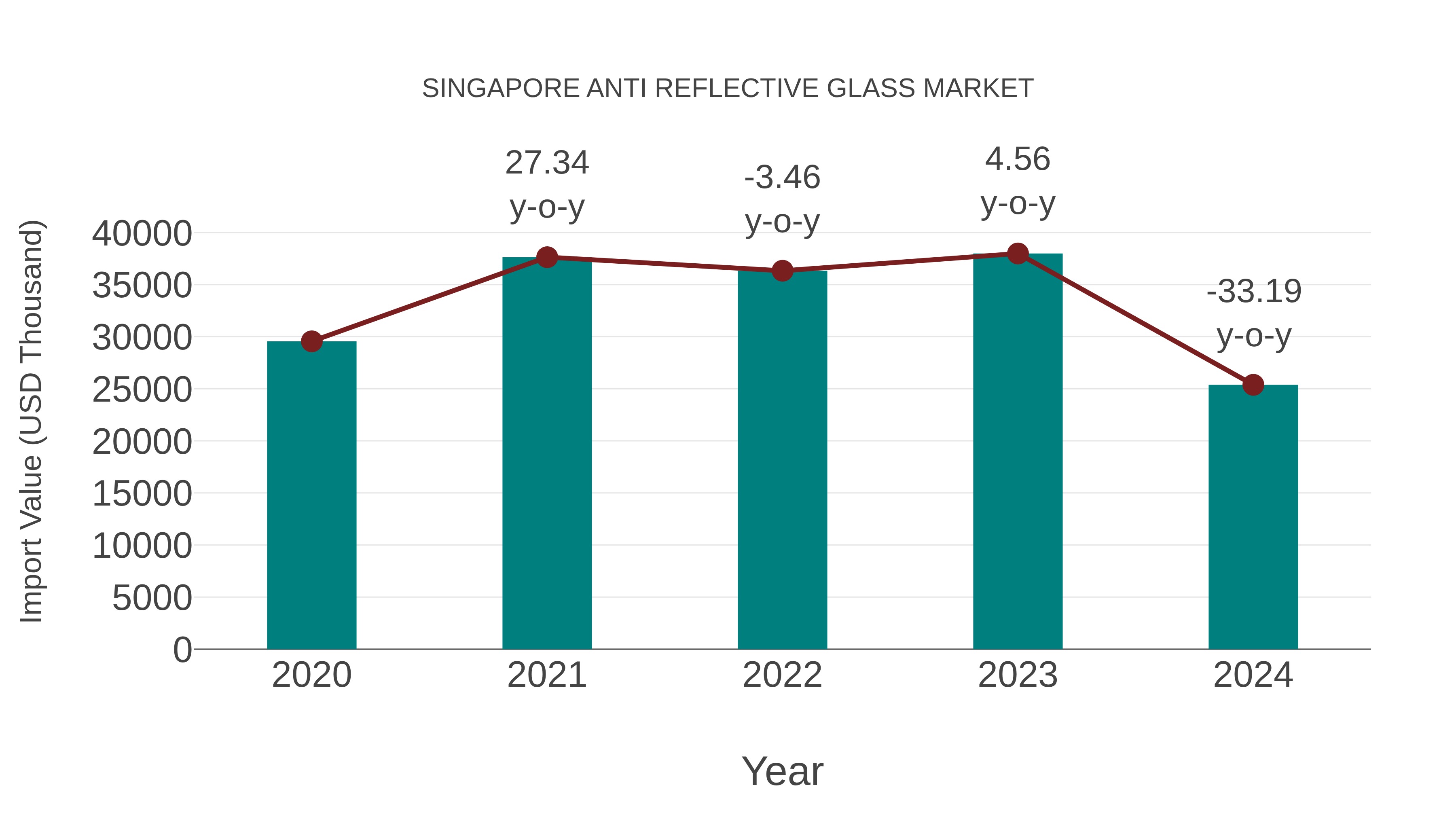
Singapore`s import trend for anti-reflective glass in the Singapore market experienced a decline, with a growth rate of -33.19% from 2023 to 2024 and a compound annual growth rate (CAGR) of -3.74% for the period 2020-2024. This negative momentum could be attributed to shifts in demand patterns or changes in market dynamics impacting import volumes.
Singapore Anti Reflective Glass Market Synopsis
Anti-reflective glass is used in various applications, including architectural glazing, display screens, and optical devices, for its ability to reduce glare and enhance visibility. The market for anti-reflective glass in Singapore serves architectural and display industries. As glare reduction and enhanced visibility become key considerations, the demand for anti-reflective glass is expected to remain strong.
Drivers of the Market
The Singapore anti-reflective glass market is expected to grow as it caters to industries that require optical clarity and reduced glare. Anti-reflective glass coatings enhance visibility and reduce reflections on glass surfaces. As industries such as electronics and optics seek high-quality display solutions, the demand for anti-reflective glass in Singapore is likely to rise, driven by its essential role in improving screen performance and user experience.
Challenges of the Market
The Singapore anti-reflective glass market faces challenges associated with coatings durability, optical performance expectations, and cost considerations. Anti-reflective glass producers should prioritize durable coatings, deliver exceptional optical clarity, and offer competitive pricing to meet market expectations effectively.
COVID-19 Impact on the Market
The anti-reflective glass market in Singapore faced challenges during the COVID-19 pandemic due to fluctuations in construction and architectural projects. Reduced demand for anti-reflective glass impacted the market. However, as industries adapted to new safety regulations and projects resumed, the market emphasized clarity and performance in anti-reflective glass products.
Key Players in the Market
Companies like Schott AG and Pilkington are essential contributors to the Singapore anti-reflective glass market. Anti-reflective glass is used in display screens and optical applications to reduce glare and improve visibility.
Key Highlights of the Report:
- Singapore Anti Reflective Glass Market Outlook
- Market Size of Singapore Anti Reflective Glass Market, 2025
- Forecast of Singapore Anti Reflective Glass Market, 2032
- Historical Data and Forecast of Singapore Anti Reflective Glass Revenues & Volume for the Period 2022-2032F
- Singapore Anti Reflective Glass Market Trend Evolution
- Singapore Anti Reflective Glass Market Drivers and Challenges
- Singapore Anti Reflective Glass Price Trends
- Singapore Anti Reflective Glass Porter's Five Forces
- Singapore Anti Reflective Glass Industry Life Cycle
- Historical Data and Forecast of Singapore Anti Reflective Glass Market Revenues & Volume By Type for the Period 2022-2032F
- Historical Data and Forecast of Singapore Anti Reflective Glass Market Revenues & Volume By Double Layers for the Period 2022-2032F
- Historical Data and Forecast of Singapore Anti Reflective Glass Market Revenues & Volume By Four Layers for the Period 2022-2032F
- Historical Data and Forecast of Singapore Anti Reflective Glass Market Revenues & Volume By Others for the Period 2022-2032F
- Historical Data and Forecast of Singapore Anti Reflective Glass Market Revenues & Volume By Application for the Period 2022-2032F
- Historical Data and Forecast of Singapore Anti Reflective Glass Market Revenues & Volume By Architectural Windows for the Period 2022-2032F
- Historical Data and Forecast of Singapore Anti Reflective Glass Market Revenues & Volume By Instrumentation Windows for the Period 2022-2032F
- Historical Data and Forecast of Singapore Anti Reflective Glass Market Revenues & Volume By Electronic Displays for the Period 2022-2032F
- Historical Data and Forecast of Singapore Anti Reflective Glass Market Revenues & Volume By Picture Framing Glass for the Period 2022-2032F
- Historical Data and Forecast of Singapore Anti Reflective Glass Market Revenues & Volume By Showcase Glass for the Period 2022-2032F
- Historical Data and Forecast of Singapore Anti Reflective Glass Market Revenues & Volume By Cold Storage Displays for the Period 2022-2032F
- Historical Data and Forecast of Singapore Anti Reflective Glass Market Revenues & Volume By Lamps Glass for the Period 2022-2032F
- Historical Data and Forecast of Singapore Anti Reflective Glass Market Revenues & Volume By Others for the Period 2022-2032F
- Singapore Anti Reflective Glass Import Export Trade Statistics
- Market Opportunity Assessment By Type
- Market Opportunity Assessment By Application
- Singapore Anti Reflective Glass Top Companies Market Share
- Singapore Anti Reflective Glass Competitive Benchmarking By Technical and Operational Parameters
- Singapore Anti Reflective Glass Company Profiles
- Singapore Anti Reflective Glass Key Strategic Recommendations






































