Singapore Outdoor Furniture Market: Import Trend Analysis
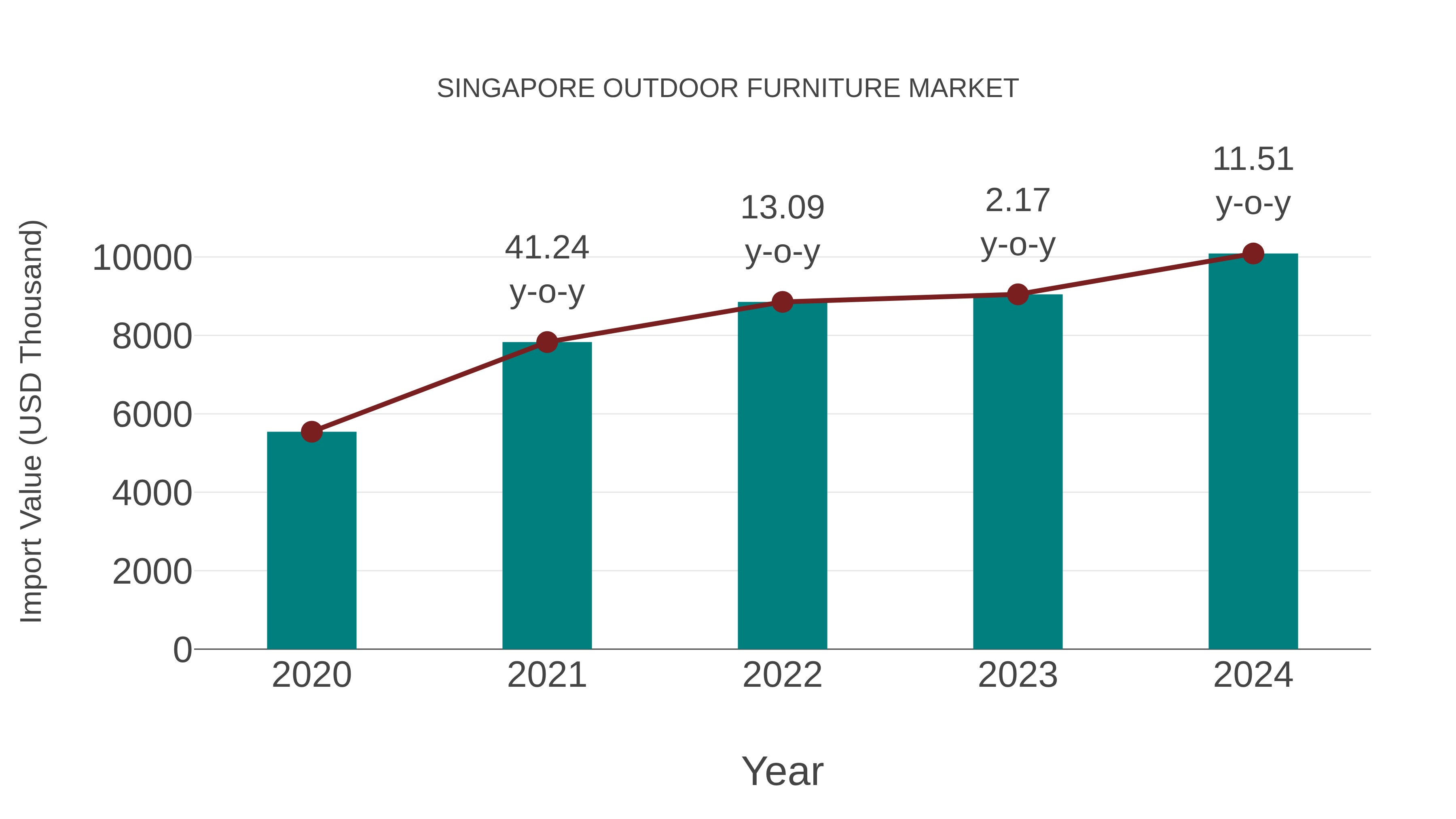
In 2024, Singapore`s outdoor furniture market saw a notable increase in imports, driven by rising consumer demand for quality and stylish outdoor furniture options. The trend reflected a shift towards outdoor living spaces and a growing preference for durable and aesthetic outdoor furniture products.
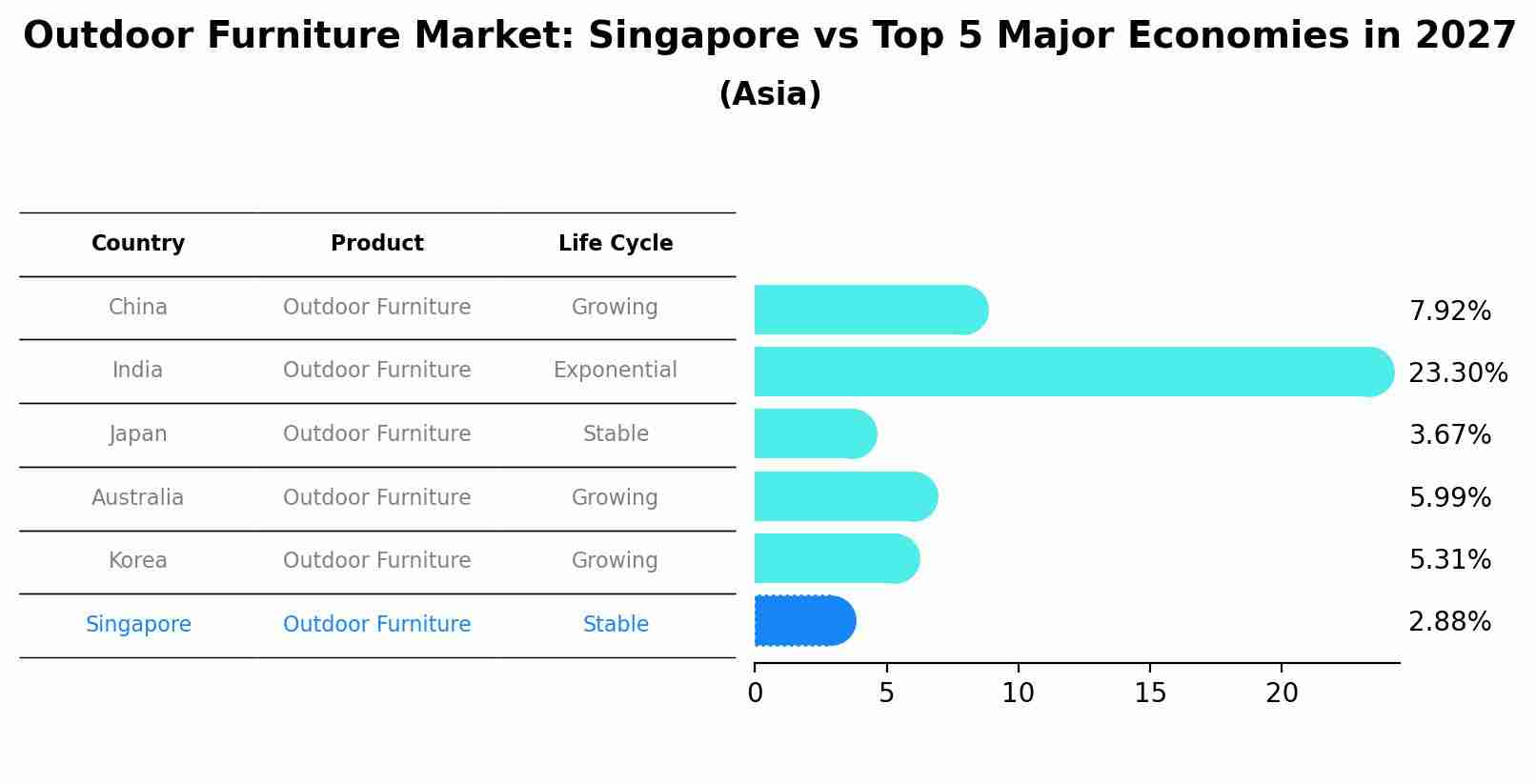
Outdoor Furniture Market: Singapore vs Top 5 Major Economies in 2027 (Asia)
The Outdoor Furniture market in Singapore is projected to grow at a stable growth rate of 2.88% by 2027, within the Asia region led by China, along with other countries like India, Japan, Australia and South Korea, collectively shaping a dynamic and evolving market environment driven by innovation and increasing adoption of emerging technologies.
Singapore Outdoor Furniture Market Synopsis
The outdoor furniture market in Singapore is anticipated to witness growth as outdoor living spaces and alfresco dining gain popularity. Outdoor furniture includes a wide range of products, from patio sets to garden loungers. The market`s expansion is driven by lifestyle trends that prioritize outdoor relaxation and social gatherings.
Drivers of the Market
The growth of the Singapore outdoor furniture market is driven by factors such as outdoor living trends, residential and commercial outdoor spaces, and innovations in outdoor furniture design. Outdoor furniture includes a range of products such as patio sets, garden benches, and outdoor dining sets used for alfresco living. Growth drivers encompass the demand for weather-resistant and UV-resistant outdoor furniture materials, the availability of space-saving and foldable designs, and customization options for outdoor furniture upholstery and finishes. As individuals and businesses seek to create inviting outdoor environments, the outdoor furniture market is expected to grow, providing stylish and durable outdoor seating and decor.
Challenges of the Market
The outdoor furniture market in Singapore encounters challenges related to durability and design adaptation. Outdoor furniture must withstand Singapore tropical climate, which includes high humidity and heavy rainfall. Moreover, adapting outdoor furniture designs to suit various outdoor spaces and aesthetic preferences is crucial for attracting consumers in this competitive market.
COVID-19 Impact on the Market
The outdoor furniture market in Singapore experienced changes during the COVID-19 pandemic. With restrictions on indoor activities, there was increased interest in outdoor living spaces. This led to a resurgence in demand for outdoor furniture. Manufacturers adapted by offering durable and weather-resistant outdoor furniture solutions. The pandemic accelerated the trend of creating functional and stylish outdoor environments, influencing market strategies.
Key Players in the Market
In the Singapore outdoor furniture market, major players such as Keter Group, Brown Jordan International, Inc., and Tropitone Furniture Company, Inc., specialize in providing outdoor furniture and accessories for residential and hospitality outdoor spaces. Their commitment to outdoor living solutions and durable materials establishes their strong market presence.
Key Highlights of the Report:
- Singapore Outdoor Furniture Market Outlook
- Market Size of Singapore Outdoor Furniture Market, 2025
- Forecast of Singapore Outdoor Furniture Market, 2032
- Historical Data and Forecast of Singapore Outdoor Furniture Revenues & Volume for the Period 2022-2032F
- Singapore Outdoor Furniture Market Trend Evolution
- Singapore Outdoor Furniture Market Drivers and Challenges
- Singapore Outdoor Furniture Price Trends
- Singapore Outdoor Furniture Porter's Five Forces
- Singapore Outdoor Furniture Industry Life Cycle
- Historical Data and Forecast of Singapore Outdoor Furniture Market Revenues & Volume By Material for the Period 2022-2032F
- Historical Data and Forecast of Singapore Outdoor Furniture Market Revenues & Volume By Wood for the Period 2022-2032F
- Historical Data and Forecast of Singapore Outdoor Furniture Market Revenues & Volume By Metal for the Period 2022-2032F
- Historical Data and Forecast of Singapore Outdoor Furniture Market Revenues & Volume By Plastic for the Period 2022-2032F
- Historical Data and Forecast of Singapore Outdoor Furniture Market Revenues & Volume By Other Materials for the Period 2022-2032F
- Historical Data and Forecast of Singapore Outdoor Furniture Market Revenues & Volume By Product for the Period 2022-2032F
- Historical Data and Forecast of Singapore Outdoor Furniture Market Revenues & Volume By Chair for the Period 2022-2032F
- Historical Data and Forecast of Singapore Outdoor Furniture Market Revenues & Volume By Tables for the Period 2022-2032F
- Historical Data and Forecast of Singapore Outdoor Furniture Market Revenues & Volume By Seating sets for the Period 2022-2032F
- Historical Data and Forecast of Singapore Outdoor Furniture Market Revenues & Volume By Loungers and Daybeds for the Period 2022-2032F
- Historical Data and Forecast of Singapore Outdoor Furniture Market Revenues & Volume By Dining Sets for the Period 2022-2032F
- Historical Data and Forecast of Singapore Outdoor Furniture Market Revenues & Volume By Other Products for the Period 2022-2032F
- Historical Data and Forecast of Singapore Outdoor Furniture Market Revenues & Volume By Market Type for the Period 2022-2032F
- Historical Data and Forecast of Singapore Outdoor Furniture Market Revenues & Volume By Organised for the Period 2022-2032F
- Historical Data and Forecast of Singapore Outdoor Furniture Market Revenues & Volume By Unorganised for the Period 2022-2032F
- Historical Data and Forecast of Singapore Outdoor Furniture Market Revenues & Volume By End User for the Period 2022-2032F
- Historical Data and Forecast of Singapore Outdoor Furniture Market Revenues & Volume By Commercial for the Period 2022-2032F
- Historical Data and Forecast of Singapore Outdoor Furniture Market Revenues & Volume By Residential for the Period 2022-2032F
- Historical Data and Forecast of Singapore Outdoor Furniture Market Revenues & Volume By Distribution Channel for the Period 2022-2032F
- Historical Data and Forecast of Singapore Outdoor Furniture Market Revenues & Volume By Offline for the Period 2022-2032F
- Historical Data and Forecast of Singapore Outdoor Furniture Market Revenues & Volume By Retail and Contractors for the Period 2022-2032F
- Historical Data and Forecast of Singapore Outdoor Furniture Market Revenues & Volume By Hypermarkets for the Period 2022-2032F
- Historical Data and Forecast of Singapore Outdoor Furniture Market Revenues & Volume By Supermarkets for the Period 2022-2032F
- Historical Data and Forecast of Singapore Outdoor Furniture Market Revenues & Volume By Specialty Stores for the Period 2022-2032F
- Historical Data and Forecast of Singapore Outdoor Furniture Market Revenues & Volume By Online for the Period 2022-2032F
- Singapore Outdoor Furniture Import Export Trade Statistics
- Market Opportunity Assessment By Material
- Market Opportunity Assessment By Product
- Market Opportunity Assessment By Market Type
- Market Opportunity Assessment By Distribution Channel
- Singapore Outdoor Furniture Top Companies Market Share
- Singapore Outdoor Furniture Competitive Benchmarking By Technical and Operational Parameters
- Singapore Outdoor Furniture Company Profiles
- Singapore Outdoor Furniture Key Strategic Recommendations






































