Singapore Smokeless Tobacco Product Market: Import Trend Analysis
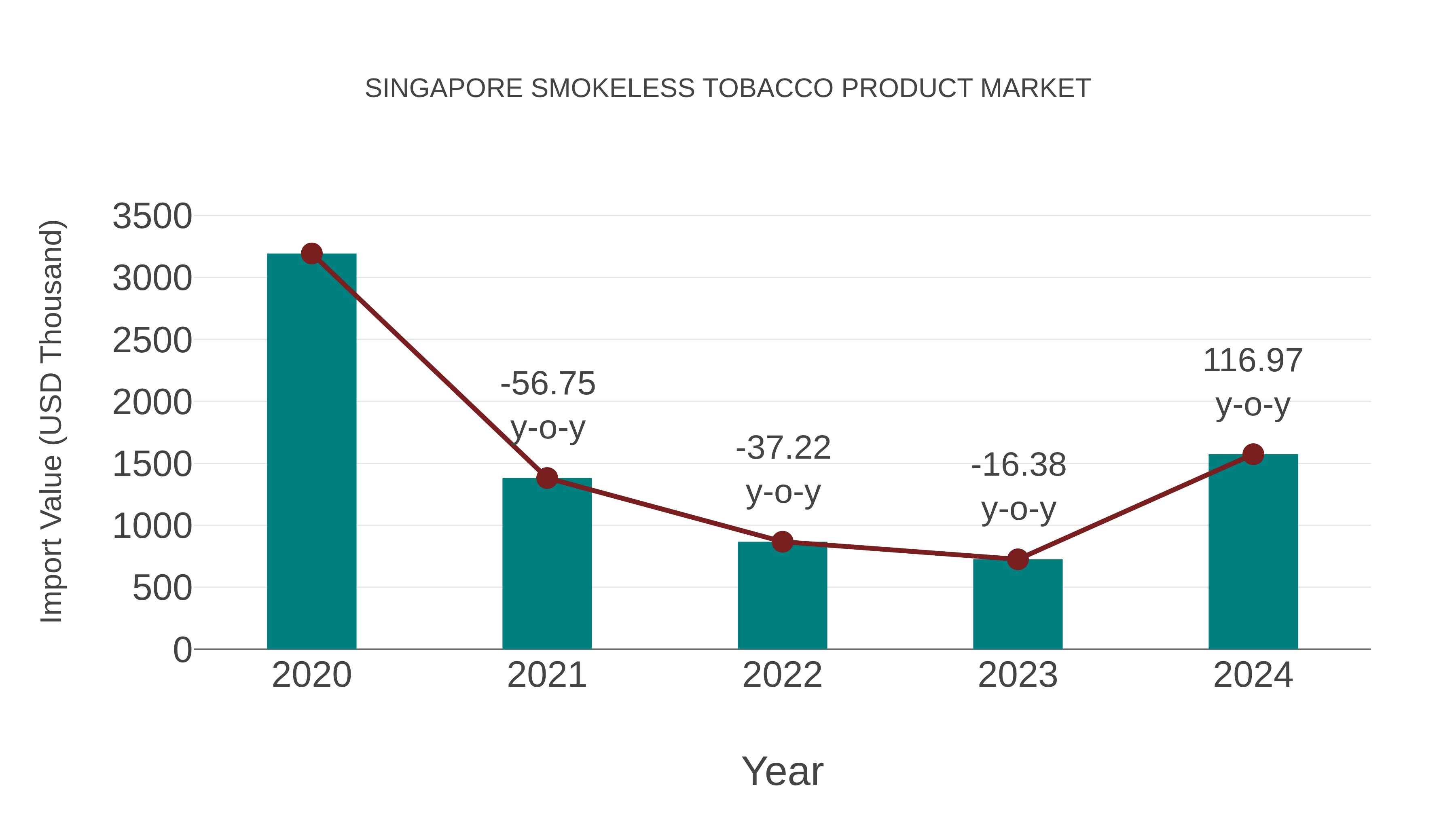
In 2024, Singapore`s smokeless tobacco product market experienced a notable increase in imports. The trend reflected a growing demand for smokeless tobacco products in the country, signaling a potential shift in consumer preferences towards alternative tobacco products.
Singapore Smokeless Tobacco Product Market Synopsis
The Smokeless Tobacco Product Market in Singapore involves tobacco products that are consumed without being burned, such as chewing tobacco, snuff, and other oral tobacco products. These products are used by placing them in the mouth, and they are an alternative to traditional smoking.
Market Drivers
Tobacco Consumption Alternatives: Smokeless tobacco products serve as an alternative to traditional smoking, appealing to individuals who want to avoid smoking-related health risks or restrictions.Cultural and Traditional Use: In some cultures or communities, smokeless tobacco has traditional and cultural significance, which can influence its consumption.Perception of Reduced Harm: Some consumers may perceive smokeless tobacco products as less harmful than cigarettes, contributing to their demand.
Market challenges
Regulatory Environment: Smokeless tobacco products may be subject to stringent regulations, including packaging and labeling requirements, impacting their marketing and sales.Public Health Concerns: Despite being considered a reduced-risk alternative to smoking by some, smokeless tobacco products still pose health risks, including addiction and potential oral health issues.Awareness and Education: Limited awareness and education about the risks of smokeless tobacco use may contribute to its continued consumption.
Key players
British American Tobacco, Altria Group, Inc., Swedish Match AB, Imperial Brands PLC, Japan Tobacco International (JTI) are the key players in the market.
Covid-19 Impact
The Covid-19 pandemic might have had varied effects on the Singapore Smokeless Tobacco Product Market. While some consumers may have increased their use of smokeless tobacco due to stress and anxiety during the pandemic, the overall impact would also depend on the regulatory environment and public health measures implemented during that time.
Key Highlights of the Report:
- Singapore Smokeless Tobacco Product Market Outlook
- Market Size of Singapore Smokeless Tobacco Product Market, 2020
- Forecast of Singapore Smokeless Tobacco Product Market, 2027
- Historical Data and Forecast of Singapore Smokeless Tobacco Product Revenues & Volume for the Period 2023 - 2027
- Singapore Smokeless Tobacco Product Market Trend Evolution
- Singapore Smokeless Tobacco Product Market Drivers and Challenges
- Singapore Smokeless Tobacco Product Price Trends
- Singapore Smokeless Tobacco Product Porter's Five Forces
- Singapore Smokeless Tobacco Product Industry Life Cycle
- Historical Data and Forecast of Singapore Smokeless Tobacco Product Market Revenues & Volume By Product Type for the Period 2023 - 2027
- Historical Data and Forecast of Singapore Smokeless Tobacco Product Market Revenues & Volume By Chewing Tobacco for the Period 2023 - 2027
- Historical Data and Forecast of Singapore Smokeless Tobacco Product Market Revenues & Volume By Snuff for the Period 2023 - 2027
- Historical Data and Forecast of Singapore Smokeless Tobacco Product Market Revenues & Volume By Others for the Period 2023 - 2027
- Historical Data and Forecast of Singapore Smokeless Tobacco Product Market Revenues & Volume By Distribution Channel for the Period 2023 - 2027
- Historical Data and Forecast of Singapore Smokeless Tobacco Product Market Revenues & Volume By Online for the Period 2023 - 2027
- Historical Data and Forecast of Singapore Smokeless Tobacco Product Market Revenues & Volume By Offline for the Period 2023 - 2027
- Singapore Smokeless Tobacco Product Import Export Trade Statistics
- Market Opportunity Assessment By Product Type
- Market Opportunity Assessment By Distribution Channel
- Singapore Smokeless Tobacco Product Top Companies Market Share
- Singapore Smokeless Tobacco Product Competitive Benchmarking By Technical and Operational Parameters
- Singapore Smokeless Tobacco Product Company Profiles
- Singapore Smokeless Tobacco Product Key Strategic Recommendations






































