Slovakia Precast Concrete Market Size (2020-2030)
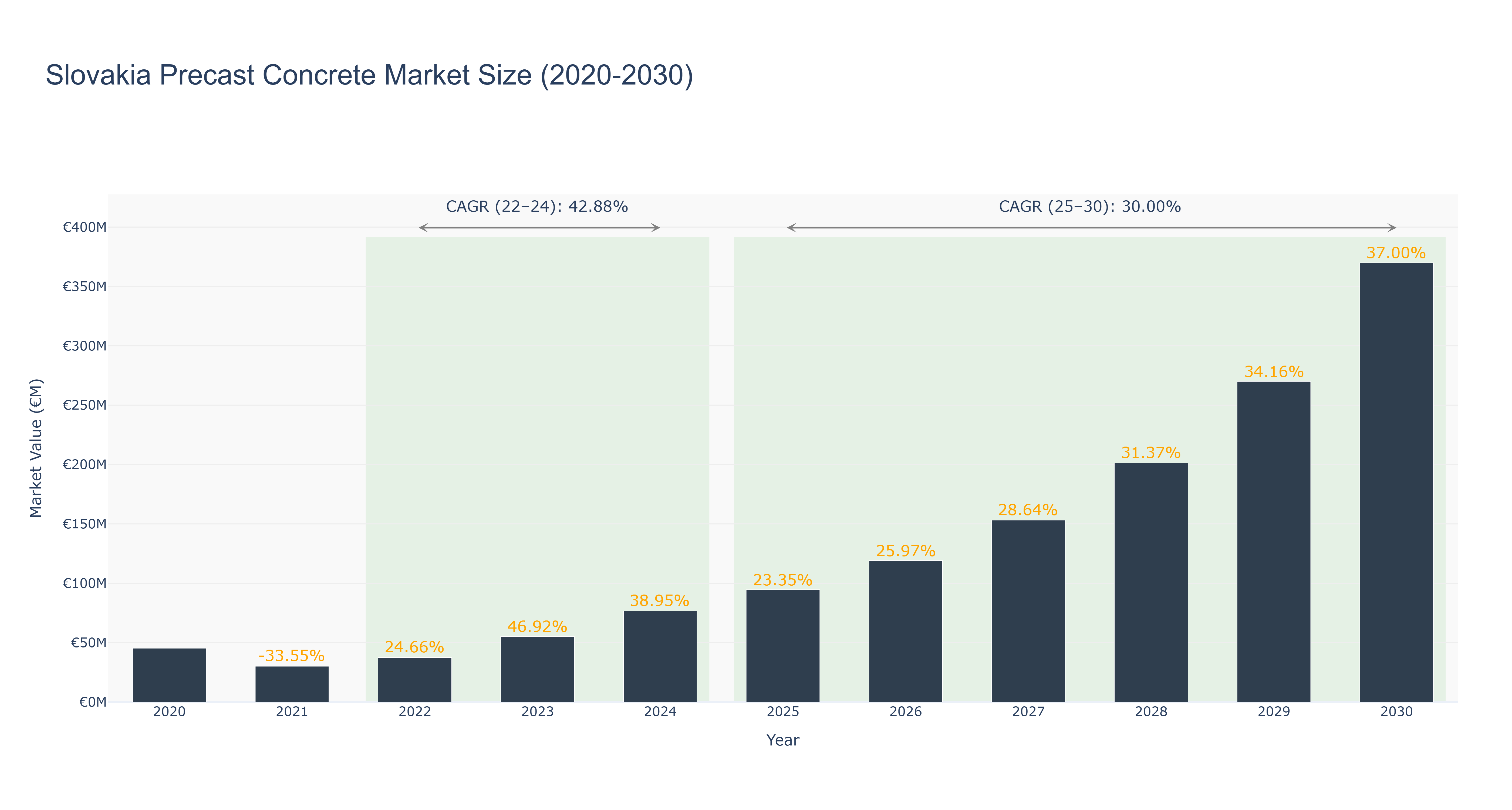
Slovakia Precast Concrete Market has shown a fluctuating trend over the past years. The peak market size was €369.88 million in 2030, with a notable growth rate of 37.00%. From 2020 to 2024, the market size decreased from €45.32 million to €76.63 million, followed by a significant upsurge to €94.53 million in 2025. The forecasted market size is expected to reach €269.98 million by 2029, showcasing a steady growth trajectory. The CAGR for the period 2022-24 was 42.88%, reflecting a rapid expansion phase, while the CAGR for 2025-30 is projected at 30.0%. Industry drivers such as infrastructure development and increasing demand for sustainable construction practices have contributed to these market trends. Looking ahead, Slovakia is set to launch a national precast concrete initiative aimed at enhancing construction efficiency and sustainability in the country.
Slovakia Precast Concrete Market: Production & Trade Performance (2019-2025)
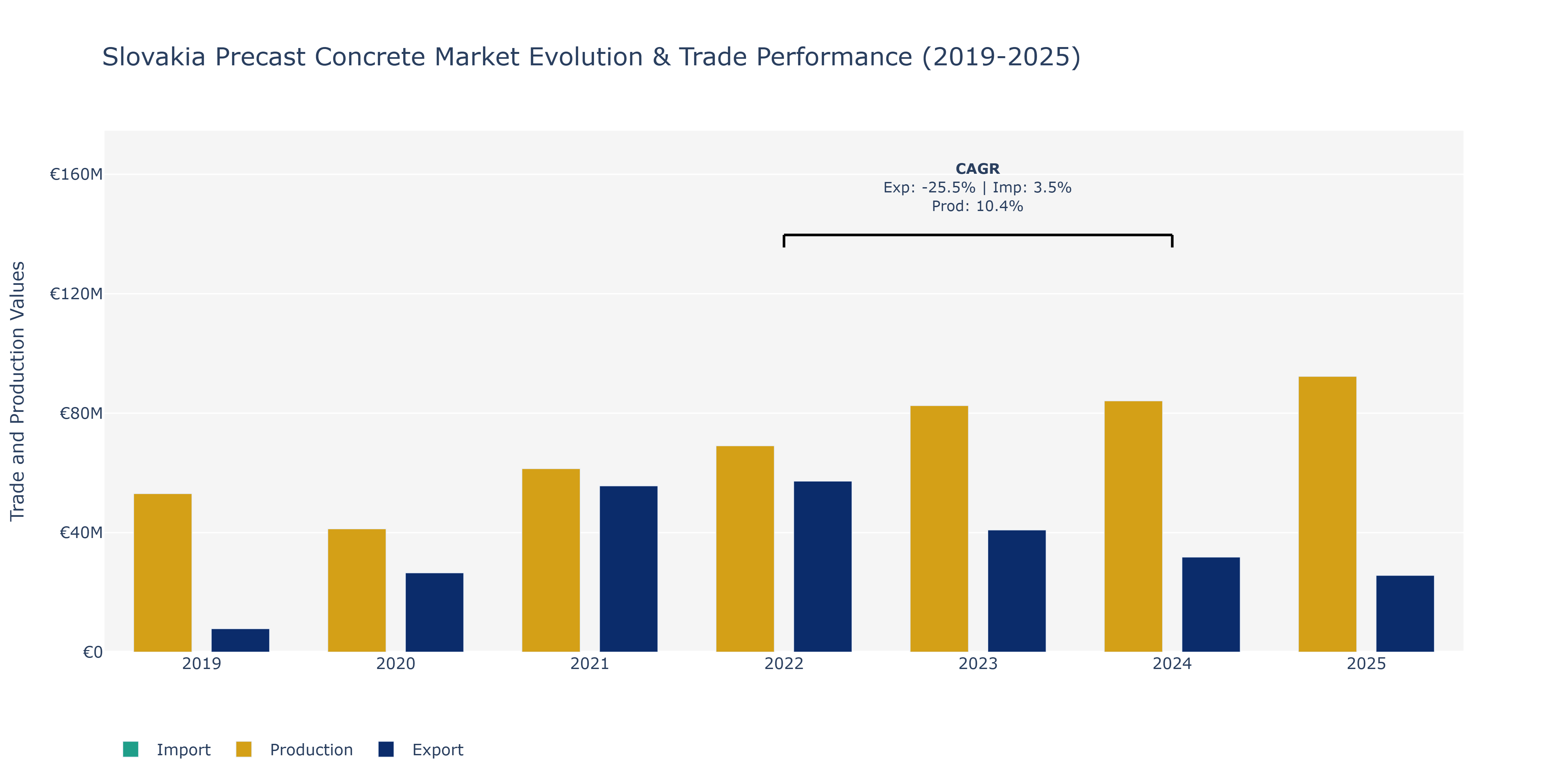
In the Slovakia Precast Concrete Market, from 2019 to 2025, exports showed a fluctuating trend, starting at €7.8 million, peaking at €57.21 million in 2022, and then declining to €25.66 million in 2025. Imports, on the other hand, exhibited a steady increase from €11.38 million in 2019 to €32.41 million in 2025, with a notable peak in 2024 at €31.05 million. Production demonstrated consistent growth, rising from €53.02 million in 2019 to €92.32 million in 2025. The fluctuations in exports can be attributed to varying demand from international markets and changes in global economic conditions impacting trade flows. The steady growth in imports reflects the increasing need for raw materials and advanced technologies to support the expanding production capacity of the precast concrete industry in Slovakia. The upward trajectory of production aligns with the country's infrastructure development projects and investments in sustainable construction practices, driving the demand for precast concrete products.
Slovakia Precast Concrete Market Synopsis
The Slovakia precast concrete market is witnessing steady growth due to increasing construction activities in residential, commercial, and infrastructure sectors. The demand for precast concrete products such as panels, beams, columns, and slabs is rising as they offer advantages like cost-effectiveness, faster construction, and high durability. Key drivers include government investments in infrastructure development, urbanization trends, and the need for sustainable construction practices. Major players in the Slovakia precast concrete market are focusing on product innovation, technological advancements, and strategic partnerships to gain a competitive edge. With a positive outlook for the construction industry in Slovakia, the precast concrete market is expected to continue its growth trajectory in the coming years.
Slovakia Precast Concrete Market Trends
The Slovakia precast concrete market is experiencing steady growth due to the rising demand for durable and cost-effective construction materials in the country. Key trends driving the market include the increasing adoption of precast concrete elements in residential, commercial, and infrastructure projects for their speed of construction, quality control, and sustainability benefits. Additionally, the emphasis on green building practices and the government`s focus on infrastructure development are fueling the use of precast concrete in Slovakia. Manufacturers are also investing in technological advancements to enhance product performance and efficiency, further contributing to market expansion. Overall, the Slovakia precast concrete market is poised for continued growth as the construction industry prioritizes efficiency, sustainability, and quality in building projects.
Slovakia Precast Concrete Market Challenges
In the Slovakia Precast Concrete Market, some challenges that are commonly faced include fluctuating raw material prices, increasing competition from other construction methods, and the need for continuous innovation to meet changing regulatory requirements and customer preferences. Additionally, there may be issues related to transportation costs and logistics, especially when delivering precast concrete elements to construction sites. Ensuring quality control and maintaining efficient production processes can also be challenging, as precast concrete products require careful handling and rigorous testing to meet industry standards. Overall, companies operating in the Slovakia Precast Concrete Market need to navigate these challenges effectively to stay competitive and meet the evolving needs of the construction industry in the country.
Slovakia Precast Concrete Market Investment Opportunities
The Slovakia precast concrete market offers promising investment opportunities due to the country`s growing infrastructure development and construction industry. With increasing urbanization and demand for quality, cost-effective construction materials, precast concrete products are in high demand for various projects such as residential buildings, commercial structures, bridges, and infrastructure projects. Investors can explore opportunities in manufacturing and supplying precast concrete elements such as beams, columns, slabs, and panels to cater to the construction industry`s needs. Additionally, investing in innovative technologies and sustainable practices within the precast concrete sector can provide a competitive edge and contribute to long-term growth prospects in the Slovakia market.
Jordan Agar Market Government Policies
The government of Slovakia has implemented various policies to regulate the precast concrete market, aimed at ensuring quality, safety, and environmental sustainability. These policies include building codes and standards that specify requirements for precast concrete materials and construction techniques to meet quality and safety standards. Additionally, there are regulations in place to promote sustainable practices in the precast concrete industry, such as reducing carbon emissions and promoting the use of eco-friendly materials. The government also provides incentives and support for research and development in the precast concrete sector to encourage innovation and technology advancement. Overall, these policies create a framework for a competitive and sustainable precast concrete market in Slovakia.
Slovakia Precast Concrete Market Future Outlook
The Slovakia Precast Concrete Market is expected to witness steady growth in the coming years due to increasing construction activities across residential, commercial, and infrastructure sectors. The market is likely to be driven by factors such as rapid urbanization, government initiatives to boost infrastructure development, and the growing demand for sustainable construction materials. Additionally, the shift towards prefabricated and modular construction methods is anticipated to further propel the market growth. Key players in the industry are focusing on innovation, technological advancements, and strategic partnerships to gain a competitive edge. Overall, the Slovakia Precast Concrete Market is poised for expansion, with opportunities for growth in various application areas such as bridges, buildings, and transportation infrastructure.
Key Highlights of the Report:
- Slovakia Precast Concrete Market Outlook
- Market Size of Slovakia Precast Concrete Market, 2021
- Forecast of Slovakia Precast Concrete Market, 2031
- Historical Data and Forecast of Slovakia Precast Concrete Revenues & Volume for the Period 2018 - 2031
- Slovakia Precast Concrete Market Trend Evolution
- Slovakia Precast Concrete Market Drivers and Challenges
- Slovakia Precast Concrete Price Trends
- Slovakia Precast Concrete Porter's Five Forces
- Slovakia Precast Concrete Industry Life Cycle
- Historical Data and Forecast of Slovakia Precast Concrete Market Revenues & Volume By Product for the Period 2018 - 2031
- Historical Data and Forecast of Slovakia Precast Concrete Market Revenues & Volume By Structural Building Components for the Period 2018 - 2031
- Historical Data and Forecast of Slovakia Precast Concrete Market Revenues & Volume By Architectural Building Components for the Period 2018 - 2031
- Historical Data and Forecast of Slovakia Precast Concrete Market Revenues & Volume By Transportation Products for the Period 2018 - 2031
- Historical Data and Forecast of Slovakia Precast Concrete Market Revenues & Volume By Water & Waste Handling Products for the Period 2018 - 2031
- Historical Data and Forecast of Slovakia Precast Concrete Market Revenues & Volume By Others for the Period 2018 - 2031
- Historical Data and Forecast of Slovakia Precast Concrete Market Revenues & Volume By End-use for the Period 2018 - 2031
- Historical Data and Forecast of Slovakia Precast Concrete Market Revenues & Volume By Residential for the Period 2018 - 2031
- Historical Data and Forecast of Slovakia Precast Concrete Market Revenues & Volume By Non-residential for the Period 2018 - 2031
- Historical Data and Forecast of Slovakia Precast Concrete Market Revenues & Volume By Infrastructure for the Period 2018 - 2031
- Slovakia Precast Concrete Import Export Trade Statistics
- Market Opportunity Assessment By Product
- Market Opportunity Assessment By End-use
- Slovakia Precast Concrete Top Companies Market Share
- Slovakia Precast Concrete Competitive Benchmarking By Technical and Operational Parameters
- Slovakia Precast Concrete Company Profiles
- Slovakia Precast Concrete Key Strategic Recommendations






































