Slovakia Stainless Steel Tableware And Kitchenware Market Size (2020-2030)
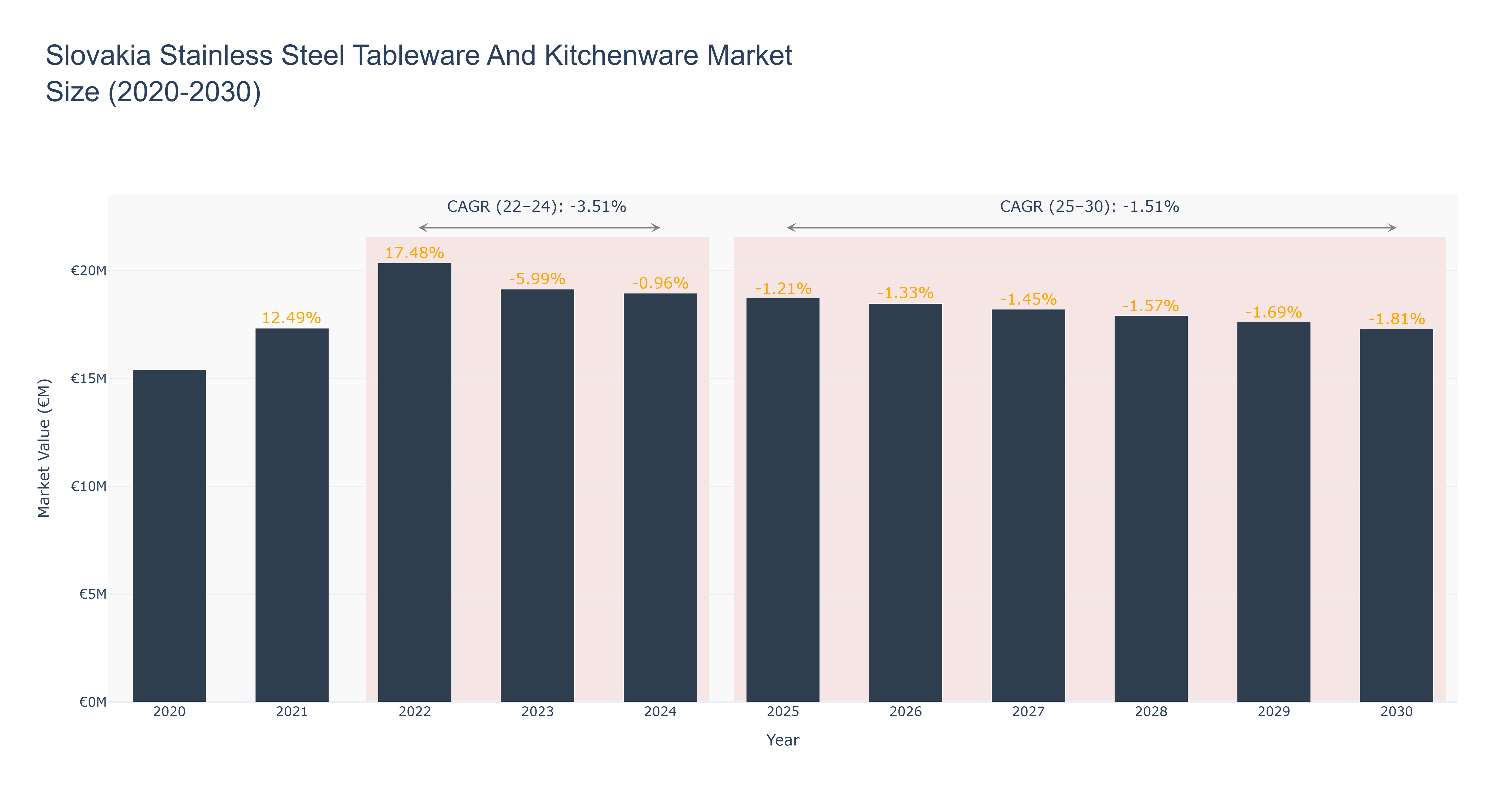
The Slovakia Stainless Steel Tableware And Kitchenware Market reached its peak in 2022 with a market size of €20.36 million. However, the market experienced a decline in subsequent years, with the market size dropping to €18.96 million in 2024. The forecasted market size from 2025 to 2030 continues on a downward trend, with an expected market size of €17.30 million in 2030. The CAGR for the period 2022-24 is -3.51%, while the CAGR for 2025-30 is projected at -1.51%. The decline in market size can be attributed to changing consumer preferences towards more sustainable and eco-friendly alternatives, as well as increased competition in the market. To counter this trend, stakeholders in the Slovakia Stainless Steel Tableware And Kitchenware Market are focusing on introducing innovative designs and expanding their product offerings to appeal to a broader customer base.
Slovakia Stainless Steel Tableware And Kitchenware Market: Production & Trade Performance (2019-2025)
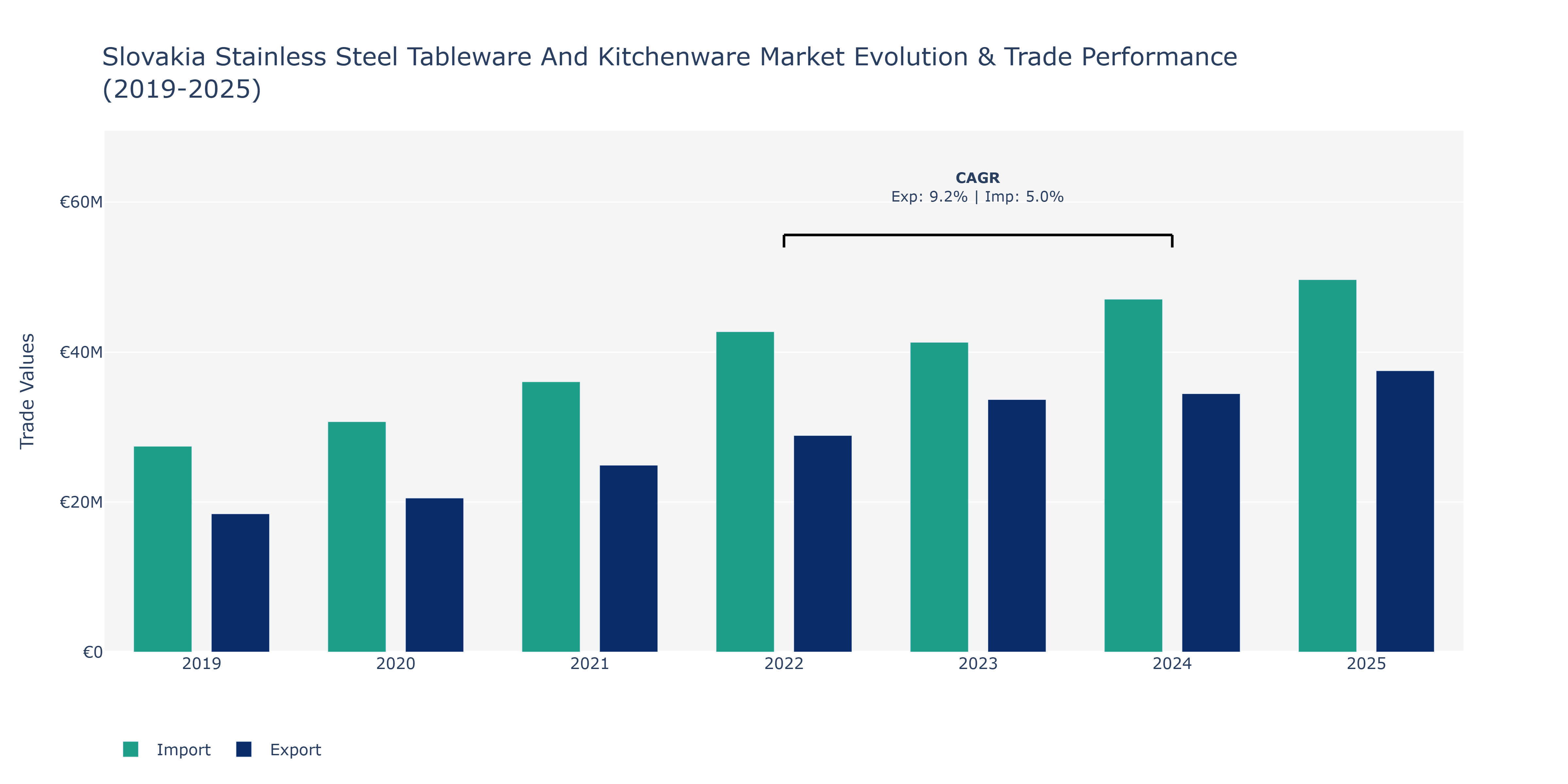
In the Slovakia Stainless Steel Tableware And Kitchenware Market, exports and imports saw notable growth during the period. From 2019 to 2025, exports increased steadily from €18.44 million to €37.51 million, indicating a consistent upward trajectory. Imports followed a similar pattern, rising from €27.44 million in 2019 to €49.66 million in 2025. While exports and imports experienced fluctuations in some years, such as a dip in imports in 2023, overall, both metrics demonstrated a positive trend. These movements can be attributed to increasing global demand for stainless steel tableware and kitchenware, as consumers prioritize durable and aesthetically-pleasing products. Furthermore, the market's growth aligns with the broader trend of consumers seeking high-quality kitchenware, influenced by factors like lifestyle changes and a growing culinary culture, as reported by industry experts (Source: Euromonitor International).
Key Highlights of the Report:
- Slovakia Stainless Steel Tableware and Kitchenware Market Outlook
- Market Size of Slovakia Stainless Steel Tableware and Kitchenware Market, 2025
- Forecast of Slovakia Stainless Steel Tableware and Kitchenware Market, 2032
- Historical Data and Forecast of Slovakia Stainless Steel Tableware and Kitchenware Revenues & Volume for the Period 2022 - 2032F
- Slovakia Stainless Steel Tableware and Kitchenware Market Trend Evolution
- Slovakia Stainless Steel Tableware and Kitchenware Market Drivers and Challenges
- Slovakia Stainless Steel Tableware and Kitchenware Price Trends
- Slovakia Stainless Steel Tableware and Kitchenware Porter's Five Forces
- Slovakia Stainless Steel Tableware and Kitchenware Industry Life Cycle
- Historical Data and Forecast of Slovakia Stainless Steel Tableware and Kitchenware Market Revenues & Volume By Product for the Period 2022 - 2032F
- Historical Data and Forecast of Slovakia Stainless Steel Tableware and Kitchenware Market Revenues & Volume By Tableware for the Period 2022 - 2032F
- Historical Data and Forecast of Slovakia Stainless Steel Tableware and Kitchenware Market Revenues & Volume By Kitchenwares for the Period 2022 - 2032F
- Historical Data and Forecast of Slovakia Stainless Steel Tableware and Kitchenware Market Revenues & Volume By Application for the Period 2022 - 2032F
- Historical Data and Forecast of Slovakia Stainless Steel Tableware and Kitchenware Market Revenues & Volume By Domestic Use for the Period 2022 - 2032F
- Historical Data and Forecast of Slovakia Stainless Steel Tableware and Kitchenware Market Revenues & Volume By Commercial Use for the Period 2022 - 2032F
- Slovakia Stainless Steel Tableware and Kitchenware Import Export Trade Statistics
- Market Opportunity Assessment By Product
- Market Opportunity Assessment By Application
- Slovakia Stainless Steel Tableware and Kitchenware Top Companies Market Share
- Slovakia Stainless Steel Tableware and Kitchenware Competitive Benchmarking By Technical and Operational Parameters
- Slovakia Stainless Steel Tableware and Kitchenware Company Profiles
- Slovakia Stainless Steel Tableware and Kitchenware Key Strategic Recommendations






































