Slovenia Tankless Water Heater Market Size (2020-2030)
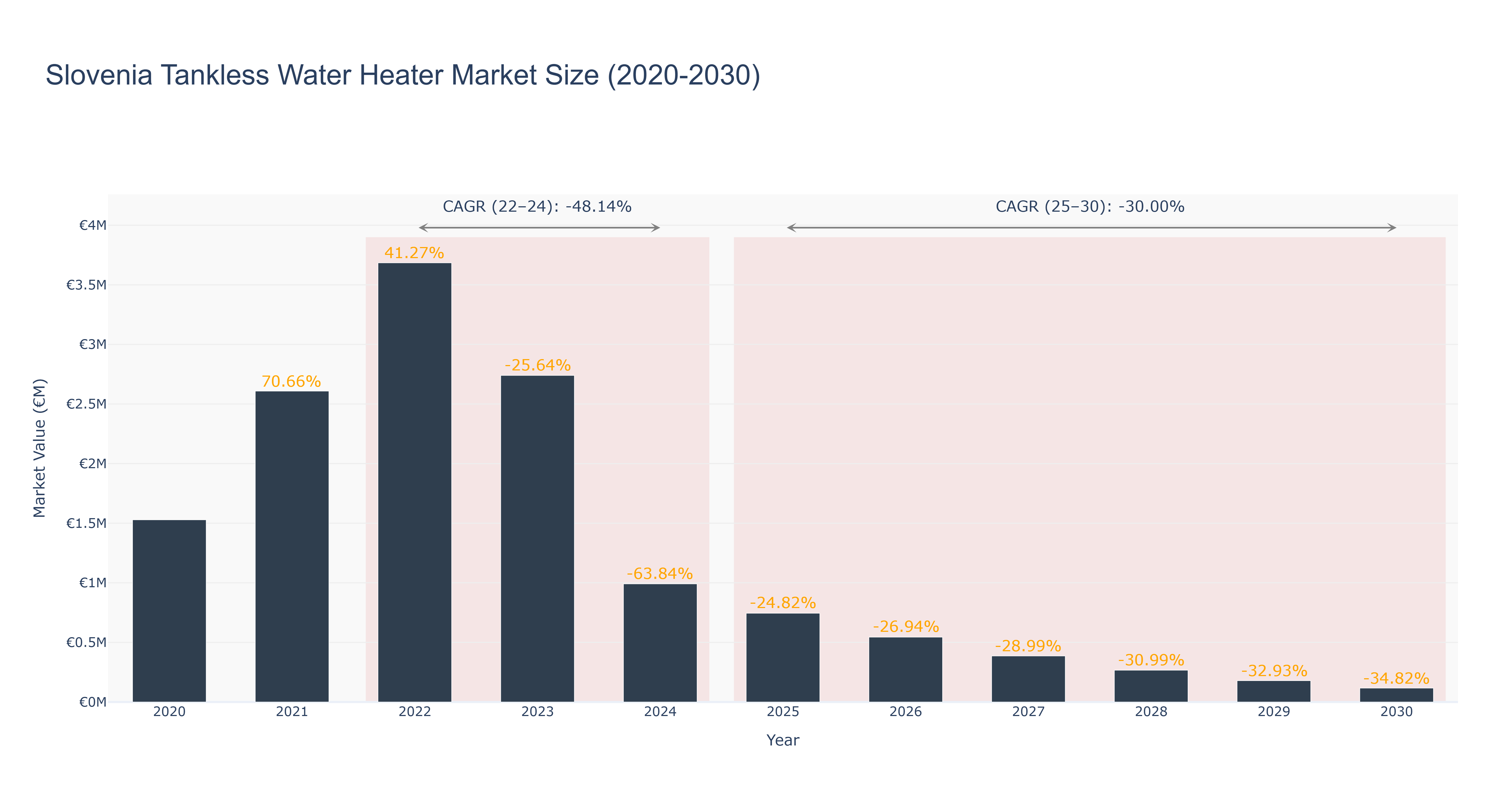
The Slovenia Tankless Water Heater Market witnessed a peak market size of €3.68 million in 2022, followed by a significant decline to €0.54 million in 2026. The market size is forecasted to further decrease to €0.12 million by 2030, with a CAGR of -30.0% from 2025 to 2030. The market faced a sharp downturn post-2022 due to increased competition, technological advancements in traditional water heaters, and changing consumer preferences towards energy-efficient solutions. To revive the market, industry players are focusing on product innovation, enhancing energy efficiency, and expanding distribution networks. In the near future, Slovenia is planning to launch a national energy efficiency program that aims to promote the adoption of eco-friendly heating solutions, presenting growth opportunities for the tankless water heater market.
Slovenia Tankless Water Heater Market: Production & Trade Performance (2019-2025)
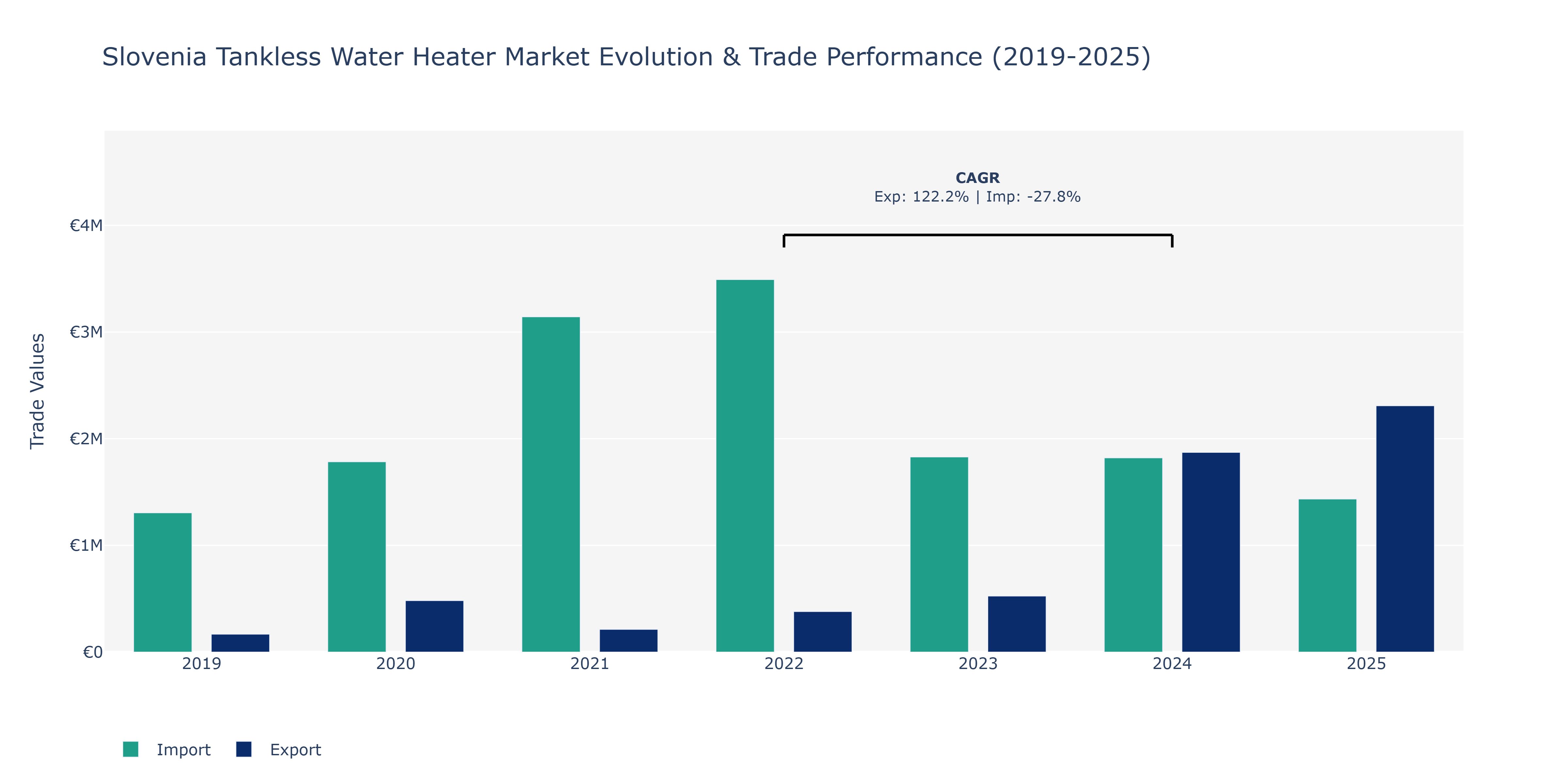
The Slovenia Tankless Water Heater Market saw a notable increase in exports from 2019 to 2025, with figures rising from €167.12 thousand to approximately €2.31 million. The peak export value was observed in 2025. In contrast, imports fluctuated during the same period, reaching a peak in 2021 at €3.14 million before declining to around €1.43 million in 2025. The decrease in imports in 2025 could be attributed to various factors such as changes in consumer preferences towards more energy-efficient models, the impact of global supply chain disruptions, or shifts in government regulations promoting domestic production. The significant growth in exports can be linked to the increasing demand for energy-efficient and environmentally friendly water heating solutions in both residential and commercial sectors in Slovenia. This trend aligns with the global movement towards sustainable energy practices, where tankless water heaters are gaining popularity due to their energy-saving benefits and compact design.
Slovenia Tankless Water Heater Market Overview
The Slovenia tankless water heater market is experiencing steady growth due to increasing demand for energy-efficient and space-saving water heating solutions. Tankless water heaters are preferred for their on-demand hot water supply, reduced energy consumption, and longer lifespan compared to traditional storage water heaters. The market is driven by factors such as growing awareness of energy conservation, government initiatives promoting eco-friendly technologies, and rising disposable income levels among consumers. Key players in the Slovenia tankless water heater market include companies like Bosch, Rinnai, and Navien. The market is expected to witness further growth in the coming years as more households and commercial establishments adopt tankless water heaters to meet their hot water needs efficiently and sustainably.
Slovenia Tankless Water Heater Market Trends and Opportunities
The Slovenia Tankless Water Heater Market is witnessing growth due to increasing awareness about energy efficiency and the convenience offered by tankless systems. Consumers are opting for tankless water heaters over traditional storage tanks for their space-saving design and on-demand hot water supply. The market is also driven by government initiatives promoting energy-efficient appliances. Opportunities lie in the growing demand for eco-friendly and cost-effective heating solutions, particularly in residential and commercial sectors. Manufacturers are focusing on product innovations such as Wi-Fi connectivity and smart features to attract tech-savvy consumers. Additionally, partnerships and collaborations with energy companies for promoting energy-efficient solutions can further boost market growth in Slovenia.
Slovenia Tankless Water Heater Market Challenges
In the Slovenia tankless water heater market, some challenges faced include limited consumer awareness and understanding of the benefits of tankless water heaters compared to traditional storage water heaters. Additionally, the upfront cost of purchasing and installing tankless water heaters may be perceived as a barrier for some consumers, despite the long-term energy savings they offer. Furthermore, the availability of skilled technicians for installation and maintenance of tankless water heaters can also be a challenge, potentially leading to longer wait times and higher service costs. Manufacturers and retailers in the market may need to focus on education and outreach efforts to address these challenges and increase market penetration for tankless water heaters in Slovenia.
Slovenia Tankless Water Heater Market Drivers
The Slovenia Tankless Water Heater Market is primarily driven by the growing demand for energy-efficient and space-saving water heating solutions. Consumers are increasingly looking for eco-friendly alternatives that can help reduce energy consumption and lower utility costs. Tankless water heaters offer on-demand hot water, eliminating the need for a storage tank and providing a continuous supply of hot water. The increasing awareness about the benefits of tankless water heaters in terms of energy savings and convenience is fueling market growth. Additionally, government initiatives promoting energy efficiency and the rising trend of smart home technology are further driving the adoption of tankless water heaters in Slovenia. Manufacturers are also focusing on product innovations and technological advancements to cater to the evolving consumer preferences in the market.
Slovenia Tankless Water Heater Market Government Policies
In Slovenia, government policies related to the tankless water heater market focus on promoting energy efficiency and reducing greenhouse gas emissions. The government offers financial incentives and subsidies for the purchase and installation of energy-efficient tankless water heaters to encourage consumers to switch from traditional water heaters. Additionally, there are regulations in place that set minimum energy performance standards for water heaters, including tankless models, to ensure they meet certain efficiency requirements. The government also supports research and development initiatives to advance technology and innovation in the tankless water heater sector, aiming to drive sustainability and environmental conservation efforts in line with national energy efficiency goals.
Slovenia Tankless Water Heater Market Future Outlook
The future outlook for the Slovenia Tankless Water Heater Market appears to be promising, driven by factors such as increasing awareness of energy efficiency, rising disposable incomes, and growing demand for space-saving and eco-friendly home appliances. Consumers are increasingly looking for energy-efficient solutions that can help reduce utility bills and minimize environmental impact. Additionally, technological advancements in tankless water heaters, such as improved energy efficiency, smart features, and longer lifespan, are expected to drive market growth. The trend towards sustainable living and the government`s initiatives to promote energy-efficient products are also likely to propel the market. Overall, the Slovenia Tankless Water Heater Market is anticipated to witness steady growth in the coming years as consumers prioritize energy efficiency and sustainability in their homes.
Key Highlights of the Report:
- Slovenia Tankless Water Heater Market Outlook
- Market Size of Slovenia Tankless Water Heater Market, 2025
- Forecast of Slovenia Tankless Water Heater Market, 2032
- Historical Data and Forecast of Slovenia Tankless Water Heater Revenues & Volume for the Period 2022 - 2032F
- Slovenia Tankless Water Heater Market Trend Evolution
- Slovenia Tankless Water Heater Market Drivers and Challenges
- Slovenia Tankless Water Heater Price Trends
- Slovenia Tankless Water Heater Porter's Five Forces
- Slovenia Tankless Water Heater Industry Life Cycle
- Historical Data and Forecast of Slovenia Tankless Water Heater Market Revenues & Volume By Type for the Period 2022 - 2032F
- Historical Data and Forecast of Slovenia Tankless Water Heater Market Revenues & Volume By Whole-House for the Period 2022 - 2032F
- Historical Data and Forecast of Slovenia Tankless Water Heater Market Revenues & Volume By Point-of-Use for the Period 2022 - 2032F
- Historical Data and Forecast of Slovenia Tankless Water Heater Market Revenues & Volume By Application for the Period 2022 - 2032F
- Historical Data and Forecast of Slovenia Tankless Water Heater Market Revenues & Volume By Residential for the Period 2022 - 2032F
- Historical Data and Forecast of Slovenia Tankless Water Heater Market Revenues & Volume By Commercial for the Period 2022 - 2032F
- Slovenia Tankless Water Heater Import Export Trade Statistics
- Market Opportunity Assessment By Type
- Market Opportunity Assessment By Application
- Slovenia Tankless Water Heater Top Companies Market Share
- Slovenia Tankless Water Heater Competitive Benchmarking By Technical and Operational Parameters
- Slovenia Tankless Water Heater Company Profiles
- Slovenia Tankless Water Heater Key Strategic Recommendations






































