Slovenia Whiskey Market Size (2020-2030)
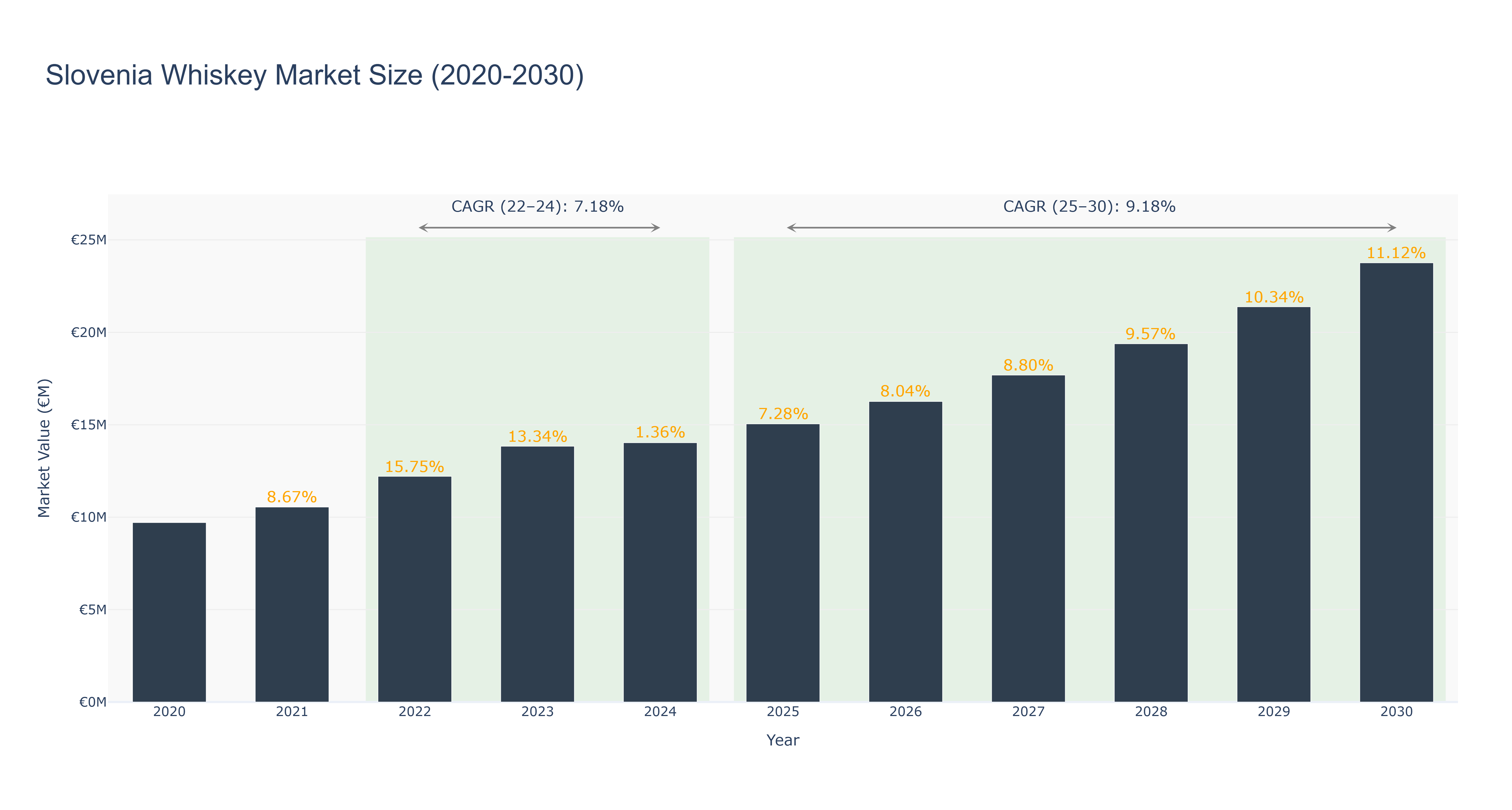
Slovenia Whiskey Market has shown a steady growth trajectory over the past decade. The peak market size of €23.76 million is forecasted for 2030, with an impressive CAGR of 9.18% from 2025 to 2030. The market experienced significant growth from 2020 to 2024, with the market size increasing from €9.71 million to €14.03 million, driven by increasing consumer demand and expanding distribution channels. The period from 2025 to 2030 is expected to see accelerated growth fueled by changing consumer preferences towards premium spirits and innovative marketing strategies. Recent developments indicate a surge in craft distilleries and a growing interest in whiskey tourism in Slovenia, which are poised to further boost market growth in the near future. Overall, the Slovenia Whiskey Market is poised for continued success, driven by evolving industry drivers and upcoming market initiatives.
Slovenia Whiskey Market: Production & Trade Performance (2019-2025)
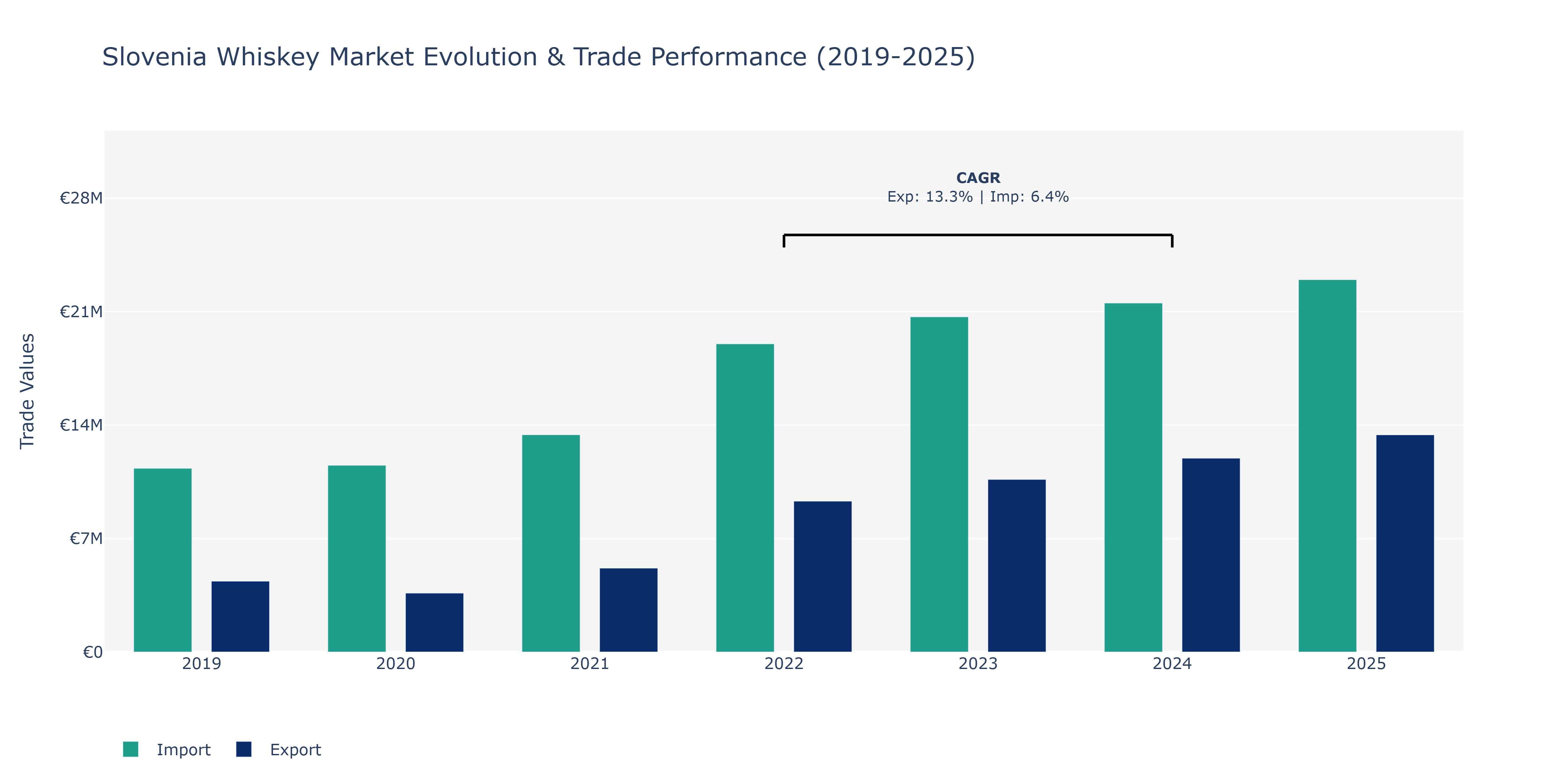
In the Slovenia Whiskey Market, exports and imports displayed notable fluctuations during the period analyzed. Between 2019 and 2021, both exports and imports experienced substantial growth, with exports increasing from €4.37 million to €5.18 million and imports rising from €11.34 million to €13.41 million. The most significant surge occurred in 2022, with exports reaching €9.31 million and imports hitting €19.02 million. This peak can be attributed to increased demand for premium whiskey products in Slovenia, potentially driven by changing consumer preferences towards higher-quality spirits and expanding marketing efforts by key players in the market. Following this peak, a more moderate but steady growth trend was observed in the subsequent years, reflecting a maturing market with sustained interest in whiskey imports. The consistent growth in both exports and imports underscores the resilience and appeal of the Slovenia Whiskey Market, positioning it as a key player in the global whiskey trade landscape.
Key Highlights of the Report:
- Slovenia Whiskey Market Outlook
- Market Size of Slovenia Whiskey Market, 2025
- Forecast of Slovenia Whiskey Market, 2032
- Historical Data and Forecast of Slovenia Whiskey Revenues & Volume for the Period 2022-2032F
- Slovenia Whiskey Market Trend Evolution
- Slovenia Whiskey Market Drivers and Challenges
- Slovenia Whiskey Price Trends
- Slovenia Whiskey Porter`s Five Forces
- Slovenia Whiskey Industry Life Cycle
- Historical Data and Forecast of Slovenia Whiskey Market Revenues & Volume By Product Type for the Period 2022-2032F
- Historical Data and Forecast of Slovenia Whiskey Market Revenues & Volume By American Whisky for the Period 2022-2032F
- Historical Data and Forecast of Slovenia Whiskey Market Revenues & Volume By Irish Whisky for the Period 2022-2032F
- Historical Data and Forecast of Slovenia Whiskey Market Revenues & Volume By Scotch Whisky for the Period 2022-2032F
- Historical Data and Forecast of Slovenia Whiskey Market Revenues & Volume By Canadian Whisky for the Period 2022-2032F
- Historical Data and Forecast of Slovenia Whiskey Market Revenues & Volume By Others for the Period 2022-2032F
- Historical Data and Forecast of Slovenia Whiskey Market Revenues & Volume By Distribution Channel for the Period 2022-2032F
- Historical Data and Forecast of Slovenia Whiskey Market Revenues & Volume By On-trade for the Period 2022-2032F
- Historical Data and Forecast of Slovenia Whiskey Market Revenues & Volume By Off-trade for the Period 2022-2032F
- Slovenia Whiskey Import Export Trade Statistics
- Market Opportunity Assessment By Product Type
- Market Opportunity Assessment By Distribution Channel
- Slovenia Whiskey Top Companies Market Share
- Slovenia Whiskey Competitive Benchmarking By Technical and Operational Parameters
- Slovenia Whiskey Company Profiles
- Slovenia Whiskey Key Strategic Recommendations






































