South Korea Dental Sterilization Market Size, Share & Growth Rate
The South Korea Dental Sterilization Market was estimated at USD 457 Million in 2025 and is projected to reach USD 603 Million by 2032, growing at a CAGR of 4.0% from 2026 to 2032. This growth trajectory is primarily driven by an increasing emphasis on dental hygiene among both professionals and consumers. As the number of dental procedures rises in response to a growing population and heightened health consciousness, clinics are increasingly adopting advanced sterilization technologies to ensure patient safety and compliance with stringent regulations.
South Korea Dental Sterilization Market Year-wise Growth Rate and Key Drivers
This graph highlights how the South Korea Dental Sterilization Market has steadily grown over the years, supported by major growth factors.
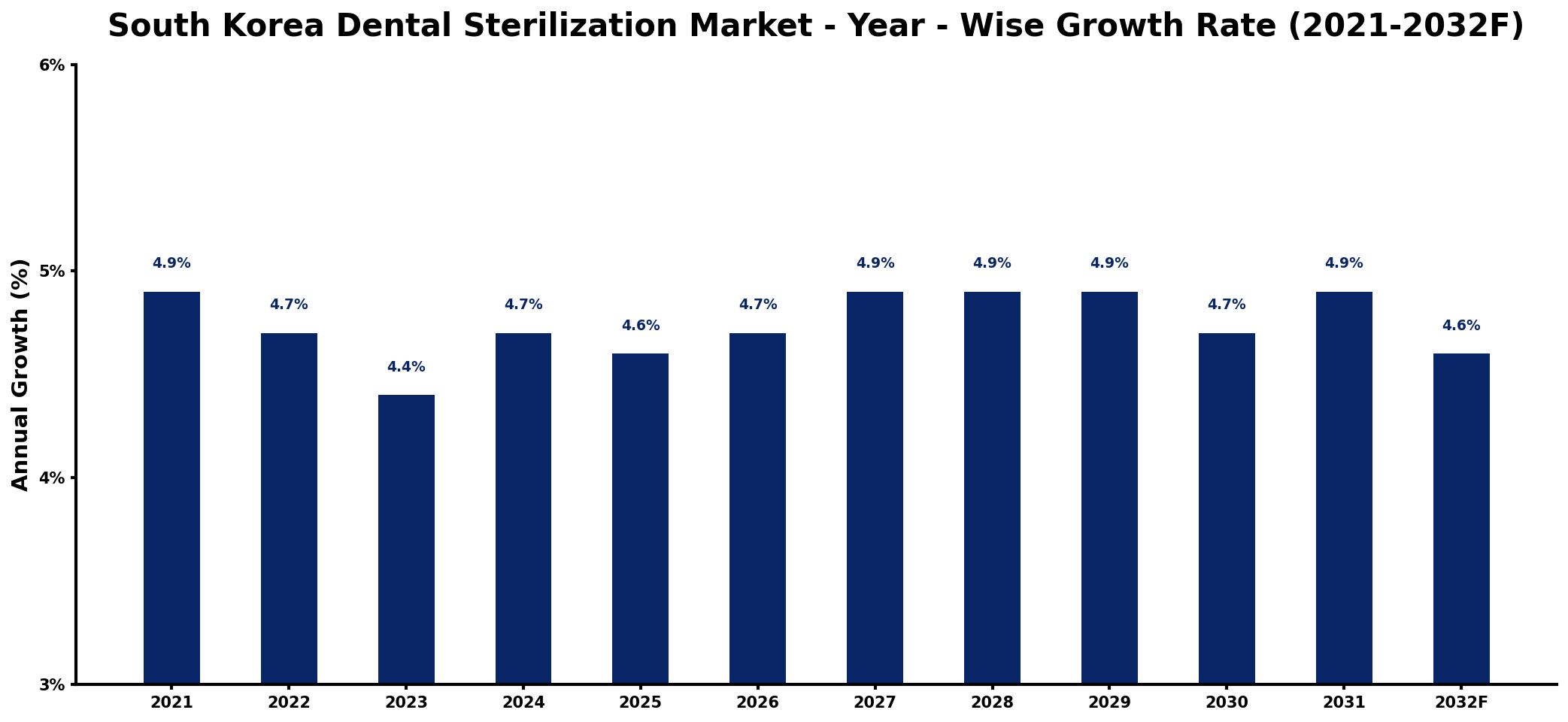
The table below presents the year‑wise growth rates along with the key drivers influencing the market
| Year | Growth Rate | Major Drivers |
| 2021 | 4.9% | Rising healthcare expenditure in sector |
| 2022 | 4.7% | Increased focus on infection control |
| 2023 | 4.4% | Growing awareness of safety protocols |
| 2024 | 4.7% | Expansion of healthcare facilities nationwide |
| 2025 | 4.6% | Technological advancements in equipment |
| 2026 | 4.7% | Increased investment in healthcare infrastructure |
| 2027 | 4.9% | Surge in preventive healthcare practices |
| 2028 | 4.9% | Growing demand for quality assurance |
| 2029 | 4.9% | Enhanced regulatory compliance requirements |
| 2030 | 4.7% | Increased training for healthcare professionals |
| 2031 | 4.9% | Rising patient expectations for safety |
| 2032 | 4.6% | Focus on sustainable healthcare practices |
Note: Market size estimations and growth projections presented in this report are based on 6Wresearch's proprietary forecasting methodology, utilizing the latest available industry data, government publications, and primary research inputs.
South Korea Dental Sterilization Market Synopsis
The South Korea Dental Sterilization Market is at a pivotal point, with substantial growth fueled by rising awareness about the importance of effective sterilization practices in dental clinics. The increasing number of dental procedures, coupled with the continuous evolution of sterilization technologies, highlights the critical need for high-standard sterilization products.
Current market dynamics underscore the adoption of environmentally friendly and efficient sterilization solutions. The focus on patient safety and compliance with rigorous regulations drives dental practices to invest in innovative sterilization methods, creating a competitive landscape for manufacturers and suppliers.
South Korea Dental Sterilization Market Key Takeaways
- The market is evolving due to the adoption of advanced sterilization technologies, including autoclaves and ultrasonic cleaners.
- Stricter regulations are compelling dental clinics to prioritize high standards in sterilization practices.
- Growing consumer awareness about infection control is pressuring clinics to upgrade their sterilization protocols.
- Sustainability trends are fostering demand for eco-friendly sterilization products.
- Investment in training for dental professionals is essential to maintain compliance with evolving regulations.
Evaluation of Restraints in South Korea Dental Sterilization Market
Despite the optimistic growth prospects, the South Korea Dental Sterilization Market faces significant restraints. Compliance with evolving government regulations poses a formidable challenge, particularly for smaller dental clinics that may struggle with the financial burden of upgrading their equipment. Moreover, maintaining high sterilization standards necessitates ongoing staff training, which can consume valuable time and resources. As regulations become stricter to match technological advancements, the pressure on dental practices to remain compliant is mounting, impacting operational efficiency.
South Korea Dental Sterilization Market Trends
The market is witnessing a shift towards rapid and efficient sterilization processes that align with the operational demands of modern dental clinics. Automation and digitalization in sterilization equipment are on the rise, enabling precise monitoring of sterilization cycles. Furthermore, as environmentally conscious practices gain traction, there is an increasing demand for sterilization products that reduce water and energy usage, reflecting a broader trend towards sustainability in healthcare practices.
South Korea Dental Sterilization Market Opportunities
Investment opportunities abound in the South Korea Dental Sterilization Market, driven by the rising demand for innovative and efficient sterilization solutions. Manufacturers focusing on eco-friendly sterilization methods will likely find a receptive market, as dental clinics prioritize sustainability. Additionally, businesses offering training and consulting services related to sterilization compliance stand to benefit significantly from the growing emphasis on adherence to regulatory standards.
Government Initiatives in the South Korea Dental Sterilization Market
The South Korean government plays a crucial role in regulating dental sterilization practices. The Ministry of Food and Drug Safety oversees the approval and registration of sterilization products, ensuring they adhere to stringent safety and efficacy standards. Moreover, the Korean Dental Association provides essential guidelines for sterilization protocols, aiming to prevent infections and safeguard patient health. Regular inspections conducted by health authorities ensure compliance, emphasizing the importance of maintaining high sterilization standards within dental practices.
Future Insights of the South Korea Dental Sterilization Market
Looking ahead to 2026-2032, the South Korea Dental Sterilization Market is poised for sustained growth, driven by an increasing focus on infection control and patient safety. The rise in dental diseases and a corresponding increase in dental facilities will further fuel demand for sterilization products and services. As technological advancements continue to emerge, and with regulatory pressures intensifying, dental clinics will increasingly turn to innovative solutions that enhance operational efficiency while ensuring compliance with sterilization standards.
South Korea Dental Sterilization Market Latest Developments (2025 - 2026)
Recent developments in the South Korea Dental Sterilization Market indicate a surge in the adoption of digital monitoring technologies for sterilization processes. Enhanced sterilization equipment that allows for real-time tracking of cycle parameters is becoming more prevalent. Additionally, there is a noticeable trend of dental clinics partnering with specialized training providers to enhance staff competencies in managing sterilization protocols effectively, reflecting a comprehensive approach to infection control.
South Korea Dental Sterilization Market - Key Attractiveness of the Report
- 10 Years of Market Numbers
- Historical Data Starting from 2022 to 2025
- Base Year: 2025
- Forecast Data until 2032
- Key Performance Indicators Impacting the Market
- Major Upcoming Developments and Projects
Key Highlights of the Report:
- South Korea Dental Sterilization Market Outlook
- Market Size of South Korea Dental Sterilization Market, 2025
- Forecast of South Korea Dental Sterilization Market, 2032
- Historical Data and Forecast of South Korea Dental Sterilization Revenues & Volume for the Period 2022-2032F
- South Korea Dental Sterilization Market Trend Evolution
- South Korea Dental Sterilization Market Drivers and Challenges
- South Korea Dental Sterilization Price Trends
- South Korea Dental Sterilization Porter's Five Forces
- South Korea Dental Sterilization Industry Life Cycle
- Historical Data and Forecast of South Korea Dental Sterilization Market Revenues & Volume By Product for the Period 2022-2032F
- Historical Data and Forecast of South Korea Dental Sterilization Market Revenues & Volume By Instruments for the Period 2022-2032F
- Historical Data and Forecast of South Korea Dental Sterilization Market Revenues & Volume By Consumables and Accessories for the Period 2022-2032F
- Historical Data and Forecast of South Korea Dental Sterilization Market Revenues & Volume By End-use for the Period 2022-2032F
- Historical Data and Forecast of South Korea Dental Sterilization Market Revenues & Volume By Hospital for the Period 2022-2032F
- Historical Data and Forecast of South Korea Dental Sterilization Market Revenues & Volume By Dental Clinics for the Period 2022-2032F
- Historical Data and Forecast of South Korea Dental Sterilization Market Revenues & Volume By Dental Laboratories for the Period 2022-2032F
- South Korea Dental Sterilization Import Export Trade Statistics
- Market Opportunity Assessment By Product
- Market Opportunity Assessment By End-use
- South Korea Dental Sterilization Top Companies Market Share
- South Korea Dental Sterilization Competitive Benchmarking By Technical and Operational Parameters
- South Korea Dental Sterilization Company Profiles
- South Korea Dental Sterilization Key Strategic Recommendations






































