Spain Lithium Hydroxide Market: Import Trend Analysis
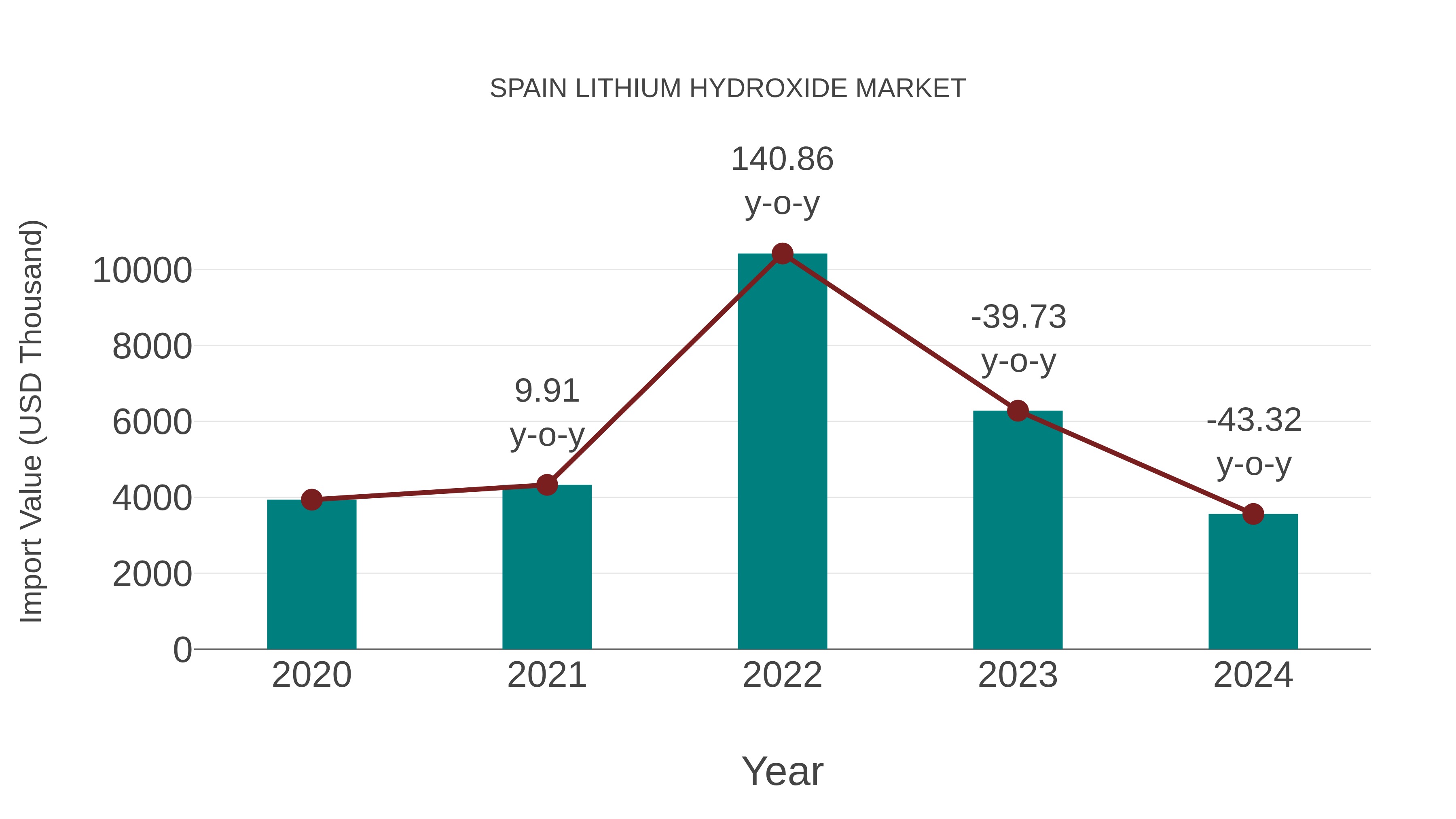
In 2024, Spain`s import of lithium hydroxide for the lithium market experienced a steady increase, driven by rising demand from the electric vehicle industry. The country`s import trend reflected a growing reliance on imported lithium hydroxide to meet domestic industry needs.
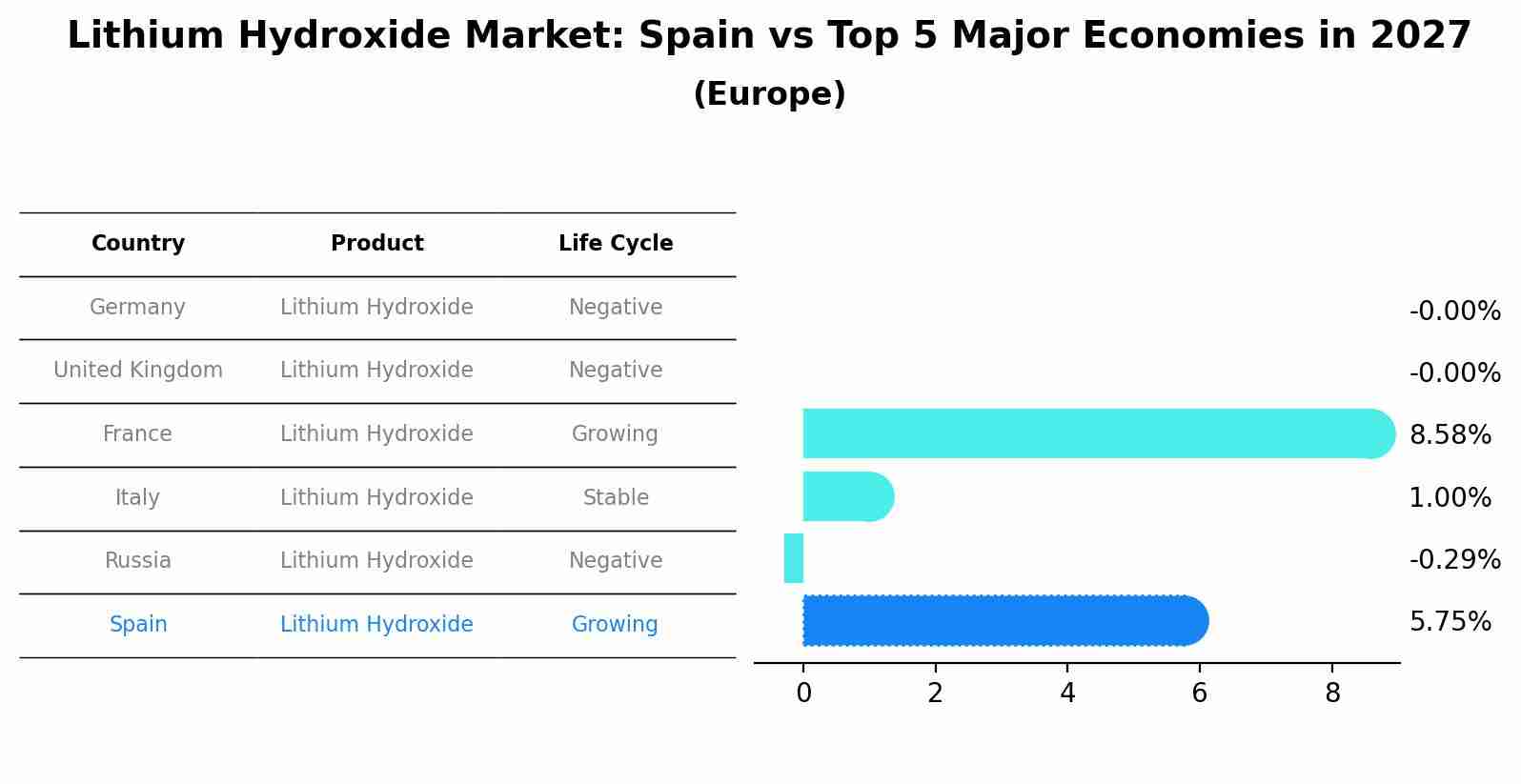
Lithium Hydroxide Market: Spain vs Top 5 Major Economies in 2027 (Europe)
By 2027, Spain's Lithium Hydroxide market is forecasted to achieve a growing growth rate of 5.75%, with Germany leading the Europe region, followed by United Kingdom, France, Italy and Russia.
Spain Lithium Hydroxide Market Overview
The lithium hydroxide market in Spain is growing, driven by its applications in battery production, particularly for electric vehicles. Lithium hydroxide is essential for producing high-energy-density batteries, making it increasingly valuable as the demand for EVs rises. As the automotive industry transitions towards electrification, the demand for lithium hydroxide is expected to surge, supported by advancements in battery technology.
Drivers of the market
The lithium hydroxide market is influenced by the increasing demand for high-performance batteries in electric vehicles and portable electronics. Lithium hydroxide is crucial for the production of high-capacity lithium-ion batteries, driving its demand. Additionally, the growing focus on sustainable energy solutions and the expansion of electric vehicle markets are shaping the future of this market.
Challenges of the market
The lithium hydroxide market faces challenges related to sourcing and regulatory compliance. As demand for lithium hydroxide grows, particularly for electric vehicle batteries, securing a stable supply of high-quality lithium sources becomes crucial. Fluctuations in raw material prices can impact production costs and market dynamics. Additionally, manufacturers must navigate complex regulatory frameworks concerning the extraction and processing of lithium to ensure compliance and sustainability. Competition from alternative battery technologies further complicates market positioning, necessitating continuous innovation and differentiation.
Government Policy of the market
The lithium hydroxide market in Spain is driven by government policies that support the electric vehicle and energy storage sectors. Regulations ensure that lithium hydroxide production meets EU environmental and safety standards. Government funding for battery research and incentives for green energy projects foster market expansion, particularly in the growing electric vehicle market.
Key Highlights of the Report:
- Spain Lithium Hydroxide Market Outlook
- Market Size of Spain Lithium Hydroxide Market, 2024
- Forecast of Spain Lithium Hydroxide Market, 2031
- Historical Data and Forecast of Spain Lithium Hydroxide Revenues & Volume for the Period 2018 - 2031
- Spain Lithium Hydroxide Market Trend Evolution
- Spain Lithium Hydroxide Market Drivers and Challenges
- Spain Lithium Hydroxide Price Trends
- Spain Lithium Hydroxide Porter's Five Forces
- Spain Lithium Hydroxide Industry Life Cycle
- Historical Data and Forecast of Spain Lithium Hydroxide Market Revenues & Volume By Application for the Period 2018 - 2031
- Historical Data and Forecast of Spain Lithium Hydroxide Market Revenues & Volume By Batteries for the Period 2018 - 2031
- Historical Data and Forecast of Spain Lithium Hydroxide Market Revenues & Volume By Lubricating Greases for the Period 2018 - 2031
- Historical Data and Forecast of Spain Lithium Hydroxide Market Revenues & Volume By Purification for the Period 2018 - 2031
- Historical Data and Forecast of Spain Lithium Hydroxide Market Revenues & Volume By Others for the Period 2018 - 2031
- Spain Lithium Hydroxide Import Export Trade Statistics
- Market Opportunity Assessment By Application
- Spain Lithium Hydroxide Top Companies Market Share
- Spain Lithium Hydroxide Competitive Benchmarking By Technical and Operational Parameters
- Spain Lithium Hydroxide Company Profiles
- Spain Lithium Hydroxide Key Strategic Recommendations






































