Spain Packaged Water Market: Import Trend Analysis
In 2024, Spain`s packaged water market witnessed a notable increase in imports. The trend reflected a growing demand for foreign packaged water products in the country, potentially driven by factors such as consumer preferences, product variety, or quality perception.
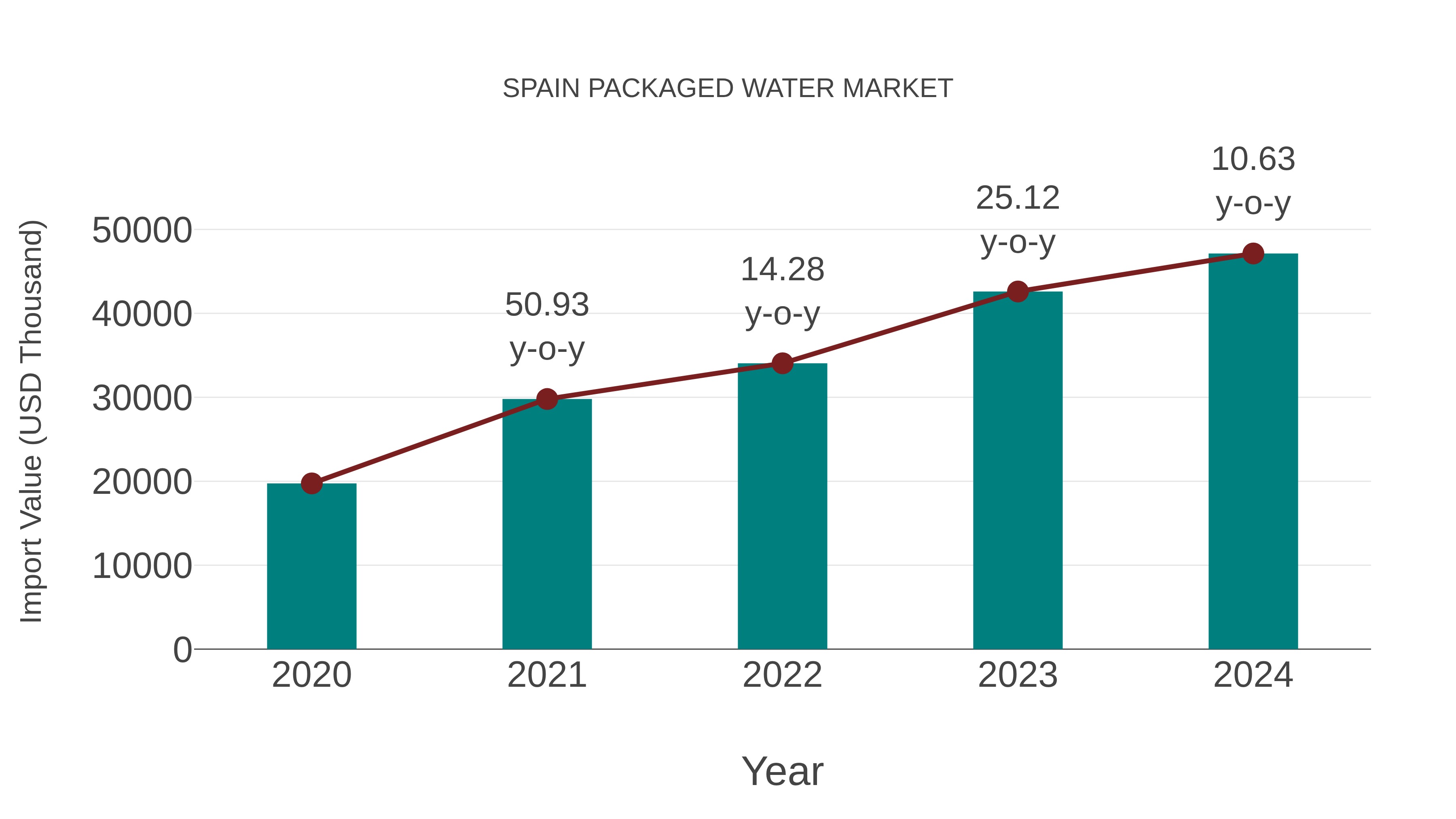
Spain Packaged water Market Overview
The Spain Packaged water market is experiencing steady growth driven by increasing consumer awareness of the importance of hydration and health-conscious lifestyles. The market is characterized by a wide range of products including still, sparkling, flavored, and functional waters to cater to diverse consumer preferences. Key players in the market focus on product innovation, sustainable packaging solutions, and marketing strategies to differentiate themselves in a competitive landscape. The demand for convenience and on-the-go hydration options further fuels the growth of the packaged water market in Spain. Government initiatives promoting healthy living and environmental sustainability also play a role in shaping consumer behavior and preferences in the market. Overall, the Spain packaged water market is expected to continue its growth trajectory, driven by evolving consumer trends and preferences.
Spain Packaged water Market Trends and Opportunities
The Spain Packaged water market is experiencing a growing demand due to increasing health consciousness among consumers and a shift towards healthier beverage options. The market is witnessing a trend towards premium and functional packaged water products, such as vitamin-infused water and flavored sparkling water, catering to the evolving consumer preferences. Additionally, sustainability and eco-friendly packaging solutions are gaining traction, presenting opportunities for brands to differentiate themselves and attract environmentally conscious consumers. With a focus on hydration and convenience, there is potential for innovation in packaging formats and distribution channels to further drive market growth in Spain`s packaged water sector.
Spain Packaged water Market Challenges
In the Spain Packaged water market, some key challenges include increasing competition among brands, price wars leading to thin profit margins, and concerns over environmental sustainability due to the use of plastic packaging. Additionally, changing consumer preferences towards more sustainable and eco-friendly options such as reusable bottles and filtered tap water pose a threat to the growth of the packaged water industry. Regulatory pressures and government initiatives to reduce plastic waste further add to the challenges faced by companies operating in this market. To stay competitive and address these challenges, companies need to focus on innovation in packaging materials, invest in sustainable practices, and adapt their marketing strategies to meet evolving consumer demands for healthier and more environmentally friendly products.
Spain Packaged water Market Drivers
The Spain Packaged water market is primarily driven by the increasing health consciousness among consumers, leading to a growing preference for convenient and safe drinking water options. The rise in disposable incomes and changing lifestyles have also fueled the demand for packaged water as a convenient and on-the-go hydration solution. Additionally, concerns over water contamination and the lack of access to clean drinking water in certain regions have further propelled the market growth. The popularity of packaged water is also driven by its convenience and portability, making it a preferred choice for consumers in various settings such as offices, gyms, and outdoor activities. The increasing awareness about the environmental impact of single-use plastic bottles has led to a shift towards sustainable packaging options, further influencing the market dynamics.
Spain Packaged water Market Government Policy
The Spain Packaged water market is influenced by several government policies aimed at ensuring the safety and quality of packaged water products. The Spanish government has regulations in place to monitor and enforce standards for labeling, packaging, and production processes to protect consumer health. Additionally, there are guidelines for water source quality, sanitation, and environmental sustainability in the production and distribution of packaged water. The government also imposes taxes and fees on packaged water products to promote responsible consumption and environmental awareness. Overall, these policies play a crucial role in shaping the Spain Packaged water market by promoting transparency, safety, and sustainability in the industry.
Spain Packaged water Market Future Outlook
The Spain Packaged water market is expected to continue its growth trajectory in the coming years. Factors driving this growth include increasing health consciousness among consumers, a growing preference for convenience, and the rise in tourism activities in the region. The market is also benefiting from the trend towards environmentally friendly packaging materials and the availability of various flavored and functional water options. As consumers seek healthier alternatives to sugary beverages and concerns over water quality persist, the demand for packaged water is likely to remain strong. However, the market may face challenges related to sustainability issues and competition from other beverage categories. Overall, the Spain Packaged water market is forecasted to expand steadily, with opportunities for innovation and strategic partnerships to drive growth further.
Key Highlights of the Report:
- Spain Packaged water Market Outlook
- Market Size of Spain Packaged water Market, 2025
- Forecast of Spain Packaged water Market, 2032
- Historical Data and Forecast of Spain Packaged water Revenues & Volume for the Period 2022 - 2032F
- Spain Packaged water Market Trend Evolution
- Spain Packaged water Market Drivers and Challenges
- Spain Packaged water Price Trends
- Spain Packaged water Porter's Five Forces
- Spain Packaged water Industry Life Cycle
- Historical Data and Forecast of Spain Packaged water Market Revenues & Volume By Product for the Period 2022 - 2032F
- Historical Data and Forecast of Spain Packaged water Market Revenues & Volume By Still for the Period 2022 - 2032F
- Historical Data and Forecast of Spain Packaged water Market Revenues & Volume By Carbonated for the Period 2022 - 2032F
- Historical Data and Forecast of Spain Packaged water Market Revenues & Volume By Flavored for the Period 2022 - 2032F
- Historical Data and Forecast of Spain Packaged water Market Revenues & Volume By Functional for the Period 2022 - 2032F
- Spain Packaged water Import Export Trade Statistics
- Market Opportunity Assessment By Product
- Spain Packaged water Top Companies Market Share
- Spain Packaged water Competitive Benchmarking By Technical and Operational Parameters
- Spain Packaged water Company Profiles
- Spain Packaged water Key Strategic Recommendations






































