Sri Lanka Carbon Market: Import Trend Analysis
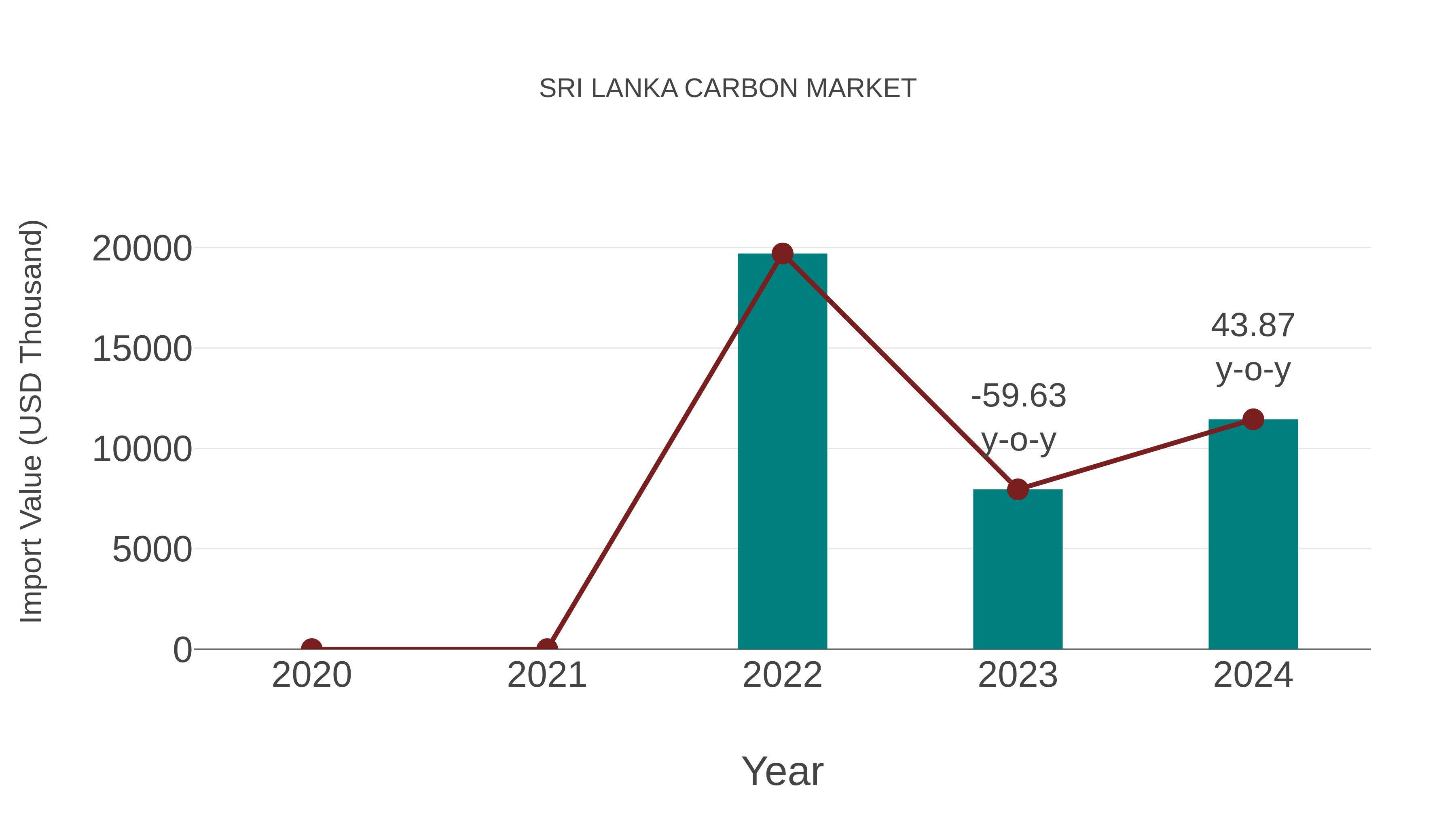
Sri Lanka import trend for the carbon market showed a growth rate of 43.87% from 2023 to 2024, with a compound annual growth rate (CAGR) of -23.78% from 2020 to 2024. This significant uptick in imports could be attributed to a shift in environmental regulations or increased focus on sustainability practices in the country.
Sri Lanka Carbon Market Highlights
| Report Name | Sri Lanka Carbon Market |
| Forecast period | 2025-2031 |
| CAGR | 25.7% |
| Growing Sector | Automotive |
Topics Covered in the Sri Lanka Carbon Market Report
The Sri Lanka Carbon Market report thoroughly covers the market By product types and by Applications. The market report provides an unbiased and detailed analysis of the ongoing market trends, opportunities/high growth areas, and market drivers, which would help the stakeholders to devise and align their market strategies according to the current and future market dynamics.
Sri Lanka Carbon Market Synopsis
Sri Lanka carbon market is growing steadily with government-led drives, corporate environmental initiatives, and a higher level of carbon credit trade participation. The country's greenhouse gas emissions reduction focus supports global climate treaties and promotes the development of renewable energy and carbon offset projects. Carbon pricing regimes and other regulatory systems are promoting market transparency and private sector investment. Even with the challenges of regulatory uncertainties and low infrastructure, Sri Lanka's carbon market has the potential to grow, promising long-term business and investment opportunities for those concerned with sustainable development.
According to 6Wresearch, the Sri Lanka Carbon Market is projected to grow at CAGR of 25.7% during the forecast period 2025-2031. Sri Lanka carbon market Growth is set for, driven by regulatory measures, carbon trading, and increased sustainability investments. Initiated by the country's desire to cut greenhouse gas emissions and comply with global environmental agendas. Government policies on the adoption of renewable energy, carbon credit markets, and greenhouse gas reduction programs are among drivers that are driving growth in the market. Growing awareness among businesses on carbon offsetting strategies as well as sustainability reporting has led companies to play an active role in the carbon market. Sri Lanka's focus on enhancing energy efficiency in industry, transport, and infrastructure development also supports market growth. Growing reforestation efforts and investment in clean energy technologies such as solar and wind power are also driving the low-carbon economy transition in Sri Lanka. Several challenges can, however, hinder market growth.
Uncertainty about regulatory systems and the fluidity of carbon pricing mechanisms create volatility, making long-term planning for firms to invest challenging. Limited technological advancements and inadequate infrastructure for monitoring, reporting, and verification of emissions remain significant challenges. Moreover, more private-sector participation and financial incentives to attract investments in carbon-reduction schemes are a significant challenge. Despite these problems, the Sri Lanka carbon market will experience a tremendous boost with continuous policy development, global coordination, and increased international demand for carbon credits, rendering the country an emerging global player in the carbon trading mechanism.
Sri Lanka Carbon Market Trends
Sri Lanka carbon market is witnessing significant developments with the growing uptake of carbon credit trading, government policies for emissions reduction, and corporate sustainability efforts. One of the most important trends defining the market is the growing presence of industries within carbon offset programs as firms aim to meet regulatory needs and align with international environmental standards. The growth of renewable energy projects, especially solar, wind, and hydroelectric power, is also driving market growth by decreasing the nation's dependence on fossil fuels.
The government is also promoting afforestation and reforestation initiatives to increase carbon sequestration, which is supporting a healthy voluntary carbon credit market. The development of emissions monitoring and verification technology is also enhancing market transparency and efficiency. But obstacles like policy uncertainties and inadequate private-sector participation remain. All else notwithstanding, Sri Lanka drive for sustainable development and climate-change mitigation should reinforce its foothold in the new world carbon market.
Investments Opportunities in the Sri Lanka Carbon Market
Sri Lanka carbon Industry in the Investment possibilities is growing as a result of regulatory mechanisms, commitment towards sustainability, and carbon credit trading adoption, which is on the rise. The efforts of the government towards emissions reduction and renewable energy generation have provided a favorable investment climate for clean energy projects such as solar, wind, and hydroelectric power. Carbon offset projects like afforestation, reforestation, and sustainable agriculture are also emerging, with both local and foreign investors showing increased interest.
The voluntary carbon market is also increasingly becoming an important channel, creating incentives for corporations to engage in emissions reduction programs. Private entities and financial institutions are investing in carbon credit ventures more and more to meet the global environmental norms. Regulatory risk and market infrastructure constraints could, however pose obstacles for long-term growth in investments. Despite such obstacles, Sri Lanka's move to a low-carbon economy is still yielding extensive opportunities for the investor interested in participating in green development with its attendant financial dividends from carbon diminution endeavors.
Leading Players in the Sri Lanka Carbon Market
Sri Lanka carbon market is facilitated by major industry stakeholders involved in emissions reduction, carbon trading, and renewable energy projects. Hayleys PLC, a leading Sri Lankan conglomerate, is actively pursuing carbon credit opportunities through its renewable energy business and sustainable manufacturing operations. Tokyo Cement Group, a major cement producer, has adopted carbon mitigation measures by using energy-efficient production techniques and alternative fuels.
In addition, LOLC Holdings PLC, a leading financial services company, is putting funds into green finance projects that invest in carbon offset programs and sustainable initiatives. Sri Lanka Carbon Fund (SLCF) with government support is key to promoting carbon trading and encouraging companies to invest in emissions reduction efforts. In addition, foreign business entities and financial institutions are becoming more active in working with Sri Lankan companies to develop market opportunities for carbon. As the market is developing, these top players will propel innovation, investment, and regulatory compliance and enhance Sri Lanka's shift toward a low-carbon economy.
Government Regulations
The government of Sri Lanka has introduced various legislative structures to facilitate the growth of the carbon market and stimulate emissions reductions. Policies are aligned with global climate obligations to ensure compliance with international carbon reduction standards. Carbon pricing mechanisms and incentives for businesses adopting sustainable practices, such as carbon offsetting schemes and investment in clean energy initiatives, have been established by the government. Additionally, environmental regulations mandate industries to limit greenhouse gas emissions by practicing energy efficiency measures and clean production methods. Besides, Sri Lanka is also focusing on the creation of cap-and-trade systems with the aim of increasing carbon trading and encouraging industries to reduce their carbon footprint.
The launch of voluntary carbon credit markets has provided firms with new potential to engage in emissions reduction projects. However, challenges such as regulatory risk, inadequacies in the capability to enforce, and market infrastructure limitations persist. The government addresses these through continuously enhancing policies, enhancing transparency, and supporting coordination between public and private sector actors to strengthen a robust carbon market.
Future Insights of the Sri Lanka Carbon Market
The development of the Sri Lanka carbon market is anticipated to be influenced by changing regulatory paradigms, advances in technology, and expanded private-sector investment. As the government remains resolute in lessening greenhouse gas emissions and signing on to global climate treaties, the market should witness considerable expansion. The introduction of renewable resources, energy conservation programs, and carbon credit schemes will also accelerate market growth. In addition, investments in carbon capture and storage (CCS) technologies and afforestation and reforestation activities will be key to maximizing carbon offset opportunities. Nevertheless, policy uncertainties, limited funding, and lack of awareness among industries can be challenges to the full potential of the market. However, with increased government assistance, global cooperation, and encouragement for eco-friendly practices, Sri Lanka stands a good chance of becoming a significant player in the international carbon trading market. The nation's shift to a low-carbon economy will provide long-term business opportunities while ensuring environmental stewardship.
Market Segmentation Analysis
The Report offers a comprehensive study of the subsequent market segments and their leading categories.
Graphite to Dominate the Market-By Product Types
Graphite emerging as the dominate segment. Sri Lanka is known for its high-purity vein graphite reserves, which have been a crucial component in industries such as energy storage, electronics, and metallurgy. Sri Lanka carbon market share is expanding due to rising carbon credit trading, emission reduction policies, and green investments.
Automotive to Dominate the Market -By Applications
According to Saurabh, Senior Research Analyst, 6Wresearch, The Sri Lanka carbon market is poised for substantial growth across various application segments, with the automotive sector expected to grow the market. The increasing global shift towards electric vehicles (EVs) and fuel-efficient transportation is driving the demand for carbon-based materials, particularly graphite, which is crucial for lithium-ion battery production.
Key Attractiveness of the Report
- 10 Years of Market Numbers.
- Historical Data Starting from 2021 to 2024.
- Base Year: 2024
- Forecast Data until 2031.
- Key Performance Indicators Impacting the market.
- Major Upcoming Developments and Projects.
Key Highlights of the Report:
- Sri Lanka Carbon Market Overview
- Sri Lanka Carbon Market Outlook
- Market Size of Sri Lanka Carbon Market, 2025
- Forecast of Sri Lanka Carbon Market, 2032
- Historical Data and Forecast of Sri Lanka Carbon Revenues & Volume for the Period 2022 - 2032F
- Sri Lanka Carbon Market Trend Evolution
- Sri Lanka Carbon Market Drivers and Challenges
- Sri Lanka Carbon Price Trends
- Sri Lanka Carbon Porter's Five Forces
- Sri Lanka Carbon Industry Life Cycle
- Historical Data and Forecast of Sri Lanka Carbon Market Revenues & Volume By Product Types for the Period 2022 - 2032F
- Historical Data and Forecast of Sri Lanka Carbon Market Revenues & Volume By Amorphous Carbon for the Period 2022 - 2032F
- Historical Data and Forecast of Sri Lanka Carbon Market Revenues & Volume By Graphite for the Period 2022 - 2032F
- Historical Data and Forecast of Sri Lanka Carbon Market Revenues & Volume By Diamond for the Period 2022 - 2032F
- Historical Data and Forecast of Sri Lanka Carbon Market Revenues & Volume By Applications for the Period 2022 - 2032F
- Historical Data and Forecast of Sri Lanka Carbon Market Revenues & Volume By Automotive for the Period 2022 - 2032F
- Historical Data and Forecast of Sri Lanka Carbon Market Revenues & Volume By Construction for the Period 2022 - 2032F
- Historical Data and Forecast of Sri Lanka Carbon Market Revenues & Volume By Engineering Industries for the Period 2022 - 2032F
- Historical Data and Forecast of Sri Lanka Carbon Market Revenues & Volume By Aerospace for the Period 2022 - 2032F
- Historical Data and Forecast of Sri Lanka Carbon Market Revenues & Volume By Others for the Period 2022 - 2032F
- Sri Lanka Carbon Import Export Trade Statistics
- Market Opportunity Assessment By Product Types
- Market Opportunity Assessment By Applications
- Sri Lanka Carbon Top Companies Market Share
- Sri Lanka Carbon Competitive Benchmarking By Technical and Operational Parameters
- Sri Lanka Carbon Company Profiles
- Sri Lanka Carbon Key Strategic Recommendations
Market Segmentation Analysis
The Report offers a comprehensive study of the subsequent market segments and their leading categories.
By Product Types
- Amorphous Carbon
- Graphite
- Diamond
By Applications
- Automotive
- Construction
- Engineering Industries
- Aerospace
- Others






































