Sri Lanka Octopus Market Size Growth Rate
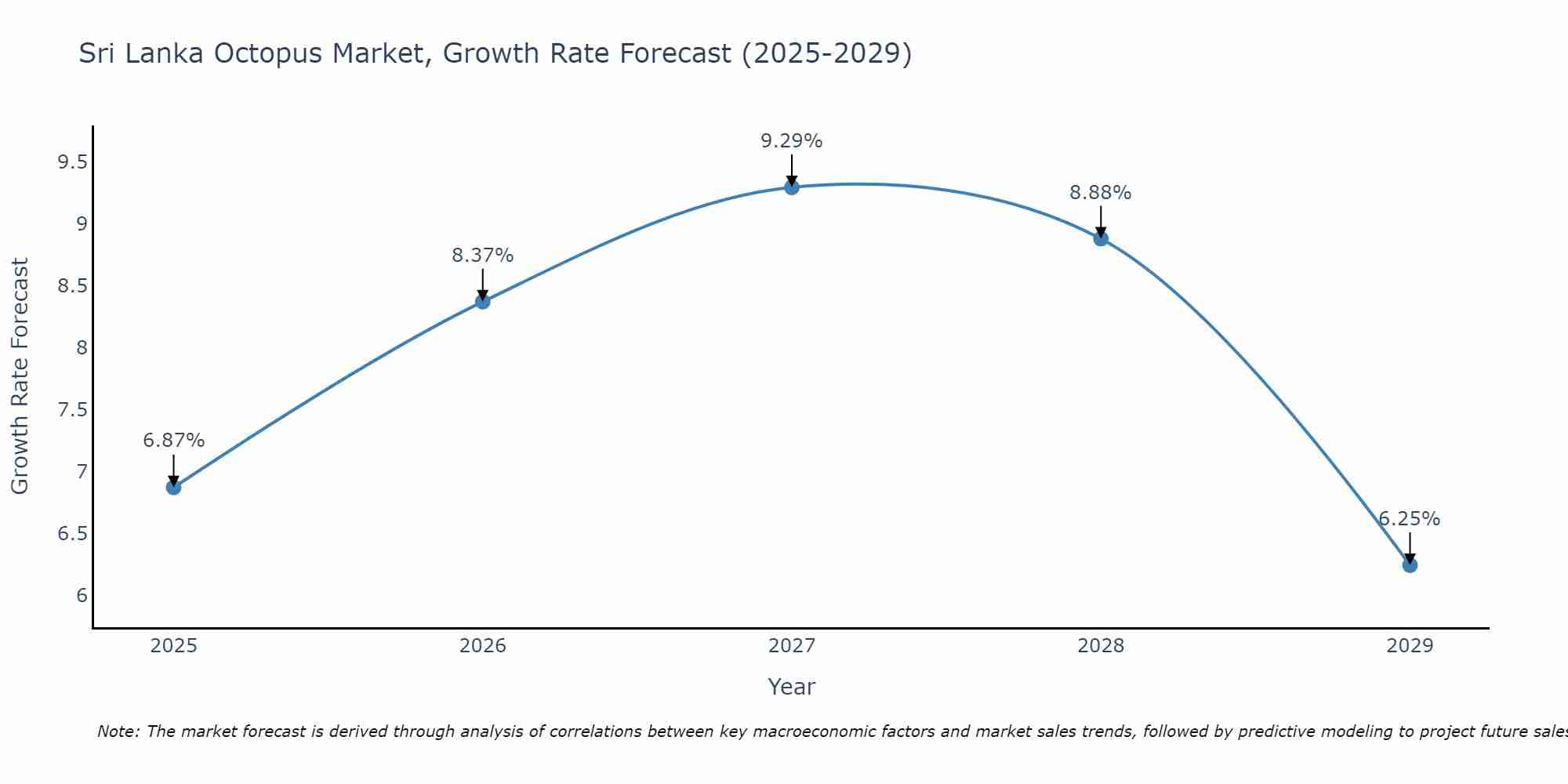
The Sri Lanka Octopus Market is projected to witness mixed growth rate patterns during 2025 to 2029. Growth accelerates to 9.29% in 2027, following an initial rate of 6.87%, before easing to 6.25% at the end of the period.
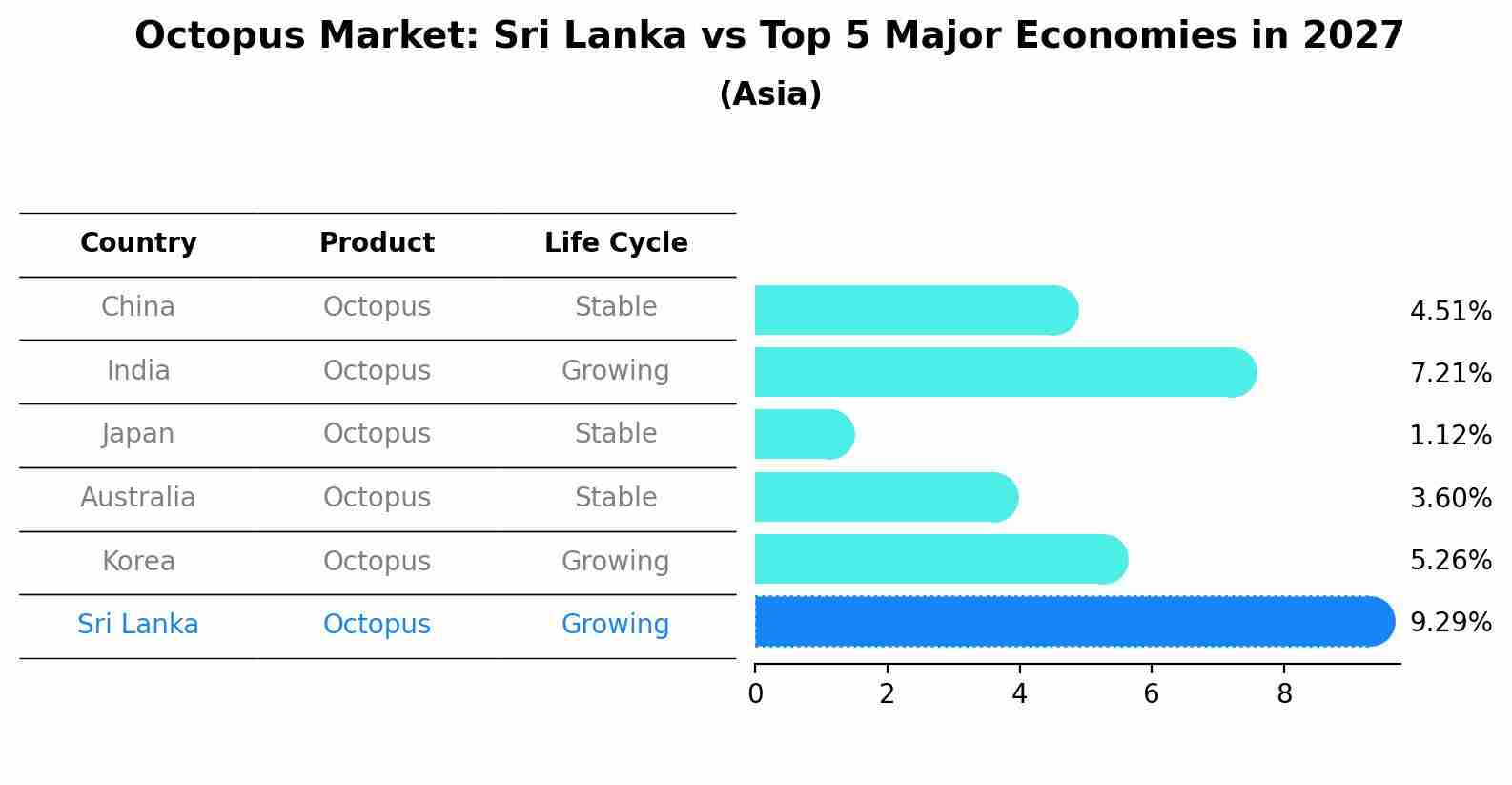
Octopus Market: Sri Lanka vs Top 5 Major Economies in 2027 (Asia)
By 2027, the Octopus market in Sri Lanka is anticipated to reach a growth rate of 9.29%, as part of an increasingly competitive Asia region, where China remains at the forefront, supported by India, Japan, Australia and South Korea, driving innovations and market adoption across sectors.
Sri Lanka Octopus Market Synopsis
The Sri Lanka octopus market is a growing sector within the country`s seafood industry, driven by increasing demand both domestically and internationally. Octopus is a popular delicacy in Sri Lankan cuisine and is also exported to countries across Asia and Europe. The market is characterized by a mix of small-scale artisanal fishermen and larger commercial operations, with most octopus caught using traditional fishing methods such as hand lines and traps. However, there is also a growing trend towards sustainable fishing practices to meet the rising global demand for ethically sourced seafood. The market faces challenges such as fluctuating catch volumes due to environmental factors and competition from other seafood products. Overall, the Sri Lanka octopus market presents opportunities for growth and innovation in the seafood industry.
Sri Lanka Octopus Market Trends
In the Sri Lanka Octopus Market, there are several notable trends emerging. One key trend is the increasing demand for sustainably sourced octopus products, driven by growing consumer awareness of environmental issues. This has led to a rise in certifications such as MSC (Marine Stewardship Council) for responsibly caught octopus, appealing to eco-conscious consumers. Additionally, there is a growing preference for value-added octopus products, such as pre-cooked or marinated options, catering to busy lifestyles and convenience-seeking consumers. The market is also seeing innovations in packaging to extend shelf life and improve product presentation. Overall, these trends indicate a shift towards more ethical and convenient octopus products in the Sri Lanka market.
Sri Lanka Octopus Market Challenges
In the Sri Lanka Octopus market, some of the key challenges faced include fluctuating supply due to unpredictable weather conditions affecting fishing activities, competition from imported octopus products, and limited infrastructure for processing and storage. Additionally, issues related to unsustainable fishing practices leading to declining octopus populations and concerns regarding quality and food safety standards also pose challenges for market players. Moreover, the lack of awareness among consumers about the nutritional benefits and culinary versatility of octopus further hinders market growth. Addressing these challenges would require investments in sustainable fishing methods, improved processing facilities, market promotion initiatives, and stringent quality control measures to ensure the long-term viability and competitiveness of the Sri Lanka Octopus market.
Sri Lanka Octopus Market Investment Opportunities
The Sri Lanka Octopus Market presents promising investment opportunities due to the growing demand for seafood globally. With Sri Lanka being a major exporter of seafood products, particularly octopus, investing in this market could be lucrative. The market offers opportunities for investors to engage in the octopus fishing industry, processing and packaging facilities, as well as export ventures to cater to international markets. Additionally, there is potential for value-added products such as ready-to-eat octopus snacks or canned octopus, which could further expand market reach and profitability. Investing in the Sri Lanka Octopus Market allows investors to tap into the country`s abundant marine resources and benefit from the increasing demand for high-quality seafood products worldwide.
Jordan Agar Market Government Policies
The Sri Lankan government has implemented various policies related to the Octopus Market to regulate and promote sustainable fishing practices. These policies include licensing requirements for octopus fishers, seasonal closures to protect breeding grounds, and catch limits to prevent overfishing. Additionally, there are regulations in place to ensure the quality and safety of octopus products for consumers. The government also collaborates with local fishing communities and organizations to monitor and enforce these policies effectively. Overall, these initiatives aim to balance the economic benefits of the octopus market with conservation efforts to maintain the long-term viability of octopus populations in Sri Lankan waters.
Sri Lanka Octopus Market Future Outlook
The future outlook for the Sri Lanka Octopus Market appears promising, driven by increasing demand for seafood products globally and the country`s strategic geographical location for octopus fishing. The market is expected to witness steady growth in the coming years, supported by improvements in fishing techniques, sustainable practices, and a growing focus on seafood exports. Additionally, the rising popularity of octopus as a culinary delicacy in international markets is likely to further boost demand and drive market expansion. However, challenges such as environmental concerns, regulations on fishing quotas, and competition from other seafood products may impact the market`s growth trajectory. Overall, with continued innovation and sustainability efforts, the Sri Lanka Octopus Market is poised for growth and opportunities in the foreseeable future.
Key Highlights of the Report:
- Sri Lanka Octopus Market Outlook
- Market Size of Sri Lanka Octopus Market, 2024
- Forecast of Sri Lanka Octopus Market, 2031
- Historical Data and Forecast of Sri Lanka Octopus Revenues & Volume for the Period 2021 - 2031
- Sri Lanka Octopus Market Trend Evolution
- Sri Lanka Octopus Market Drivers and Challenges
- Sri Lanka Octopus Price Trends
- Sri Lanka Octopus Porter's Five Forces
- Sri Lanka Octopus Industry Life Cycle
- Historical Data and Forecast of Sri Lanka Octopus Market Revenues & Volume By Product Type for the Period 2021 - 2031
- Historical Data and Forecast of Sri Lanka Octopus Market Revenues & Volume By Fresh for the Period 2021 - 2031
- Historical Data and Forecast of Sri Lanka Octopus Market Revenues & Volume By Processed for the Period 2021 - 2031
- Historical Data and Forecast of Sri Lanka Octopus Market Revenues & Volume By Application for the Period 2021 - 2031
- Historical Data and Forecast of Sri Lanka Octopus Market Revenues & Volume By Commercial for the Period 2021 - 2031
- Historical Data and Forecast of Sri Lanka Octopus Market Revenues & Volume By Food and Beverage for the Period 2021 - 2031
- Historical Data and Forecast of Sri Lanka Octopus Market Revenues & Volume By Distribution Channel for the Period 2021 - 2031
- Historical Data and Forecast of Sri Lanka Octopus Market Revenues & Volume By Direct for the Period 2021 - 2031
- Historical Data and Forecast of Sri Lanka Octopus Market Revenues & Volume By Indirect for the Period 2021 - 2031
- Sri Lanka Octopus Import Export Trade Statistics
- Market Opportunity Assessment By Product Type
- Market Opportunity Assessment By Application
- Market Opportunity Assessment By Distribution Channel
- Sri Lanka Octopus Top Companies Market Share
- Sri Lanka Octopus Competitive Benchmarking By Technical and Operational Parameters
- Sri Lanka Octopus Company Profiles
- Sri Lanka Octopus Key Strategic Recommendations






































