Sri Lanka Wood Preservatives Market: Import Trend Analysis
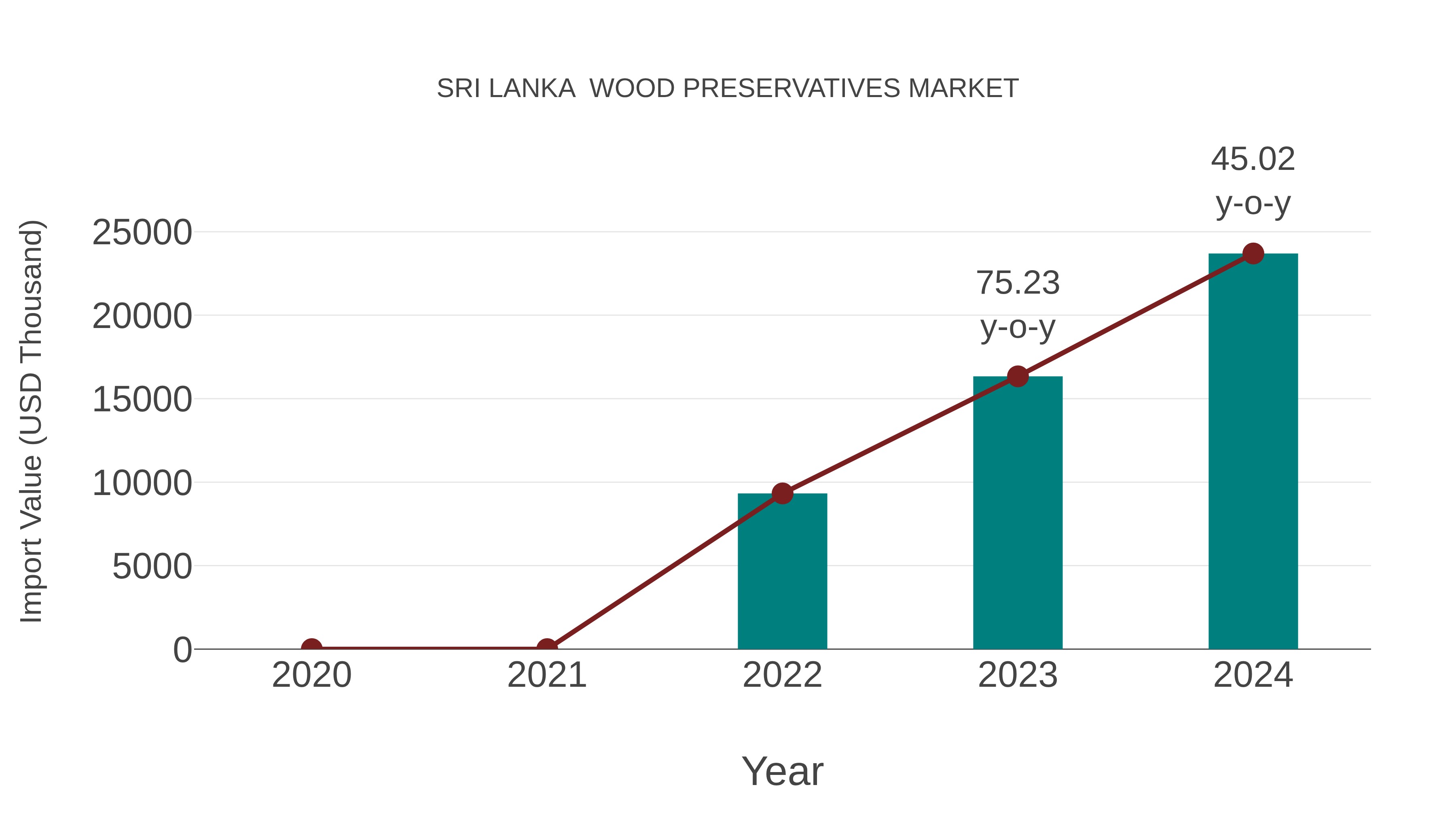
Sri Lanka wood preservatives market witnessed a notable import trend, with a growth rate of 45.02% from 2023 to 2024. The compound annual growth rate (CAGR) for 2020-2024 stood at 59.41%. This surge can be attributed to increased construction activities and a growing focus on wood preservation in the country.
Sri Lanka Wood Preservatives Market Overview
The wood preservatives market in Sri Lanka supplies chemicals and treatments for protecting timber and wood products against decay, insects, and environmental degradation. Wood preservatives extend the lifespan and structural integrity of wood used in construction, fencing, and utility poles. Market dynamics include demand for eco-friendly preservatives, regulatory compliance for chemical formulations, and innovations in non-toxic treatments enhancing environmental sustainability and user safety.
Drivers of the market
Driven by wood protection needs, infrastructure projects, and advancements in preservative technologies. Growth factors include demand for treated timber, environmental regulations, and applications in construction, landscaping, and marine industries.
Challenges of the market
The wood preservatives market in Sri Lanka faces obstacles such as high production costs and the need for specialized skills to apply and maintain these preservatives. There is also limited awareness about the benefits of modern wood preservatives among potential users. Additionally, competition from traditional preservatives and economic fluctuations pose significant challenges.
Government Policy of the market
Government policies for the wood preservatives market in Sri Lanka aim to regulate the use of chemicals to protect wood from decay and insects while ensuring environmental safety. Regulations focus on promoting the use of eco-friendly preservatives, monitoring chemical applications in wood treatment, and enforcing safety standards for workers and consumers. Efforts also include research and development initiatives to advance sustainable preservative technologies.
Key Highlights of the Report:
- Sri Lanka Wood Preservatives Market Outlook
- Market Size of Sri Lanka Wood Preservatives Market, 2025
- Forecast of Sri Lanka Wood Preservatives Market, 2032
- Historical Data and Forecast of Sri Lanka Wood Preservatives Revenues & Volume for the Period 2022-2032F
- Sri Lanka Wood Preservatives Market Trend Evolution
- Sri Lanka Wood Preservatives Market Drivers and Challenges
- Sri Lanka Wood Preservatives Price Trends
- Sri Lanka Wood Preservatives Porter's Five Forces
- Sri Lanka Wood Preservatives Industry Life Cycle
- Historical Data and Forecast of Sri Lanka Wood Preservatives Market Revenues & Volume By Formulation for the Period 2022-2032F
- Historical Data and Forecast of Sri Lanka Wood Preservatives Market Revenues & Volume By Water-Based Wood Preservatives for the Period 2022-2032F
- Historical Data and Forecast of Sri Lanka Wood Preservatives Market Revenues & Volume By Solvent-Based Wood Preservatives for the Period 2022-2032F
- Historical Data and Forecast of Sri Lanka Wood Preservatives Market Revenues & Volume By Oil-Based Wood Preservatives for the Period 2022-2032F
- Historical Data and Forecast of Sri Lanka Wood Preservatives Market Revenues & Volume By Application for the Period 2022-2032F
- Historical Data and Forecast of Sri Lanka Wood Preservatives Market Revenues & Volume By Residential for the Period 2022-2032F
- Historical Data and Forecast of Sri Lanka Wood Preservatives Market Revenues & Volume By Commercial for the Period 2022-2032F
- Historical Data and Forecast of Sri Lanka Wood Preservatives Market Revenues & Volume By Industrial for the Period 2022-2032F
- Sri Lanka Wood Preservatives Import Export Trade Statistics
- Market Opportunity Assessment By Formulation
- Market Opportunity Assessment By Application
- Sri Lanka Wood Preservatives Top Companies Market Share
- Sri Lanka Wood Preservatives Competitive Benchmarking By Technical and Operational Parameters
- Sri Lanka Wood Preservatives Company Profiles
- Sri Lanka Wood Preservatives Key Strategic Recommendations






































