Sri Lanka Wooden Furniture Market Size, Share & Growth Rate
The Sri Lanka Wooden Furniture Market was estimated at USD 221 Million in 2025 and is projected to reach USD 300 Million by 2032, growing at a CAGR of 4.5% from 2026 to 2032. This growth trajectory is primarily driven by a burgeoning residential and commercial property sector, coupled with an increasing consumer preference for aesthetically appealing and durable furniture. The trend towards customization and sustainable sourcing further complements the market's expansion, as consumers increasingly seek unique pieces that reflect their personal style while adhering to eco-friendly principles.
Sri Lanka Wooden Furniture Market Growth Rate Analysis (2021-2032)
The Sri Lanka wooden furniture market has been demonstrating steady growth, marked by a yearly increase of 5.1% in both 2021 and 2022, with a slight rise to 5.5% in 2023. This growth can be attributed to a resurgence in consumer demand, primarily driven by rising disposable incomes and a preference for sustainable materials. Modest fluctuations are observed, with a dip to 4.9% in 2031, likely reflecting market saturation and competition from imported alternatives. However, investments in local craftsmanship and infrastructure improvements, alongside a growing emphasis on digitalization in retail, are expected to stabilize growth, as evidenced by the anticipated return to 5.5% in 2032.
Sri Lanka Wooden Furniture Market Year-wise Growth Rate and Key Drivers
This graph highlights how the Sri Lanka Wooden Furniture Market has steadily grown over the past five years, supported by major growth factors.
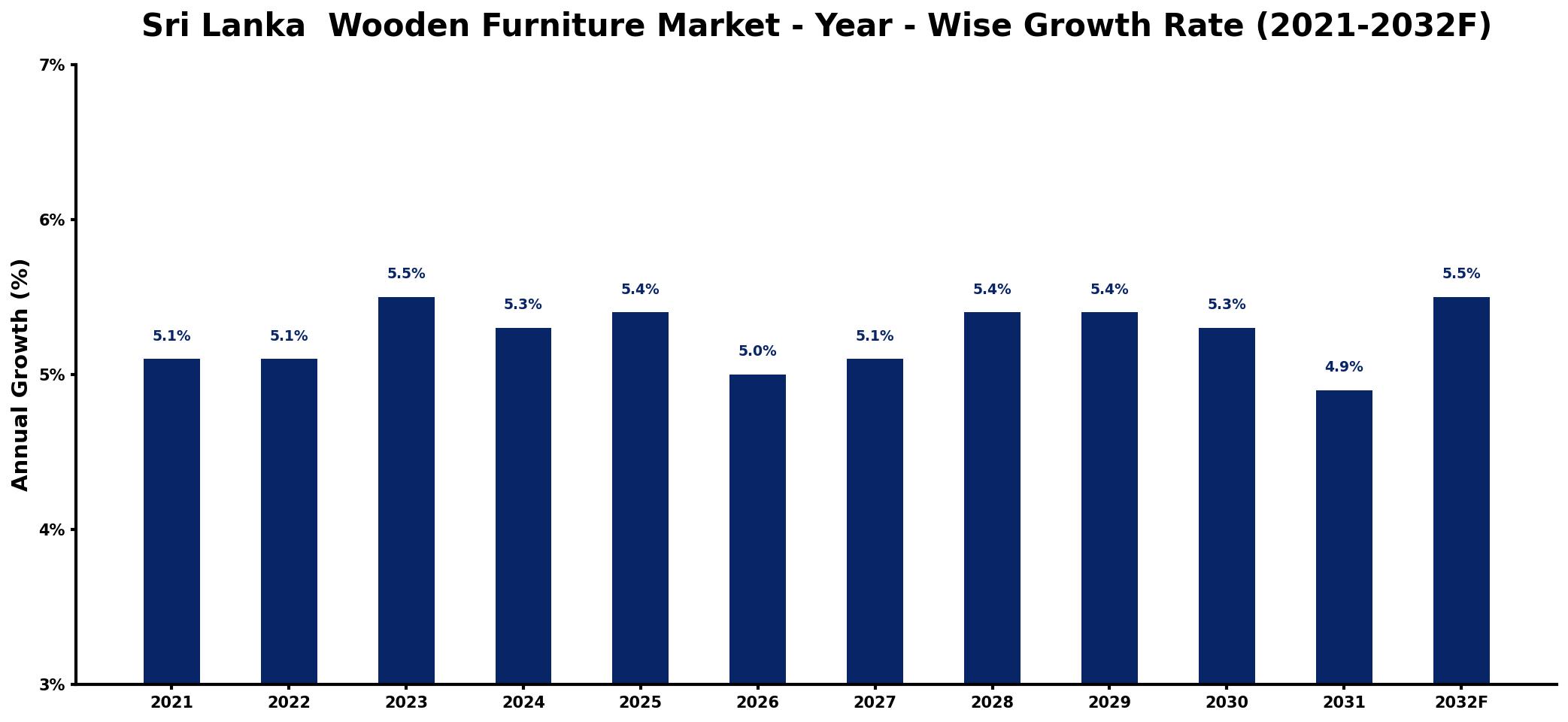
The table below presents the year‑wise growth rates along with the key drivers influencing the market
| Year | Growth Rate | Major Drivers |
| 2021 | 5.1% | Rising consumer spending on design |
| 2022 | 5.1% | Increased focus on sustainable sourcing |
| 2023 | 5.5% | Growing demand for home renovations |
| 2024 | 5.3% | Expansion of local manufacturing capabilities |
| 2025 | 5.4% | Surge in e-commerce sales channels |
| 2026 | 5.0% | Investment in technology for production |
| 2027 | 5.1% | Strengthened export markets for materials |
| 2028 | 5.4% | Growing popularity of custom solutions |
| 2029 | 5.4% | Increased collaboration with designers |
| 2030 | 5.3% | Enhanced marketing strategies for visibility |
| 2031 | 4.9% | increased pharmaceutical industry usage |
| 2032 | 5.5% | Focus on ergonomic product designs |
Note: Market size estimations and growth projections presented in this report are based on 6Wresearch's proprietary forecasting methodology, utilizing the latest available industry data, government publications, and primary research inputs.
Sri Lanka Wooden Furniture Market Synopsis
In recent years, the demand for wooden furniture in Sri Lanka has seen a notable shift towards custom designs, particularly in urban areas where space is often limited. Homeowners and businesses alike are opting for modular furniture that offers flexibility without sacrificing style.
Additionally, the growing awareness of sustainability has prompted many consumers to seek out furniture crafted from responsibly sourced materials. This shift not only supports local artisans but also aligns with global trends toward environmentally conscious consumerism.
Sri Lanka Wooden Furniture Market Key Takeaways
- Market growth is bolstered by rising property developments and changing interior design trends.
- Customization options are increasingly driving consumer preferences for unique furniture solutions.
- Sustainable practices in sourcing and production are becoming essential market differentiators.
- Challenges such as high production costs and limited raw material availability need addressing.
- Government initiatives aim to enhance craftsmanship and support local manufacturers in improving export competitiveness.
Evaluation of Restraints in Sri Lanka Wooden Furniture Market
Despite its promising outlook, the Sri Lanka wooden furniture market faces significant restraints that could hamper growth. High production costs, primarily driven by the availability of quality raw materials, challenge manufacturers, particularly smaller enterprises. Additionally, a general lack of awareness regarding the benefits of modern wooden furniture among potential users limits market expansion. The presence of competing materials, such as metal and plastic, further complicates the competitive landscape, especially during economic fluctuations that impact consumer spending. Addressing these issues is crucial for the sustainable development of this sector.
Sri Lanka Wooden Furniture Market Trends
The Sri Lankan wooden furniture market is currently witnessing several key trends that shape both consumer demand and technological advancements. Notably, there is a marked increase in the popularity of ergonomic designs, particularly for office furniture, as more companies prioritize employee well-being and productivity. Additionally, innovations in modular furniture systems are gaining traction, allowing consumers to easily reconfigure their spaces to meet changing needs.
Moreover, the rise of online retail platforms has transformed how consumers interact with wooden furniture brands, enabling them to explore a wider variety of styles and customization options from the comfort of their homes. This digital shift is expected to play a pivotal role in expanding market reach and enhancing customer engagement.
Sri Lanka Wooden Furniture Market Opportunities
There are significant growth opportunities for investors and manufacturers within the Sri Lanka wooden furniture market. The increasing urbanization and a corresponding rise in property development present fertile ground for innovative furniture solutions that cater to modern living spaces. Furthermore, the push for sustainable and eco-friendly products opens avenues for businesses focused on responsible sourcing and production practices. As global demand for artisanal and handcrafted furniture rises, Sri Lankan manufacturers can leverage their rich craftsmanship heritage to penetrate both domestic and international markets.
Government Initiatives in the Sri Lanka Wooden Furniture Market
The government of Sri Lanka has implemented several initiatives aimed at promoting the wooden furniture sector. These policies focus on enhancing craftsmanship, quality, and competitiveness for export. Training programs for local artisans and manufacturers are designed to boost skills and encourage innovation in design. Additionally, there are efforts to facilitate market access for Sri Lankan furniture producers by upholding international production standards and ensuring sustainable sourcing of wood materials. These initiatives not only support economic growth but also preserve the countrys rich cultural heritage in furniture design.
Future Insights of the Sri Lanka Wooden Furniture Market
Looking ahead to the period from 2026 to 2032, the Sri Lanka wooden furniture market is poised for continued growth, driven by evolving consumer preferences and a resilient property market. Innovations in materials and design are likely to shape product offerings, reflecting both traditional craftsmanship and modern functionality. As sustainability becomes an ingrained expectation rather than a trend, companies that prioritize environmentally friendly practices will likely outperform their competitors. Overall, the combination of local artisan talent and increasing global demand for quality wooden furniture will serve to enhance the market's appeal and growth potential.
Sri Lanka Wooden Furniture Market Latest Developments (2025 - 2026)
In the last year, the Sri Lanka wooden furniture market has seen notable developments, particularly in the area of sustainable practices. Several initiatives have emerged focused on promoting the use of responsibly sourced wood, which aligns with global sustainability trends. Additionally, an increase in collaborations between designers and local craftsmen has emerged, fostering innovation and creativity in product design. This synergy has not only enhanced the aesthetic appeal of wooden furniture but also provided greater customization options for consumers, marking a significant shift in market dynamics.
Sri Lanka Wooden Furniture Market - Key Attractiveness of the Report
- 10 Years of Market Numbers
- Historical Data Starting from 2022 to 2025
- Base Year: 2025
- Forecast Data until 2032
- Key Performance Indicators Impacting the Market
- Major Upcoming Developments and Projects
Key Highlights of the Report:
- Sri Lanka Wooden Furniture Market Outlook
- Market Size of Sri Lanka Wooden Furniture Market, 2025
- Forecast of Sri Lanka Wooden Furniture Market, 2032
- Historical Data and Forecast of Sri Lanka Wooden Furniture Revenues & Volume for the Period 2022-2032F
- Sri Lanka Wooden Furniture Market Trend Evolution
- Sri Lanka Wooden Furniture Market Drivers and Challenges
- Sri Lanka Wooden Furniture Price Trends
- Sri Lanka Wooden Furniture Porter's Five Forces
- Sri Lanka Wooden Furniture Industry Life Cycle
- Historical Data and Forecast of Sri Lanka Wooden Furniture Market Revenues & Volume By Type for the Period 2022-2032F
- Historical Data and Forecast of Sri Lanka Wooden Furniture Market Revenues & Volume By Hardwood for the Period 2022-2032F
- Historical Data and Forecast of Sri Lanka Wooden Furniture Market Revenues & Volume By Softwood for the Period 2022-2032F
- Historical Data and Forecast of Sri Lanka Wooden Furniture Market Revenues & Volume By Material for the Period 2022-2032F
- Historical Data and Forecast of Sri Lanka Wooden Furniture Market Revenues & Volume By Plywood for the Period 2022-2032F
- Historical Data and Forecast of Sri Lanka Wooden Furniture Market Revenues & Volume By Laminates for the Period 2022-2032F
- Historical Data and Forecast of Sri Lanka Wooden Furniture Market Revenues & Volume By MDF for the Period 2022-2032F
- Historical Data and Forecast of Sri Lanka Wooden Furniture Market Revenues & Volume By Other Materials for the Period 2022-2032F
- Historical Data and Forecast of Sri Lanka Wooden Furniture Market Revenues & Volume By Product for the Period 2022-2032F
- Historical Data and Forecast of Sri Lanka Wooden Furniture Market Revenues & Volume By Bedroom for the Period 2022-2032F
- Historical Data and Forecast of Sri Lanka Wooden Furniture Market Revenues & Volume By Seating for the Period 2022-2032F
- Historical Data and Forecast of Sri Lanka Wooden Furniture Market Revenues & Volume By Kitchen for the Period 2022-2032F
- Historical Data and Forecast of Sri Lanka Wooden Furniture Market Revenues & Volume By Other Products for the Period 2022-2032F
- Historical Data and Forecast of Sri Lanka Wooden Furniture Market Revenues & Volume By Application for the Period 2022-2032F
- Historical Data and Forecast of Sri Lanka Wooden Furniture Market Revenues & Volume By Residential for the Period 2022-2032F
- Historical Data and Forecast of Sri Lanka Wooden Furniture Market Revenues & Volume By Commercial for the Period 2022-2032F
- Historical Data and Forecast of Sri Lanka Wooden Furniture Market Revenues & Volume By Distribution Channel for the Period 2022-2032F
- Historical Data and Forecast of Sri Lanka Wooden Furniture Market Revenues & Volume By Offline for the Period 2022-2032F
- Historical Data and Forecast of Sri Lanka Wooden Furniture Market Revenues & Volume By Online for the Period 2022-2032F
- Sri Lanka Wooden Furniture Import Export Trade Statistics
- Market Opportunity Assessment By Type
- Market Opportunity Assessment By Material
- Market Opportunity Assessment By Product
- Market Opportunity Assessment By Application
- Market Opportunity Assessment By Distribution Channel
- Sri Lanka Wooden Furniture Top Companies Market Share
- Sri Lanka Wooden Furniture Competitive Benchmarking By Technical and Operational Parameters
- Sri Lanka Wooden Furniture Company Profiles
- Sri Lanka Wooden Furniture Key Strategic Recommendations






































