Sweden Canned Tuna Market Size (2020-2030)
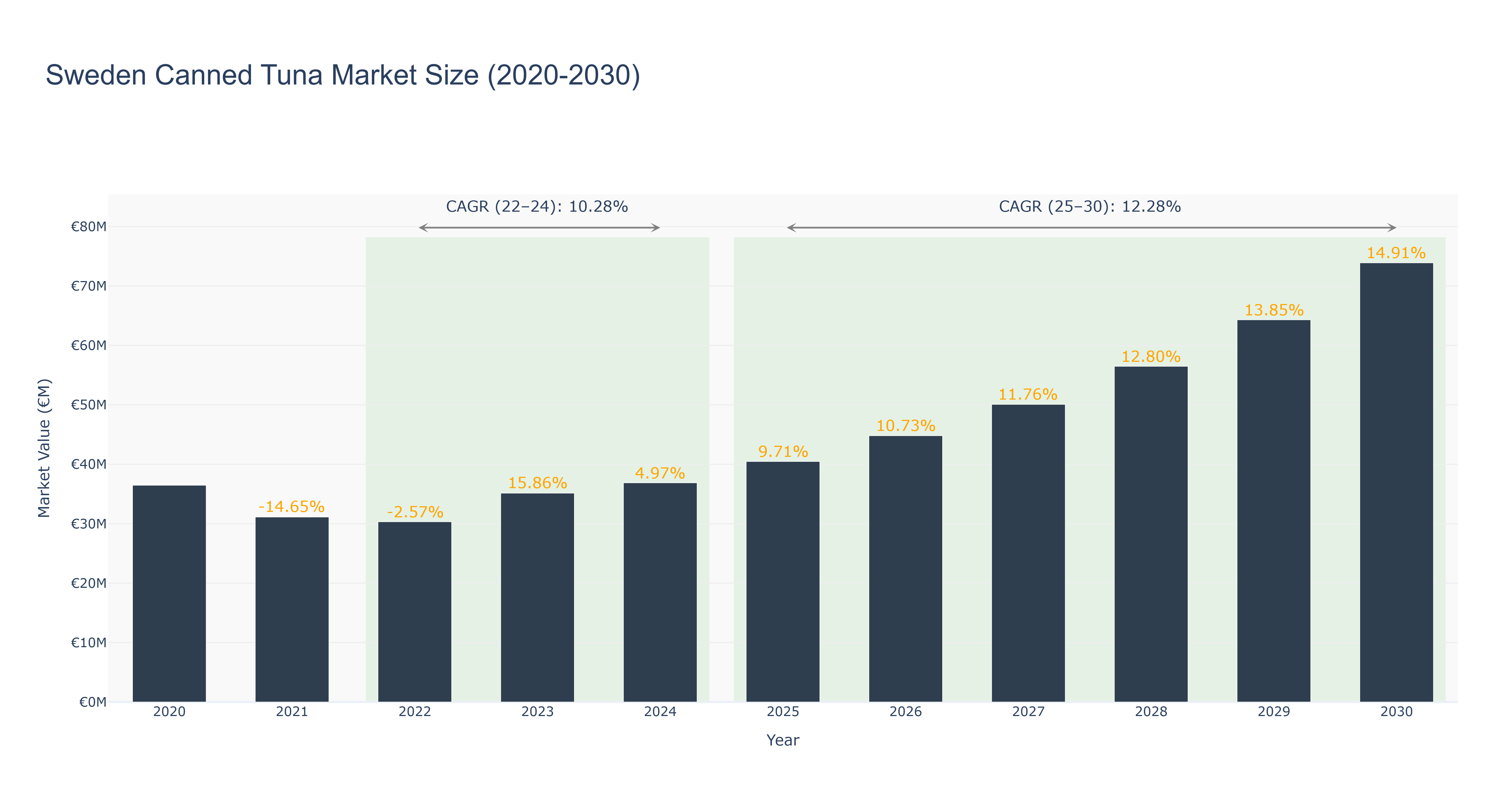
Sweden Canned Tuna Market has shown a mixed trend over the years. The market peaked at €73.91 million in 2030, with a steady growth trajectory from 2020 to 2024, reaching €36.89 million in 2024. However, there was a slight decline in market size in 2021 and 2022, attributed to economic uncertainties and changing consumer preferences. The forecasted market size from 2025 to 2030 shows a promising growth trend, with a CAGR of 12.28% expected, driven by increasing health-conscious consumer demographics and a growing demand for convenient seafood options. Recent developments in sustainable fishing practices and packaging innovations are set to further boost market growth in the coming years, ensuring a positive outlook for Sweden's canned tuna market.
Sweden Canned Tuna Market: Production & Trade Performance (2019-2025)
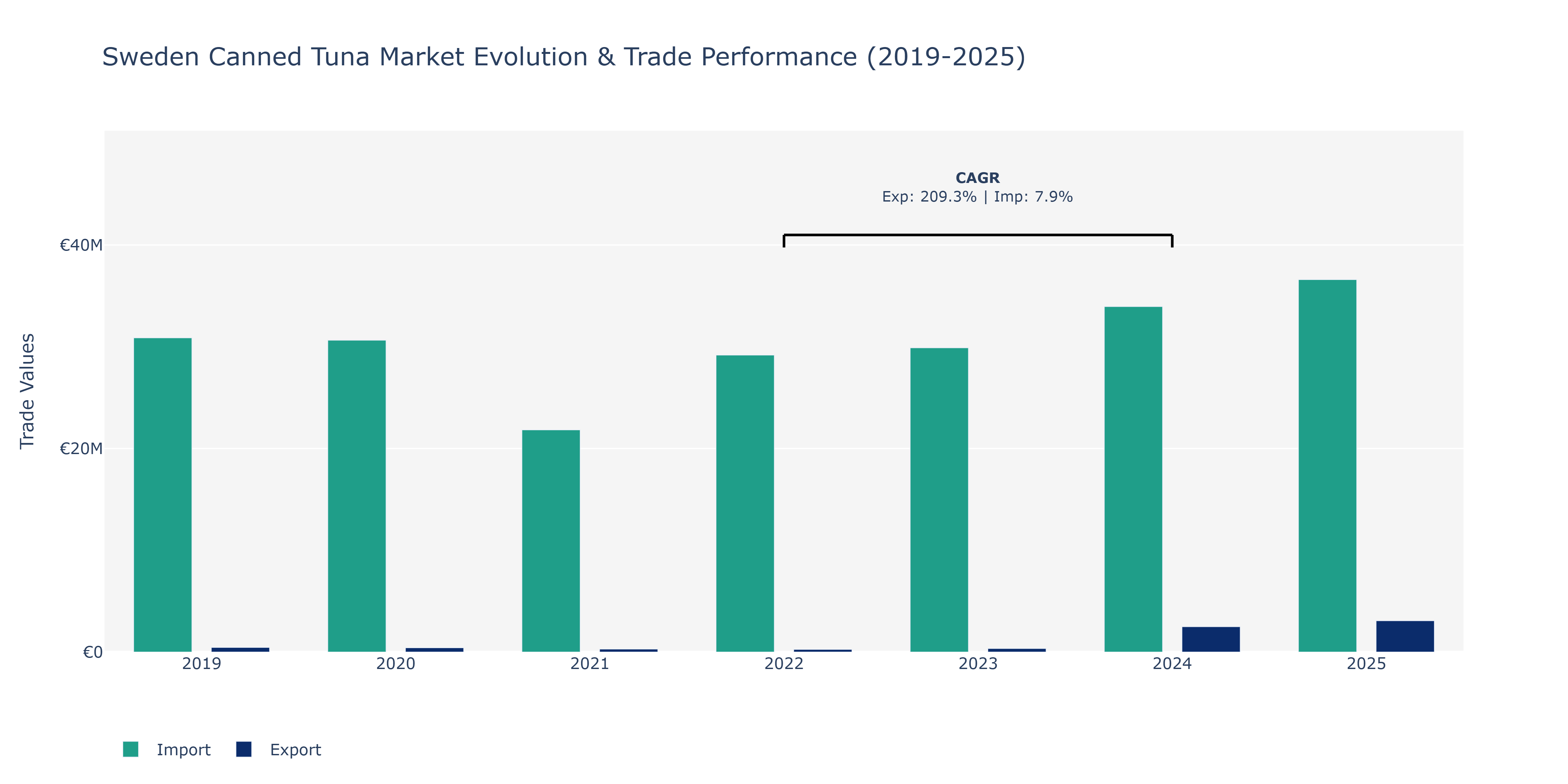
Between 2019 and 2025, the Sweden Canned Tuna Market experienced fluctuations in both exports and imports. In 2019, exports stood at €449.9 thousand, showing a slight decline to €418.23 thousand in 2020 before a more significant drop to €286.08 thousand in 2021. The market saw a notable recovery in 2023 with exports reaching €342.86 thousand and a substantial increase to €2.49 million in 2024, showcasing a peak point. Import value followed a different trajectory, with values at €30.87 million in 2019, slightly decreasing to €30.64 million in 2020, and further dropping to €21.83 million in 2021. There was a rebound in 2022 with imports rising to €29.18 million and reaching a peak at €36.59 million in 2025. The sudden surge in exports in 2024 could be attributed to expanded production capacities or increased global demand for Swedish canned tuna products. Conversely, fluctuations in imports might be influenced by changes in domestic consumption patterns or shifts in international trade agreements impacting the import volume of canned tuna into Sweden.
Sweden Canned Tuna Market Overview
The canned tuna market in Sweden is particularly strong, driven by its popularity as a convenient and nutritious food option. Tuna is a key ingredient in various dishes, from salads to pasta, making it a household staple. The market is increasingly focused on sustainability, with consumers demanding transparency regarding sourcing and fishing practices. Brands are responding by offering products that are certified sustainable, which appeals to environmentally conscious buyers. The continued popularity of quick and easy meal solutions ensures that the canned tuna market will remain a significant segment within the broader canned food industry.
Drivers of the market
The canned tuna market in Sweden is primarily driven by the increasing consumer preference for healthy and convenient meal options. As tuna is recognized for its high protein content and omega-3 fatty acids, it has become a popular choice among health-conscious consumers. The convenience of canned tuna as a quick and easy ingredient for salads, sandwiches, and casseroles further enhances its appeal. Additionally, the growing trend of sustainability in seafood sourcing has prompted consumers to seek out brands that adhere to responsible fishing practices. The introduction of innovative flavors and product variations, such as flavored or low-sodium options, also contributes to the market expansion.
Challenges of the market
The canned tuna market in Sweden faces substantial challenges related to environmental and sustainability concerns. Overfishing and the decline of tuna populations have led to stricter regulations and the need for certification (such as MSC labels), which can increase costs for manufacturers. Additionally, changing consumer preferences towards fresher and healthier food options, coupled with growing concerns over mercury levels in tuna, have negatively impacted demand. Price volatility in the global seafood market also adds financial strain to businesses in this sector.
Government Policy of the market
The canned tuna market in Sweden is shaped by both consumer demand for convenient seafood options and stringent government policies on sustainable fishing. Sweden, following the EUs Common Fisheries Policy (CFP), supports sustainable sourcing of tuna to prevent overfishing and maintain marine biodiversity. This affects the types of tuna that can be imported and sold in the country. The Swedish government also promotes clear labeling practices to ensure transparency about the origin and fishing methods used, making it easier for consumers to make environmentally conscious purchasing decisions.
Key Highlights of the Report:
- Sweden Canned Tuna Market Outlook
- Market Size of Sweden Canned Tuna Market, 2025
- Forecast of Sweden Canned Tuna Market, 2032
- Historical Data and Forecast of Sweden Canned Tuna Revenues & Volume for the Period 2022 - 2032
- Sweden Canned Tuna Market Trend Evolution
- Sweden Canned Tuna Market Drivers and Challenges
- Sweden Canned Tuna Price Trends
- Sweden Canned Tuna Porter`s Five Forces
- Sweden Canned Tuna Industry Life Cycle
- Historical Data and Forecast of Sweden Canned Tuna Market Revenues & Volume By Product for the Period 2022 - 2032
- Historical Data and Forecast of Sweden Canned Tuna Market Revenues & Volume By Skipjack for the Period 2022 - 2032
- Historical Data and Forecast of Sweden Canned Tuna Market Revenues & Volume By Yellowfin for the Period 2022 - 2032
- Historical Data and Forecast of Sweden Canned Tuna Market Revenues & Volume By Others for the Period 2022 - 2032
- Historical Data and Forecast of Sweden Canned Tuna Market Revenues & Volume By Distribution Channel for the Period 2022 - 2032
- Historical Data and Forecast of Sweden Canned Tuna Market Revenues & Volume By Hypermarket & Supermarket for the Period 2022 - 2032
- Historical Data and Forecast of Sweden Canned Tuna Market Revenues & Volume By Specialty Stores for the Period 2022 - 2032
- Historical Data and Forecast of Sweden Canned Tuna Market Revenues & Volume By Online for the Period 2022 - 2032
- Sweden Canned Tuna Import Export Trade Statistics
- Market Opportunity Assessment By Product
- Market Opportunity Assessment By Distribution Channel
- Sweden Canned Tuna Top Companies Market Share
- Sweden Canned Tuna Competitive Benchmarking By Technical and Operational Parameters
- Sweden Canned Tuna Company Profiles
- Sweden Canned Tuna Key Strategic Recommendations






































