Switzerland Soybean Oil Market Growth Rate Analysis (2025 - 2031)
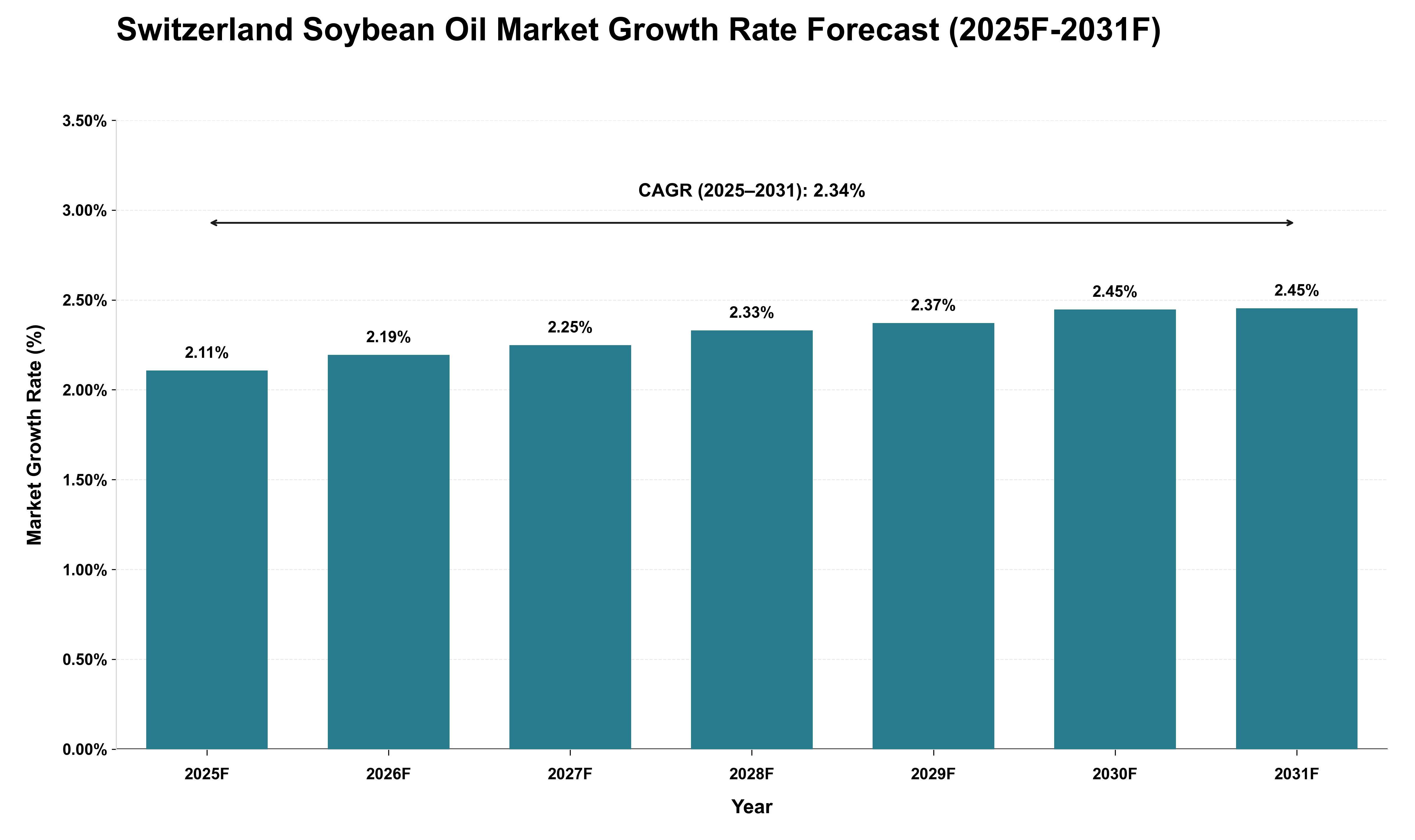
The forecasted growth trajectory for the Switzerland soybean oil market will exhibit a gradual acceleration, with annual growth rates increasing from 2.11% in 2025 to a peak of 2.45% in both 2030 and 2031. This upward trend reflects an anticipated shift in end-use demand driven by evolving consumer preferences towards healthier cooking oils and increased incorporation of plant-based ingredients in food products. As Switzerland continues to emphasize sustainability and health-conscious consumption, the demand for soybean oil is likely to rise, supported by its versatility across culinary applications and food processing sectors. Additionally, import dependencies may influence market dynamics, as fluctuations in global supply chains could impact availability and pricing. The projected CAGR of 2.34% underscores a robust outlook for this product class, suggesting that economic factors will favor continued investment and consumption growth within the Swiss market during this period.
Key Highlights of the Report:
- Switzerland Soybean Oil Market Outlook
- Market Size of Switzerland Soybean Oil Market, 2025
- Forecast of Switzerland Soybean Oil Market, 2032
- Historical Data and Forecast of Switzerland Soybean Oil Revenues & Volume for the Period 2022-2032F
- Switzerland Soybean Oil Market Trend Evolution
- Switzerland Soybean Oil Market Drivers and Challenges
- Switzerland Soybean Oil Price Trends
- Switzerland Soybean Oil Porter`s Five Forces
- Switzerland Soybean Oil Industry Life Cycle
- Historical Data and Forecast of Switzerland Soybean Oil Market Revenues & Volume By End-Use for the Period 2022-2032F
- Historical Data and Forecast of Switzerland Soybean Oil Market Revenues & Volume By Food for the Period 2022-2032F
- Historical Data and Forecast of Switzerland Soybean Oil Market Revenues & Volume By Feed for the Period 2022-2032F
- Historical Data and Forecast of Switzerland Soybean Oil Market Revenues & Volume By Industrial for the Period 2022-2032F
- Switzerland Soybean Oil Import Export Trade Statistics
- Market Opportunity Assessment By End-Use
- Switzerland Soybean Oil Top Companies Market Share
- Switzerland Soybean Oil Competitive Benchmarking By Technical and Operational Parameters
- Switzerland Soybean Oil Company Profiles
- Switzerland Soybean Oil Key Strategic Recommendations






































