Musical Instrument Market: Tanzania vs Top 5 Major Economies in 2027 (Africa)
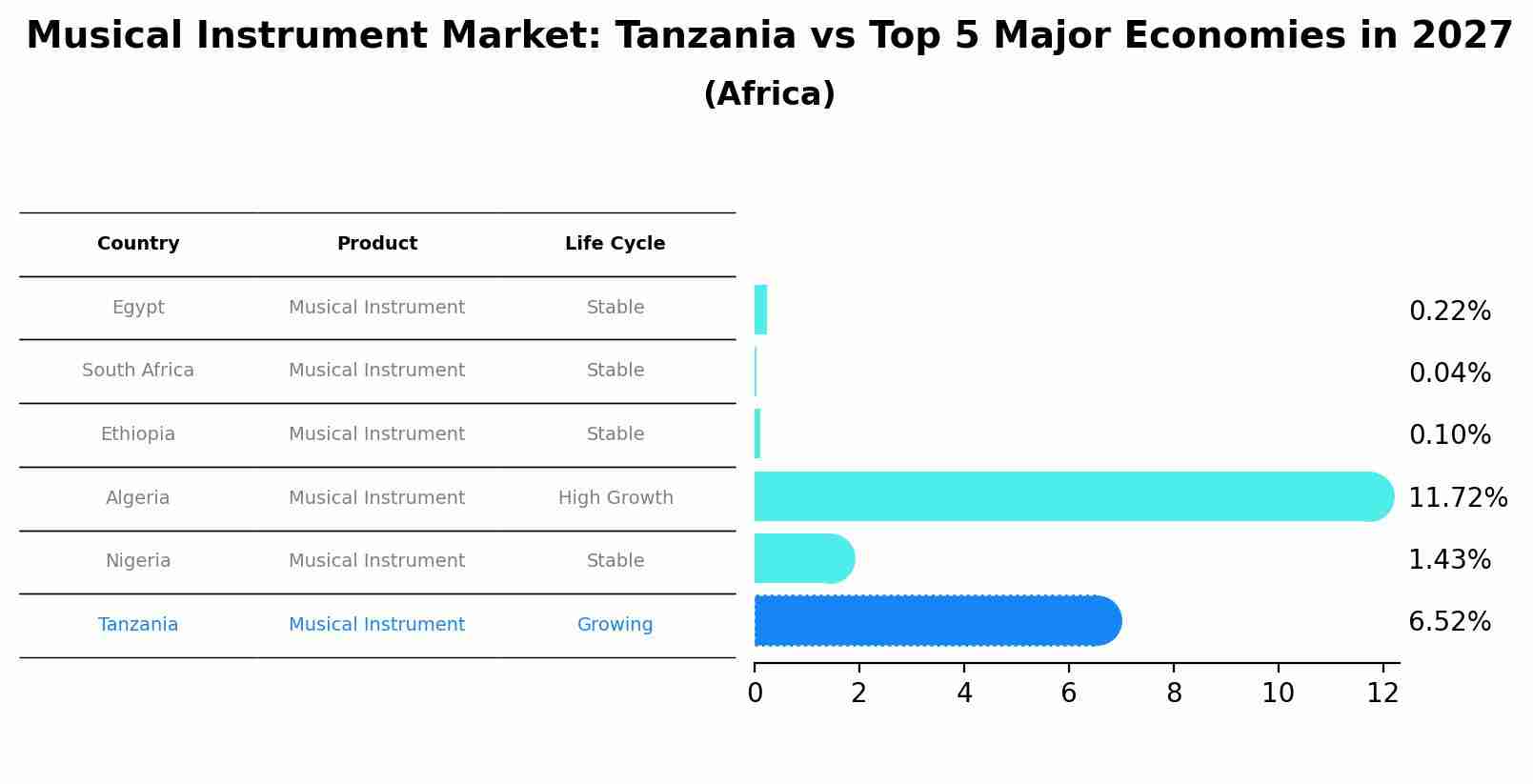
The Musical Instrument market in Tanzania is projected to grow at a growing growth rate of 6.52% by 2027, highlighting the country's increasing focus on advanced technologies within the Africa region, where Egypt holds the dominant position, followed closely by South Africa, Ethiopia, Algeria and Nigeria, shaping overall regional demand.
Tanzania Musical Instrument Market Overview
The Tanzania musical instrument market is characterized by a diverse range of products catering to musicians, music schools, and cultural events. Market dynamics include growing interest in traditional and contemporary musical instruments, increasing disposable incomes, and initiatives promoting music education and cultural heritage preservation.
Drivers of the market
In Tanzania, the Musical Instrument market is driven by growing interest in music education, cultural events, and entertainment activities. Schools, musicians, and cultural institutions are key consumers of musical instruments, including guitars, pianos, and traditional African instruments. The market growth is supported by rising disposable incomes and a burgeoning music industry that fosters demand for high-quality instruments.
Challenges of the market
The Tanzania musical instrument market faces challenges primarily related to importation costs, market demand fluctuations, and consumer preferences. Import tariffs and transportation costs impact the affordability and availability of musical instruments in Tanzania. Fluctuations in consumer spending and preferences for traditional versus modern instruments further influence market dynamics. Moreover, educating consumers about musical instrument quality, maintenance, and cultural significance, as well as supporting local craftsmanship and music education initiatives, are ongoing challenges for stakeholders in the Tanzania musical instrument market.
Government Policy of the market
Government policies concerning the musical instrument market in Tanzania prioritize promoting local craftsmanship, enhancing access to musical education, and supporting cultural preservation initiatives. Efforts are made to facilitate import regulations, encourage domestic production, and promote music as a tool for social cohesion.
Key Highlights of the Report:
- Tanzania Musical Instrument Market Outlook
- Market Size of Tanzania Musical Instrument Market, 2024
- Forecast of Tanzania Musical Instrument Market, 2031
- Historical Data and Forecast of Tanzania Musical Instrument Revenues & Volume for the Period 2018 - 2031
- Tanzania Musical Instrument Market Trend Evolution
- Tanzania Musical Instrument Market Drivers and Challenges
- Tanzania Musical Instrument Price Trends
- Tanzania Musical Instrument Porter's Five Forces
- Tanzania Musical Instrument Industry Life Cycle
- Historical Data and Forecast of Tanzania Musical Instrument Market Revenues & Volume By Product for the Period 2018 - 2031
- Historical Data and Forecast of Tanzania Musical Instrument Market Revenues & Volume By String Instruments for the Period 2018 - 2031
- Historical Data and Forecast of Tanzania Musical Instrument Market Revenues & Volume By Pianos And Keyboards for the Period 2018 - 2031
- Historical Data and Forecast of Tanzania Musical Instrument Market Revenues & Volume By Drums And Percussion Instruments for the Period 2018 - 2031
- Historical Data and Forecast of Tanzania Musical Instrument Market Revenues & Volume By Others for the Period 2018 - 2031
- Tanzania Musical Instrument Import Export Trade Statistics
- Market Opportunity Assessment By Product
- Tanzania Musical Instrument Top Companies Market Share
- Tanzania Musical Instrument Competitive Benchmarking By Technical and Operational Parameters
- Tanzania Musical Instrument Company Profiles
- Tanzania Musical Instrument Key Strategic Recommendations






































