Thailand Copper Clad Wire Market: Import Trend Analysis
Thailand copper clad wire market witnessed a significant decline in imports from 2020 to 2024, with a compound annual growth rate (CAGR) of -91.6%. This sharp downturn in import momentum can be attributed to shifting demand patterns or market instability within the industry.
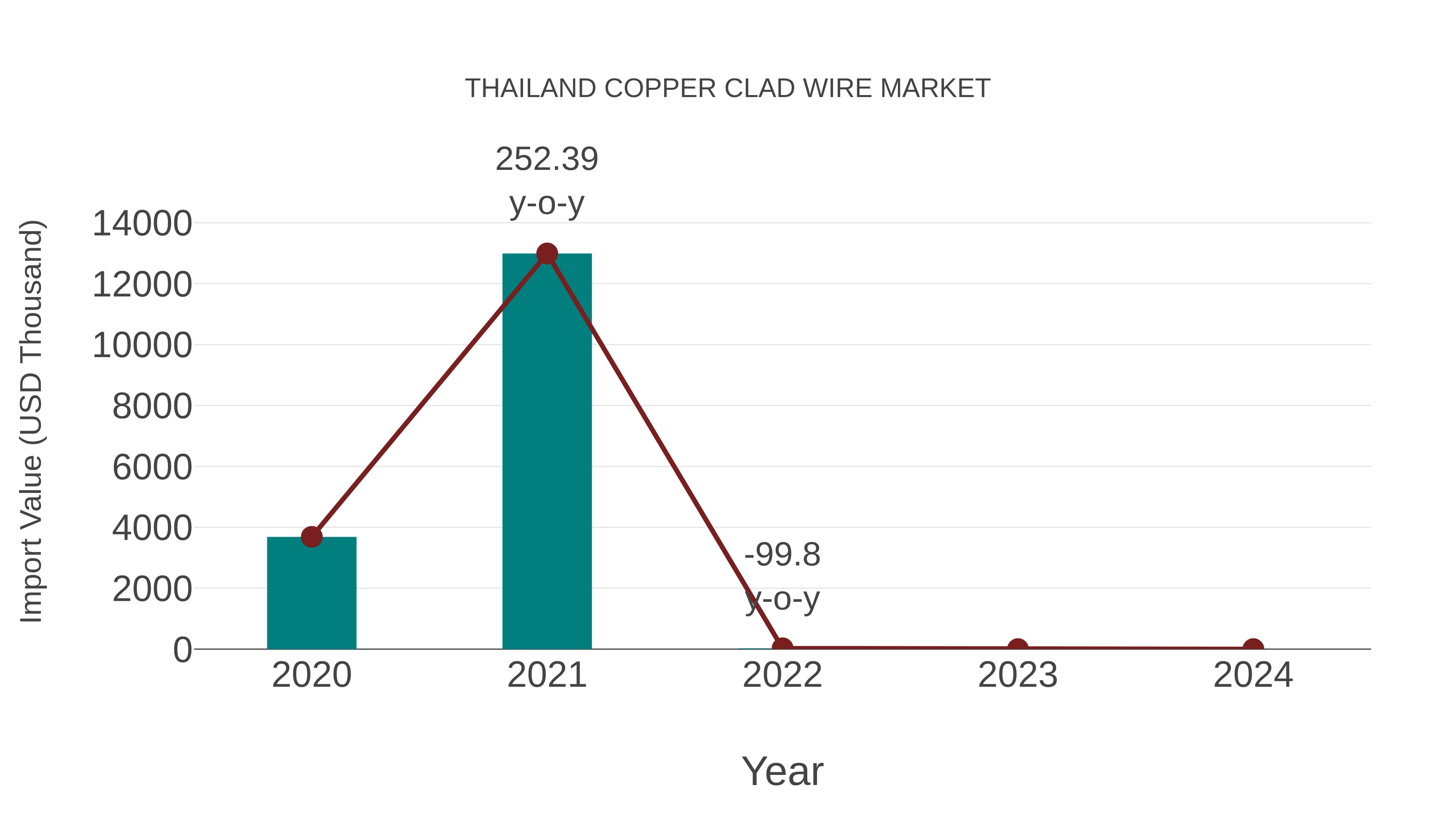
Thailand Copper Clad Wire Market Synopsis
Copper clad wire is a critical component in the electrical and electronics industries, and the Thailand market for this product is thriving. Copper clad wire consists of a copper core with a thin layer of another material, often aluminum or steel. This combination offers the electrical conductivity of copper with the strength and cost-effectiveness of the cladding material. The growing demand for consumer electronics, electrical appliances, and telecommunications equipment has propelled the use of copper clad wire. Additionally, investments in infrastructure and renewable energy projects contribute to the market`s expansion.
Drivers of the Market
The Thailand copper clad wire market is growing steadily, primarily owing to the telecommunications and electrical industries. Copper clad wires combine the conductivity of copper with the strength of steel or aluminum, making them essential for applications such as data transmission and power distribution. The expansion of the telecommunications sector, driven by the increasing demand for high-speed internet and mobile connectivity, fuels the demand for copper clad wires. Furthermore, the growing emphasis on renewable energy sources drives the market as these wires are crucial in solar and wind power systems.
Challenges of the Market
The Thailand copper clad wire market faces several challenges. First and foremost, fluctuations in the global copper prices can significantly impact the cost of production, leading to pricing volatility in the market. Additionally, the market has to contend with competition from alternative materials and technologies like fiber optics and wireless communication, which can reduce the demand for copper-based products. Regulatory changes related to environmental concerns and safety standards also pose challenges for manufacturers in this sector.
COVID-19 Impact on the Market
The copper clad wire market in Thailand was impacted by supply chain disruptions during the pandemic, affecting the availability of raw materials. This led to price fluctuations and challenges for manufacturers. The telecommunications and electronics industries, which heavily rely on copper clad wires, faced increased demand as remote work and digitalization trends accelerated. Post-pandemic, the market is expected to continue evolving with a focus on technology-driven applications.
Key Players in the Market
The copper clad wire market in Thailand includes companies like Thai Pacific Wire Co., Ltd. and J-POWER SYSTEM CO., LTD. These players are known for their copper clad wire products used in electrical and telecommunications applications.
Key Highlights of the Report:
- Thailand Copper Clad Wire Market Outlook
- Market Size of Thailand Copper Clad Wire Market, 2025
- Forecast of Thailand Copper Clad Wire Market, 2032
- Historical Data and Forecast of Thailand Copper Clad Wire Revenues & Volume for the Period 2022-2032F
- Thailand Copper Clad Wire Market Trend Evolution
- Thailand Copper Clad Wire Market Drivers and Challenges
- Thailand Copper Clad Wire Price Trends
- Thailand Copper Clad Wire Porter's Five Forces
- Thailand Copper Clad Wire Industry Life Cycle
- Historical Data and Forecast of Thailand Copper Clad Wire Market Revenues & Volume By Product Type for the Period 2022-2032F
- Historical Data and Forecast of Thailand Copper Clad Wire Market Revenues & Volume By Aluminium Copper Clad Wire for the Period 2022-2032F
- Historical Data and Forecast of Thailand Copper Clad Wire Market Revenues & Volume By Steel Copper Clad Wire for the Period 2022-2032F
- Historical Data and Forecast of Thailand Copper Clad Wire Market Revenues & Volume By End User for the Period 2022-2032F
- Historical Data and Forecast of Thailand Copper Clad Wire Market Revenues & Volume By Transportation for the Period 2022-2032F
- Historical Data and Forecast of Thailand Copper Clad Wire Market Revenues & Volume By Consumer Electronics for the Period 2022-2032F
- Historical Data and Forecast of Thailand Copper Clad Wire Market Revenues & Volume By Power & Energy for the Period 2022-2032F
- Historical Data and Forecast of Thailand Copper Clad Wire Market Revenues & Volume By Construction for the Period 2022-2032F
- Historical Data and Forecast of Thailand Copper Clad Wire Market Revenues & Volume By General Industrial for the Period 2022-2032F
- Thailand Copper Clad Wire Import Export Trade Statistics
- Market Opportunity Assessment By Product Type
- Market Opportunity Assessment By End User
- Thailand Copper Clad Wire Top Companies Market Share
- Thailand Copper Clad Wire Competitive Benchmarking By Technical and Operational Parameters
- Thailand Copper Clad Wire Company Profiles
- Thailand Copper Clad Wire Key Strategic Recommendations






































