Thailand Scissors and Shears Market Summary
The thailand scissors and shears market was estimated at USD 108 Million in 2025 and is projected to reach USD 124 Million by 2032, growing at a CAGR of 2.9% from 2026 to 2032.
Thailand Scissors and Shears Market Year-wise Growth Rate and Key Drivers
This graph highlights how the Thailand Scissors and Shears Market has steadily grown over the past five years, supported by major growth factors.
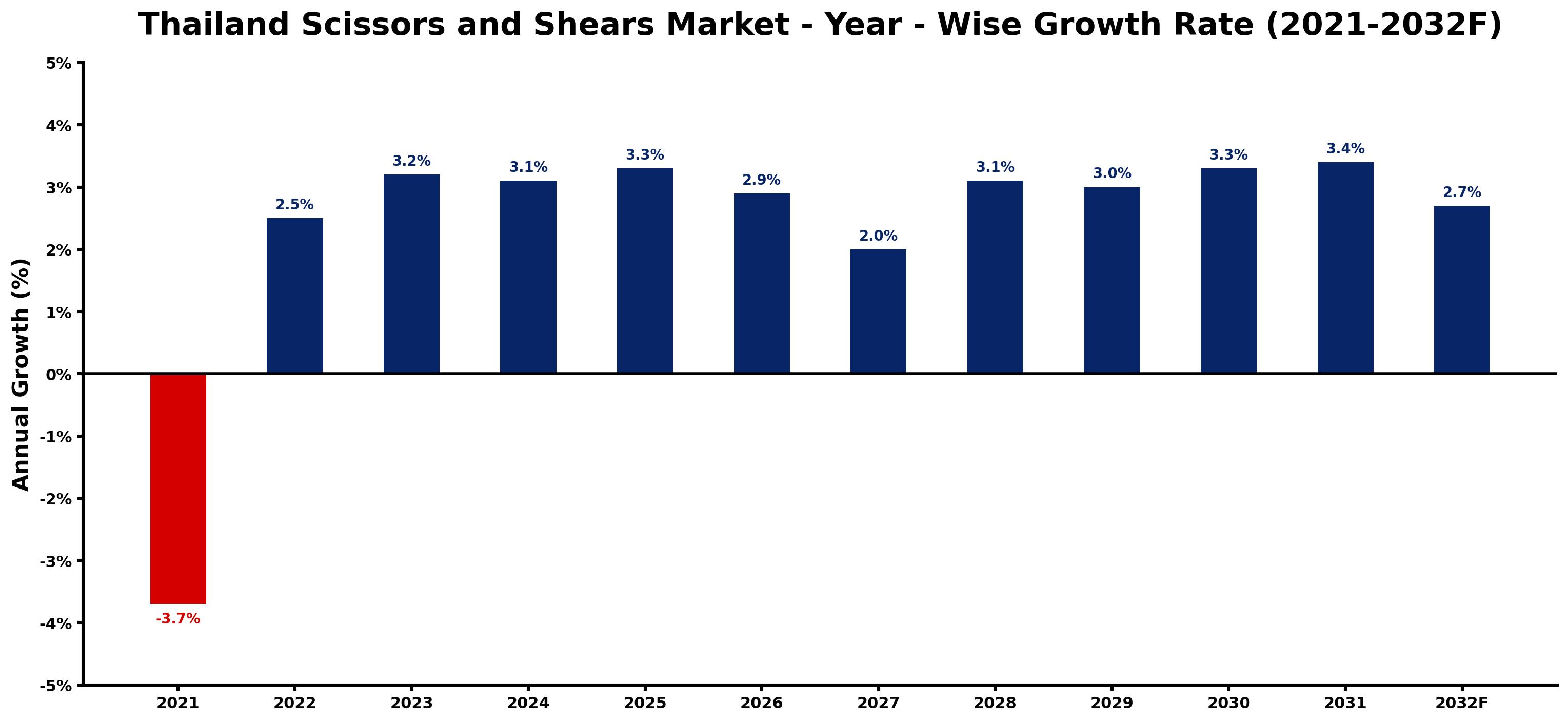
The table below presents the year wise growth rates along with the key drivers influencing the market
| Year | Growth Rate | Major Drivers |
| 2021 | -3.7% | Supply chain disruptions during the pandemic hindered product availability, causing a decline in sales. |
| 2022 | 2.5% | Surge in e-commerce platforms offering a wider range of scissors and shears. |
| 2023 | 3.2% | Traditional retail outlets embracing digital transformation to enhance customer experience. |
| 2024 | 3.1% | Emerging DIY culture promotes increased household purchases of cutting tools. |
| 2025 | 3.3% | Crafting and sewing hobbies gain traction, boosting demand for specialty scissors. |
| 2026 | 2.9% | Thailand's population growth leads to higher consumption rates of personal care products. |
| 2027 | 2.0% | Increased awareness about quality tools influences consumer purchasing decisions significantly. |
| 2028 | 3.1% | Sustainability trends encourage the production of eco-friendly scissors and shears. |
| 2029 | 3.0% | Technological innovations result in advanced shears with enhanced ergonomic designs. |
| 2030 | 3.3% | Regional competition escalates, driving down prices and increasing product variety. |
| 2031 | 3.4% | Corporate investments in local manufacturing enhance supply chains and reduce costs. |
| 2032 | 2.7% | Changing lifestyles promote a rise in professional grooming services, increasing tool demand. |
Note - Market size estimations and growth projections presented in this report are based on 6Wresearch's advanced forecasting approach, validated with industry datasets as of June 2026.
Thailand Scissors and Shears Market Synopsis
The Thailand Scissors and Shears Market is projected to reach 2.9% and witness significant growth during the forecast period (2026-2032). This remarkable growth trajectory is underpinned by an increasing demand for quality cutting tools among households and industries alike. Household consumers, driven by a heightened awareness of personal grooming and DIY activities, have significantly amplified their purchasing of innovative products. Concurrently, industrialization across Thailand has further spurred the demand for scissors and shears, consequently enhancing the revenue streams within this market.
Thailand Scissors and Shears Market Growth Drivers
The growth of the Thailand scissors and shears market is largely attributed to several key factors:
- Consumer demand for premium scissors and shears is on the rise, wherein a variety of high-end beauty tools have entered the market, allowing consumers to meet their grooming needs efficiently.
- The flourishing crafting and sewing culture in Thailand, particularly among individuals aged 15-65, has led to increased usage of scissors and shears as essential cutting instruments in various creative endeavors.
- An increased focus on home decor, driven by a surge in tourism and improved income levels, has further promoted the spending on home accessories, which includes stylish scissors and shears.
- The participation of women in the workforce continues to grow, making hair styling and grooming tools more sought after to accommodate the busy lifestyles of consumers, thereby expanding the overall customer base.
- Innovations in product design and technology have attracted consumers who prefer modern aesthetics and functionality, further driving market growth.
Thailand Scissors and Shears Market Challenges and Restraints
Despite the promising growth outlook, several challenges persist in the Thailand scissors and shears market:
- The high price points associated with premium scissors and shears pose a significant barrier, particularly for consumers in lower economic strata, potentially limiting market penetration.
- Supply chain disruptions, exacerbated by the ongoing effects of the COVID-19 pandemic, have led to production halts and fluctuations in the availability of materials.
- Market players face intense competition, necessitating constant innovation and differentiation to maintain market share amid a plethora of brands.
- Shifts in consumer preferences towards value-for-money products may lead to increased pressure on pricing strategies and profit margins for manufacturers.
- Regulatory hurdles, particularly in terms of safety standards and manufacturing processes, could pose challenges for new entrants and established players alike.
Thailand Scissors and Shears Market Government Investment and Initiatives
The Thai government has been actively promoting initiatives aimed at boosting the manufacturing sector, including the scissors and shears market. Programs designed to enhance technological advancements and innovations are in place to encourage local production and reduce dependency on imports. Additionally, investment in infrastructure and support for small and medium enterprises (SMEs) is a key focus, which indirectly benefits the scissors and shears sector by ensuring stability and growth in related industries. Policies fostering skill development and training programs for craftsmanship in cutting tools are also being prioritized to enhance the local workforce's capabilities.
Thailand Scissors and Shears Market Latest Developments (May 2025 - June 2026)
The period between May 2025 and June 2026 has seen significant shifts within the Thailand scissors and shears market. Industry players have increasingly emphasized sustainability, with a noticeable push towards eco-friendly materials and manufacturing processes. Additionally, the integration of technology into product offerings, such as ergonomic designs or self-sharpening mechanisms, has become more common. This trend reflects the evolving consumer preferences towards not only efficiency but also sustainability in their purchases. Marketing strategies have shifted to focus on digital platforms, engaging younger demographics and encouraging a more interactive approach to brand loyalty and consumer engagement.
Thailand Scissors and Shears Market - Key Attractiveness of the Report
- 10 Years of Market Numbers
- Historical Data Starting from 2022 to 2025
- Base Year: 2025
- Forecast Data until 2032
- Key Performance Indicators Impacting the Market
- Major Upcoming Developments and Projects
Key Highlights of the Report:
- Thailand Scissors and Shears Market Outlook
- Market Size of Thailand Scissors and Shears Market, 2025
- Forecast of Thailand Scissors and Shears Market, 2032
- Historical Data and Forecast of Thailand Scissors and Shears Revenues & Volume for the Period 2022-2032F
- Thailand Scissors and Shears Market Trend Evolution
- Thailand Scissors and Shears Market Drivers and Challenges
- Thailand Scissors and Shears Price Trends
- Thailand Scissors and Shears Porter's Five Forces
- Thailand Scissors and Shears Industry Life Cycle
- Historical Data and Forecast of Thailand Scissors and Shears Market Revenues & Volume By Type for the Period 2022-2032F
- Historical Data and Forecast of Thailand Scissors and Shears Market Revenues & Volume By Scissors for the Period 2022-2032F
- Historical Data and Forecast of Thailand Scissors and Shears Market Revenues & Volume By Shears for the Period 2022-2032F
- Historical Data and Forecast of Thailand Scissors and Shears Market Revenues & Volume By Application for the Period 2022-2032F
- Historical Data and Forecast of Thailand Scissors and Shears Market Revenues & Volume By Residential for the Period 2022-2032F
- Historical Data and Forecast of Thailand Scissors and Shears Market Revenues & Volume By Non-Residential for the Period 2022-2032F
- Thailand Scissors and Shears Import Export Trade Statistics
- Market Opportunity Assessment By Type
- Market Opportunity Assessment By Application
- Thailand Scissors and Shears Top Companies Market Share
- Thailand Scissors and Shears Competitive Benchmarking By Technical and Operational Parameters
- Thailand Scissors and Shears Company Profiles
- Thailand Scissors and Shears Key Strategic Recommendations






































