Turkey Acetate Yarn Market Size, Share & Growth Rate
The Turkey Acetate Yarn Market was estimated at USD 397 Million in 2025 and is projected to reach USD 534 Million by 2032, growing at a CAGR of 4.3% from 2026 to 2032. This promising growth trajectory is being driven by a strong demand for versatile and eco-friendly textile solutions, particularly in fashion and home furnishings. Increasing consumer awareness regarding sustainable materials is fueling the popularity of acetate yarn as a preferred choice in the textile sector.
Turkey Acetate Yarn Market Year-wise Growth Rate and Key Drivers
This graph highlights how the Turkey Acetate Yarn Market has steadily grown over the years, supported by major growth factors.
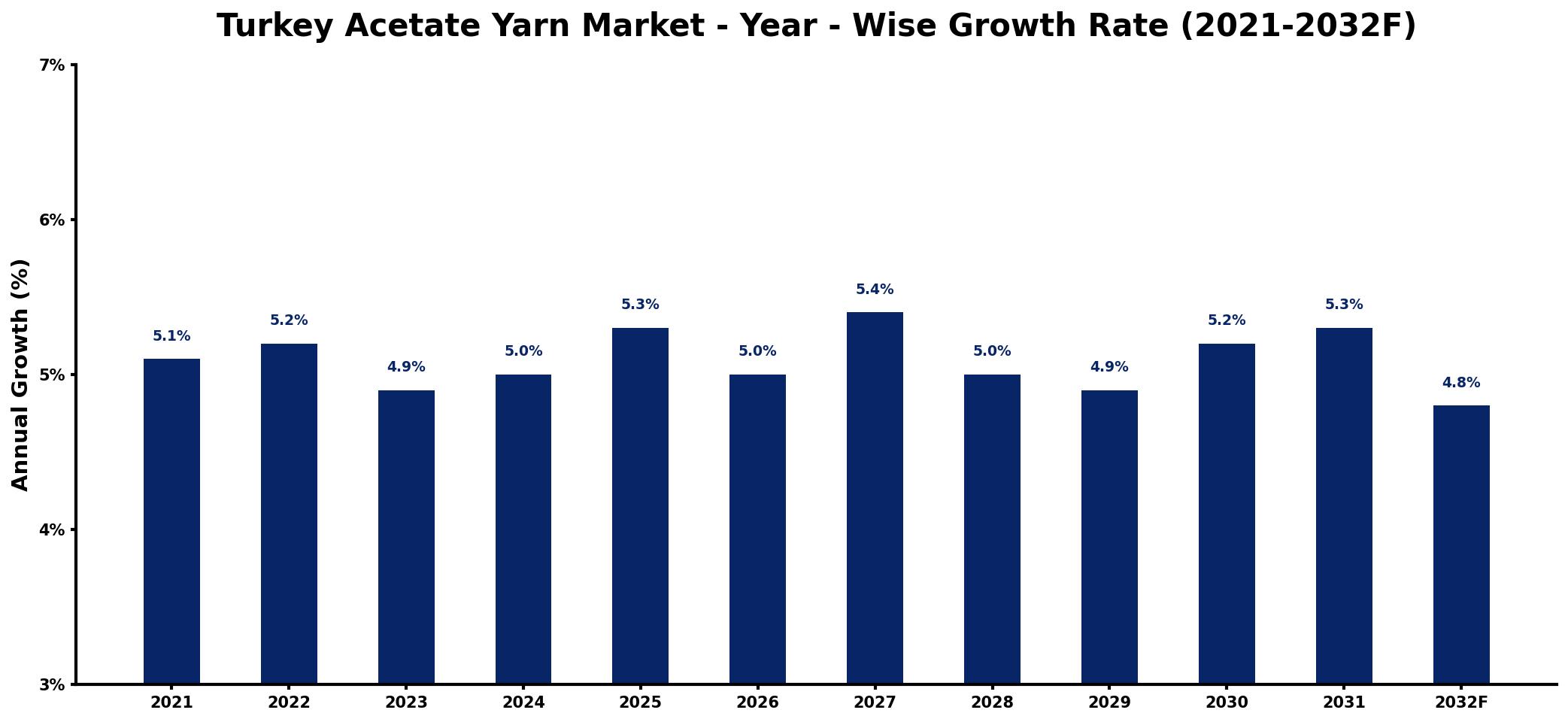
The table below presents the year‑wise growth rates along with the key drivers influencing the market
| Year | Growth Rate | Major Drivers |
| 2021 | 5.1% | Rising demand from fashion industry |
| 2022 | 5.2% | Increased investment in textiles sector |
| 2023 | 4.9% | Growing popularity of sustainable materials |
| 2024 | 5.0% | Expansion in home furnishing applications |
| 2025 | 5.3% | Higher consumer spending on apparel |
| 2026 | 5.0% | Technological advancements in production |
| 2027 | 5.4% | Emerging markets boosting exports |
| 2028 | 5.0% | Diversification of product offerings |
| 2029 | 4.9% | Strengthening of local manufacturing capabilities |
| 2030 | 5.2% | Increased focus on eco-friendly products |
| 2031 | 5.3% | Growth in online retail channels |
| 2032 | 4.8% | Rise in global fashion trends |
Note: Market size estimations and growth projections presented in this report are based on 6Wresearch's proprietary forecasting methodology, utilizing the latest available industry data, government publications, and primary research inputs.
Turkey Acetate Yarn Market Synopsis
The Turkey Acetate Yarn Market is currently witnessing a surge in demand due to the unique properties of acetate yarn, such as its luxurious feel and versatility across various applications. The textile industry is harnessing these attributes, leveraging Turkey's robust manufacturing capabilities to meet both domestic and international market needs.
With the global push towards sustainable materials, acetate yarn stands out as a semi-synthetic option derived from renewable sources, positioning it favorably in a competitive landscape. This increasing focus on eco-conscious textiles will likely influence future product innovation and market strategies in Turkey's acetate yarn industry.
Turkey Acetate Yarn Market Key Takeaways
- The market is projected to grow at a CAGR of 4.3% from 2026 to 2032, fueled by the rising demand for sustainable textile solutions.
- Acetate yarn's appealing properties include softness, moisture absorption, and an elegant appearance, making it highly sought after in fashion.
- Turkey's strategic geographical position and well-established textile manufacturing infrastructure enhance market competitiveness.
- Government regulations focused on environmental sustainability will shape operational practices in acetate yarn production.
- Innovations in production techniques are anticipated to further boost the appeal of acetate yarn in various textile applications.
Evaluation of Restraints in Turkey Acetate Yarn Market
Despite its growth potential, the Turkey Acetate Yarn Market faces notable constraints. The competition from alternative synthetic and natural fibers poses a significant challenge, as these materials often offer similar properties at competitive prices. Additionally, acetate yarns susceptibility to wrinkling and moisture absorption could deter its use in specific applications where durability is prioritized. Fluctuating raw material prices further complicate production costs, while evolving regulatory requirements regarding environmental standards necessitate continual adaptation from manufacturers. These factors could potentially influence market dynamics and impede growth if not strategically addressed.
Turkey Acetate Yarn Market Trends
Currently, several trends are shaping the Turkey Acetate Yarn Market. A significant shift towards sustainable fashion and eco-friendly materials is gaining momentum, compelling manufacturers to innovate and adapt their offerings. This includes the integration of advanced production technologies that minimize environmental impacts while enhancing product performance. Furthermore, the growing popularity of athleisure and multifunctional textiles is likely to expand the application scope of acetate yarn, driving additional demand in both fashion and technical textiles.
Turkey Acetate Yarn Market Opportunities
The Turkey Acetate Yarn Market presents several lucrative opportunities for stakeholders. Innovations aimed at improving the yarn's performance characteristics and reducing production costs can yield significant market advantages. Additionally, as consumer preferences continue to shift towards sustainable textiles, there is ample scope for companies to develop new applications within the fashion and home décor sectors. Collaborations with fashion designers to create exclusive collections utilizing acetate yarn could also enhance brand visibility and market share, positioning businesses favorably in a competitive landscape.
Government Initiatives in the Turkey Acetate Yarn Market
Government initiatives play a critical role in shaping the Turkey Acetate Yarn Market. Policies aimed at promoting sustainable manufacturing practices and environmental conservation are increasingly influencing industry standards. The Turkish government, through various ministries, is focused on ensuring compliance with environmental regulations and enhancing product quality. These regulations are designed to align with international standards, facilitating exports and improving the overall reputation of Turkish textiles in the global market.
Future Insights of the Turkey Acetate Yarn Market
Looking ahead to 2026-2032, the Turkey Acetate Yarn Market is expected to experience significant growth driven by a combination of technological innovations and consumer shifts toward sustainability. The anticipated integration of smart textiles and digital technologies into production processes will likely enhance efficiency and responsiveness. Additionally, as the demand for high-performance and eco-friendly textiles continues to rise, acetate yarn will position itself as a crucial player in the evolving textile landscape. Stakeholders should prepare for a competitive market that increasingly values sustainability and quality, shaping future opportunities.
Turkey Acetate Yarn Market Latest Developments (2025 - 2026)
Recent developments in the Turkey Acetate Yarn Market indicate a growing focus on innovation and sustainability. Companies are investing in research to enhance the properties of acetate yarn, aiming to improve moisture management and durability. There is also a visible trend toward collaboration with fashion brands to create sustainable collections, reflecting the shifting consumer preferences towards eco-conscious products. These trends are anticipated to play a crucial role in driving market dynamics and shaping the competitive landscape in the coming years.
Turkey Acetate Yarn Market - Key Attractiveness of the Report
- 10 Years of Market Numbers
- Historical Data Starting from 2022 to 2025
- Base Year: 2025
- Forecast Data until 2032
- Key Performance Indicators Impacting the Market
- Major Upcoming Developments and Projects






































