United Arab Emirates Tennis Shoes Market Size Growth Rate
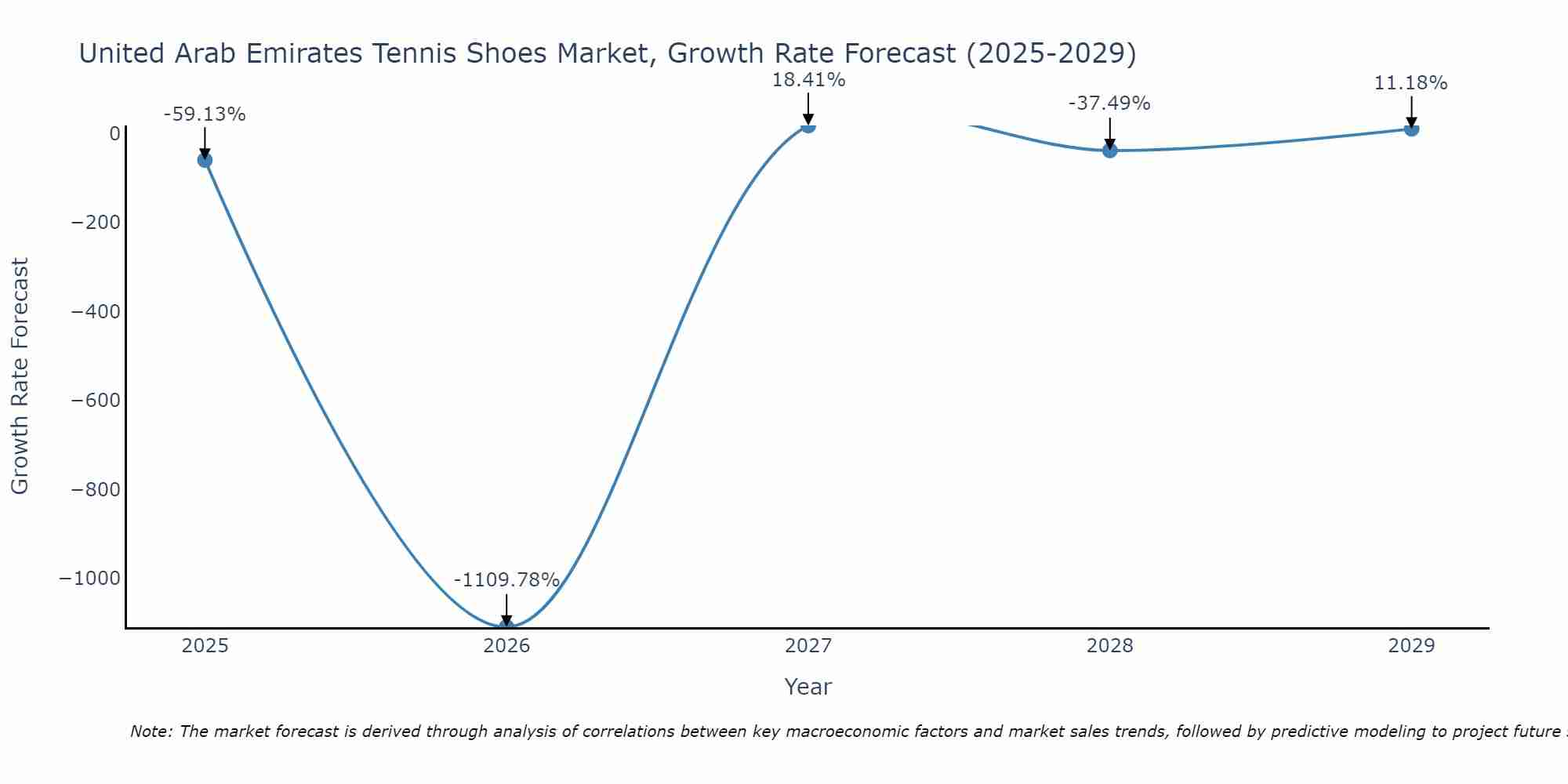
The United Arab Emirates Tennis Shoes Market is projected to witness mixed growth rate patterns during 2025 to 2029. Growth accelerates to 18.41% in 2027, following an initial rate of -59.13%, before easing to 11.18% at the end of the period.
UAE Tennis Shoes Market Synopsis
The UAE Tennis Shoes Market is an integral part of the broader sports footwear industry. Tennis is a popular sport in the UAE, attracting both professional players and amateurs. Tennis shoes, with their specific design features for court performance, are in demand among athletes and enthusiasts. This market benefits from the country`s sports culture and the growing interest in tennis as a recreational and competitive activity.
Drivers of the Market Outlook
The UAE Tennis Shoes market has experienced significant growth, propelled by a burgeoning interest in sports and fitness activities, particularly tennis. The government`s initiatives to promote sports at both the grassroots and professional levels have led to an increased uptake of tennis as a popular recreational activity. This surge in participation has translated into a heightened demand for specialized footwear like tennis shoes. Furthermore, the presence of world-class sporting events and tournaments in the UAE has contributed to the market`s expansion. The endorsement of tennis by renowned athletes and the availability of technologically advanced, performance-enhancing tennis shoe options have further bolstered market growth.
Challenges of the Market Outlook
The UAE Tennis Shoes Market encounters specific hurdles. Firstly, the preference for casual and lifestyle footwear in the region affects the demand for specialized tennis shoes. Secondly, competition from global sportswear brands poses a significant challenge for local manufacturers. Thirdly, fluctuating consumer trends and preferences in the fashion industry impact the market. Lastly, marketing and creating awareness about the benefits of tennis-specific footwear is essential.
COVID-19 Impact on the Market Outlook
The UAE Tennis Shoes Market experienced shifts in consumer behavior during the COVID-19 pandemic. As outdoor activities gained popularity and individuals sought comfort in sportswear, tennis shoes became a sought-after item. Online sales channels played a vital role in reaching consumers, and innovation in materials and design remained a focal point. The market outlook remains positive with the enduring demand for athletic footwear.
Key Players in the Market Outlook
In the UAE tennis shoes market, several key players have established a strong presence. Brands like Nike, Adidas, Puma, and Reebok have a significant share of the market. These international giants offer a wide range of tennis shoe options catering to various customer preferences, from professional athletes to casual sports enthusiasts. Additionally, local retailers and sports stores play a crucial role in distributing and promoting these brands in the UAE.
Key Highlights of the Report:
- United Arab Emirates (UAE) Tennis Shoes Market Outlook
- Market Size of United Arab Emirates (UAE) Tennis Shoes Market, 2024
- Forecast of United Arab Emirates (UAE) Tennis Shoes Market, 2031
- Historical Data and Forecast of United Arab Emirates (UAE) Tennis Shoes Revenues & Volume for the Period 2021-2031
- United Arab Emirates (UAE) Tennis Shoes Market Trend Evolution
- United Arab Emirates (UAE) Tennis Shoes Market Drivers and Challenges
- United Arab Emirates (UAE) Tennis Shoes Price Trends
- United Arab Emirates (UAE) Tennis Shoes Porter's Five Forces
- United Arab Emirates (UAE) Tennis Shoes Industry Life Cycle
- Historical Data and Forecast of United Arab Emirates (UAE) Tennis Shoes Market Revenues & Volume By Playing Surface for the Period 2021-2031
- Historical Data and Forecast of United Arab Emirates (UAE) Tennis Shoes Market Revenues & Volume By Hard Court Tennis Shoes for the Period 2021-2031
- Historical Data and Forecast of United Arab Emirates (UAE) Tennis Shoes Market Revenues & Volume By Clay Court Tennis Shoes for the Period 2021-2031
- Historical Data and Forecast of United Arab Emirates (UAE) Tennis Shoes Market Revenues & Volume By Grass Court Tennis Shoes for the Period 2021-2031
- Historical Data and Forecast of United Arab Emirates (UAE) Tennis Shoes Market Revenues & Volume By User for the Period 2021-2031
- Historical Data and Forecast of United Arab Emirates (UAE) Tennis Shoes Market Revenues & Volume By Men for the Period 2021-2031
- Historical Data and Forecast of United Arab Emirates (UAE) Tennis Shoes Market Revenues & Volume By Women for the Period 2021-2031
- Historical Data and Forecast of United Arab Emirates (UAE) Tennis Shoes Market Revenues & Volume By Kids for the Period 2021-2031
- Historical Data and Forecast of United Arab Emirates (UAE) Tennis Shoes Market Revenues & Volume By Distribution Channel for the Period 2021-2031
- Historical Data and Forecast of United Arab Emirates (UAE) Tennis Shoes Market Revenues & Volume By Supermarket/Hypermarket for the Period 2021-2031
- Historical Data and Forecast of United Arab Emirates (UAE) Tennis Shoes Market Revenues & Volume By Specialty Stores for the Period 2021-2031
- Historical Data and Forecast of United Arab Emirates (UAE) Tennis Shoes Market Revenues & Volume By E-commerce for the Period 2021-2031
- Historical Data and Forecast of United Arab Emirates (UAE) Tennis Shoes Market Revenues & Volume By Others for the Period 2021-2031
- United Arab Emirates (UAE) Tennis Shoes Import Export Trade Statistics
- Market Opportunity Assessment By Playing Surface
- Market Opportunity Assessment By User
- Market Opportunity Assessment By Distribution Channel
- United Arab Emirates (UAE) Tennis Shoes Top Companies Market Share
- United Arab Emirates (UAE) Tennis Shoes Competitive Benchmarking By Technical and Operational Parameters
- United Arab Emirates (UAE) Tennis Shoes Company Profiles
- United Arab Emirates (UAE) Tennis Shoes Key Strategic Recommendations






































