United Kingdom (UK) Apiculture Market: Import Trend Analysis
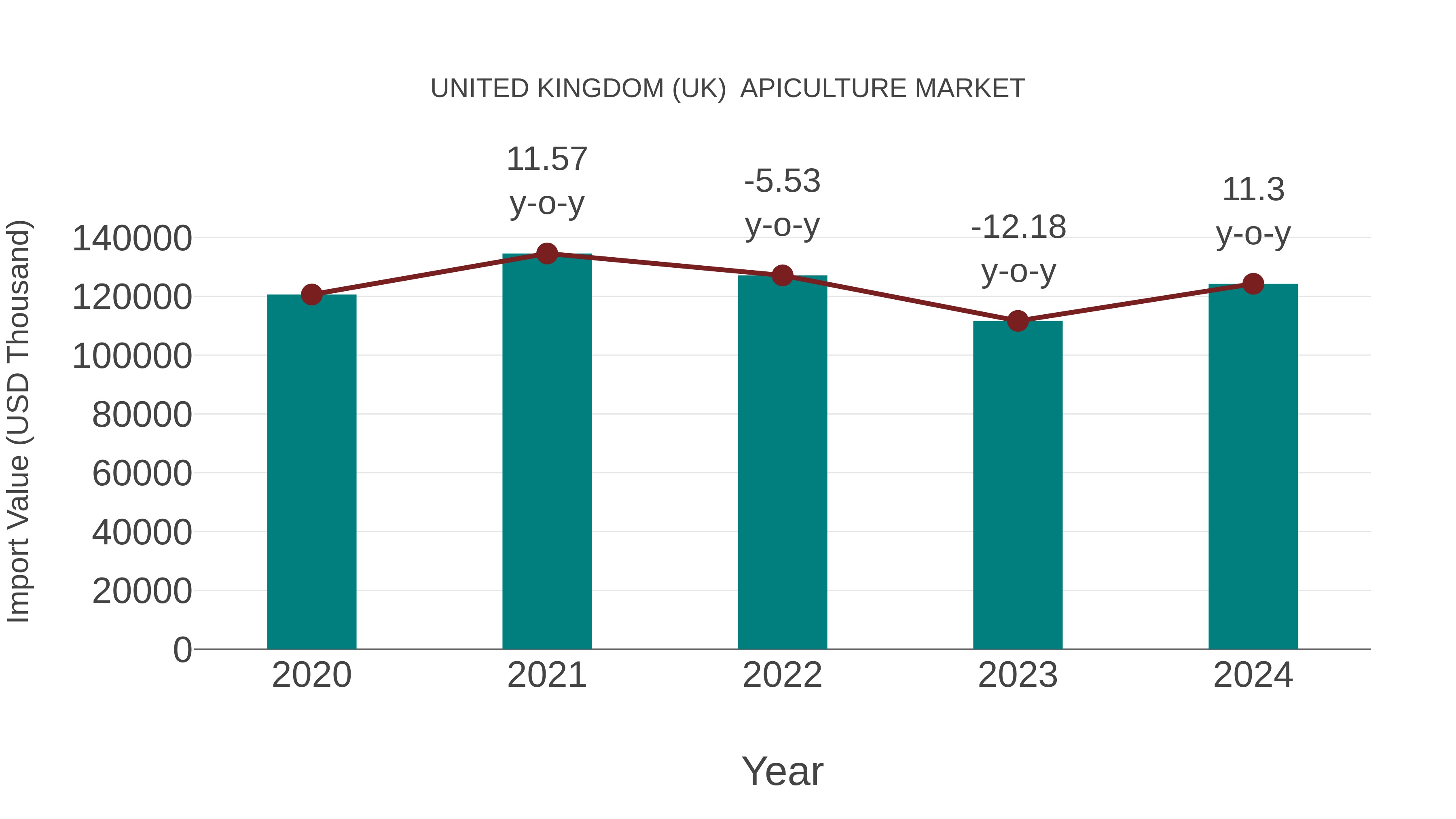
The United Kingdom import trend for the apiculture market saw a growth rate of 11.3% from 2023 to 2024, with a compound annual growth rate (CAGR) of 0.75% from 2020 to 2024. This upward import momentum can be attributed to a steady demand shift towards high-quality honey products and increased global trade partnerships within the apiculture sector.
United Kingdom (UK) Apiculture Market Synopsis
The United Kingdom apiculture market is experiencing growth due to increasing consumer awareness of the health benefits of honey and other bee products. The country`s favorable climate and diverse flora support a healthy bee population, resulting in a wide variety of high-quality honey produced across different regions. The market is also seeing a rise in demand for other bee products such as beeswax, propolis, and royal jelly, driven by their perceived health benefits and natural properties. Local beekeepers are actively engaged in sustainable practices to protect bee populations and maintain the ecosystem. Additionally, the UK government is implementing policies to support beekeeping and biodiversity conservation. Overall, the apiculture market in the UK is thriving, with opportunities for growth and innovation in the future.
United Kingdom (UK) Apiculture Market Trends
In the United Kingdom, the apiculture market is experiencing several key trends. One significant trend is the increasing demand for locally sourced honey and other bee products, driven by consumers` growing interest in supporting sustainable and environmentally friendly practices. Beekeeping as a hobby is also gaining popularity, with more individuals and communities taking up beekeeping to help support bee populations and promote biodiversity. Additionally, there is a focus on bee health and sustainability, with efforts to combat issues such as colony collapse disorder and pesticide use. The UK government has also introduced initiatives to support beekeepers and protect pollinators, indicating a growing awareness of the importance of bees in the ecosystem. Overall, these trends are shaping the apiculture market in the UK towards a more sustainable and community-focused direction.
United Kingdom (UK) Apiculture Market Challenges
In the United Kingdom (UK) Apiculture Market, challenges such as climate change impacting bee populations and honey production, increased prevalence of pests and diseases affecting beehives, competition from cheaper imports, and changing consumer preferences towards sustainable and organic products pose significant hurdles for beekeepers. Additionally, the uncertainty surrounding Brexit and its potential impacts on regulations, trade agreements, and access to subsidies further complicates the market landscape. Beekeepers in the UK also struggle with rising operational costs, limited availability of suitable foraging areas due to urbanization and intensive agriculture, and the need for continuous education and training to maintain bee health and productivity. Overall, these challenges require strategic planning, innovation, and collaboration within the industry to ensure the sustainability and growth of apiculture in the UK.
United Kingdom (UK) Apiculture Market Investment Opportunities
The United Kingdom`s apiculture market presents various investment opportunities for individuals or companies looking to enter the sector. With the growing demand for honey and other bee-related products, there is a potential for growth and profitability in beekeeping operations. Investing in modern beehive technologies, sustainable beekeeping practices, or developing value-added products such as beeswax candles or skincare products can be lucrative avenues to explore. Additionally, there is a rising interest in urban beekeeping and honey tourism, providing opportunities for niche market development. As consumer awareness around environmental sustainability and the importance of pollinators increases, investing in the UK apiculture market can not only offer financial returns but also contribute to promoting biodiversity and supporting agricultural ecosystems.
United Kingdom (UK) Apiculture Market Future Outlook
The future outlook for the United Kingdom (UK) Apiculture Market appears promising, driven by increasing consumer awareness about the health benefits of honey and other bee products, as well as the growing demand for natural and organic products. With a focus on sustainability and environmental conservation, there is a rising interest in supporting local beekeepers and purchasing honey produced in the UK. Additionally, the government initiatives to promote beekeeping and protect bee populations are expected to further boost the growth of the apiculture market in the UK. However, challenges such as climate change, pesticide use, and disease outbreaks impacting bee colonies may pose threats to the industry. Overall, the UK apiculture market is likely to witness steady growth in the coming years, with opportunities for innovation and diversification in beekeeping practices and products.
Key Highlights of the Report:
- United Kingdom (UK) Apiculture Market Outlook
- Market Size of United Kingdom (UK) Apiculture Market, 2025
- Forecast of United Kingdom (UK) Apiculture Market, 2032
- Historical Data and Forecast of United Kingdom (UK) Apiculture Revenues & Volume for the Period 2022 - 2032F
- United Kingdom (UK) Apiculture Market Trend Evolution
- United Kingdom (UK) Apiculture Market Drivers and Challenges
- United Kingdom (UK) Apiculture Price Trends
- United Kingdom (UK) Apiculture Porter's Five Forces
- United Kingdom (UK) Apiculture Industry Life Cycle
- Historical Data and Forecast of United Kingdom (UK) Apiculture Market Revenues & Volume By Product Type for the Period 2022 - 2032F
- Historical Data and Forecast of United Kingdom (UK) Apiculture Market Revenues & Volume By Honey for the Period 2022 - 2032F
- Historical Data and Forecast of United Kingdom (UK) Apiculture Market Revenues & Volume By Beeswax for the Period 2022 - 2032F
- Historical Data and Forecast of United Kingdom (UK) Apiculture Market Revenues & Volume By Live-bees for the Period 2022 - 2032F
- Historical Data and Forecast of United Kingdom (UK) Apiculture Market Revenues & Volume By Others for the Period 2022 - 2032F
- Historical Data and Forecast of United Kingdom (UK) Apiculture Market Revenues & Volume By Application for the Period 2022 - 2032F
- Historical Data and Forecast of United Kingdom (UK) Apiculture Market Revenues & Volume By Medical for the Period 2022 - 2032F
- Historical Data and Forecast of United Kingdom (UK) Apiculture Market Revenues & Volume By Food Beverages for the Period 2022 - 2032F
- Historical Data and Forecast of United Kingdom (UK) Apiculture Market Revenues & Volume By Cosmetics for the Period 2022 - 2032F
- Historical Data and Forecast of United Kingdom (UK) Apiculture Market Revenues & Volume By Others for the Period 2022 - 2032F
- United Kingdom (UK) Apiculture Import Export Trade Statistics
- Market Opportunity Assessment By Product Type
- Market Opportunity Assessment By Application
- United Kingdom (UK) Apiculture Top Companies Market Share
- United Kingdom (UK) Apiculture Competitive Benchmarking By Technical and Operational Parameters
- United Kingdom (UK) Apiculture Company Profiles
- United Kingdom (UK) Apiculture Key Strategic Recommendations






































