United Kingdom (UK) Christmas Tree Market Size, Share & Growth Rate
The United Kingdom (UK) Christmas Tree Market was estimated at USD 476 Million in 2025 and is projected to reach USD 590 Million by 2032, growing at a CAGR of 3.1% from 2026 to 2032. This positive growth trajectory is largely driven by a combination of cultural traditions surrounding the festive season and a growing preference for sustainable and eco-friendly products. Additionally, the expanding retail sector and the increasing integration of online sales channels are stimulating market activity, leading to a diverse range of consumer offerings.
United Kingdom (UK) Christmas Tree Market Year-wise Growth Rate and Key Drivers
This graph highlights how the United Kingdom (UK) Christmas Tree Market has steadily grown over the years, supported by major growth factors.
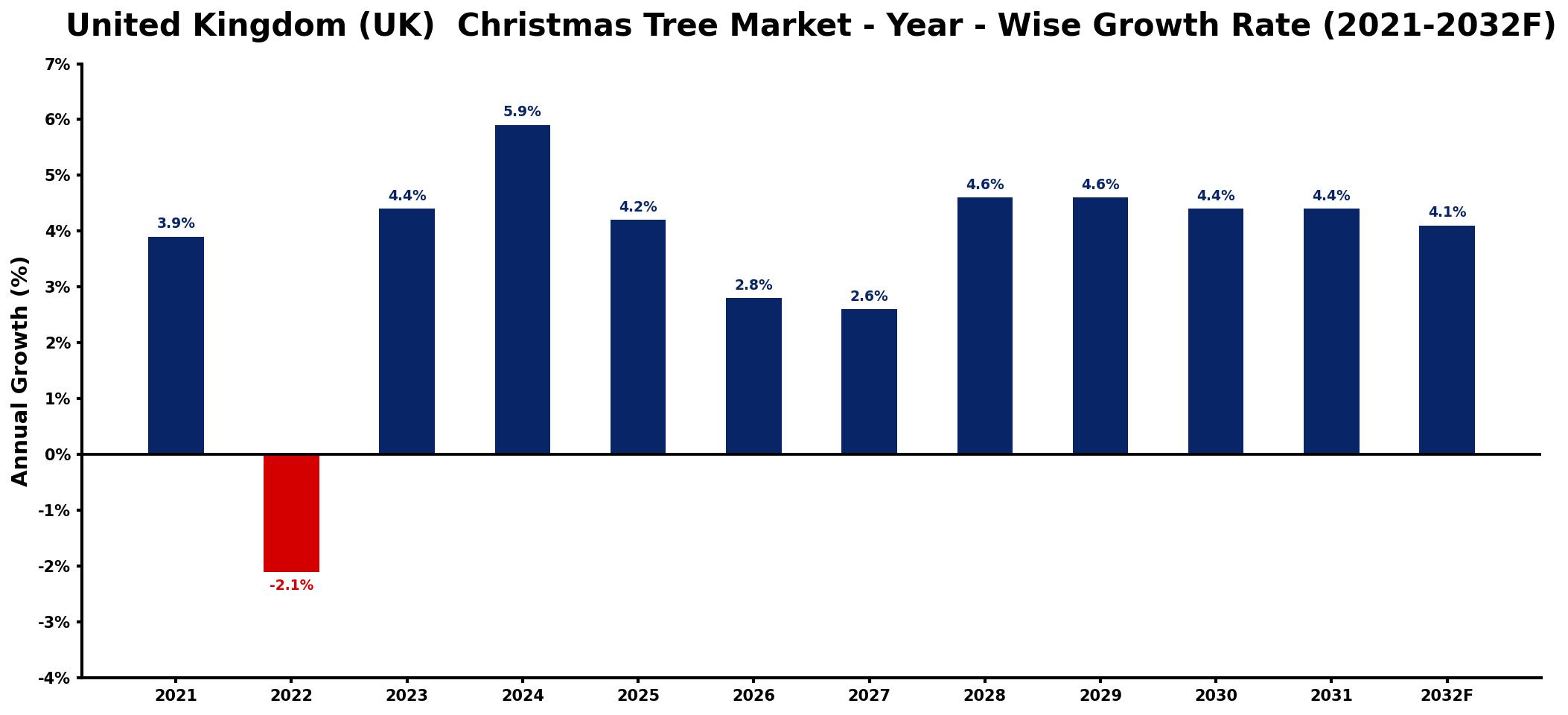
The table below presents the year‑wise growth rates along with the key drivers influencing the market
| Year | Growth Rate | Major Drivers |
| 2021 | 3.9% | Increased consumer spending on decor |
| 2022 | -2.1% | Supply chain disruptions and shortages |
| 2023 | 4.4% | Rising interest in sustainable options |
| 2024 | 5.9% | Enhanced online shopping experiences |
| 2025 | 4.2% | Growth in home improvement projects |
| 2026 | 2.8% | Expansion of seasonal marketing campaigns |
| 2027 | 2.6% | Increase in luxury home decorations |
| 2028 | 4.6% | Surge in festive community events |
| 2029 | 4.6% | Growing popularity of themed displays |
| 2030 | 4.4% | Innovations in eco-friendly materials |
| 2031 | 4.4% | Rising demand for unique experiences |
| 2032 | 4.1% | Strengthened local artisan collaborations |
Note: Market size estimations and growth projections presented in this report are based on 6Wresearch's proprietary forecasting methodology, utilizing the latest available industry data, government publications, and primary research inputs.
United Kingdom (UK) Christmas Tree Market Synopsis
The strongest force currently shaping the UK Christmas tree market is the rising consumer awareness of sustainability. As more shoppers seek environmentally friendly options, the demand for real trees, particularly varieties like Nordmann fir and Norway spruce, has surged. Moreover, consumers are increasingly favoring recyclable artificial trees, which are designed for long-term use, reflecting a significant shift in purchasing behavior.
In parallel, the cultural significance of Christmas remains a pivotal element, fueling consistent demand across both urban and rural areas. Retail strategies, including effective marketing campaigns and innovations in tree designs, enhance consumer engagement and stimulate interest. This alignment of consumer values with cultural practices underscores the market's resilience and potential for continued growth.
United Kingdom (UK) Christmas Tree Market Key Takeaways
- The UK Christmas tree market is projected to see steady growth due to evolving consumer preferences.
- Sustainable practices and eco-friendly products are becoming critical demand drivers.
- Online sales channels are enhancing market accessibility and consumer convenience.
- Real trees remain highly favored for their aesthetic and olfactory appeal during the festive season.
- Retail dynamics, including promotional activities, significantly influence market trends and consumer choices.
Evaluation of Restraints in United Kingdom (UK) Christmas Tree Market
Despite the optimistic growth outlook, the UK Christmas tree market faces several constraints. The increasing popularity of artificial trees presents a challenge to the traditional real tree segment, as consumers weigh the convenience and longevity of synthetic options against the authentic appeal of natural trees. Additionally, environmental concerns surrounding tree cultivation and transportation logistics can impact freshness and quality. Regulatory hurdles related to sustainable farming practices further complicate the operational landscape, requiring market players to continuously adapt to maintain competitiveness.
United Kingdom (UK) Christmas Tree Market Trends
Current trends indicate a shift toward more personalized and themed tree decorations, driven by the influence of social media and changing consumer aesthetics. Furthermore, innovations in tree design, such as pre-lit options and customizable features, are capturing consumer interest. The popularity of potted trees, which can be planted post-holidays, is also gaining traction as eco-conscious consumers look for ways to incorporate sustainability into their festive practices. This trend reflects a broader movement toward sustainable living and responsible consumerism.
United Kingdom (UK) Christmas Tree Market Opportunities
Significant growth and investment opportunities lie in expanding online retail platforms and enhancing distribution channels. The increasing preference for eco-friendly products also opens doors for businesses to innovate within the sustainable tree segment, including developing biodegradable and recyclable options. Additionally, creating partnerships with local growers can strengthen supply chains while promoting community involvement in the market. Catering to diverse consumer preferences, including offering subscription services for tree rentals, presents another lucrative avenue for growth.
Government Initiatives in the United Kingdom (UK) Christmas Tree Market
Government policies surrounding agriculture and trade play a vital role in the UK Christmas tree market. Regulations aimed at ensuring the safety and quality of trees, such as pest control measures and disease prevention protocols, significantly impact both production and sales. Furthermore, initiatives promoting sustainable forestry practices align with growing consumer demands for environmentally friendly options. These regulations not only enhance market sustainability but also support long-term industry health.
Future Insights of the United Kingdom (UK) Christmas Tree Market
Looking ahead to 2026-2032, the UK Christmas tree market is poised for dynamic evolution. As consumer preferences continue to shift toward sustainability and personalization, businesses that can adapt will thrive. Innovations in product offerings, particularly in the eco-friendly segment, combined with enhanced online engagement strategies, are expected to define the market landscape. The interplay between traditional customs and contemporary values will remain a key factor driving demand, ensuring that the Christmas tree market remains a vibrant and essential part of holiday celebrations in the UK.
United Kingdom (UK) Christmas Tree Market Latest Developments (2025 - 2026)
Recent developments in the UK Christmas tree market indicate a marked increase in the availability of sustainable and eco-friendly options. Retailers are launching innovative marketing campaigns to highlight the benefits of real and recyclable artificial trees. Additionally, the integration of technology in consumer engagement, such as virtual tree selection experiences, is becoming more prevalent. Collaboration with local growers is also on the rise, promoting sustainability while addressing logistical challenges. These trends point towards a market that is not only adapting to consumer demands but also setting new standards for the festive season.
United Kingdom (UK) Christmas Tree Market - Key Attractiveness of the Report
- 10 Years of Market Numbers
- Historical Data Starting from 2022 to 2025
- Base Year: 2025
- Forecast Data until 2032
- Key Performance Indicators Impacting the Market
- Major Upcoming Developments and Projects
Key Highlights of the Report:
- United Kingdom (UK) Christmas Tree Market Outlook
- Market Size of United Kingdom (UK) Christmas Tree Market, 2025
- Forecast of United Kingdom (UK) Christmas Tree Market, 2032
- Historical Data and Forecast of United Kingdom (UK) Christmas Tree Revenues & Volume for the Period 2022-2032F
- United Kingdom (UK) Christmas Tree Market Trend Evolution
- United Kingdom (UK) Christmas Tree Market Drivers and Challenges
- United Kingdom (UK) Christmas Tree Price Trends
- United Kingdom (UK) Christmas Tree Porter's Five Forces
- United Kingdom (UK) Christmas Tree Industry Life Cycle
- Historical Data and Forecast of United Kingdom (UK) Christmas Tree Market Revenues & Volume By Type for the Period 2022-2032F
- Historical Data and Forecast of United Kingdom (UK) Christmas Tree Market Revenues & Volume By Horizontal Tree for the Period 2022-2032F
- Historical Data and Forecast of United Kingdom (UK) Christmas Tree Market Revenues & Volume By Vertical Tree for the Period 2022-2032F
- Historical Data and Forecast of United Kingdom (UK) Christmas Tree Market Revenues & Volume By Location of Deployment for the Period 2022-2032F
- Historical Data and Forecast of United Kingdom (UK) Christmas Tree Market Revenues & Volume By Onshore for the Period 2022-2032F
- Historical Data and Forecast of United Kingdom (UK) Christmas Tree Market Revenues & Volume By Offshore for the Period 2022-2032F
- United Kingdom (UK) Christmas Tree Import Export Trade Statistics
- Market Opportunity Assessment By Type
- Market Opportunity Assessment By Location of Deployment
- United Kingdom (UK) Christmas Tree Top Companies Market Share
- United Kingdom (UK) Christmas Tree Competitive Benchmarking By Technical and Operational Parameters
- United Kingdom (UK) Christmas Tree Company Profiles
- United Kingdom (UK) Christmas Tree Key Strategic Recommendations






































