United Kingdom (UK) Used Car Market Summary
The united kingdom (uk) used car market was estimated at USD 237 Million in 2025 and is projected to reach USD 259 Million by 2032, growing at a CAGR of 0.7% from 2026 to 2032.
United Kingdom (UK) Used Car Market Year-wise Growth Rate and Key Drivers
This graph highlights how the United Kingdom (UK) Used Car Market has steadily grown over the past five years, supported by major growth factors.
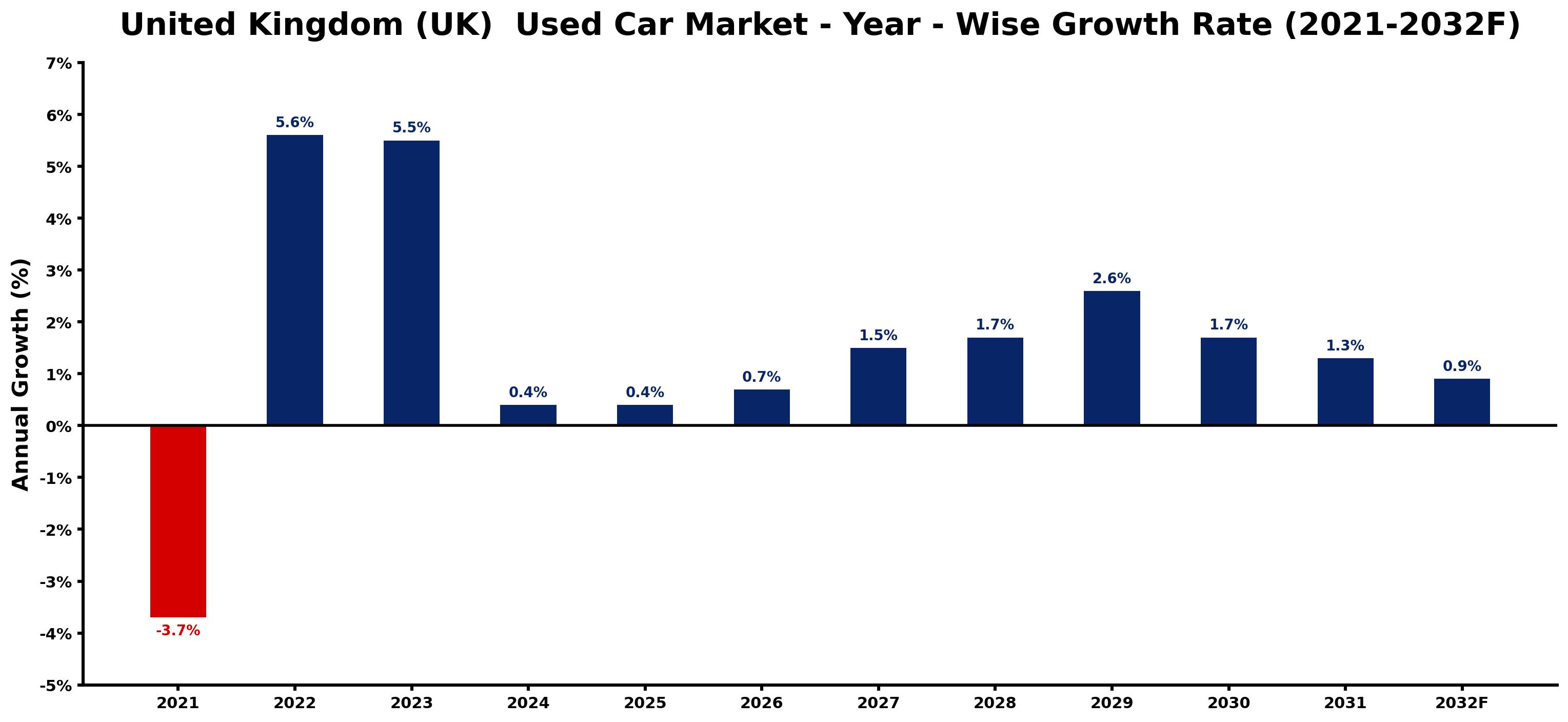
The table below presents the year wise growth rates along with the key drivers influencing the market
| Year | Growth Rate | Major Drivers |
| 2021 | -3.7% | Supply chain disruptions limited inventory availability, leading to decreased consumer purchases in the used car market. |
| 2022 | 5.6% | Consumer preferences shifted towards value, enhancing the appeal of used vehicles. |
| 2023 | 5.5% | Economic uncertainties prompted buyers to reconsider new car purchases aggressively. |
| 2024 | 0.4% | Digital platforms transformed convenience and accessibility for buying used cars immensely. |
| 2025 | 0.4% | Rising environmental awareness encouraged interest in efficient second-hand vehicles significantly. |
| 2026 | 0.7% | Sustainability trends influenced preferences for previously owned eco-friendly car models. |
| 2027 | 1.5% | Urbanization patterns led to increased demand for compact and economical vehicles. |
| 2028 | 1.7% | Enhanced financing options improved accessibility for a broader demographic of buyers. |
| 2029 | 2.6% | Technological advancements in vehicle history reporting boosted buyer confidence substantially. |
| 2030 | 1.7% | A burgeoning gig economy spurred demand for reliable used cars for work purposes. |
| 2031 | 1.3% | Increased vehicle leasing returns opened a significant supply channel for used cars. |
| 2032 | 0.9% | Evolving consumer attitudes towards ownership amplified interest in high-quality used vehicles. |
Note - Market size estimations and growth projections presented in this report are based on 6Wresearch's advanced forecasting approach, validated with industry datasets as of June 2026.
United Kingdom (UK) Used Car Market Synopsis
The United Kingdom (UK) Used Car Market is projected to reach 0.7% and witness significant growth during the forecast period (2026-2032). This market segment is marked by a diverse range of vehicles offered at various price points, appealing to a broad consumer base. The growing preference for used cars over new vehicles is primarily attributed to economic factors, environmental considerations, and the enhanced reliability of pre-owned vehicles. As buyers increasingly seek quality and affordability, the landscape of the used car market in the UK continues to evolve.
United Kingdom (UK) Used Car Market Trends and Opportunities
The United Kingdom (UK) Used Car Market is undergoing significant transformations, driven by current consumer preferences and technological advancements. Notable trends shaping this market include:
- The increasing popularity of electric and hybrid vehicles, propelled by heightened environmental awareness and government initiatives supporting the reduction of emissions.
- A surge in online platforms for car sales, providing consumers with effortless access to a wide array of used vehicles and fostering a more transparent buying process.
- A noticeable shift towards purchasing younger used cars, as consumers prioritize modern technological features and connectivity options.
- An uptick in demand for smaller, fuel-efficient cars, driven by rising fuel costs and increasing urban congestion, which is leading buyers to reconsider vehicular needs.
- Services that enhance the purchasing experience, such as vehicle inspection programs and extended warranties, are gaining traction as consumers seek reassurance about their purchases.
United Kingdom (UK) Used Car Market Challenges and Restraints
Despite its growth prospects, the United Kingdom (UK) Used Car Market faces several challenges that could impact both buyers and sellers. Key considerations include:
- Issues surrounding consumer trust, primarily due to inconsistent information about used cars' history and condition, which can deter buyers.
- The fragmented nature of the market, with numerous sellers making it challenging for consumers to accurately compare options and pricing.
- Fluctuations in supply and demand can lead to volatile pricing, complicating the value assessment for consumers, particularly during economic shifts.
- External factors, including changes in economic conditions and regulatory policies, may further complicate the market dynamics.
- The need for enhanced transparency and clearer regulations is becoming increasingly important to protect consumers and establish a fair marketplace.
United Kingdom (UK) Used Car Market Investment Opportunities
Opportunities for investment in the United Kingdom (UK) Used Car Market are plentiful, stemming from various industry trends. Potential avenues for investment include:
- Investing in online used car dealerships or platforms that streamline the buying and selling process for consumers.
- Entering the market through various channels, including vehicle auction sites, which are gaining popularity among consumers seeking competitive pricing.
- Developing technology solutions that improve customer experience, such as mobile apps for car comparison and purchasing.
- Capitalizing on the growing trend of electric and hybrid vehicle sales by focusing on their resale markets, as demand continues to rise.
- Introducing value-added services such as financing options and car warranties to build customer loyalty and differentiate offerings.
United Kingdom (UK) Used Car Market Government Investment and Initiatives
The United Kingdom government plays a pivotal role in shaping the used car market through various policies aimed at consumer protection and sustainability. Key initiatives include:
- Mandatory vehicle history checks to enhance transparency and prevent fraud in the resale of used cars.
- Regulations requiring emissions standards compliance, thereby encouraging the sale of eco-friendly vehicles.
- Incentives such as the Vehicle Excise Duty (VED), which is structured to reward lower-emission vehicles through reduced taxation.
- Implementation of the Consumer Rights Act to ensure buyers have legal protections against faulty vehicles or misrepresentations.
- Support for sustainability initiatives that promote cleaner vehicle technologies in the used car market.
United Kingdom (UK) Used Car Market Latest Developments (May 2025 - June 2026)
In the period from May 2025 to June 2026, the United Kingdom (UK) Used Car Market has seen notable shifts as it adapts to evolving consumer preferences and external pressures. The continuing rise of online platforms has significantly altered the purchasing process, making it more user-friendly and accessible. Additionally, the government's commitment to environmental initiatives has spurred interest in electric and hybrid used vehicles. Economic factors, including inflation and post-pandemic recovery, are causing fluctuations in consumer spending habits, which in turn impact market dynamics. Overall, this period reflects a transitional phase, with a focus on sustainability, enhanced consumer experiences, and the digitalization of vehicle sales.
United Kingdom (UK) Used Car Market - Key Attractiveness of the Report
- 10 Years of Market Numbers
- Historical Data Starting from 2022 to 2025
- Base Year: 2025
- Forecast Data until 2032
- Key Performance Indicators Impacting the Market
- Major Upcoming Developments and Projects
Key Highlights of the Report:
- United Kingdom (UK) Used Car Market Outlook
- Market Size of United Kingdom (UK) Used Car Market, 2025
- Forecast of United Kingdom (UK) Used Car Market, 2032F
- Historical Data and Forecast of United Kingdom (UK) Used Car Revenues & Volume for the Period 2022-2032F
- United Kingdom (UK) Used Car Market Trend Evolution
- United Kingdom (UK) Used Car Market Drivers and Challenges
- United Kingdom (UK) Used Car Price Trends
- United Kingdom (UK) Used Car Porter's Five Forces
- United Kingdom (UK) Used Car Industry Life Cycle
- Historical Data and Forecast of United Kingdom (UK) Used Car Market Revenues & Volume By Vehicle Type for the Period 2022-2032F
- Historical Data and Forecast of United Kingdom (UK) Used Car Market Revenues & Volume By Hatchbacks for the Period 2022-2032F
- Historical Data and Forecast of United Kingdom (UK) Used Car Market Revenues & Volume By Sedan for the Period 2022-2032F
- Historical Data and Forecast of United Kingdom (UK) Used Car Market Revenues & Volume By Sports Utility Vehicle for the Period 2022-2032F
- Historical Data and Forecast of United Kingdom (UK) Used Car Market Revenues & Volume By Others for the Period 2022-2032F
- Historical Data and Forecast of United Kingdom (UK) Used Car Market Revenues & Volume By Vendor for the Period 2022-2032F
- Historical Data and Forecast of United Kingdom (UK) Used Car Market Revenues & Volume By Organized for the Period 2022-2032F
- Historical Data and Forecast of United Kingdom (UK) Used Car Market Revenues & Volume By Unorganized for the Period 2022-2032F
- Historical Data and Forecast of United Kingdom (UK) Used Car Market Revenues & Volume By Fuel Type for the Period 2022-2032F
- Historical Data and Forecast of United Kingdom (UK) Used Car Market Revenues & Volume By Gasoline for the Period 2022-2032F
- Historical Data and Forecast of United Kingdom (UK) Used Car Market Revenues & Volume By Diesel for the Period 2022-2032F
- Historical Data and Forecast of United Kingdom (UK) Used Car Market Revenues & Volume By Alternative Fuel Vehicles for the Period 2022-2032F
- United Kingdom (UK) Used Car Import Export Trade Statistics
- Market Opportunity Assessment By Vehicle Type
- Market Opportunity Assessment By Vendor
- Market Opportunity Assessment By Fuel Type
- United Kingdom (UK) Used Car Top Companies Market Share
- United Kingdom (UK) Used Car Competitive Benchmarking By Technical and Operational Parameters
- United Kingdom (UK) Used Car Company Profiles
- United Kingdom (UK) Used Car Key Strategic Recommendations






































