United States (US) Apiculture Market Top 5 Importing Countries and Market Competition (HHI) Analysis
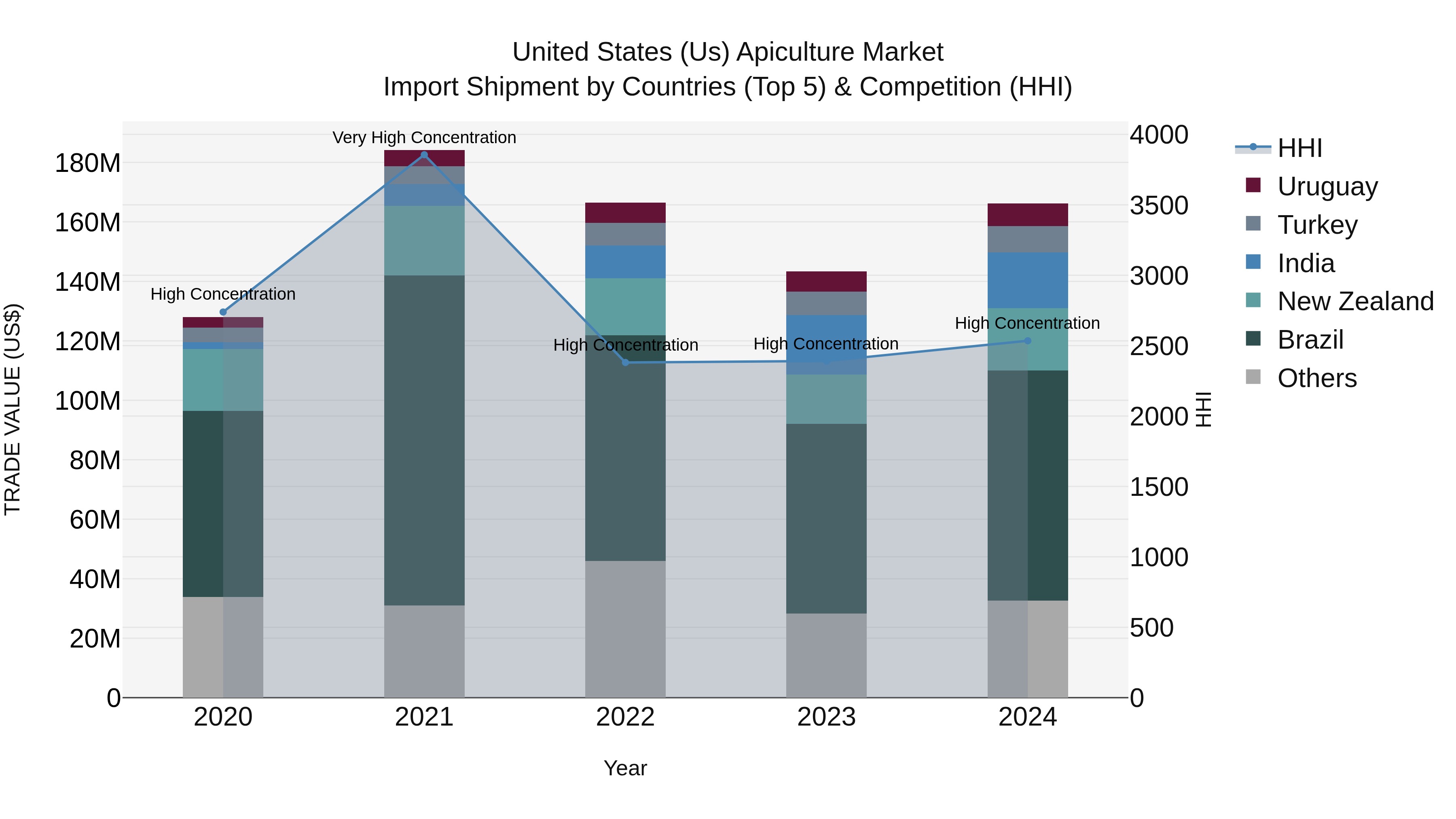
The United States continues to rely on key exporters such as Brazil, New Zealand, India, Turkey, and Uruguay for its apiculture import shipments in 2024. The market shows high concentration with a high Herfindahl-Hirschman Index (HHI). The Compound Annual Growth Rate (CAGR) from 2020 to 2024 stands at a healthy 6.76%, indicating steady growth in the industry. Furthermore, the impressive growth rate of 15.96% from 2023 to 2024 suggests a thriving market with increasing demand for imported apiculture products.
United States (US) Apiculture Market Synopsis
The United States Apiculture Market is a thriving industry that encompasses the production and management of honey bees and their byproducts. Honey production is the primary focus of the market, with the US being one of the top honey-producing countries globally. Additionally, the market includes the production of beeswax, royal jelly, propolis, and bee pollen. The demand for honey and other bee products has been steadily increasing due to growing consumer awareness of their health benefits and various applications in food, cosmetics, and pharmaceutical industries. The US apiculture market is characterized by a mix of commercial beekeepers, hobbyists, and migratory beekeepers who play a crucial role in pollinating crops across the country. However, the market faces challenges such as declining bee populations, hive diseases, and climate change impacts, which require innovative solutions to sustain the industry`s growth.
United States (US) Apiculture Market Trends
The US Apiculture Market is experiencing several trends in response to increasing consumer demand for natural and sustainable products. One major trend is the growth of urban beekeeping, driven by a rising interest in local honey production and the importance of bees for urban agriculture. Another trend is the focus on bee health and sustainability practices, with beekeepers adopting organic and chemical-free methods to support the wellbeing of bee colonies. Additionally, there is a growing market for value-added products such as beeswax candles, propolis tinctures, and honey-based skincare products, catering to consumers seeking natural alternatives. The rise of e-commerce platforms has also made it easier for beekeepers to sell their products directly to consumers, bypassing traditional distribution channels. These trends indicate a shift towards a more diversified and consumer-driven apiculture market in the US.
United States (US) Apiculture Market Challenges
In the US Apiculture Market, several challenges are being faced by beekeepers and honey producers. One major challenge is the widespread decline in bee populations due to various factors such as pesticide use, habitat loss, diseases, and climate change. This decline not only affects honey production but also has broader implications for agriculture as bees play a crucial role in pollination. Additionally, there are increasing concerns about the quality and safety of imported honey, which impacts domestic producers who must compete with lower-priced foreign products. Furthermore, fluctuating weather patterns and natural disasters can also disrupt beekeeping operations, leading to inconsistent harvests and financial instability for beekeepers. Overall, these challenges highlight the need for sustainable beekeeping practices, increased research and innovation, and supportive policies to ensure the viability of the US apiculture industry.
United States (US) Apiculture Market Investment Opportunities
The US Apiculture Market offers various investment opportunities due to the increasing demand for honey and other bee-related products. Investing in beekeeping operations can be profitable, as honey production continues to grow in popularity. Additionally, there is a rising demand for other bee products such as beeswax, propolis, and royal jelly, providing potential revenue streams for investors. With the growing awareness of the importance of bees in pollination and environmental sustainability, investing in technologies and services that support bee health and hive management could also be a promising opportunity. Furthermore, there is a market for innovative beekeeping equipment and tools that improve efficiency and productivity for beekeepers. Overall, the US Apiculture Market presents diverse investment avenues for those looking to capitalize on the growing interest in bee products and sustainable agriculture.
United States (US) Apiculture Market Future Outlook
The future outlook for the United States Apiculture Market appears promising, driven by growing consumer awareness about the benefits of honey and other bee-related products, as well as the increasing demand for pollination services in agriculture. Factors such as the rise in health-conscious consumers seeking natural sweeteners and the expanding applications of honey in various industries like food, cosmetics, and pharmaceuticals are expected to fuel market growth. However, challenges such as climate change, habitat loss, and the threat of pests and diseases to bee populations remain significant concerns that could impact the industry. Overall, with the implementation of sustainable beekeeping practices, technological advancements in hive management, and continued research into bee health, the US apiculture market is poised for steady expansion in the coming years.
Key Highlights of the Report:
- United States (US) Apiculture Market Outlook
- Market Size of United States (US) Apiculture Market, 2024
- Forecast of United States (US) Apiculture Market, 2031
- Historical Data and Forecast of United States (US) Apiculture Revenues & Volume for the Period 2021 - 2031
- United States (US) Apiculture Market Trend Evolution
- United States (US) Apiculture Market Drivers and Challenges
- United States (US) Apiculture Price Trends
- United States (US) Apiculture Porter's Five Forces
- United States (US) Apiculture Industry Life Cycle
- Historical Data and Forecast of United States (US) Apiculture Market Revenues & Volume By Product Type for the Period 2021 - 2031
- Historical Data and Forecast of United States (US) Apiculture Market Revenues & Volume By Honey for the Period 2021 - 2031
- Historical Data and Forecast of United States (US) Apiculture Market Revenues & Volume By Beeswax for the Period 2021 - 2031
- Historical Data and Forecast of United States (US) Apiculture Market Revenues & Volume By Live-bees for the Period 2021 - 2031
- Historical Data and Forecast of United States (US) Apiculture Market Revenues & Volume By Others for the Period 2021 - 2031
- Historical Data and Forecast of United States (US) Apiculture Market Revenues & Volume By Application for the Period 2021 - 2031
- Historical Data and Forecast of United States (US) Apiculture Market Revenues & Volume By Medical for the Period 2021 - 2031
- Historical Data and Forecast of United States (US) Apiculture Market Revenues & Volume By Food Beverages for the Period 2021 - 2031
- Historical Data and Forecast of United States (US) Apiculture Market Revenues & Volume By Cosmetics for the Period 2021 - 2031
- Historical Data and Forecast of United States (US) Apiculture Market Revenues & Volume By Others for the Period 2021 - 2031
- United States (US) Apiculture Import Export Trade Statistics
- Market Opportunity Assessment By Product Type
- Market Opportunity Assessment By Application
- United States (US) Apiculture Top Companies Market Share
- United States (US) Apiculture Competitive Benchmarking By Technical and Operational Parameters
- United States (US) Apiculture Company Profiles
- United States (US) Apiculture Key Strategic Recommendations






































