United States (US) Marine Plywood Market Top 5 Importing Countries and Market Competition (HHI) Analysis
Marine plywood import shipments to the United States continued to be dominated by key exporting countries such as Vietnam, Indonesia, Russia, Taiwan, and Latvia in 2024. The high Herfindahl-Hirschman Index (HHI) indicated a concentrated market landscape. Despite a slight decline in the compound annual growth rate (CAGR) from 2020 to 2024, there was a notable growth rate of 7.23% in 2024 compared to the previous year. This suggests potential opportunities and resilience in the marine plywood import market, reflecting ongoing demand and market dynamics.
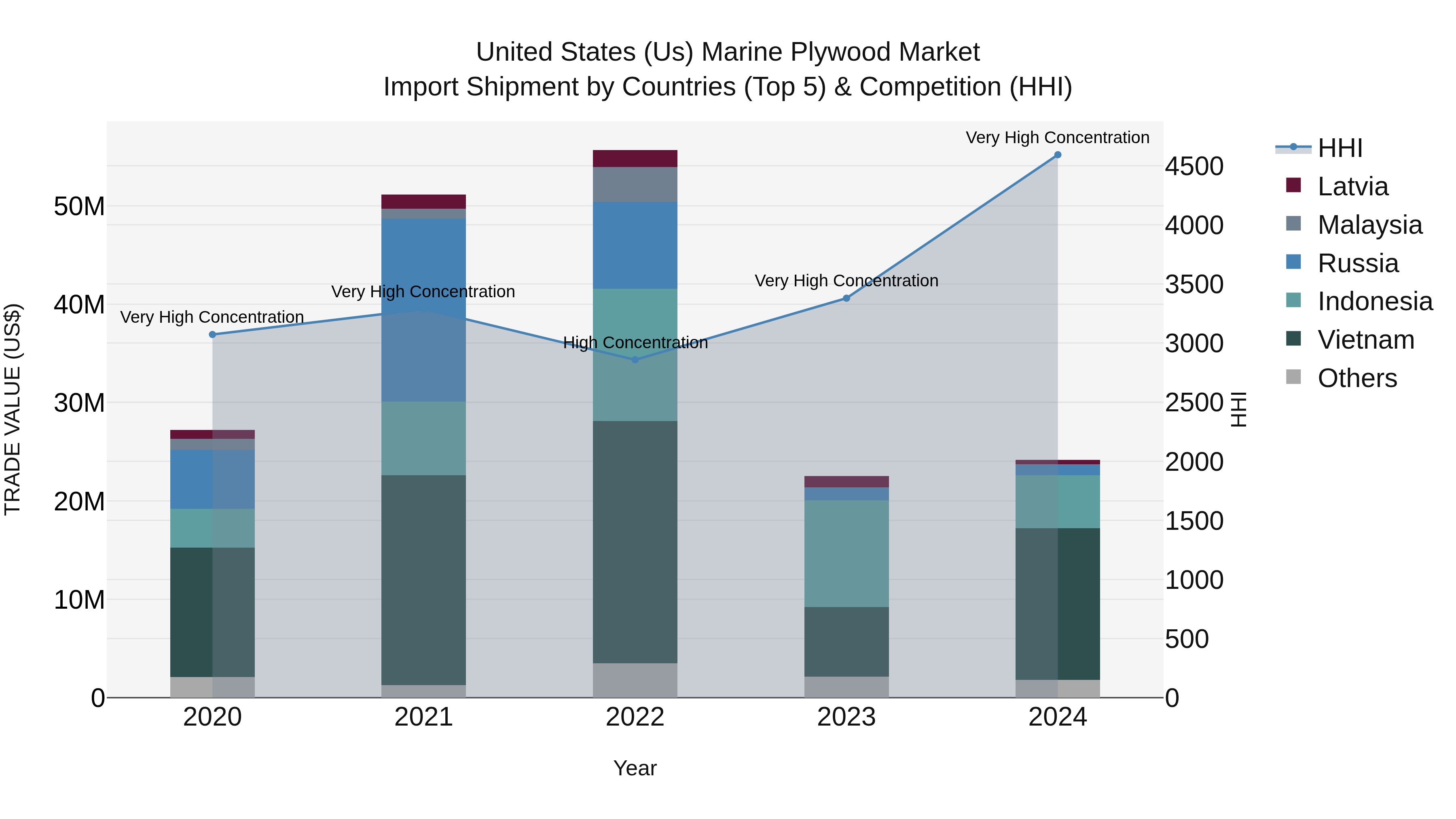
United States (US) Marine Plywood Market Overview
The United States Marine Plywood Market is experiencing steady growth driven by the increasing demand for high-quality marine-grade wood products in the construction and marine industries. Marine plywood is known for its durability, water resistance, and ability to withstand harsh marine environments, making it a popular choice for boat building, docks, and other marine applications. The market is also influenced by the growth in recreational boating activities and the construction of waterfront properties. Key players in the US Marine Plywood Market include manufacturers such as Roseburg, Weyerhaeuser, and Plum Creek Timber Company. Additionally, the market is witnessing a trend towards sustainable and eco-friendly marine plywood products, reflecting the growing emphasis on environmental conservation in the industry.
United States (US) Marine Plywood Market Trends
The US Marine Plywood Market is experiencing a growing demand due to the increasing popularity of boating and marine activities. Consumers are seeking high-quality marine plywood for boat building, docks, and other marine applications. Sustainable and eco-friendly marine plywood options are gaining traction as environmental awareness rises among consumers. Additionally, advancements in technology are leading to the development of more durable and weather-resistant marine plywood products, meeting the stringent requirements of marine applications. The market is also witnessing a trend towards customization, with consumers looking for marine plywood that can be tailored to their specific needs and preferences. Overall, the US Marine Plywood Market is poised for steady growth driven by the expanding marine industry and consumer demand for reliable and innovative marine plywood solutions.
United States (US) Marine Plywood Market Challenges
In the US Marine Plywood Market, challenges include fluctuating raw material costs, increasing competition from alternative materials, such as composite panels, and regulatory changes impacting the industry. The volatility in the prices of core materials like hardwood, which are essential for manufacturing marine plywood, can impact profit margins for manufacturers. Additionally, the growing popularity of composite panels that offer similar properties to marine plywood at a lower cost poses a threat to market share. Compliance with environmental regulations and certifications, such as the Forest Stewardship Council (FSC) certification, also adds complexity and cost to production processes. To stay competitive, companies in the US Marine Plywood Market need to innovate, streamline operations, and adapt to evolving market trends and regulatory requirements.
United States (US) Marine Plywood Market Investment Opportunities
The US Marine Plywood Market presents promising investment opportunities due to the growing demand for high-quality marine-grade plywood in the boating and construction industries. With the increasing focus on sustainable and durable materials, there is a rising preference for marine plywood known for its resistance to water, rot, and humidity. Investors can explore opportunities in manufacturing and distribution of marine plywood, as well as in technological advancements such as the development of eco-friendly and innovative plywood products. Additionally, with the expansion of the boating and marine construction sectors, there is a growing need for specialized marine plywood solutions, creating a niche market for investors to capitalize on the industry`s growth potential.
United States (US) Marine Plywood Market Government Policy
The US government has implemented policies aimed at regulating and promoting sustainable practices in the Marine Plywood Market. These policies include regulations on timber sourcing to prevent illegal logging and promote forest conservation. The government has also imposed tariffs on imported marine plywood to protect domestic producers and maintain fair competition within the market. Additionally, there are quality standards and certifications in place to ensure the safety and durability of marine plywood products. Overall, these policies seek to balance environmental concerns with economic interests, promoting a sustainable and competitive Marine Plywood Market in the United States.
United States (US) Marine Plywood Market Future Outlook
The future outlook for the United States Marine Plywood Market appears positive, driven by increasing demand from the construction and marine industries. With a growing emphasis on sustainable building materials, marine plywood is gaining popularity due to its durability and resistance to water damage. The market is expected to witness steady growth as infrastructure development projects, particularly in coastal regions, continue to rise. Additionally, the rising trend of DIY home improvement projects is likely to further boost the demand for marine plywood. However, challenges such as fluctuating raw material prices and stringent regulations regarding sustainable sourcing may impact market growth. Overall, technological advancements in plywood manufacturing processes and increasing consumer awareness about the benefits of marine plywood are expected to drive market expansion in the coming years.
Key Highlights of the Report:
- United States (US) Marine Plywood Market Outlook
- Market Size of United States (US) Marine Plywood Market, 2024
- Forecast of United States (US) Marine Plywood Market, 2031
- Historical Data and Forecast of United States (US) Marine Plywood Revenues & Volume for the Period 2021- 2031
- United States (US) Marine Plywood Market Trend Evolution
- United States (US) Marine Plywood Market Drivers and Challenges
- United States (US) Marine Plywood Price Trends
- United States (US) Marine Plywood Porter's Five Forces
- United States (US) Marine Plywood Industry Life Cycle
- Historical Data and Forecast of United States (US) Marine Plywood Market Revenues & Volume By Application for the Period 2021- 2031
- Historical Data and Forecast of United States (US) Marine Plywood Market Revenues & Volume By Marine Applications for the Period 2021- 2031
- Historical Data and Forecast of United States (US) Marine Plywood Market Revenues & Volume By Non-Marine Applications for the Period 2021- 2031
- United States (US) Marine Plywood Import Export Trade Statistics
- Market Opportunity Assessment By Application
- United States (US) Marine Plywood Top Companies Market Share
- United States (US) Marine Plywood Competitive Benchmarking By Technical and Operational Parameters
- United States (US) Marine Plywood Company Profiles
- United States (US) Marine Plywood Key Strategic Recommendations






































