United States (US) Phenol Market Top 5 Importing Countries and Market Competition (HHI) Analysis
The United States saw a notable increase in phenol import shipments in 2024, with top exporting countries including Germany, Canada, India, Malaysia, and China. The market exhibited very high concentration levels, indicating significant dominance by key players. Despite a negative compound annual growth rate from 2020 to 2024, the industry experienced a strong growth spurt in 2024 with a growth rate of 10.09%. This suggests a potential shift in market dynamics and opportunities for further expansion and competition in the phenol import sector within the US market.
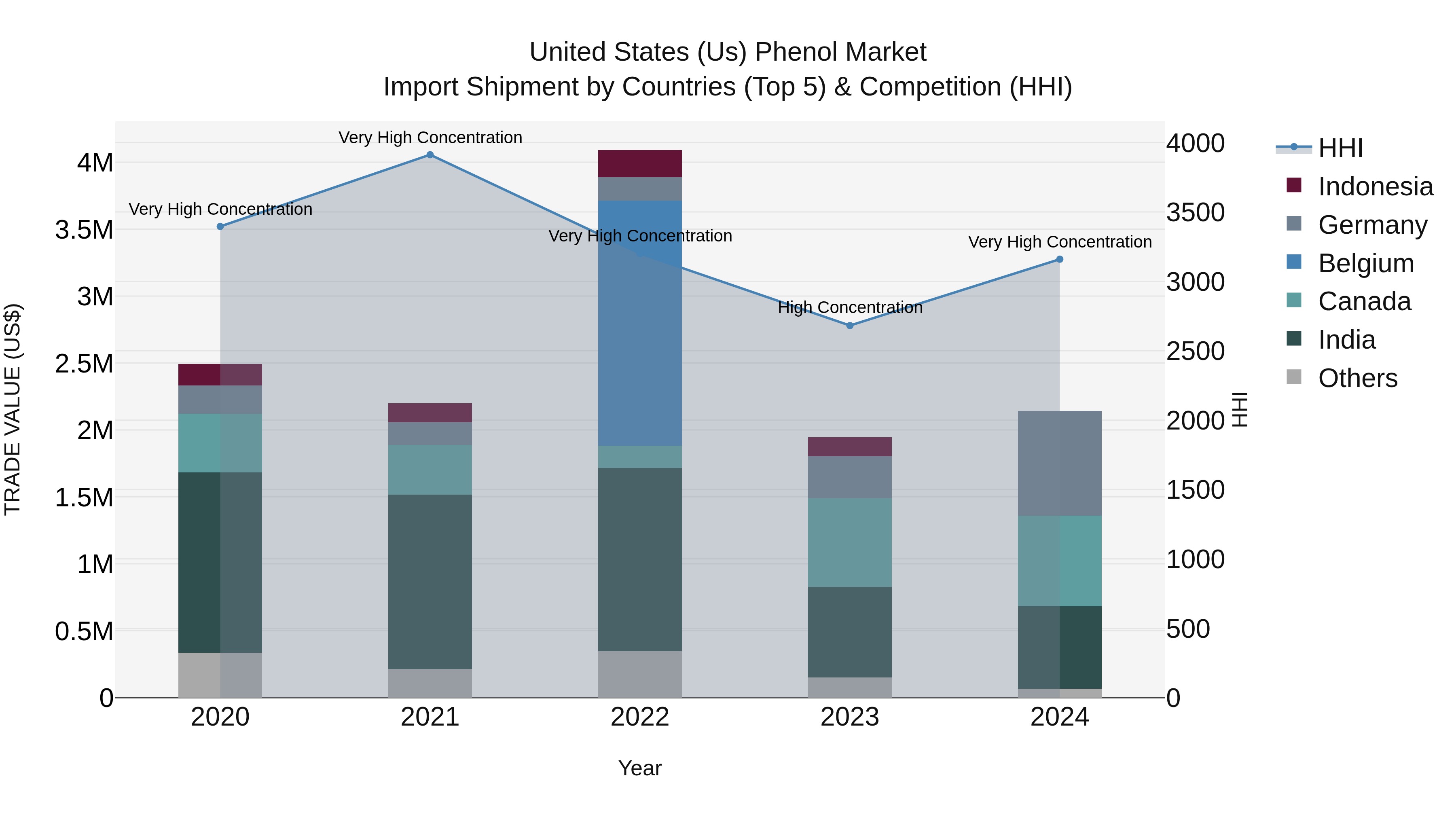
United States (US) Phenol Market Overview
The United States Phenol Market is a dynamic and growing sector driven by its wide range of applications across industries such as automotive, electronics, construction, and pharmaceuticals. Phenol is primarily used in the production of Bisphenol-A (BPA), which is further utilized in the manufacturing of polycarbonates, epoxy resins, and phenolic resins. The market is influenced by factors such as increasing demand for phenol-based products, technological advancements in manufacturing processes, and stringent regulations regarding environmental sustainability. Key players in the US Phenol Market include companies like Dow Chemical Company, INEOS Group, and PTT Global Chemical Public Company Limited. As the demand for phenol continues to rise, market players are focusing on innovation and sustainable practices to maintain a competitive edge in the industry.
United States (US) Phenol Market Trends
The US Phenol market is currently experiencing steady growth driven by increasing demand from various industries such as automotive, construction, electronics, and healthcare. One of the key trends in the market is the rising focus on sustainability and environmental regulations, leading to a shift towards eco-friendly and bio-based phenol production methods. Additionally, the growing use of phenol in the production of polycarbonates, epoxy resins, and nylon resins is further boosting market growth. Technological advancements and innovations in phenol production processes are also shaping the market landscape. Overall, the US Phenol market is expected to continue its positive trajectory, driven by evolving consumer preferences, regulatory changes, and expanding applications across industries.
United States (US) Phenol Market Challenges
The United States phenol market faces several challenges, including fluctuating prices of raw materials such as benzene and propylene, which directly impact the production costs of phenol. Regulatory pressure for stricter environmental regulations and concerns regarding the health effects of phenol exposure pose challenges for manufacturers in terms of compliance and sustainability efforts. Additionally, competition from other chemical compounds and alternative materials in industries such as plastics, resins, and pharmaceuticals adds complexity to the market landscape. Technological advancements and innovations in production processes are required to address these challenges and maintain competitiveness in the US phenol market.
United States (US) Phenol Market Investment Opportunities
The US Phenol Market presents promising investment opportunities due to the increasing demand for phenol in various industries such as plastics, pharmaceuticals, and electronics. With the growing emphasis on sustainable practices, there is a shift towards bio-based phenol production, opening up avenues for green investments. Furthermore, the US government`s initiatives to promote domestic manufacturing and reduce reliance on imports could drive investment in expanding phenol production capacities within the country. Investors could consider opportunities in companies involved in phenol production, research and development of eco-friendly production methods, or those focusing on downstream applications of phenol. However, it is essential for investors to conduct thorough market research, assess regulatory factors, and monitor industry trends to make informed investment decisions in the US Phenol Market.
United States (US) Phenol Market Government Policy
Government policies related to the US Phenol Market primarily focus on environmental regulations, safety standards, and trade agreements. The Environmental Protection Agency (EPA) regulates the production and use of phenol to ensure compliance with air and water quality standards. Occupational Safety and Health Administration (OSHA) guidelines mandate safe handling practices in phenol manufacturing facilities to protect workers` health. Additionally, trade agreements and tariffs impact the import and export of phenol, influencing market dynamics and pricing. The government`s emphasis on sustainable practices and ensuring a safe working environment for employees in the phenol industry shapes market trends and business strategies. Compliance with these policies is essential for companies operating in the US Phenol Market to maintain competitiveness and adhere to regulatory requirements.
United States (US) Phenol Market Future Outlook
The future outlook for the United States Phenol Market appears positive, driven by increasing demand from various end-user industries such as automotive, construction, electronics, and healthcare. Phenol is a key chemical used in the production of various consumer goods and industrial products, including plastics, resins, adhesives, and pharmaceuticals. With the growing emphasis on sustainability and environmental regulations, there is a shift towards the use of phenol in eco-friendly applications, further boosting market growth. Additionally, technological advancements and research initiatives aimed at enhancing the production processes and developing innovative applications for phenol are expected to create new opportunities in the market. However, factors such as fluctuating raw material prices and regulatory challenges may pose some constraints to the market growth in the coming years.
Key Highlights of the Report:
- United States (US) Phenol Market Outlook
- Market Size of United States (US) Phenol Market, 2021
- Forecast of United States (US) Phenol Market, 2027
- Historical Data and Forecast of United States (US) Phenol Revenues & Volume for the Period 2018 - 2027
- United States (US) Phenol Market Trend Evolution
- United States (US) Phenol Market Drivers and Challenges
- United States (US) Phenol Price Trends
- United States (US) Phenol Porter's Five Forces
- United States (US) Phenol Industry Life Cycle
- Historical Data and Forecast of United States (US) Phenol Market Revenues & Volume By End-users for the Period 2018 - 2027
- Historical Data and Forecast of United States (US) Phenol Market Revenues & Volume By Bisphenol A for the Period 2018 - 2027
- Historical Data and Forecast of United States (US) Phenol Market Revenues & Volume By Phenolic Resins for the Period 2018 - 2027
- Historical Data and Forecast of United States (US) Phenol Market Revenues & Volume By Caprolactam for the Period 2018 - 2027
- Historical Data and Forecast of United States (US) Phenol Market Revenues & Volume By Alkyl Phenyls for the Period 2018 - 2027
- Historical Data and Forecast of United States (US) Phenol Market Revenues & Volume By Others for the Period 2018 - 2027
- United States (US) Phenol Import Export Trade Statistics
- Market Opportunity Assessment By End-users
- United States (US) Phenol Top Companies Market Share
- United States (US) Phenol Competitive Benchmarking By Technical and Operational Parameters
- United States (US) Phenol Company Profiles
- United States (US) Phenol Key Strategic Recommendations






































