Uruguay Packaged Water Market: Import Trend Analysis
In the past year, the import trend for the Uruguay packaged water market in Uruguay showed a steady increase. This growth was driven by rising consumer demand for convenient and safe drinking water options. Major players in the market continued to expand their product offerings to cater to the evolving preferences of consumers.
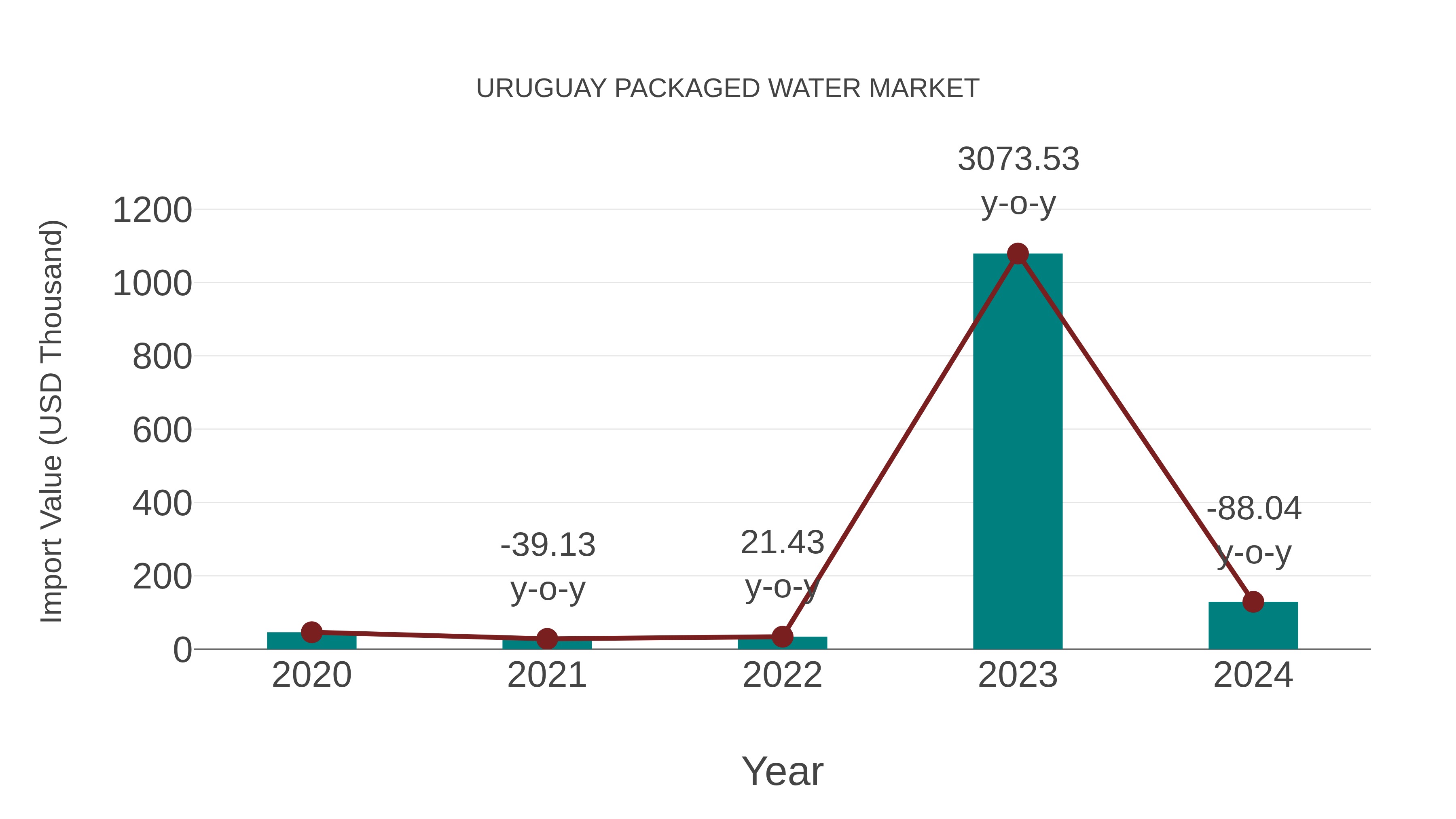
Uruguay Packaged water Market Overview
The Uruguay packaged water market is witnessing steady growth due to increasing consumer awareness about the importance of hydration and health. The market is primarily driven by the convenience and portability offered by packaged water products, making them a popular choice among consumers for on-the-go hydration. Key players in the market are focusing on product innovation, such as introducing flavored and functional waters, to cater to evolving consumer preferences. The market is also influenced by factors like growing tourism industry and rising disposable incomes, which are contributing to the overall demand for packaged water products. Additionally, stringent regulations and standards regarding water quality and safety in Uruguay are boosting consumer trust in packaged water brands, further fueling market growth.
Uruguay Packaged water Market Trends and Opportunities
The Uruguay packaged water market is experiencing significant growth due to increasing health consciousness among consumers and a growing preference for convenient and portable hydration options. Key trends in the market include the rising demand for premium and functional bottled water varieties, such as flavored, vitamin-enhanced, and alkaline waters. Opportunities exist for companies to innovate in packaging formats, sustainability initiatives, and distribution channels to cater to evolving consumer preferences. With a focus on environmental sustainability gaining traction, there is potential for growth in the market for eco-friendly packaging solutions and initiatives to reduce plastic waste. Collaborations with retailers and e-commerce platforms can also help companies expand their reach and tap into new consumer segments in the competitive packaged water market in Uruguay.
Uruguay Packaged water Market Challenges
In the Uruguay packaged water market, some of the key challenges faced include intense competition among existing brands, price fluctuations affecting consumer purchasing behavior, and increasing concerns about environmental sustainability and plastic waste. Additionally, the market may face regulatory challenges related to packaging and labeling requirements, as well as changing consumer preferences towards healthier beverage options such as flavored water or functional drinks. Moreover, the logistical challenges of distribution and ensuring product quality and safety could also impact market growth. Overall, companies in the Uruguay packaged water market need to navigate these challenges by focusing on product innovation, sustainability efforts, and effective marketing strategies to stay competitive and meet evolving consumer demands.
Uruguay Packaged water Market Drivers
The Uruguay packaged water market is primarily driven by increasing health consciousness among consumers, leading to a growing preference for convenient and safe drinking water options. The rising disposable incomes and changing lifestyles have also contributed to the surge in demand for packaged water as a convenient hydration choice. Additionally, the convenience factor of packaged water, especially in single-serve bottles, is a key driver as it caters to the on-the-go consumption habits of consumers. Growing concerns about water quality and contamination issues have further boosted the demand for packaged water as a reliable and safe alternative. The easy availability of a wide range of packaged water products in various sizes and packaging formats also plays a significant role in driving market growth in Uruguay.
Uruguay Packaged water Market Government Policy
In Uruguay, the packaged water market is subject to government policies aimed at ensuring the safety and quality of bottled water products. The Ministry of Public Health oversees regulations that govern the production, labeling, and distribution of packaged water to guarantee compliance with health and safety standards. These regulations include requirements for water sources, production processes, packaging materials, and labeling information such as expiration dates and nutritional content. Additionally, the government imposes taxes on bottled water to promote environmental sustainability and reduce plastic waste. Overall, the government`s policies in Uruguay`s packaged water market prioritize consumer health and environmental concerns while fostering a competitive and transparent industry.
Uruguay Packaged water Market Future Outlook
The Uruguay packaged water market is expected to witness steady growth in the coming years, driven by factors such as increasing health awareness among consumers, rising disposable incomes, and growing concerns about water quality and safety. With a shift towards healthier beverage options and a preference for convenience, packaged water is likely to continue gaining popularity among the Uruguayan population. The market is also expected to benefit from the growing trend of on-the-go consumption and the rising demand for functional and fortified water products. Additionally, the increasing availability of innovative packaging formats and sustainable packaging solutions is projected to further fuel the growth of the packaged water market in Uruguay. Overall, the future outlook for the Uruguay packaged water market appears promising, with opportunities for market players to capitalize on evolving consumer preferences and market trends.
Key Highlights of the Report:
- Uruguay Packaged water Market Outlook
- Market Size of Uruguay Packaged water Market, 2025
- Forecast of Uruguay Packaged water Market, 2032
- Historical Data and Forecast of Uruguay Packaged water Revenues & Volume for the Period 2022 - 2032F
- Uruguay Packaged water Market Trend Evolution
- Uruguay Packaged water Market Drivers and Challenges
- Uruguay Packaged water Price Trends
- Uruguay Packaged water Porter's Five Forces
- Uruguay Packaged water Industry Life Cycle
- Historical Data and Forecast of Uruguay Packaged water Market Revenues & Volume By Product for the Period 2022 - 2032F
- Historical Data and Forecast of Uruguay Packaged water Market Revenues & Volume By Still for the Period 2022 - 2032F
- Historical Data and Forecast of Uruguay Packaged water Market Revenues & Volume By Carbonated for the Period 2022 - 2032F
- Historical Data and Forecast of Uruguay Packaged water Market Revenues & Volume By Flavored for the Period 2022 - 2032F
- Historical Data and Forecast of Uruguay Packaged water Market Revenues & Volume By Functional for the Period 2022 - 2032F
- Uruguay Packaged water Import Export Trade Statistics
- Market Opportunity Assessment By Product
- Uruguay Packaged water Top Companies Market Share
- Uruguay Packaged water Competitive Benchmarking By Technical and Operational Parameters
- Uruguay Packaged water Company Profiles
- Uruguay Packaged water Key Strategic Recommendations






































