Venezuela Ornamental Fish Market Size, Share & Growth Rate
The Venezuela Ornamental Fish Market was estimated at USD 271 Million in 2025 and is projected to reach USD 376 Million by 2032, growing at a CAGR of 4.8% from 2026 to 2032. This growth trajectory is fueled by a burgeoning interest among local aquarium hobbyists, coupled with the increasing availability of both freshwater and marine species. Additionally, the shift towards sustainable breeding practices and the rising appeal of unique aquascaping designs are propelling market dynamics.
Venezuela Ornamental Fish Market Year-wise Growth Rate and Key Drivers
This graph highlights how the Venezuela Ornamental Fish Market has steadily grown over the years, supported by major growth factors.
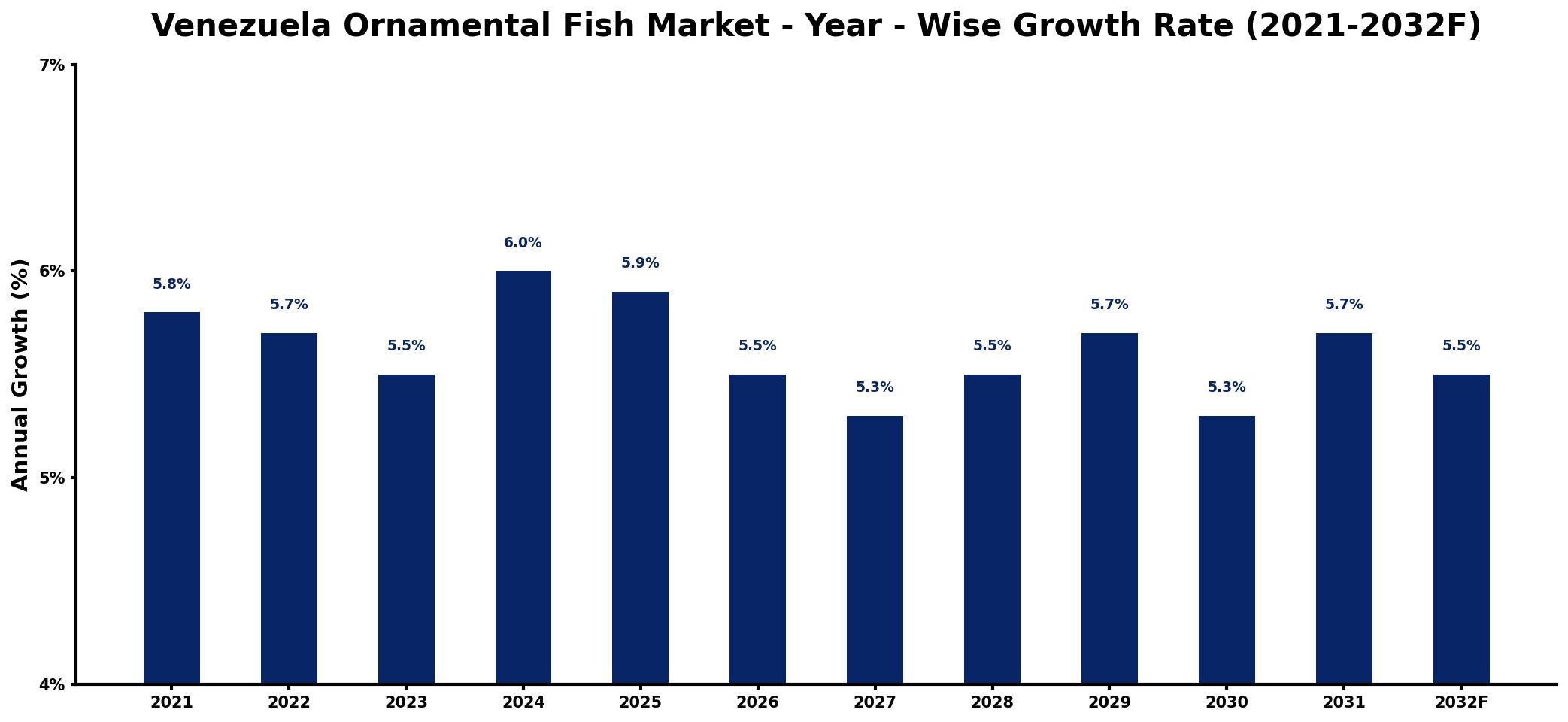
The table below presents the year‑wise growth rates along with the key drivers influencing the market
| Year | Growth Rate | Major Drivers |
| 2021 | 5.8% | Increased consumer interest in aquariums |
| 2022 | 5.7% | Expansion of online retail platforms |
| 2023 | 5.5% | Growth in home decoration trends |
| 2024 | 6.0% | Rising disposable income levels |
| 2025 | 5.9% | Increased awareness of ecosystem benefits |
| 2026 | 5.5% | increased capital investment inflows |
| 2027 | 5.3% | Emergence of eco-friendly practices |
| 2028 | 5.5% | increased production capacity utilization |
| 2029 | 5.7% | Rising popularity of aquascaping |
| 2030 | 5.3% | Increased investment in breeding facilities |
| 2031 | 5.7% | improved processing technologies adoption |
| 2032 | 5.5% | growing regional consumption patterns |
Note: Market size estimations and growth projections presented in this report are based on 6Wresearch's proprietary forecasting methodology, utilizing the latest available industry data, government publications, and primary research inputs.
Venezuela Ornamental Fish Market Synopsis
The Venezuela Ornamental Fish Market has witnessed a remarkable rise in recent years, spurred by the enthusiasm of passionate aquarium enthusiasts. With a diverse range of species available—from vibrant guppies to striking angelfish—the market is flourishing despite ongoing economic turbulence. However, a careful examination reveals that it faces significant challenges in maintaining this momentum amid regulatory and infrastructural constraints.
As demand for ornamental fish grows, the market is slowly shifting towards a more sustainable and ethical framework. Consumers are increasingly prioritizing locally bred species, which not only cater to aesthetic preferences but also adhere to ethical sourcing practices. This evolving landscape indicates that while the market is robust, the need for a focus on sustainability and local breeding initiatives remains critical to its long-term success.
Venezuela Ornamental Fish Market Key Takeaways
- The market is projected to grow to USD 376 Million by 2032, reflecting a growing interest in ornamental fishkeeping.
- Local breeders are becoming increasingly vital as consumers seek sustainably bred fish species.
- There is a significant trend towards online purchasing, offering consumers access to diverse species.
- Challenges such as economic instability and international sanctions continue to impact the market landscape.
- The government's emphasis on conservation supports the growth of sustainable practices in the ornamental fish sector.
Evaluation of Restraints in Venezuela Ornamental Fish Market
The Venezuela Ornamental Fish Market is impeded by a myriad of restraints primarily tied to the country's economic instability and political climate. Fluctuations in purchasing power result in constrained consumer spending, particularly in a niche market that often relies on discretionary income. Additionally, international sanctions restrict access to high-quality imports, limiting the variety available to consumers and stunting market growth. Regulatory uncertainties further complicate the landscape, creating an unpredictable business environment for stakeholders.
Venezuela Ornamental Fish Market Trends
The ornamental fish sector is currently experiencing an increase in demand for exotic and colorful species as consumers look to personalize their aquariums. The popularity of aquascaping—a practice that emphasizes the aesthetic arrangement of aquatic plants and decorations—has surged, enticing hobbyists to seek out unique fish that complement their designs. Moreover, an ethical shift is evident, as buyers increasingly favor sustainable sourcing practices, leading to a growing preference for locally bred fish. This trend reflects broader environmental awareness among consumers, steering the market towards more responsible consumption.
Venezuela Ornamental Fish Market Opportunities
Amidst the challenges, several investment opportunities exist within the Venezuela Ornamental Fish Market. Establishing local breeding facilities presents a viable path to meet the demand for popular species while reducing reliance on imports. Additionally, creating a robust distribution network for specialty fish and accessories can tap into the growing online purchasing trend. Specialized services such as aquarium maintenance and education on sustainable practices can further capture the interest of hobbyists eager to enhance their aquaristic experience.
Government Initiatives in the Venezuela Ornamental Fish Market
The Venezuelan government has enacted several initiatives aimed at promoting sustainability and conservation in the ornamental fish market. Regulations are in place to safeguard certain species from overexploitation, which aligns with the countrys commitment to preserving its rich biodiversity. By designating protected marine areas and encouraging responsible trade practices, the government seeks to balance economic interests with ecological preservation, fostering a healthier environment for both fish populations and local breeders.
Future Insights of the Venezuela Ornamental Fish Market
Looking ahead to the period from 2026 to 2032, the Venezuela Ornamental Fish Market is poised for gradual recovery and potential growth, assuming local breeders can navigate the prevailing economic and regulatory uncertainties. While challenges such as inflation and supply chain disruptions may persist, the increasing domestic interest in aquarium keeping, combined with the sustainable practices promoted by the government, offers a foundation for stability. Continued innovation and adaptation to market dynamics will be crucial for stakeholders aiming to capitalize on emerging opportunities.
Venezuela Ornamental Fish Market Latest Developments (2025 - 2026)
Recent developments in the Venezuela Ornamental Fish Market indicate a growing trend towards online sales platforms, allowing retailers to reach a broader audience amidst local economic challenges. Local breeders are increasingly collaborating to enhance the quality of their offerings while promoting sustainable practices. Community events focused on aquarium care and species conservation are also gaining popularity, further highlighting the commitment of hobbyists to responsible fishkeeping. These shifts suggest a landscape that, while fraught with challenges, is evolving to meet the demands of a passionate consumer base.
Venezuela Ornamental Fish Market - Key Attractiveness of the Report
- 10 Years of Market Numbers
- Historical Data Starting from 2022 to 2025
- Base Year: 2025
- Forecast Data until 2032
- Key Performance Indicators Impacting the Market
- Major Upcoming Developments and Projects
Key Highlights of the Report:
- Venezuela Ornamental Fish Market Outlook
- Market Size of Venezuela Ornamental Fish Market, 2025
- Forecast of Venezuela Ornamental Fish Market, 2032
- Historical Data and Forecast of Venezuela Ornamental Fish Revenues & Volume for the Period 2022-2032F
- Venezuela Ornamental Fish Market Trend Evolution
- Venezuela Ornamental Fish Market Drivers and Challenges
- Venezuela Ornamental Fish Price Trends
- Venezuela Ornamental Fish Porter's Five Forces
- Venezuela Ornamental Fish Industry Life Cycle
- Historical Data and Forecast of Venezuela Ornamental Fish Market Revenues & Volume By Product for the Period 2022-2032F
- Historical Data and Forecast of Venezuela Ornamental Fish Market Revenues & Volume By Tropical Freshwater for the Period 2022-2032F
- Historical Data and Forecast of Venezuela Ornamental Fish Market Revenues & Volume By Temperate for the Period 2022-2032F
- Historical Data and Forecast of Venezuela Ornamental Fish Market Revenues & Volume By Marine for the Period 2022-2032F
- Historical Data and Forecast of Venezuela Ornamental Fish Market Revenues & Volume By Application for the Period 2022-2032F
- Historical Data and Forecast of Venezuela Ornamental Fish Market Revenues & Volume By Commercial for the Period 2022-2032F
- Historical Data and Forecast of Venezuela Ornamental Fish Market Revenues & Volume By Household for the Period 2022-2032F
- Venezuela Ornamental Fish Import Export Trade Statistics
- Market Opportunity Assessment By Product
- Market Opportunity Assessment By Application
- Venezuela Ornamental Fish Top Companies Market Share
- Venezuela Ornamental Fish Competitive Benchmarking By Technical and Operational Parameters
- Venezuela Ornamental Fish Company Profiles
- Venezuela Ornamental Fish Key Strategic Recommendations






































