Algeria Vetiver Oil Market Size, Share & Growth Rate
The Algeria Vetiver Oil Market was estimated at USD 322 Million in 2025 and is projected to reach USD 437 Million by 2032, growing at a CAGR of 4.5% from 2026 to 2032. This growth trajectory is primarily driven by the increasing consumer demand for natural and organic products, particularly in the fragrance, cosmetics, and aromatherapy segments. The rising awareness surrounding the health and environmental benefits of vetiver oil is further propelling its adoption across various retail platforms.
Algeria Vetiver Oil Market Year-wise Growth Rate and Key Drivers
This graph highlights how the Algeria Vetiver Oil Market has steadily grown over the years, supported by major growth factors.
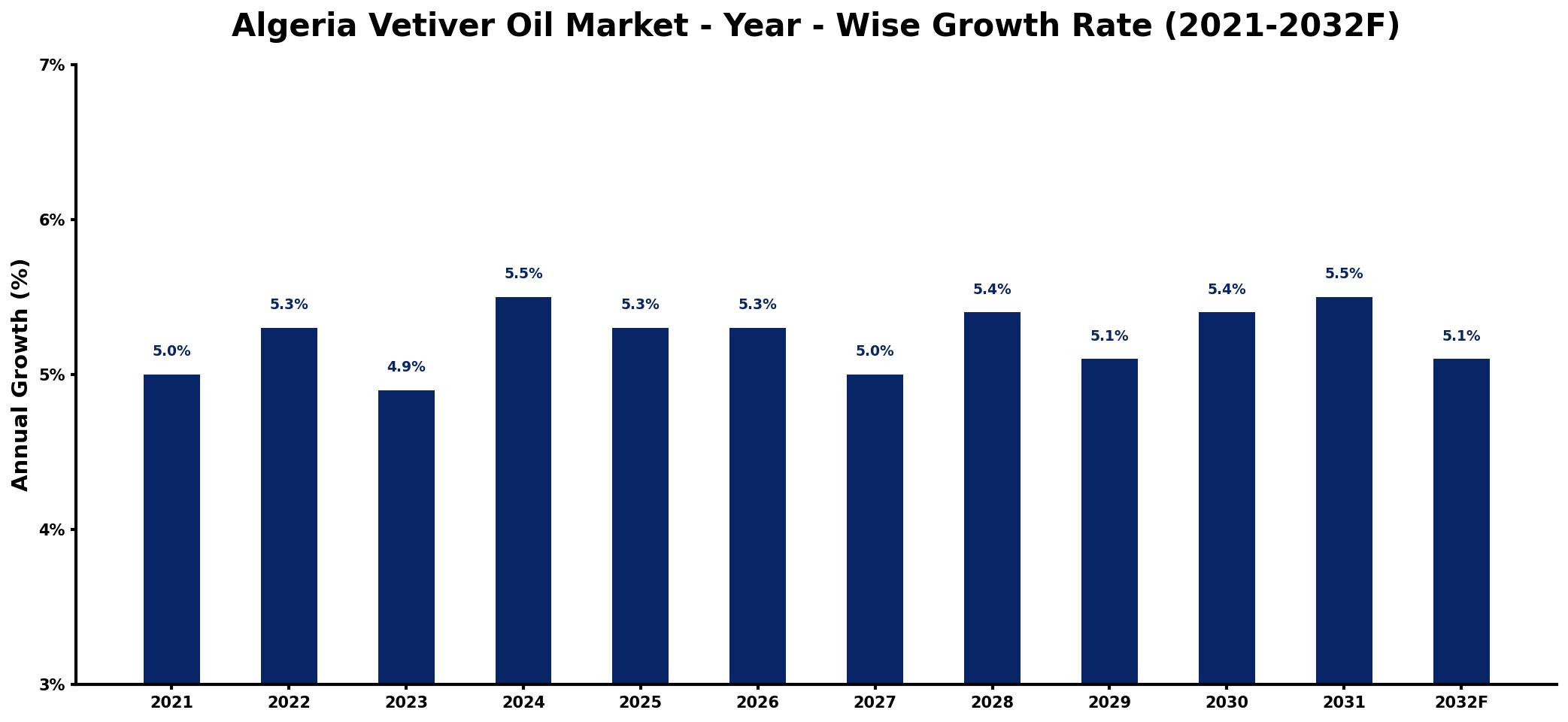
The table below presents the year‑wise growth rates along with the key drivers influencing the market
| Year | Growth Rate | Major Drivers |
| 2021 | 5.0% | Rising demand for natural fragrances |
| 2022 | 5.3% | Increased interest in aromatherapy products |
| 2023 | 4.9% | Expansion of personal care market |
| 2024 | 5.5% | Growth in organic cosmetics sector |
| 2025 | 5.3% | Development of sustainable sourcing practices |
| 2026 | 5.3% | Surge in home fragrance popularity |
| 2027 | 5.0% | Investment in eco-friendly alternatives |
| 2028 | 5.4% | Emerging trends in wellness industry |
| 2029 | 5.1% | Demand for premium fragrance ingredients |
| 2030 | 5.4% | Advancements in extraction technologies |
| 2031 | 5.5% | strengthening international trade flows |
| 2032 | 5.1% | Rise in luxury product offerings |
Note: Market size estimations and growth projections presented in this report are based on 6Wresearch's proprietary forecasting methodology, utilizing the latest available industry data, government publications, and primary research inputs.
Algeria Vetiver Oil Market Synopsis
Recently, the Algeria vetiver oil market has shown positive momentum, with an influx of natural and organic product offerings capturing consumer interest. Looking ahead, the market is expected to maintain this upward trajectory, supported by an expanding base of distribution channels and increasing online sales.
The evolution of consumer preferences towards ethically sourced and sustainably produced ingredients further enhances the markets potential. As awareness of the diverse applications of vetiver oil continues to spread, from perfumery to therapeutic uses, Algerias vetiver oil market stands poised for significant expansion.
Algeria Vetiver Oil Market Key Takeaways
- The market is set for steady growth, driven by the rising demand for natural and organic ingredients.
- Increased consumer awareness about the benefits of vetiver oil is enhancing its market adoption.
- Product innovation and effective marketing strategies are key focus areas for market participants.
- Expansion of distribution channels, particularly online, is crucial for accessing broader consumer bases.
- Favorable government policies are promoting sustainable cultivation and extraction practices.
Evaluation of Restraints in Algeria Vetiver Oil Market
Despite its promising outlook, the Algeria vetiver oil market faces notable challenges. Environmental factors such as climate variability directly impact the quality and yield of vetiver crops, resulting in occasional supply shortages. Additionally, inadequate infrastructure for processing and extraction, along with limited knowledge of sustainable agricultural practices, poses significant barriers. These factors can lead to fluctuations in pricing and may hinder the market's overall growth potential.
Algeria Vetiver Oil Market Trends
Current trends within the Algeria vetiver oil market indicate a shift towards more sustainable and ethically sourced products. Consumers are increasingly favoring brands that emphasize natural ingredients and environmentally friendly practices. Furthermore, the incorporation of vetiver oil in innovative skincare formulations and aromatherapy products is on the rise, driven by its reputed therapeutic properties. As brands adapt to these changing consumer preferences, the demand for vetiver oil is expected to strengthen, further establishing it as a staple ingredient in various applications.
Algeria Vetiver Oil Market Opportunities
The Algeria vetiver oil market holds several lucrative growth opportunities for investors and stakeholders. The increasing trend toward wellness and self-care creates a robust demand for aromatherapy and natural skincare products incorporating vetiver oil. Additionally, entering emerging markets with a rising middle class presents a promising avenue for expansion. Companies focusing on product innovation and unique branding strategies can also capitalize on the growing consumer inclination towards premium, artisanal products.
Government Initiatives in the Algeria Vetiver Oil Market
The Algerian government is actively promoting policies that aim to enhance the cultivation and sustainable extraction of essential oils, including vetiver oil. These initiatives may include financial incentives for farmers adopting eco-friendly practices and regulations focusing on quality standards. By fostering a supportive environment for the vetiver oil sector, the government aims to boost both local economies and the overall growth of the industry.
Future Insights of the Algeria Vetiver Oil Market
Looking ahead to 2026-2032, the Algeria vetiver oil market is expected to experience significant transformations driven by a blend of technological advancements and evolving consumer preferences. As sustainability remains a key focus, companies that prioritize innovative extraction techniques and eco-friendly practices will likely gain competitive advantages. Moreover, the integration of vetiver oil into new product categories will continue to expand its application base, securing a solid growth trajectory for the market.
Algeria Vetiver Oil Market Latest Developments (2025 - 2026)
Recent developments in the Algeria vetiver oil market highlight a growing interest in sustainability and ethical sourcing. Industry players are increasingly focusing on developing new partnerships with local farmers to ensure quality production and fair trade practices. Furthermore, there is a noticeable trend towards incorporating advanced extraction technologies that enhance yield while maintaining the oils natural properties. These directions are likely to shape the future landscape of the market significantly.
Algeria Vetiver Oil Market - Key Attractiveness of the Report
- 10 Years of Market Numbers
- Historical Data Starting from 2022 to 2025
- Base Year: 2025
- Forecast Data until 2032
- Key Performance Indicators Impacting the Market
- Major Upcoming Developments and Projects
Key Highlights of the Report:
- Algeria Vetiver Oil Market Outlook
- Market Size of Algeria Vetiver Oil Market, 2025
- Forecast of Algeria Vetiver Oil Market, 2032
- Historical Data and Forecast of Algeria Vetiver Oil Revenues & Volume for the Period 2022-2032F
- Algeria Vetiver Oil Market Trend Evolution
- Algeria Vetiver Oil Market Drivers and Challenges
- Algeria Vetiver Oil Price Trends
- Algeria Vetiver Oil Porter's Five Forces
- Algeria Vetiver Oil Industry Life Cycle
- Historical Data and Forecast of Algeria Vetiver Oil Market Revenues & Volume By Application for the Period 2022-2032F
- Historical Data and Forecast of Algeria Vetiver Oil Market Revenues & Volume By Medical for the Period 2022-2032F
- Historical Data and Forecast of Algeria Vetiver Oil Market Revenues & Volume By Food & Beverage for the Period 2022-2032F
- Historical Data and Forecast of Algeria Vetiver Oil Market Revenues & Volume By Spa & Relaxation for the Period 2022-2032F
- Algeria Vetiver Oil Import Export Trade Statistics
- Market Opportunity Assessment By Application
- Algeria Vetiver Oil Top Companies Market Share
- Algeria Vetiver Oil Competitive Benchmarking By Technical and Operational Parameters
- Algeria Vetiver Oil Company Profiles
- Algeria Vetiver Oil Key Strategic Recommendations






































