Brazil Insurance Telematics Market Size & Growth Rate (2026-2032)
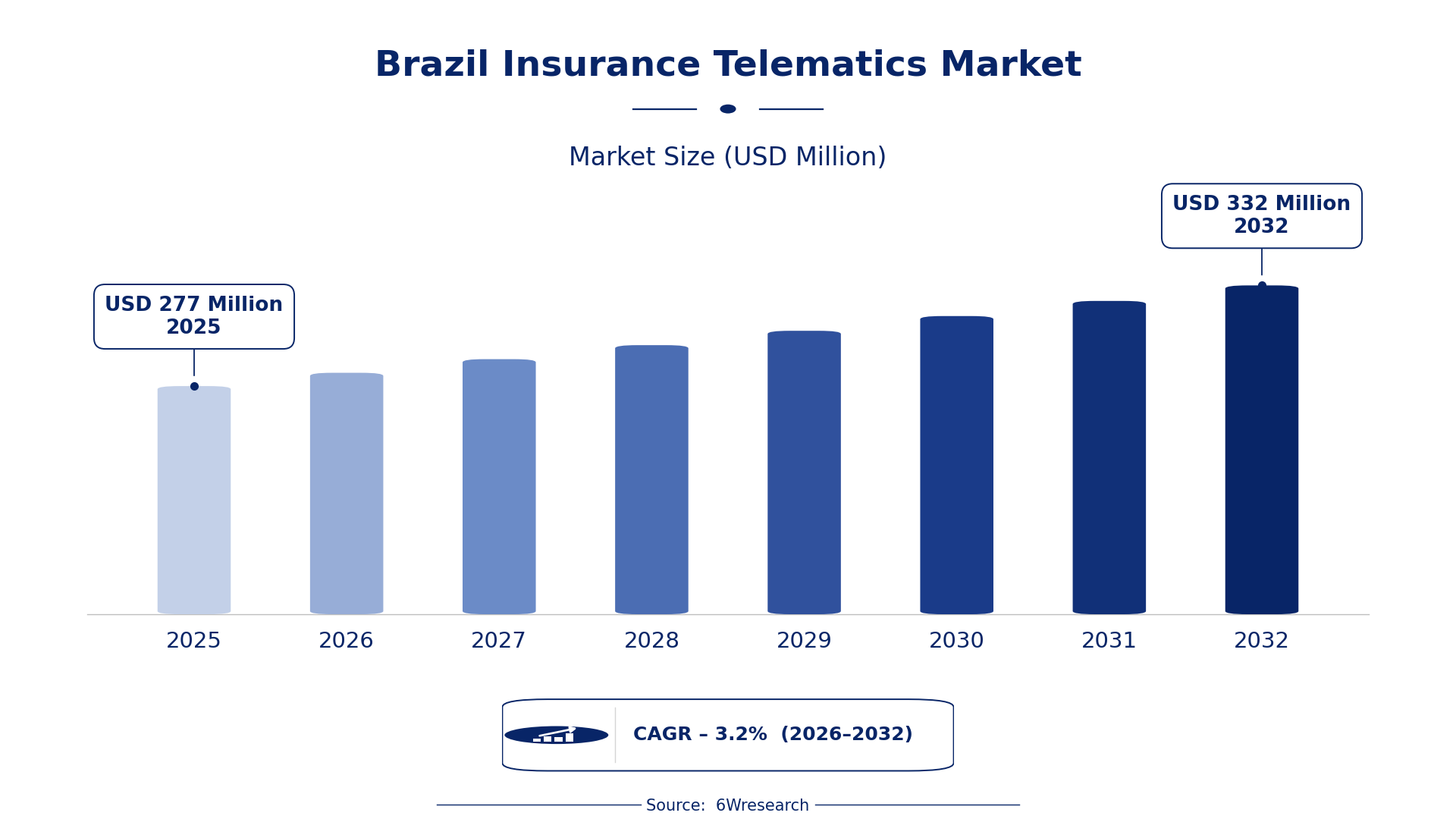
The Brazil Insurance Telematics Market was estimated at USD 277 Million in 2025 and is projected to reach USD 332 Million by 2032, growing at a CAGR of 3.2% from 2026 to 2032.
Brazil Insurance Telematics Market Synopsis
The integration of technology into the insurance sector is the most significant force driving the Brazil Insurance Telematics Market. Insurers are increasingly adopting telematics to enhance risk assessment and personalize premium offerings, which has led to a surge in demand for these innovative solutions.
As connected car technologies gain traction, insurance companies are leveraging data from telematics devices to refine their underwriting and pricing strategies. This shift not only enhances customer engagement but also allows for improved risk management, making telematics an essential component of modern insurance practices in Brazil.
Brazil Insurance Telematics Market Year-wise Growth Rate and Key Drivers
This graph illustrates the annual growth rates of the Brazil Insurance Telematics Market from 2021 to 2032, highlighting a steady upward trajectory and projected expansion over the forecast period.
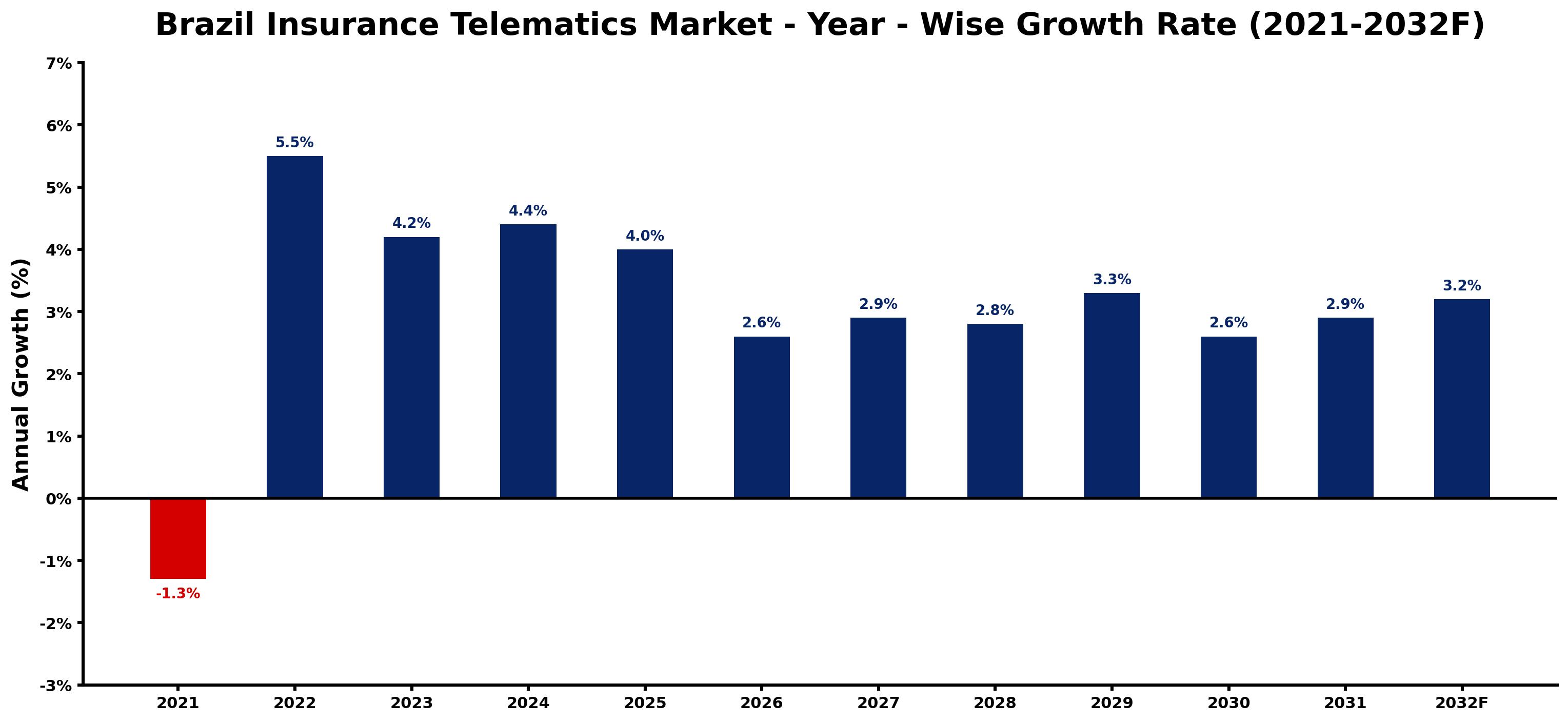
The table below presents the year‑wise growth rates along with the key drivers influencing the market
| Year | Growth Rate | Major Drivers |
| 2021 | -1.3% | ANPD regulations hindered data collection for telematics. |
| 2022 | 5.5% | Increased smartphone penetration boosting telematics app usage. |
| 2023 | 4.2% | National traffic safety campaigns promoting telematics adoption. |
| 2024 | 4.4% | Growing interest in personalized insurance products in Brazil. |
| 2025 | 4.0% | Emerging fintech collaborations enhancing telematics data integration. |
| 2026 | 2.6% | Regulatory push for innovative insurance solutions in Brazil. |
| 2027 | 2.9% | Rising awareness of automobile theft prevention via telematics. |
| 2028 | 2.8% | Expanded urban mobility programs driving telematics usage. |
| 2029 | 3.3% | Increased focus on fleet management efficiencies in logistics. |
| 2030 | 2.6% | Government incentives for telematics as safety compliance tool. |
| 2031 | 2.9% | Higher consumer awareness of real-time driving feedback benefits. |
| 2032 | 3.2% | Growing popularity of telematics in rideshare and delivery services. |
Note: Market size estimations and growth projections presented in this report are based on 6Wresearch's proprietary forecasting methodology, utilizing the latest available industry data, government publications, and primary research inputs.
Brazil Insurance Telematics Market Key Takeaways
Below are some of the specific key takeaways from the market, including:
- The market is experiencing a steady growth trajectory driven by technological advancements.
- Real-time data analysis is transforming traditional insurance models into more personalized offerings.
- Adoption of connected car technologies is crucial for the expansion of telematics solutions.
- Regulatory challenges and data privacy concerns remain critical hurdles for market players.
- Consumer education about telematics benefits is essential for wider acceptance.
Evaluation of Restraints in Brazil Insurance Telematics Market
Several factors are currently restraining the growth of the Brazil Insurance Telematics Market. Foremost among these are data security concerns, which can deter both consumers and insurers from fully embracing telematics. The regulatory environment poses another challenge, as insurance companies must navigate complex compliance requirements that can hinder innovation. Additionally, the need for comprehensive consumer education is pressing; many potential users remain unaware of how telematics can enhance their insurance experience. Addressing these restraints is vital for unlocking the market's full potential.
Brazil Insurance Telematics Market Trends
A noticeable trend in the Brazil Insurance Telematics Market is the shift toward personalized insurance products. Insurers are utilizing telematics data to tailor policies based on individual driving behaviors, thus incentivizing safer driving habits. The increase in smartphone penetration is also influencing telematics solutions, as mobile applications become integral to user engagement and data collection. on top of that, partnerships between insurers and technology providers are on the rise, enhancing the sophistication of telematics offerings.
Brazil Insurance Telematics Market Opportunities
The current market offers numerous growth and investment opportunities. Companies that focus on developing user-friendly telematics solutions can capture a significant share of the market. As awareness of the benefits of telematics grows, insurance firms that proactively educate consumers stand to gain a competitive edge. Additionally, expanding into underserved regions of Brazil presents a strategic opportunity for insurers looking to broaden their customer base. Innovations in data analytics and artificial intelligence also promise to enhance telematics capabilities, presenting further avenues for investment.
Government Initiatives in the Brazil Insurance Telematics Market
Government policies play a crucial role in shaping the Brazil Insurance Telematics Market. Regulatory frameworks focused on road safety and insurance standards are driving market growth by encouraging the adoption of telematics. Policymakers are increasingly aware of the balance needed between leveraging telematics for risk assessment and addressing privacy concerns, making regulatory adaptation essential for market players.
- A national initiative launched in early 2025 aims to promote telematics adoption by providing incentives for insurers who implement these technologies.
- Current discussions within regulatory bodies focus on establishing clearer guidelines for data privacy and security in telematics, expected to conclude by mid-2026.
- A planned public-private partnership initiative is set to enhance digital infrastructure, improving connectivity for telematics solutions, anticipated to begin in late 2026.
- Regulatory updates introduced in 2025 mandate the incorporation of telematics data in premium calculations, pushing insurers to adapt quickly.
Future Insights of the Brazil Insurance Telematics Market
Looking ahead to 2026-2032, the Brazil Insurance Telematics Market is expected to evolve significantly. As technology continues to advance, insurers will likely harness more sophisticated analytics, enabling even deeper insights into customer behavior and risk profiles. The growing adoption of electric and autonomous vehicles will also influence telematics solutions, as these vehicles increasingly rely on integrated data systems. Consumer expectations for personalized experiences will drive companies to innovate continually, making agility a critical factor for success in this sector.
Brazil Insurance Telematics Market Latest Developments
Recent developments in the Brazil Insurance Telematics Market indicate a shift towards more innovative and consumer-friendly solutions. Over the past year, several initiatives have emerged that highlight this trend, showcasing the industry's commitment to modernization and enhanced customer experience.
- A major technology vendor unveiled a new telematics platform in early 2025, focusing on real-time analytics and user engagement features.
- An ongoing pilot program by a leading regional insurer, initiated in late 2025, tests new data-sharing protocols aimed at improving privacy safeguards.
- A collaborative project involving several insurers and tech firms is expected to launch in Q3 2026, aimed at creating a standardized telematics framework for the industry.
- In early 2025, a prominent insurer announced an expansion of its telematics offerings to rural areas, addressing a previously underserved market segment.
Brazil Insurance Telematics Market - Key Attractiveness of the Report
- 10 Years of Market Numbers
- Historical Data Starting from 2022 to 2025
- Base Year: 2025
- Forecast Data until 2032
- Key Performance Indicators Impacting the Market
- Major Upcoming Developments and Projects
Key Highlights of the Report:
- Brazil Insurance Telematics Market Outlook
- Market Size of Brazil Insurance Telematics Market, 2025
- Forecast of Brazil Insurance Telematics Market, 2032
- Historical Data and Forecast of Brazil Insurance Telematics Revenues & Volume for the Period 2022-2032F
- Brazil Insurance Telematics Market Trend Evolution
- Brazil Insurance Telematics Market Drivers and Challenges
- Brazil Insurance Telematics Price Trends
- Brazil Insurance Telematics Porter's Five Forces
- Brazil Insurance Telematics Industry Life Cycle
- Historical Data and Forecast of Brazil Insurance Telematics Market Revenues & Volume By End User for the Period 2022-2032F
- Historical Data and Forecast of Brazil Insurance Telematics Market Revenues & Volume By Small for the Period 2022-2032F
- Historical Data and Forecast of Brazil Insurance Telematics Market Revenues & Volume By Medium Enterprises for the Period 2022-2032F
- Historical Data and Forecast of Brazil Insurance Telematics Market Revenues & Volume By Large Enterprises for the Period 2022-2032F
- Historical Data and Forecast of Brazil Insurance Telematics Market Revenues & Volume By Deployment Type for the Period 2022-2032F
- Historical Data and Forecast of Brazil Insurance Telematics Market Revenues & Volume By Cloud for the Period 2022-2032F
- Historical Data and Forecast of Brazil Insurance Telematics Market Revenues & Volume By On-Premises for the Period 2022-2032F
- Historical Data and Forecast of Brazil Insurance Telematics Market Revenues & Volume By Organization Size for the Period 2022-2032F
- Historical Data and Forecast of Brazil Insurance Telematics Market Revenues & Volume By Small and Medium Enterprises (SMEs) for the Period 2022-2032F
- Historical Data and Forecast of Brazil Insurance Telematics Market Revenues & Volume By Large Enterprises for the Period 2022-2032F
- Brazil Insurance Telematics Import Export Trade Statistics
- Market Opportunity Assessment By End User
- Market Opportunity Assessment By Deployment Type
- Market Opportunity Assessment By Organization Size
- Brazil Insurance Telematics Top Companies Market Share
- Brazil Insurance Telematics Competitive Benchmarking By Technical and Operational Parameters
- Brazil Insurance Telematics Company Profiles
- Brazil Insurance Telematics Key Strategic Recommendations






































