Chile Prefabricated Building Market Size Growth Rate
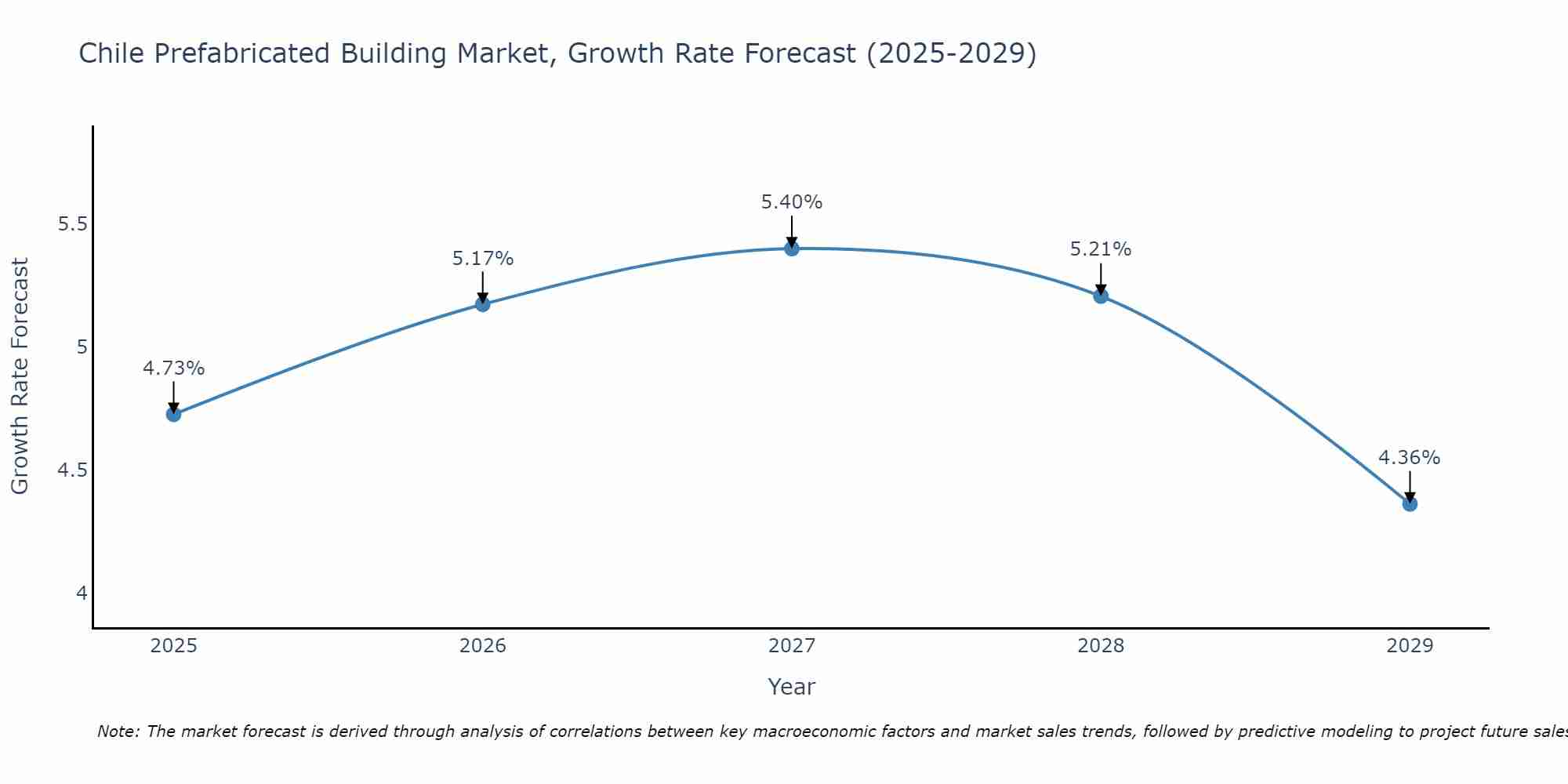
The Chile Prefabricated Building Market is projected to witness mixed growth rate patterns during 2025 to 2029. Growth accelerates to 5.40% in 2027, following an initial rate of 4.73%, before easing to 4.36% at the end of the period.
Chile Prefabricated Building Market Overview
The Chile prefabricated building market is experiencing growth driven by factors such as rapid urbanization, increasing construction activities, and the need for cost-effective and sustainable building solutions. Prefabricated construction methods are gaining popularity due to their efficiency in reducing construction time and costs while maintaining high-quality standards. The market offers a range of prefabricated building solutions including modular homes, prefabricated components, and portable structures. Key players in the Chilean market are focusing on innovation, sustainability, and customization to meet the diverse demands of the construction industry. Government initiatives promoting sustainable construction practices and the rising awareness of the benefits of prefabricated buildings are further driving the market`s growth trajectory. With a positive outlook for the construction sector, the Chile prefabricated building market is poised for continued expansion in the coming years.
Chile Prefabricated Building Market Trends
The Chile prefabricated building market is experiencing growth due to factors such as the increasing demand for affordable housing, rapid urbanization, and the government`s initiatives to promote sustainable construction practices. Modular construction techniques are gaining popularity as they offer faster construction times, cost savings, and reduced environmental impact. There is a growing interest in prefabricated buildings for various applications including residential, commercial, and industrial sectors. Innovations in design, technology, and materials are driving the market forward, leading to a shift towards more customizable and energy-efficient prefabricated structures. The market is expected to continue expanding in the coming years as the construction industry in Chile embraces the benefits of prefabricated building solutions.
Chile Prefabricated Building Market Challenges
In the Chile Prefabricated Building Market, some challenges include limited awareness and understanding of the benefits of prefabricated construction methods among customers and stakeholders, leading to slower adoption rates compared to traditional construction practices. Additionally, there may be resistance from traditional construction companies who perceive prefabrication as a threat to their business models. Infrastructure limitations, such as transportation and logistics constraints, can also pose challenges in efficiently delivering prefabricated components to construction sites. Moreover, ensuring quality control and compliance with local building regulations can be more complex in prefabricated construction, requiring close monitoring and coordination throughout the manufacturing and assembly processes to meet industry standards and ensure structural integrity.
Chile Prefabricated Building Market Investment Opportunities
The Chile Prefabricated Building Market presents various investment opportunities due to increasing construction activities, government support for sustainable and affordable housing solutions, and growing awareness of the benefits of prefabricated construction methods. Investors can explore opportunities in supplying prefabricated building materials, partnering with construction companies to offer prefabricated solutions, or investing in prefabricated building technology companies. The market also offers potential for innovative and eco-friendly prefabricated building solutions to meet the demand for sustainable construction practices. Additionally, with the housing deficit in Chile, there is a growing need for cost-effective and efficient housing solutions, making the prefabricated building market a promising sector for investment and growth.
Chile Prefabricated Building Market Government Policy
The Chilean government has implemented various policies to promote the growth of the prefabricated building market. These include tax incentives for companies using prefabricated construction methods, streamlined permitting processes for prefabricated building projects, and funding support for research and development in the sector. Additionally, the government has introduced regulations to ensure the quality and safety of prefabricated buildings, with strict adherence to building codes and standards. These policies aim to drive innovation, improve efficiency in construction processes, and address housing shortages in Chile by encouraging the adoption of prefabricated building technologies. Overall, the government`s initiatives are geared towards creating a favorable environment for the prefabricated building industry to thrive and contribute to the country`s sustainable development goals.
Chile Prefabricated Building Market Future Outlook
The Chile prefabricated building market is poised for significant growth in the coming years due to several factors. The increasing urbanization and demand for affordable housing solutions are driving the adoption of prefabricated construction methods, which offer cost savings and faster construction time. Additionally, the emphasis on sustainability and energy efficiency in building practices is leading to a greater interest in prefabricated buildings, known for their eco-friendly construction processes. The government`s initiatives to promote the use of prefabricated materials in construction projects further support the market growth. With advancements in technology and design capabilities, the Chile prefabricated building market is expected to expand rapidly, catering to various sectors such as residential, commercial, and industrial construction.
Key Highlights of the Report:
- Chile Prefabricated Building Market Outlook
- Market Size of Chile Prefabricated Building Market, 2021
- Forecast of Chile Prefabricated Building Market, 2031
- Historical Data and Forecast of Chile Prefabricated Building Revenues & Volume for the Period 2018 - 2031
- Chile Prefabricated Building Market Trend Evolution
- Chile Prefabricated Building Market Drivers and Challenges
- Chile Prefabricated Building Price Trends
- Chile Prefabricated Building Porter's Five Forces
- Chile Prefabricated Building Industry Life Cycle
- Historical Data and Forecast of Chile Prefabricated Building Market Revenues & Volume By Dimensions for the Period 2018 - 2031
- Historical Data and Forecast of Chile Prefabricated Building Market Revenues & Volume By Skeleton System for the Period 2018 - 2031
- Historical Data and Forecast of Chile Prefabricated Building Market Revenues & Volume By Panel System for the Period 2018 - 2031
- Historical Data and Forecast of Chile Prefabricated Building Market Revenues & Volume By Cellular System for the Period 2018 - 2031
- Historical Data and Forecast of Chile Prefabricated Building Market Revenues & Volume By Combined System for the Period 2018 - 2031
- Historical Data and Forecast of Chile Prefabricated Building Market Revenues & Volume By Application for the Period 2018 - 2031
- Historical Data and Forecast of Chile Prefabricated Building Market Revenues & Volume By Residential for the Period 2018 - 2031
- Historical Data and Forecast of Chile Prefabricated Building Market Revenues & Volume By Non-Residential for the Period 2018 - 2031
- Chile Prefabricated Building Import Export Trade Statistics
- Market Opportunity Assessment By Dimensions
- Market Opportunity Assessment By Application
- Chile Prefabricated Building Top Companies Market Share
- Chile Prefabricated Building Competitive Benchmarking By Technical and Operational Parameters
- Chile Prefabricated Building Company Profiles
- Chile Prefabricated Building Key Strategic Recommendations






































