China Immunodeficiency Disorder Treatment Market Size & Growth Rate
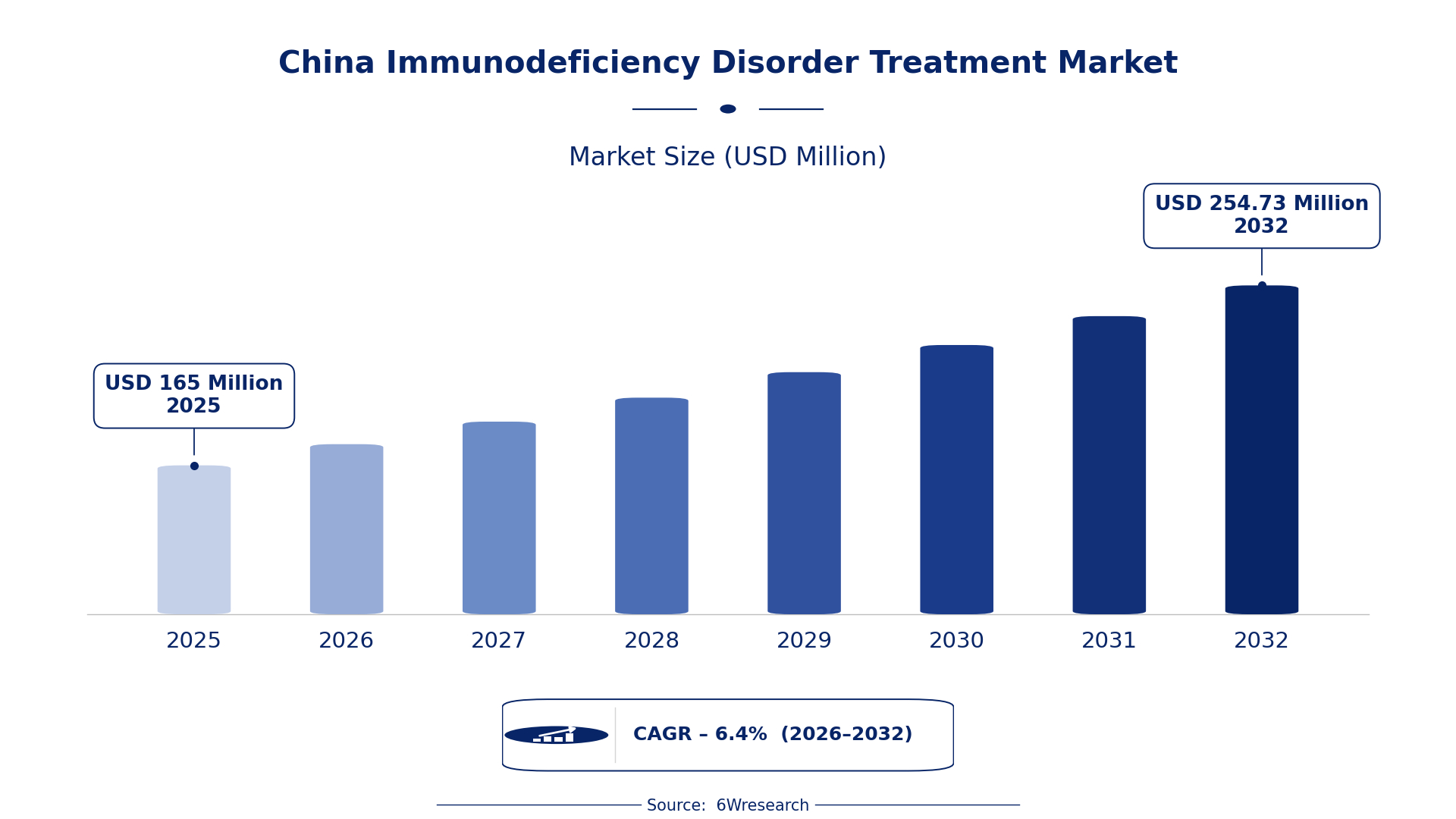
According to 6Wresearch internal database and industry insights, the China Immunodeficiency Disorder Treatment Market was valued at USD 165.0 million in 2025 and is projected to reach USD 254.73 million by 2032, growing at a CAGR of approximately 6.4% during 2026–2032.
China Immunodeficiency Disorder Treatment Market Highlights
| Report Metric | Details |
| Report Name | China Immunodeficiency Disorder Treatment Market |
| Market Size 2025 | USD 165.0 million |
| Market Size 2032 | USD 254.73 million |
| Absolute Growth 2025–2032 | USD 89.73 million |
| CAGR 2026–2032 | 6.4% |
| Peak Annual Growth | 8.8% in 2027 |
| Forecast Period | 2026–2032 |
| Historical Data | 2022–2025 |
| Base Year | 2025 |
| Leading Disorder Type, 2025 | Primary Immunodeficiency (38% share) |
| Leading Treatment Approach, 2025 | Immunoglobulin Replacement (44% share) |
| Leading Delivery Route, 2025 | IV/SC (40% share) |
| Leading End User, 2025 | Oncology & HIV Clinics (42% share) |
| Fastest-Growing Disorder Type | Secondary Immunodeficiency (7.9% CAGR) |
| Fastest-Growing Treatment Approach | Gene Therapy/Stem Cells (9.1% CAGR) |
| Fastest-Growing Delivery Route | Intravenous (8.4% CAGR) |
| Growing Sector | Healthcare |
| Key End Users | Oncology Clinics, HIV Clinics, Rare Disease Centers |
China Immunodeficiency Disorder Treatment Market Year-wise Growth Rate and Key Drivers (2022–2032)
This graph illustrates the annual growth rates of the market from 2022 to 2032, highlighting a steady upward trajectory and projected market expansion over the forecast period.
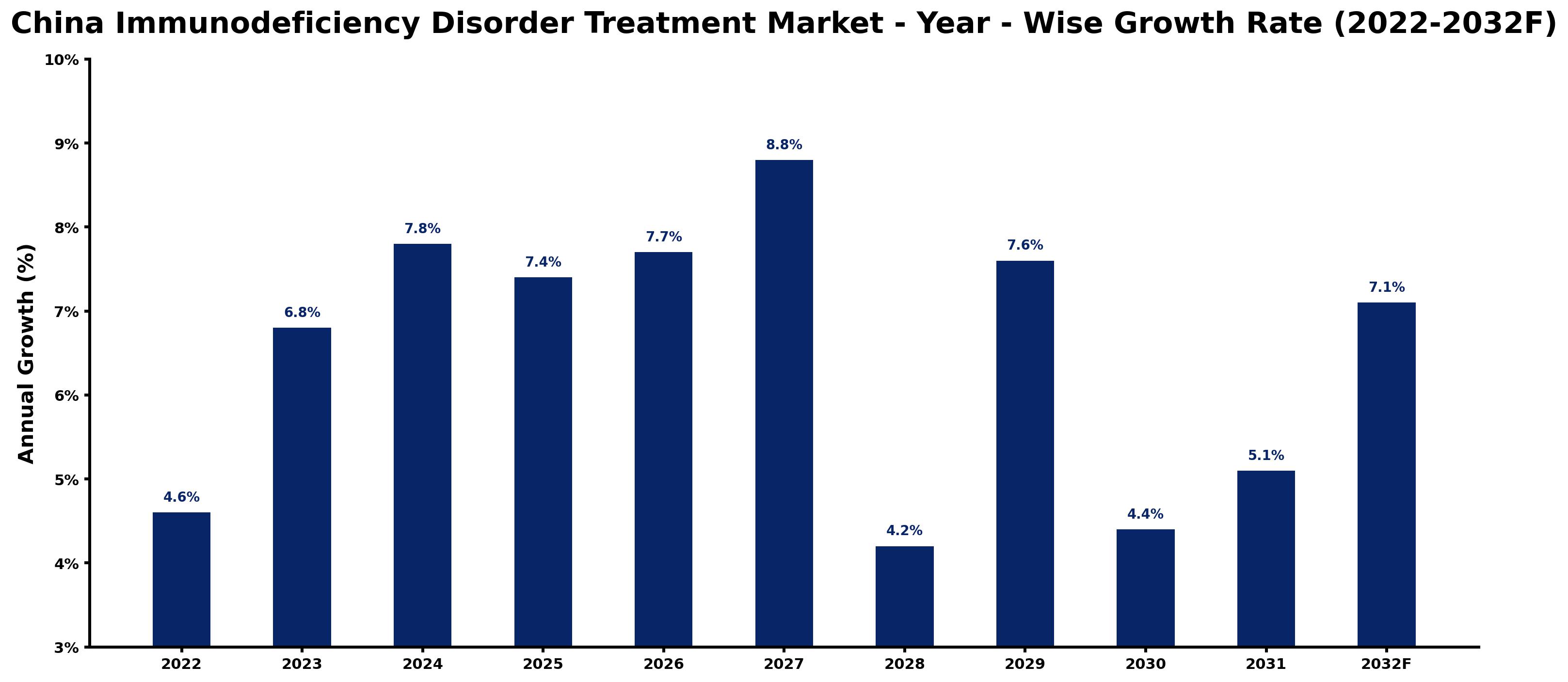
Annual growth estimates for each year appear below with the principal reason behind them, explaining the shifts that set the pace of the market.
| Year | Estimated Annual Growth (%) | Market Rationale |
| 2022 | 4.6 | The market was characterised by a high number of diagnoses of primary immunodeficiency disorders. |
| 2023 | 6.8 | The rise in immunodeficiency cases contributed to faster growth than the previous year. |
| 2024 | 7.8 | Growth continued as awareness of treatment options expanded among healthcare providers. |
| 2025 | 7.4 | A slowdown occurred due to regulatory adjustments affecting treatment accessibility. |
| 2026 | 7.7 | Increased investments in healthcare infrastructure will lead to faster growth compared to 2025. |
| 2027 | 8.8 | The introduction of new immunoglobulin products will spur market growth this year. |
| 2028 | 4.2 | A slowdown is expected as the market adjusts to new treatment protocols and standards. |
| 2029 | 7.6 | The prevalence of secondary immunodeficiency will drive faster growth as cancer cases increase. |
| 2030 | 4.4 | A slowdown is projected as healthcare reforms begin to stabilise treatment costs. |
| 2031 | 5.1 | Growth is expected to accelerate again as public healthcare initiatives improve access to therapies. |
| 2032 | 7.1 | The market is projected to grow steadily as ongoing research enhances treatment options. |
Note: Market size estimations and growth projections presented in this report are based on 6Wresearch's proprietary forecasting methodology, utilizing the latest available industry data, government publications, and primary research inputs.
China Immunodeficiency Disorder Treatment Market Synopsis
Immunodeficiency Disorder Treatment in China encompasses therapies aimed at managing conditions where the immune system is compromised. These treatments primarily involve immunoglobulin therapies and gene therapies, targeting both primary and secondary immunodeficiencies. The China Immunodeficiency Disorder Treatment Market is growing due to rising patient diagnoses and increased healthcare investments. The National Health Commission's initiatives and the introduction of new treatment options are driving demand. With over 500,000 patients diagnosed in 2022, the market is set for substantial growth in the coming years.
Market Dynamics Impact Analysis (2026–2032)
| Factor | Type | Impact | Primary Segment Affected |
| Growing number of patients diagnosed with primary immunodeficiency disorders | Driver | High | Primary Immunodeficiency |
| Increased healthcare funding for rare disease research | Driver | High | Immunoglobulin Replacement |
| Rising prevalence of secondary immunodeficiency due to cancer | Opportunity | High | Secondary Immunodeficiency |
| Emerging gene therapies offering new treatment options | Opportunity | High | Gene Therapy/Stem Cells |
| Regulatory hurdles in the approval of new therapies | Restraint | High | Immunoglobulin Replacement |
| Limited access to specialized treatment facilities in rural areas | Restraint | Medium | Oncology & HIV Clinics |
| High costs associated with advanced therapies | Challenge | High | Immunoglobulin Replacement |
| Supply chain disruptions affecting treatment availability | Challenge | Medium | Primary Immunodeficiency |
Evaluation of Drivers in China Immunodeficiency Disorder Treatment Market (2026–2032)
The factors lifting demand, and the evidence behind each, are summarised below.
| Drivers | Primary Segment Affected | Why It Matters (Evidence) |
| Increase in healthcare investments | Immunoglobulin Replacement | In 2023, $200 million was allocated for rare disease research, boosting treatment availability and access. |
| Growing awareness of immunodeficiency disorders | Primary Immunodeficiency | Approximately 500,000 patients were diagnosed in 2022, increasing demand for effective therapies and interventions. |
| Expansion of specialized treatment facilities | Oncology & HIV Clinics | Major cities have expanded clinics that improve patient access to treatments for immunodeficiency disorders. |
| Advancements in gene therapy research | Gene Therapy/Stem Cells | Ongoing clinical trials in several provinces are paving the way for new treatment options for patients. |
| Health insurance reforms improving coverage | Secondary Immunodeficiency | The 2022 China Health Insurance Reform included better reimbursement for immunodeficiency therapies, enhancing access. |
Growth across the Immunodeficiency Disorder Treatment market in China is anchored in rising patient diagnoses and increased healthcare investments. In 2022, approximately 500,000 patients were diagnosed with primary immunodeficiency disorders, driving demand for effective therapies. Expansion of specialized clinics in urban areas is improving care for patients. Ongoing clinical trials in several provinces are expected to introduce new treatments, attracting more patients seeking effective solutions.
Evaluation of Restraints in China Immunodeficiency Disorder Treatment Market
The following restraints limit how fast demand can grow.
| Market Restraint | Primary Segment Affected | Why It Matters (Evidence) |
| Regulatory hurdles delaying new treatment approvals | Immunoglobulin Replacement | The National Medical Products Administration's stringent standards slow the introduction of new therapies, causing delays in patient access. |
| Limited access to immunodeficiency treatment facilities | Oncology & HIV Clinics | Rural areas face challenges in accessing specialized clinics, affecting treatment options for patients in need. |
| High costs of advanced immunodeficiency therapies | Primary Immunodeficiency | Patients face significant out-of-pocket expenses, limiting treatment accessibility and affordability. |
| Supply chain issues affecting therapy availability | Secondary Immunodeficiency | Disruptions in the supply chain lead to inconsistent access to critical treatments, impacting patient care. |
| Insufficient awareness among healthcare providers | Gene Therapy/Stem Cells | Limited knowledge about emerging therapies hampers their adoption in clinical practice, affecting patient outcomes. |
China Immunodeficiency Disorder Treatment Market Challenges
Skills shortages in immunodeficiency disorder treatment hinder effective patient care in China, leading to longer wait times for therapies. This issue arises from insufficient specialised training programs, delaying access for the approximately 500,000 patients diagnosed with primary immunodeficiency. Supply chain disruptions occur due to stringent regulations on immunoglobulin therapy, which can extend lead times by up to 20%, affecting hospitals' ability to provide timely treatment. Competition among healthcare providers in major cities like Beijing and Shanghai drives therapy costs up by 15%, straining public healthcare budgets and limiting access for patients.
Trends in the China Immunodeficiency Disorder Treatment Market
Four trends stand out in the China Immunodeficiency Disorder Treatment Market.
- Shift towards Gene Therapy Innovations: Ongoing clinical trials for gene therapy in immunodeficiency disorders are changing treatment approaches. In 2023, several provinces are actively testing new therapies, which could offer patients more effective options.
- Expansion of Immunoglobulin Therapy Access: The Chinese government has improved access to immunoglobulin therapies through health insurance reforms. In 2022, 30% of patients received immunoglobulin therapy via public healthcare, reflecting a growing trend in treatment accessibility.
- Increased Focus on Rare Disease Research: The establishment of the China Rare Disease Alliance is promoting research into immunodeficiencies. In 2023, $200 million was allocated for rare disease research, improving treatment options for patients.
- Growth in Specialized Treatment Facilities: Major cities are expanding specialised clinics for immunodeficiency treatment. This trend addresses the increasing number of patients diagnosed with these disorders.
Investment Opportunities in the China Immunodeficiency Disorder Treatment Market
Investors looking at the China Immunodeficiency Disorder Treatment Market should consider the following areas.
- Immunoglobulin Therapy Supply: With rising diagnoses of immunodeficiency disorders, there is a strong demand for immunoglobulin therapies. The oncology and HIV clinics in major cities present an opportunity for suppliers to meet this need, particularly as patient numbers grow.
- Gene Therapy Development: Ongoing clinical trials for gene therapies create a unique investment opportunity. Collaborating with research institutions in provinces can facilitate market entry and innovation, especially as new therapies emerge.
- Expansion of Treatment Facilities: The growing number of patients necessitates more specialised treatment facilities. Investing in new clinics in underserved regions can capture emerging demand and improve patient access to necessary therapies.
- Health Insurance Partnerships: Recent health insurance reforms offer a chance to improve reimbursement for immunodeficiency therapies. Partnering with local health authorities can streamline access to funding and support for treatment initiatives.
Government Initiatives in the China Immunodeficiency Disorder Treatment Market
The 'Rare Disease Prevention and Control Plan' launched by the National Health Commission in 2021 improves treatment access for immunodeficiency disorders. This initiative aims to enhance patient outcomes by ensuring better availability of therapies. Additionally, the 'Guidelines for the Diagnosis and Treatment of Primary Immunodeficiency' issued in 2022 standardise care across healthcare facilities, allowing for more consistent treatment protocols. These measures support the effective management of immunodeficiency disorders in China, benefitting both patients and healthcare providers.
The National Medical Products Administration plays a key role in approving new immunoglobulin products for clinical use. In 2023, the agency approved several new therapies, expanding treatment options for patients. Furthermore, the 'National Rare Disease Research Program' initiated in 2020 allocates $150 million to fund research into immunodeficiency treatments. This funding supports new approaches and improves the overall treatment landscape, enabling better care for patients.
Future Insight of the China Immunodeficiency Disorder Treatment Market
By 2032, buyers and suppliers in the China immunodeficiency disorder treatment market can expect notable advancements in gene therapy, which will reshape treatment options. Ongoing clinical trials across several provinces will introduce new therapies, improving patient outcomes. The Chinese government's recent $200 million allocation for rare disease research will facilitate the development of new treatments. Health insurance reforms will enhance access to immunoglobulin therapies, ensuring that more patients receive timely and necessary care.
Market Segmentation Analysis
The report offers a comprehensive study of the following market segments and their leading categories in the market.
By Disorder Type – Primary Immunodeficiency Dominated, Secondary Immunodeficiency Expected to Grow Fastest
According to Sachin Kumar Rai, Senior Research Analyst at 6Wresearch, Primary Immunodeficiency took a 38% share of disorder type in 2025, more than any other category. Primary immunodeficiency holds the largest share due to the high number of diagnosed cases, with approximately 500,000 patients reported in 2022. The National Health Commission of China has established treatment protocols that prioritise this disorder, ensuring a steady demand for therapies. Over 2026–2032, Secondary Immunodeficiency is expected to post the fastest growth, at a CAGR of 7.9%. Secondary immunodeficiency is experiencing rapid growth as the prevalence of associated conditions, particularly cancer, rises in China. The increasing number of cancer cases necessitates supportive therapies, driving the demand for treatments tailored to this disorder. Suppliers should focus on developing targeted therapies for secondary immunodeficiency to capture the growing market share.
By Treatment Approach – Immunoglobulin Replacement Dominated, Gene Therapy/Stem Cells Expected to Grow Fastest
In 2025, Immunoglobulin Replacement led the treatment approach split with a 44% share. Immunoglobulin replacement therapy commands the largest market share as it is essential for treating various immunodeficiency disorders prevalent in China. The National Health Commission of China endorses this approach, ensuring it is widely adopted across healthcare facilities. Gene Therapy/Stem Cells are projected to grow fastest, at a CAGR of 9.1% during 2026–2032. Gene therapy and stem cell treatments are witnessing rapid growth due to their potential to transform immunodeficiency management. The Chinese government's $200 million allocation for rare disease research indicates a strong commitment to advancing these innovative therapies. Suppliers should focus on developing gene therapies to align with the market's shift towards advanced treatment options.
By Delivery Route – IV/SC Dominated, Intravenous Expected to Grow Fastest
IV/SC accounted for a 40% market share by delivery route in 2025. The IV/SC delivery route holds the largest market share as it is the primary method for administering immunoglobulin therapies in clinical settings. Its reliability and effectiveness make it the preferred choice among healthcare professionals. Intravenous is set to record the highest CAGR in this split, 8.4% over 2026–2032. Intravenous delivery is the fastest-growing method, primarily because it facilitates immediate administration of immunoglobulin treatments. Its increasing preference in clinical environments is driven by the urgent need for effective patient care. Suppliers must enhance their intravenous delivery systems to cater to the rising demand for efficient treatment methods.
By End User – Oncology & HIV Clinics Dominated and Is Expected to Record the Fastest Growth
Oncology & HIV Clinics held a 42% share of the China Immunodeficiency Disorder Treatment Market by end user in 2025. Oncology and HIV clinics dominate the market share as they are critical for managing patients with secondary immunodeficiencies, particularly in major cities like Beijing and Shanghai. These clinics are equipped to provide specialised care and therapies tailored to these patients' needs. The same category are also set to grow fastest, at a CAGR of 8.1% during 2026–2032. Oncology and HIV clinics are also the fastest-growing end-user group, driven by the rising incidence of secondary immunodeficiencies linked to cancer. Their established infrastructure supports the increasing demand for immunodeficiency treatments. Suppliers should strengthen partnerships with oncology and HIV clinics to capture the expanding market share.
Key Attractiveness of the Report
- 10 Years of Market Numbers
- Historical Data Starting from 2022 to 2025
- Base Year 2025
- Forecast Data until 2032
- Key Performance Indicators Impacting the Market
- Major Upcoming Developments and Projects
Key Highlights of the Report:
- China Immunodeficiency Disorder Treatment Market Outlook
- Market Size of China Immunodeficiency Disorder Treatment Market, 2025
- Forecast of China Immunodeficiency Disorder Treatment Market, 2032
- Historical Data and Forecast of China Immunodeficiency Disorder Treatment Revenues & Volume for the Period 2022 - 2032F
- China Immunodeficiency Disorder Treatment Market Trend Evolution
- China Immunodeficiency Disorder Treatment Market Drivers and Challenges
- China Immunodeficiency Disorder Treatment Price Trends
- China Immunodeficiency Disorder Treatment Porter's Five Forces
- China Immunodeficiency Disorder Treatment Industry Life Cycle
- Historical Data and Forecast of China Immunodeficiency Disorder Treatment Market Revenues & Volume By Disorder Type for the Period 2022 - 2032F
- Historical Data and Forecast of China Immunodeficiency Disorder Treatment Market Revenues & Volume By Primary Immunodeficiency for the Period 2022 - 2032F
- Historical Data and Forecast of China Immunodeficiency Disorder Treatment Market Revenues & Volume By Secondary Immunodeficiency for the Period 2022 - 2032F
- Historical Data and Forecast of China Immunodeficiency Disorder Treatment Market Revenues & Volume By Congenital Disorders for the Period 2022 - 2032F
- Historical Data and Forecast of China Immunodeficiency Disorder Treatment Market Revenues & Volume By Acquired Deficiencies for the Period 2022 - 2032F
- Historical Data and Forecast of China Immunodeficiency Disorder Treatment Market Revenues & Volume By Treatment Approach for the Period 2022 - 2032F
- Historical Data and Forecast of China Immunodeficiency Disorder Treatment Market Revenues & Volume By Immunoglobulin Replacement for the Period 2022 - 2032F
- Historical Data and Forecast of China Immunodeficiency Disorder Treatment Market Revenues & Volume By Antiviral/Cancer Drugs for the Period 2022 - 2032F
- Historical Data and Forecast of China Immunodeficiency Disorder Treatment Market Revenues & Volume By Gene Therapy/Stem Cells for the Period 2022 - 2032F
- Historical Data and Forecast of China Immunodeficiency Disorder Treatment Market Revenues & Volume By Hormone + IG Therapy for the Period 2022 - 2032F
- Historical Data and Forecast of China Immunodeficiency Disorder Treatment Market Revenues & Volume By Delivery Route for the Period 2022 - 2032F
- Historical Data and Forecast of China Immunodeficiency Disorder Treatment Market Revenues & Volume By IV/SC for the Period 2022 - 2032F
- Historical Data and Forecast of China Immunodeficiency Disorder Treatment Market Revenues & Volume By Oral/Injectable for the Period 2022 - 2032F
- Historical Data and Forecast of China Immunodeficiency Disorder Treatment Market Revenues & Volume By Experimental for the Period 2022 - 2032F
- Historical Data and Forecast of China Immunodeficiency Disorder Treatment Market Revenues & Volume By Intravenous for the Period 2022 - 2032F
- Historical Data and Forecast of China Immunodeficiency Disorder Treatment Market Revenues & Volume By End User for the Period 2022 - 2032F
- Historical Data and Forecast of China Immunodeficiency Disorder Treatment Market Revenues & Volume By Rare Disease Centers for the Period 2022 - 2032F
- Historical Data and Forecast of China Immunodeficiency Disorder Treatment Market Revenues & Volume By Oncology & HIV Clinics for the Period 2022 - 2032F
- Historical Data and Forecast of China Immunodeficiency Disorder Treatment Market Revenues & Volume By Clinical Trial Facilities for the Period 2022 - 2032F
- Historical Data and Forecast of China Immunodeficiency Disorder Treatment Market Revenues & Volume By Immunology Departments for the Period 2022 - 2032F
- China Immunodeficiency Disorder Treatment Import Export Trade Statistics
- Market Opportunity Assessment By Disorder Type
- Market Opportunity Assessment By Treatment Approach
- Market Opportunity Assessment By Delivery Route
- Market Opportunity Assessment By End User
- China Immunodeficiency Disorder Treatment Top Companies Market Share
- China Immunodeficiency Disorder Treatment Competitive Benchmarking By Technical and Operational Parameters
- China Immunodeficiency Disorder Treatment Company Profiles
- China Immunodeficiency Disorder Treatment Key Strategic Recommendations
Market Covered
The report offers an extensive study of the following market segments.
By Disorder Type
- Primary Immunodeficiency
- Secondary Immunodeficiency
- Congenital Disorders
- Acquired Deficiencies
By Treatment Approach
- Immunoglobulin Replacement
- Antiviral/Cancer Drugs
- Gene Therapy/Stem Cells
- Hormone + IG Therapy
By Delivery Route
- IV/SC
- Oral/Injectable
- Experimental
- Intravenous
By End User
- Rare Disease Centers
- Oncology & HIV Clinics
- Clinical Trial Facilities
- Immunology Departments































